
News
Health Ministry finally sets guidelines on assisted reproductive technology and other infertility treatment protocols

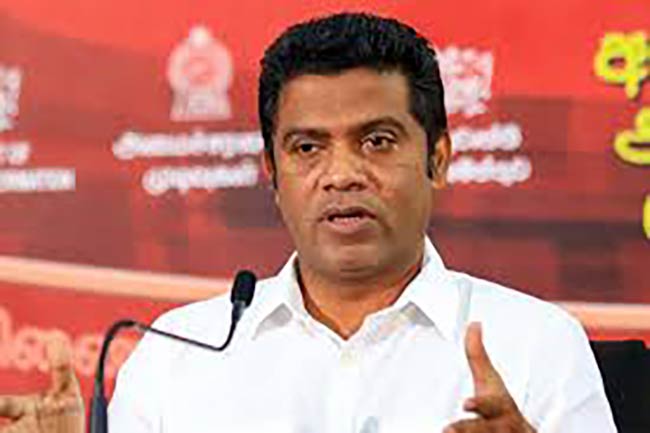
Director of Maternal and Child Health, and Consultant Physician Dr. Chandima Sirithunga, recently presented a set of guidelines on assisted reproductive technology and other infertility treatment protocols to the Minister of Health and Mass Media, Dr Nalinda Jayatissa, at a ceremony held at the Ministry of Health.
These guidelines are intended to be followed by hospitals and all other healthcare institutions providing infertility treatment, with the aim of ensuring higher-quality healthcare services for patients seeking medical assistance for infertility. Institutions implementing these guidelines will be required to provide accurate information to patients, adhere to medical ethics, utilise safe treatment methods, report any adverse effects, and implement appropriate measures to address complications.
While many Western and Asian countries have established regulatory bodies to oversee infertility treatment in hospitals and healthcare centres, Sri Lanka currently lacks such an institution. The introduction of these national guidelines by the Ministry of Health is, therefore, considered a timely initiative to ensure proper regulation and standardisation of infertility treatment practices in the country.
The event was attended by several senior healthcare professionals, including Deputy Minister of Health and Mass Media Dr Hansaka Wijemuni, Senior Professor in Obstetrics and Gynaecology at the Faculty of Medicine in Colombo Dr Athula Kaluwaarachchi, President of the Sri Lanka College of Obstetricians and Gynaecologists Dr Sanath Akmeemana, Consultant in Reproductive Medicine Dr Milhan Bacha, Senior Lecturer in Obstetrics and Gynaecology at the University of Sri Jayewardenepura Dr Chaminda Hunukumbura, and Specialist in Public Health at the Family Health Bureau Dr Loshan Munasinghe.

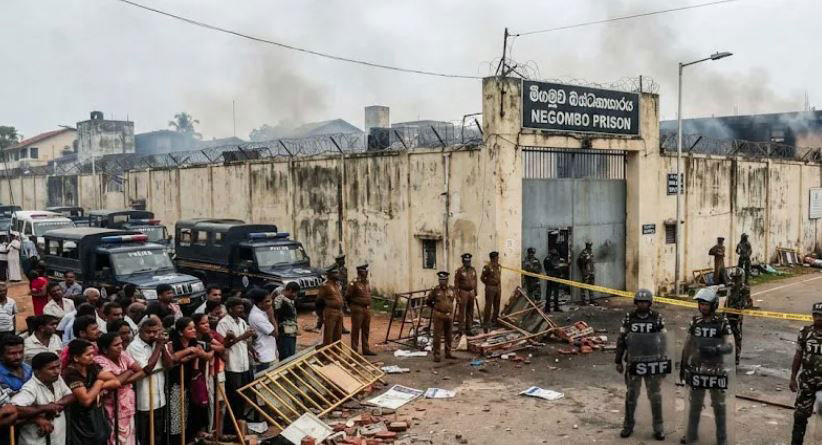
Post-mortem examinations conducted on prison officers killed during the violent unrest at Negombo Prison have revealed that the victims were subjected to severe and brutal assaults, according to preliminary findings of the ongoing investigation.
A five-member team of Judicial Medical Officers carried out the examinations at the Negombo Hospital, uncovering evidence of extensive injuries caused by the violence.
Investigators have so far determined that the clash erupted after a group allegedly led by Suresh Pushpakumara, also known as “Katuwellegama Suresh”, who is suspected of links to narcotics trafficking and organised crime, attacked another group of inmates inside the prison.
Preliminary inquiries indicate that the victims of the assault were inmates suspected of providing information to prison authorities regarding illegal activities, including the smuggling of prohibited items into the facility.
One of the first victims of the violence was inmate Ganegoda Arachchilage Gayan Sampath, who died after being attacked during the initial stages of the confrontation.
The 31-year-old resident of Ashokapura, Naththandiya, had been remanded for about three and a half months over drug-related allegations. His elder brother is also currently in custody at Negombo Prison.
Relatives claimed that Gayan had provided information to prison officials about narcotics and other contraband allegedly being brought into the prison following his admission.
His mother alleged that her son had been subjected to a savage attack, claiming that he suffered severe head injuries and fractures to his limbs after being assaulted with iron rods by a group of inmates.
She said a senior police officer had informed her that her son had assisted prison authorities by providing information about illegal activities within the facility and that his actions may have made him a target.
According to her, authorities had identified around 15 suspects in connection with the attack and assured her that legal action would be taken.Meanwhile, prison authorities have decided not to house inmates at the Negombo Prison premises as the facility remains an active crime scene.
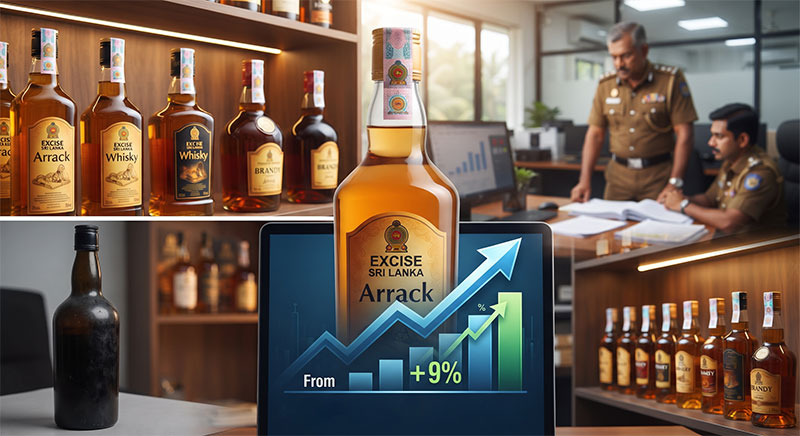
Sri Lanka’s excise revenue has surged by more than 60% over the past three years following the introduction of a revenue sticker system for liquor products, which authorities say has helped curb widespread tax evasion and counterfeit operations without costing the government a single rupee.
The Excise Department’s revenue increased from Rs. 170 billion in 2022, when the programme was launched, to Rs. 226 billion in 2024, with further growth recorded in 2025, according to a senior department official.
The revenue stickers programme, introduced on January 3, 2022, initially faced strong resistance from sections of the liquor industry. The official said many manufacturers had failed to comply with the requirement to affix revenue stickers to bottles, resulting in significant revenue losses to the state.
“Nearly 50% of the excise revenue due to the government was being lost,” the official said, adding that the department responded through intensified inspections and enforcement operations.
The official claimed that some industry players had opposed the system because it disrupted practices involving counterfeit stickers, unrecorded production and tax evasion. In one series of raids conducted in August 2023, counterfeit stickers were detected on liquor bottles at more than 6,000 locations, while around 100,000 bottles bearing fake stickers were seized within a week in February 2023.
Under the revenue stickers system, the financial burden is borne entirely by liquor manufacturers. The department said suppliers provide the stamps at a cost of about US$5.99 per 1,000 stickers, rising to approximately US$7.99 after port duties and clearing charges. The cost to manufacturers is around Rs. 1.21 per stamp.
The official said the programme produced immediate results, with excise revenue increasing by 17.7% in the first quarter after implementation, while liquor production rose by 9%. Toddy production recorded a sharp 200% increase as previously unreported production entered the formal taxable supply chain.
By May 31, 2025, the department had achieved 104% of its expected revenue target, collecting Rs. 98 billion during the period, the official said.
The Excise Department said the system conforms to international standards, including ISO 22382 guidelines for revenue sticker systems, and similar mechanisms are used in countries such as Nepal and Argentina.
by Chaminda Silva
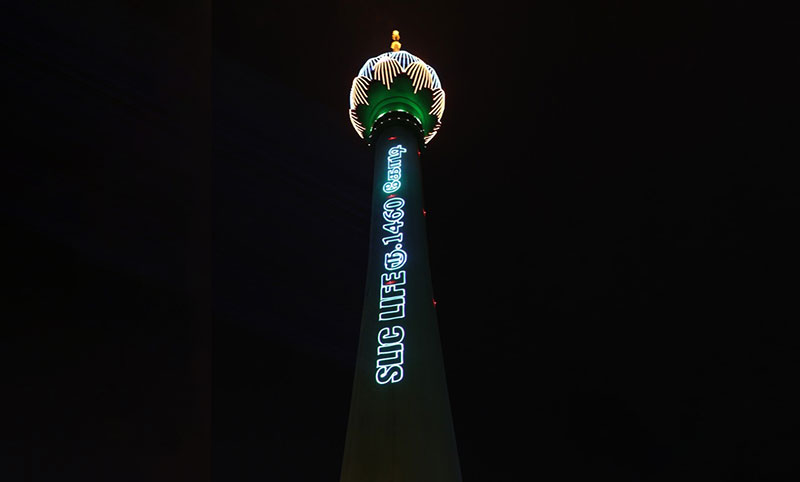
Sri Lanka Insurance Life (SLIC Life) has declared a record annual bonus of Rs. 14.68 billion to its policyholders for the 2025 financial year, the highest life insurance bonus announced by any insurer in Sri Lanka.
The company said the latest declaration raises the cumulative bonuses paid to policyholders since 2006 to Rs. 131.28 billion, extending its record of announcing the industry’s highest annual bonus.
SLIC Life said it maintained its financial strength during 2025, with total assets increasing to Rs. 275 billion and its Life Fund reaching Rs. 247 billion, the largest in the local life insurance industry. The insurer also settled an average of more than Rs. 1.35 billion a month in maturity payments and claims, amounting to approximately Rs. 16.2 billion for the year.
The company reported a Profit Before Tax of Rs. 4.3 billion for 2025, while Gross Written Premium (GWP) rose 24% year-on-year to Rs. 32.6 billion. New Business Premium Income increased by 42% to Rs. 7.56 billion.
SLIC Life said it continued to invest in digital services and customer experience while expanding its Life Loyalty Rewards programme.
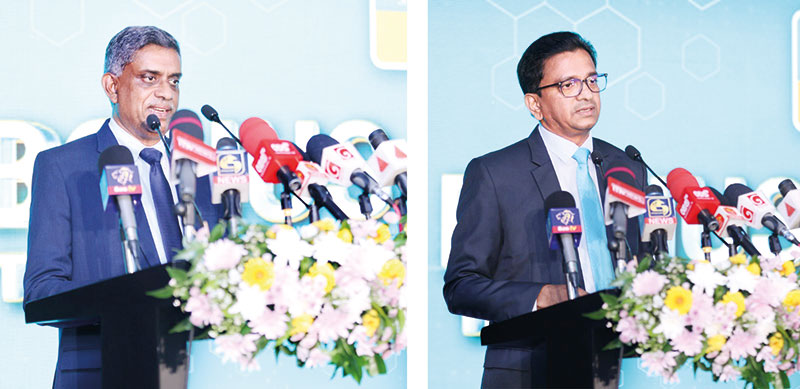
Nusith Kumaratunga, Chairman of SLIC (Left) and Nalin Subasinghe, CEO of SLIC Life (Right) addressing the gathering
The insurer also highlighted its corporate social responsibility initiatives, including the ‘Pasal Piriyatha Surakimu’ programme, which has supported more than 3,365 underprivileged schools since 2007, and the ‘Suba Pathum Scholarship Programme’, under which more than 2,200 scholarships worth over Rs. 240 million have been awarded since 2014.

Showers will occur in the Sabaragamuwa, Western and North-western provinces and in Kandy, Nuwara-Eliya, Galle and Matara districts

Negombo Prison bloodbath: Autopsies reveal brutal assaults

Excise revenue jumps 60% as revenue stickers curb liquor tax fraud

Sri Lanka Insurance Life declares record Rs. 14.68 bn bonus for policyholders

Lanka, Pakistan discuss closer defence cooperation

Thai authorities foil international syndicate smuggling Lankan family using Malaysian passports

‘Dates have the highest sugar content to fight Coronavirus’

Sunday Island 27 December – Headlines

#SundayIsland 17th December – Headlines

Sunday Island – 28th March

Sunday Island Headlines – 21 March

Sunday Island – 21st February – Headlines
-
 News2 days ago
Herath warns prospective migrant workers not to get fleeced by racketeers
-

 News6 days ago
AI concerned over proposed SL military deployment in Haiti
-

 Midweek Review4 days ago
Unexpected focus on ‘pieces of tin’ worn by military men
-
 Latest News5 days ago
Nyamhuri and Ngarava stun Bangladesh by defending 141
-

 News3 days ago
Negombo Prison riot: Ensuring protection of prisoners fundamental responsibility of the state – UN
-
 Foreign News2 days ago
Tensions erupt in Indian state after 11-year-old raped and murdered
-

 Features2 days ago
Devanesan Annan – in Memoriam
-

 Editorial4 days ago
Prison riots and political battles