
News
Hand in hand for better food and a better future: Partnerships for Sri Lanka’s SDG journey


FAO, IFAD and WFP roles highlighted
As Sri Lanka joins the global community in marking World Food Day 2025 today (16) under the theme “Hand in Hand for Better Foods and a Better Future,” the message is clear: achieving food security and nutrition for all requires collaboration that transcends institutional boundaries, sectors, and generations. In a world of increasing shocks and stresses, no single actor can shoulder this responsibility alone.
Sri Lanka stands at a critical juncture. Despite commendable progress in reducing hunger and malnutrition, the combined impacts of economic volatility, climate variability, and market disruptions continue to challenge households and communities. Food security and nutrition for all still remains unfulfilled while rural communities – particularly smallholder farmers – face barriers in accessing markets, finance, and climate-smart technologies, globally and in Sri Lanka. Delivering on the Sustainable Development Goals (SDGs) in this context is not just about meeting global commitments; it is about securing livelihoods, dignity, and stability within the country.
The United Nations’ Rome-based agencies – FAO, IFAD, and WFP, – each bring distinct strengths to this effort. FAO provides policy and technical expertise to modernise and diversify agriculture. IFAD invests in rural transformation, empowering smallholder farmers by strengthening inclusive value chains and enhancing access to finance. WFP addresses immediate food and nutrition needs while strengthening school meals, emergency preparedness, and social safety nets to build resilient food systems. However, the real impact comes when these efforts converge – aligned with national priorities and reinforced through partnerships with government institutions, private sector innovation, civil society engagement, and community participation.
In Sri Lanka, promising pathways are already visible. The adoption of modern technologies such as digital platforms for market access, remote sensing for climate-smart planning, and data-driven advisory services for farmers are beginning to reshape agriculture. Revitalisation of the tank-based irrigation systems and the sustainable use of water resources are helping enhance the production and productivity of small holder farmers. Youth-led agritech solutions are linking producers directly to consumers, while digital financial services are expanding opportunities for smallholder farmers. Fortified rice in school meals is transforming the way the nutrient needs of young school-going children are met. Women’s producer groups are playing a pivotal role in ensuring household nutrition, diversifying incomes, and advancing gender equality. Smallholder farmers are being connected to the banks for agri financing and the private sector through a public-private-producer partnerships model. These examples demonstrate that innovation, digitisation, and inclusivity – when anchored in strong partnerships – can unlock transformation at scale.
Yet, the challenges ahead demand more. Climate change is altering rainfall patterns, increasing the frequency of floods and droughts, and reducing productivity. Urbanization is accelerating demand for safe, affordable food, while limited infrastructure in rural areas constrains equitable access to markets. These are systemic challenges that cannot be solved by one sector or one generation. They require a collective vision: policies that incentivize innovation, partnerships that embrace digital solutions, and investments that prioritize both women and youth as central agents of change.
This year, on World Food Day, as FAO commemorates its 80th anniversary, we are reminded of the enduring value of multilateralism and solidarity. The call is to renew our commitment to working hand in hand – not only across the UN system, but with all partners, across sectors and across generations. Partnerships must extend from ministries to municipalities, from research labs to farmlands, from classrooms to boardrooms, ensuring that innovation and opportunity reach every Sri Lankan.
The Road Ahead
To accelerate on Sri Lanka’s path toward food security and the SDGs, four priorities stand out:
1. Accelerate digital and technological transformation in agriculture, ensuring that smallholders, especially women and youth, benefit from innovations in climate information, financial services, and market linkages.
2. Invest in gender-responsive and youth-focused programmes that recognize women and young people not only as beneficiaries but as leaders and innovators in building resilient agrifood systems.
3. Strengthen climate adaptation and resilience by modernizing tank-based ecosystems, promoting climate-smart practices, and safeguarding biodiversity and natural resources.
4. Build a unified national platform for partnerships, data, and accountability, enabling government, private sector, academia, civil society, and communities to jointly monitor progress, share innovations, and drive results.
5. Ensure nutrition-sensitive safety net programmes reach vulnerable communities, particularly women and children, to secure access to nutritious food, support healthy growth, and promote long-term food security.
Together, hand in hand, Sri Lanka can secure better foods and a better future – today, and for generations to come.
By Vimlendra Sharan,
Sherina Tabassum and Philip Ward


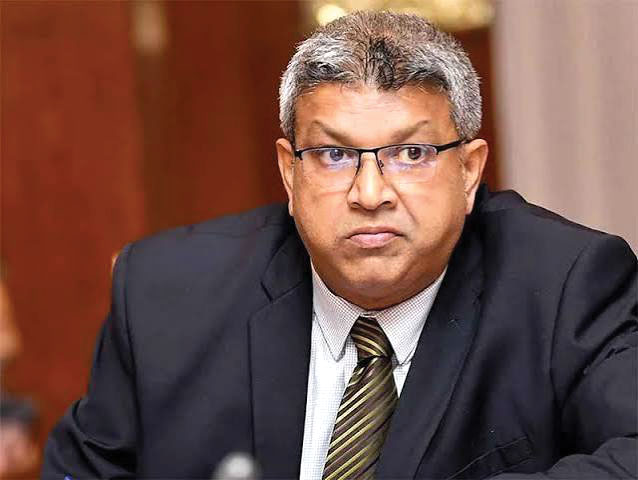
Appointment of committee eyewash, says UNP
The government is considering changes to prison regulations pertaining to the treatment of Buddhist monks serving jail terms, including their right to wear monastic robes when taken outside prison.
Justice and National Integration Minister Harshana Nanayakkara announced the proposed changes yesterday (14) following the submission of an interim report by a committee appointed to review the rules and procedures governing prisons.
The report was handed over to Secretary to the President Dr Nandika Sanath Kumanayake at the Presidential Secretariat.
One of the key recommendations is to amend Prison Standing Order 356 by introducing a new provision, 356(A). The proposed revision would require prison authorities to consult the Department of Buddhist Affairs on the removal of a monk’s robes upon admission to prison. The Commissioner of Prisons would be allowed 10 days to notify the department and take the necessary steps.
A separate amendment to Departmental Order 550 would allow Buddhist monks to wear their robes whenever they are taken outside prison, unless their respective Nikaya formally requests that the privilege be withdrawn.
The committee has also recommended extending similar arrangements, with suitable modifications, to members of other religious clergy who are imprisoned.
The proposals follow concerns raised over the treatment of Ven. Galagoda Aththe Gnanasara Thera after he was taken into custody. President Anura Kumara Dissanayake subsequently held discussions with representatives of the three main Buddhist Nikayas and appointed the committee to examine the existing legal framework.
Nanayakkara said the interim report had been forwarded to the Acting Commissioner General of Prisons, along with instructions to revise the relevant standing orders in accordance with its recommendations.
The proposed amendments have yet to be confirmed as formally implemented.
Meanwhile, the UNP yesterday criticised the government’s decision to appoint a committee to make recommendations on the attire to be worn by imprisoned Buddhist monks and other religious leaders when taken outside prison, describing the move as unnecessary.
In a statement issued yesterday (14), the UNP said the procedures governing the matter were already clearly set out in the Department of Prisons’ Standing Orders, making the appointment of a separate committee unwarranted.
The party cited remarks by Professor G.L. Peiris, Convenor of the Janathawadi Joint Opposition, who had described the committee’s appointment as a
“complete eyewash” and questioned the need for such a move.
Referring to Standing Order 550 of the Prisons Department, the UNP said convicted prisoners appearing before court for legal proceedings should not be required to wear prison uniforms.
It further stated that the regulations allowed prisoners to wear civilian clothing consistent with what they wore before imprisonment, including attire appropriate to their cultural and religious backgrounds.
The UNP accused the government of unnecessarily prolonging the issue by appointing a committee, despite the existence of regulations governing prisoners’ attire.
The party also called on the government to seek forgiveness from the Mahanayake Thera and the Sangha Council of the Kotte Sri Kalyani Samagri Dharma Maha Sangha Sabha of the Siyam Maha Nikaya over the decision concerning the religious attire of Ven. Galagoda Aththe Gnanasara Thera.
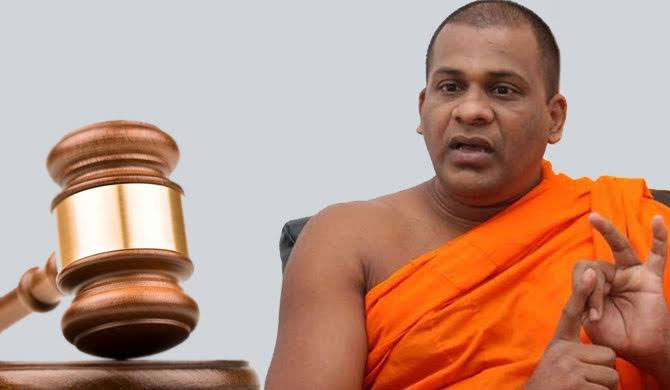
Court of Appeal President Justice Rohantha Abeysuriya yesterday withdrew from the bench hearing petitions challenging the decision by prison authorities to require Ven. Galagoda Aththe Gnanasara Thera to wear prison attire following his imprisonment.
The decision was announced when the petitions seeking to invalidate the prison authorities’ decision were taken up for consideration on October 14.
Following his withdrawal, a three-judge bench was appointed to hear the petitions.
The petitions relate to the prison authorities’ decision to require Gnanasara Thera to wear prison attire after he was taken into custody to serve the remainder of his sentence for contempt of court.
In September this year, the Supreme Court annulled the presidential pardon granted to Gnanasara Thera by former President Maithripala Sirisena in May 2019.
Following the ruling, the Court of Appeal directed the Commissioner General of Prisons to take the necessary steps to enforce the remainder of the monk’s prison sentence.
Gnanasara Thera had originally been sentenced to six years’ imprisonment for contempt of court but had served only around nine months before receiving the presidential pardon in 2019.
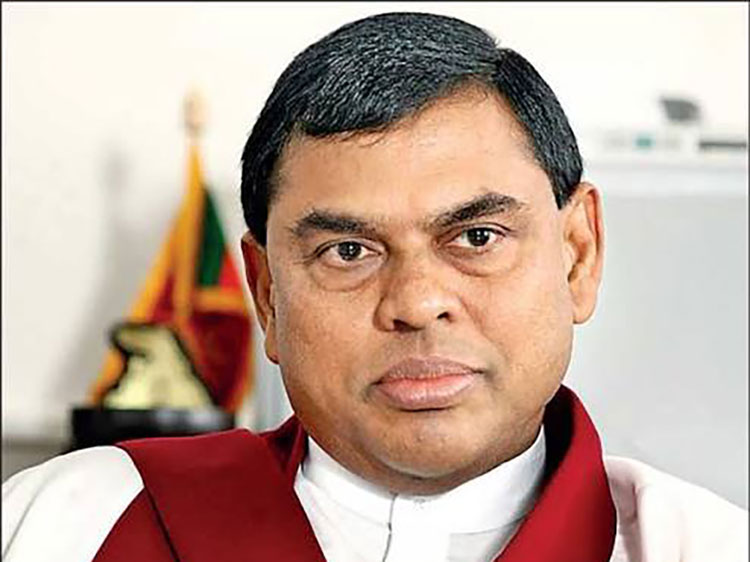
The Fort Magistrate’s Court yesterday issued an arrest warrant for former Minister Basil Rajapaksa over the alleged misuse of funds belonging to the Sri Lanka Tourism Promotion Bureau during the 2014 Uva Provincial Council election.
The Magistrate also directed the CID Illegal Assets Investigation Division to take necessary steps to obtain a Red Notice through Interpol.
The orders were issued following submissions made by the CID in connection with the alleged financial irregularities.
The CID’s Illegal Assets Investigation Unit informed the court that Rs. 7.8 million allocated to the Sri Lanka Tourism Promotion Bureau in 2014 had allegedly not been used for the Bureau’s promotional activities.
Instead, the funds had allegedly been used to provide 12,000 T-shirts during the Uva Provincial Council election, causing a financial loss to the government, the CID told court.

Showers or thundershowers will occur at most parts of the island

Prison rules to be revised over monks’ attire

AC President recuses himself from hearing prison attire case pertaining to Gnanasara Thera

Court orders steps to obtain INTERPOL Red Notice against Basil

CID informs Fort Magistrate’s Court investigation into money laundering case against Namal completed

No force used to make Gnanasara Thera wear prison garb – Prisons

‘Dates have the highest sugar content to fight Coronavirus’

Sunday Island 27 December – Headlines

#SundayIsland 17th December – Headlines

Sunday Island – 28th March

Sunday Island Headlines – 21 March

Sunday Island – 21st February – Headlines
-

 News6 days ago
NDB fraud Rs 60mn more than reported
-

 News6 days ago
Removing monk’s robes matter for Sangha to decide: Mahanayake Theras
-

 News4 days ago
Sri Lanka escalates anti-graft drive with Shiranthi’s jailing
-

 News5 days ago
NPP govt. reminded of its responsibilities as US warship leaves Colombo
-

 Latest News5 days ago
Farhan, Sadaqat help Pakistan ace 183 chase to go 1-0 up
-
 News6 days ago
BHC, Colombo: “LTTE remains a proscribed org. in the UK”
-

 Latest News3 days ago
Farhan and Sadaqat help Pakistan seal series in style
-

 News4 days ago
Iranian ships stranded, Lanka fears US sanctions