
Sports
Haider and Sharafu lead UAE to historic series win against Bangladesh


Alishan Sharafu’s composed half-century under pressure and Haider Ali’s splendid spell of 3 for 7 led UAE to a historic series win against Bangladesh in Sharjah. The hosts chased down 163 with seven wickets in hand to clinch the series 2-1, having already beaten the visitors by two wickets on Monday. It is UAE’s second T20I series win against a Full Member team, having beaten Ireland by the same margin in 2021.
Left-arm spinner Haider led the charge to reduce Bangladesh to 84 for 8, before they recovered to reach 162 for 9. Bangladesh, however, couldn’t quite use the momentum with the ball, as Sharafu, only 22, struck his eighth half-century in T20Is to anchor the chase. He struck five fours and three sixes in his unbeaten 47-ball 68 as the chase went down to the last over. He added 87 runs for the unbroken fourth-wicket stand with Asif Khan, who damaged Bangladesh with five sixes in his unbeaten 26-ball 41.
UAE didn’t quite get their chase off to the best of starts, though. After consecutive fifties in the first two games, captain Muhammad Waseem fell early in for 9 this time. Shoriful Islam got him to drive at a slightly wide one, edging to Tanzid Hassan at slip. Muhammad Zohaib then struck Hassan Mahmud for consecutive sixes in the fifth over, both times hitting through the line, one over long-on, and the other through extra cover.
Sharafu got his big-hitting going with a top-edged six off Tanzim Hasan in the seventh over, before Rishad Hossain cleaned up Zohaib for 29 with one that spun back into the left-hand batter. Rahul Chopra was the next to go just after the halfway mark, heaving at a slower bouncer from Tanzim to midwicket for 13.
Sharafu didn’t get bothered by UAE being three down and the equation reading 84 required off 56. He ramped Tanzim for a six over deep third two balls after Chopra’s wicket. He pinged the same bowler in his next over for a four through point, but then UAE were kept quiet for about 16 deliveries that left UAE to get 53 to win from 30.
Sharafu then hammered Rishad down the ground at the start of the 16th over, with Tanzid parrying the catch at long-off for a six. Asif, always on the prowl for big hits, also smacked Rishad for consecutive sixes in the same over to make it a 19-run over. It brought the required run rate down from 10.60 to 8.50 and 34 to get from the last four.
Sharafu finished the next over with a cracking four through the covers and Asif smashed Mahmud over midwicket next ball to bring it close to a run-a-ball equation. With 14 to win from 12, Asif clubbed two more sixes in the penultimate over off Tanzim on the off side before Sharafu aptly struck the winning runs next over, a blistering cover drive off Mahmud.
Waseem used four different bowlers to bowl the first four overs after winning the toss, and the fourth of those did the trick. Haider struck with his first ball, trapping the Bangladesh captain Litton Das lbw for 14. Litton missed his sweep after going across too far that exposed his middle and leg stumps, but he was disappointed on being given out.
Towhid Hridoy was also given out lbw two balls later, as he charged down and missed the ball, which struck the front pad. The raised finger caused pandemonium in the UAE side, with Haider jumping all over the place.
Haider finished with a double-wicket maiden, before removing Mahedi Hasan, who was trying to cut against a delivery that came back to hit the top of leg stump. Haider remained accurate in his next two overs too, giving him magical figures in just his third T20I.
Tanzid batted exactly the opposite to how his team-mates had been going about it. He started with a couple of big hits in the first over, he lofted Matiullah Khan for his second six in the third over, before hammering Dhruv Parashar for consecutive sixes in the fifth over after Bangladesh had lost three wickets. Tanzid sweetly timed two more fours off Akif Raja before the seamer bowled him with the around-the-wicket angle in the seventh over.
Both Parashar and Raja supported Haider, as did Matiullah after the halfway mark. Matiullah, who was expensive in the first two games, removed Shamim Hossain and Rishad in the space of four balls. Saghir Khan then had Tanzim caught at long-on, as Bangladesh were in risk of getting bowled out for less than 100.Jaker struck a couple of sixes to get Bangladesh past the 100-run mark, all the while needing the physio’s attention due to exhaustion. Mahmud struck Matiullah for his first six in the 18th over, before Jaker struck his third six, a blast down the ground in the penultimate over. Jaker, however, fell next ball, slicing Saghir to deep backward point for an easy catch. No. 11 Shoriful then deposited Saghir over the midwicket fence and Bangladesh had started to put up a respectable total.Waseem’s decision to bowl the last over backfired, as he went for 23 runs in five balls. He was taken off the attack for bowling too many high full-tosses. Sharafu had to complete the over, as his only delivery went for three runs.
Brief scores:
United Arab Emirates 166 for 3 in 19.1 overs (Muhammad Zohaib 29, Alishan Sharafu 68*, Rahul Chopra 13, Asif Khan 41*; Shoriful Islam 1-24, Tanzim Hasan Sakib 1-40, Rishad Hossain 1-42) beat Bangladesh 162 for 9 in 20 overs (Tanzid Hasan 40,Litton Das 14, Jaker Ali 41, Hasan Mahmud 26*, Shoriful Islam 16*; Akif Raja 1-27, Dhruv Parashar 1-24, Matiullah Khan 2-41, Haider Ali 3-07, Saghir Khan 2-36) by seven wickets
[Cricinfo]


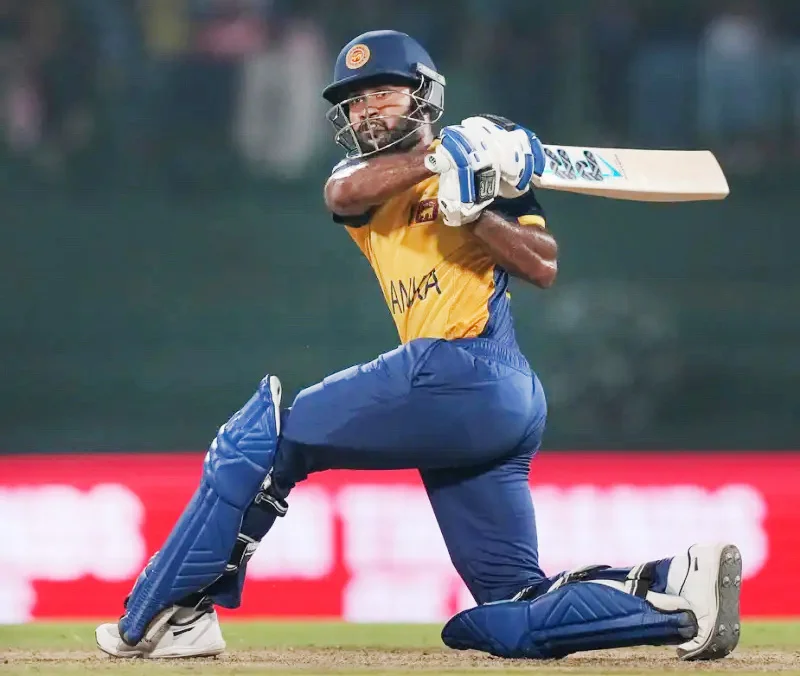
If you are late for work and fancy beating every red light on Galle Road to clock in on time, you are chasing a mirage. Try the same stunt on Baseline Road and you will learn soon enough that Colombo traffic plays by its own rules. Sri Lanka’s World Cup campaign was much the same. When you are ranked eighth in the world and expect to waltz into the semi-finals, that is wishful thinking. And as the old saying goes, if wishes were horses, beggars would ride.
Reaching the Super Eight was no mean feat. Heavyweights like Australia were bundled out in the first round, while Afghanistan, tipped as dark horse, never quite got out of the paddock. On paper, Sri Lanka did what was expected of them. So why the hue and cry?
Because this was a home World Cup. England and New Zealand were served up on a silver platter in familiar conditions and Sri Lanka dropped the ball at the business end. Those were games there for the taking, matches where one nerveless knock could have turned the tide. Instead, they blinked. The final Super Eight clash against Pakistan, however, offered a glimpse of what this side can do when the pitch suits their armoury. On helpful tracks, they have begun to punch above their weight, trading blows with sides ranked well above them.
Yet the turbulence off the field continues to undo the good work on it. Perhaps it is time to think outside the box and appoint captains specifically for World Cups, leaders given a fixed tenure for the tournament cycle, empowered to plan without looking over their shoulders. Sri Lankan cricket has witnessed enough bloodless coups over the past 15 years to fill a political thriller.
In the past, it was established players, permanent fixtures in the XI, who engineered these power shifts when a younger man was handed the reins. Now the worrying trend is different. Even those unsure of their own places in the side are sharpening knives behind closed doors. That is a slippery slope and a dangerous precedent for a team trying to build a culture of accountability.
Not everything about this campaign was doom and gloom. Far from it. The fielding, for one, was razor sharp. Half-chances stuck, direct hits flew in like guided missiles and the athleticism in the ring saved crucial runs. For years this was Sri Lanka’s Achilles’ heel. Now it is fast becoming a strength, the result of sustained emphasis and hard graft behind the scenes.
Then there was young Pavan Rathnayake. Drafted into the squad barely a week before the tournament, the 23-year-old was expected to soak in the atmosphere and learn the ropes. Instead, he walked in at the deep end and swam like a seasoned pro. Rathnayake not only held the middle order together but finished as Sri Lanka’s second highest run-getter behind Pathum Nissanka, striking at over 150. He counter-punched spinners, found gaps with soft hands and cleared the ropes with fearless intent. It was a breakout campaign that left many wondering why he had been warming the benches for so long.
True, his domestic T20 numbers were hardly headline-grabbing. But selectors are paid to look beyond spreadsheets and see temperament, technique and ticker. Thank God Sri Lanka once had a man like Duleep Mendis backing a young Sanath Jayasuriya when the numbers did not stack up. Duleep saw the bigger picture and refused to lose faith.
by Rex Clementine

Former Nannapurawa MV athlete Madushani Herath established a new Sri Lanka record in the women’s triple jump on the final day of the selection trial held at Diyagama on Sunday.
Currently, a management student of University of Kelaniya, Madushani cleared 13.68 metres to erase the record held by Vidusha Lakshani. Lakshani’s 13.66 metres record remained unshaken since 2019.
Madushani’s coach Krishantha Kumara said that the record breaking performance was a result of hardwork and combined coaching effort.
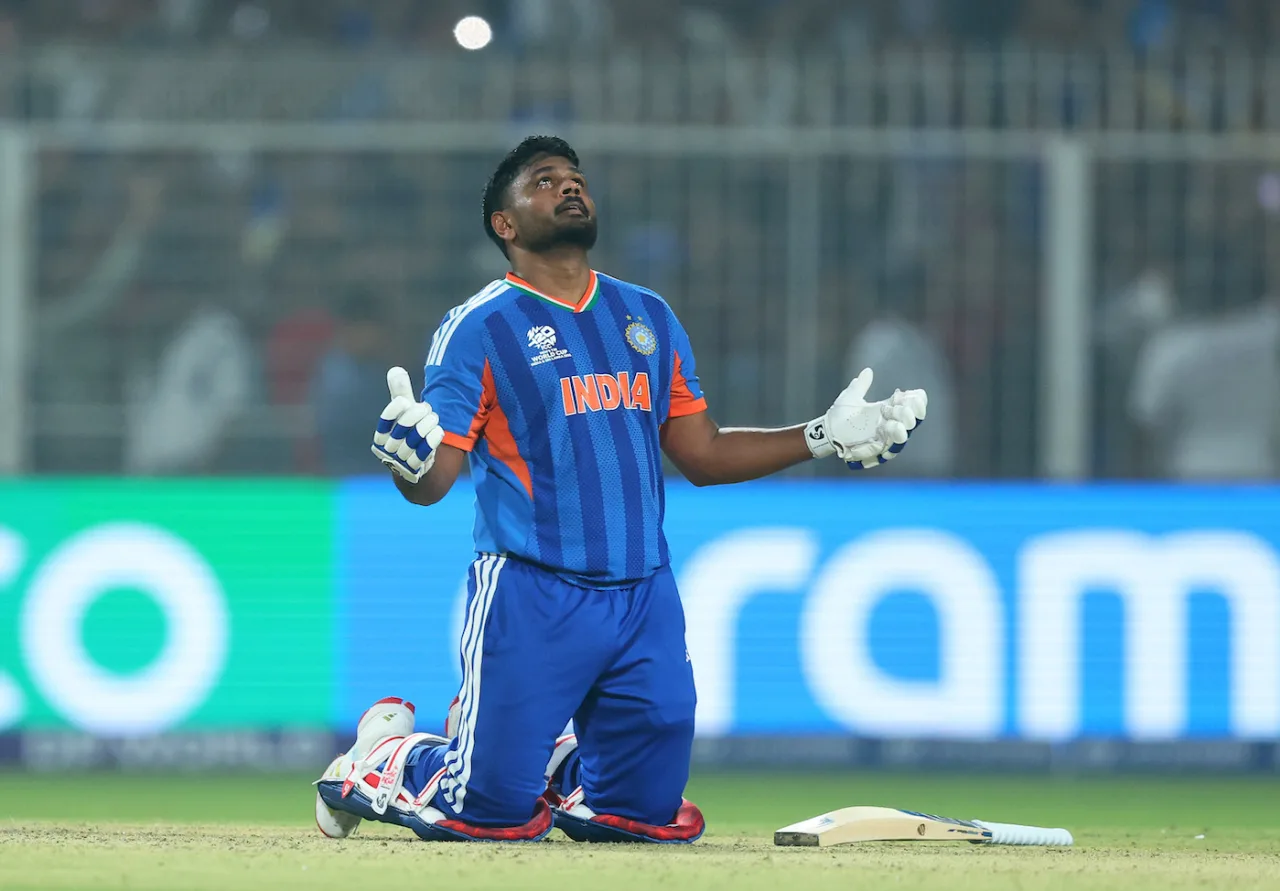
Sanju Samson was not India’s first-choice opener in the lead-up to the tournament. India changed that opening combination at the last moment, but Samson still wasn’t their first-choice opener for the first five matches of this World Cup. Brought in as an unlikely Plan B as India faced four must-win matches, Samson powered India’s highest successful chase at the T20 World Cups in the second of those.
It was good defensive bowling from India that restricted West Indies to 195 in this virtual quarter-final, a neat callback to the 2016 semi-final between these two sides when West Indies restricted India to 193. Like India were that night, West Indies were left ruing their opener’s slow innings, a 33-ball 32 from their captain Shai Hope. Outside that, the six-hitting pack scored 163 in 14.3 overs, more than the par for the conditions than their powerplay of 45 for 0.
Lacking extreme pace or mystery in their bowling, West Indies desperately needed asking-rate pressure or errors from batters who haven’t been in too many ICC must-win games. Those mistakes did come from Abhishek Dharma and Ishan Kishan, but Samson batted regally for his 97 not out off 50, taking few low-percentage options, reaching his first fifty in 13 innings in just 26 balls. This was the first time in the IPL and T20Is that Samson opened and stayed unbeaten in a successful chase, at the end of which he collapsed to his knees, looked at the heavens and crossed his heart.
West Indies brought in a new opener themselves, giving Roston Chase the job for the first time in international cricket so that they could have an offspinner for India’s left-hand batters. Chase surprisingly seemed much more at home, punishing errors in length from Arshdeep Singh, scooping Jasprit Bumrah, and sweeping Axar Patel, who completely handcuffed Hope.
Smartly, India kept bowling Axar, backloading Bumrah and Varun Chakravarthy for bigger hitters. Hope scored only 15 runs off 13 balls from Axar. He made only ten boundary attempts in his 33-ball stay. By the time Varun bowled him to make it 20 matches with at least one wicket, West Indies had dawdled to 68 for 1 in 8.5 overs, and were looking at six overs from Bumrah and Varun in the last 11.
Curiously, at this point, India didn’t go straight to Bumrah, but took the defensive option of bowling another Hardik Pandya over. Hetmyer wasted little time in regaining the record for most sixes in a single World Cup, hitting two in the first six balls to go past Sahibzada Farhan’s 19.
Having overplayed their hand, India brought Bumrah back for the 12th over, and he dismissed both the set batters for 27 off 16 and 40 off 25. When two of your three batters have such returns, you should really be doing much better than West Indies’ 103 for 3 in 12 overs.
It is a testament to the six-hitting prowess in that West Indies middle order that they still ended up with a competitive score. It started with the last ball of the 15th over when Jason Holder walked at Pandya and hit him for a straight six. Arshdeep had his figures rearranged when Powell bludgeoned him for a 98-metre six and then flicked him for one that just cleared the rope in the 16th over. Varun’s last over was taken down by Holder; his 1 for 40 meant that seven out of his ten costliest analyses in T20Is have come in the last two and a half months.
Arshdeep came back to finish off well with no boundaries in the 19th over, but Holder and Powell managed to take 26 from overs 18 and 20, bowled by Bumrah.
Abhishek practically played the entirety of the first two overs of the chase, taking India to 12 for 0. There was a bit of unease around with West Indies expecting a desperate shot. Samson didn’t need any of those. He backed away to create his first four off Akeal Hosein, and then swept and pulled him for sixes.
While Samson was caressing boundaries, Abhishek and Kishan offered catches to Hetmyer at deep square leg. Hetmyer took both of them to make it 41 for 2 in 4.3 overs.
For some reason, India, so big on right-left combinations in the lead-up to the World Cup, have been inflexible about Suryalumar Yadav batting at No. 4. He hit a trademark six over backward of square leg, but two right-hand batters in the middle allowed West Indies to bowl their left-arm spinners. Suryakumar’s contribution to the 58-run third-wicket stand was 18 off 16.
Samson stayed imperious at the other end, finding boundaries whenever the asking rate reached threatening proportions.
Against Tilak Varma, Chase created pressure, bowling three dots in his first over, the 12th of the innings. Shamar Joseph, who had taken Suryakumar’s wicket, started the 13th over with India in the most trouble they ever were in the chase, needing 92 off the last eight and a match-up against offspin in front of them.
Samson hit the first four, followed by a hat-trick of fours from Tilak to remove any alarm from the chase. As a final piece of the cherry on top, Tilak ended Chase’s second over with a straight six. He fell to a sharp catch from Hetmyer at mid-off, but Tilak did a big job with his 27 off 15.
Fittingly, Samson ended the chase with two languid hits for a six and a four to cap off “one of the greatest days of my life”.
Brief scores:
India 199 for 5 in 19.2 overs (Abhishek Sharma 10, Sanju Samson 97*, Ishan Kishan 10, Suryakumar Yadav 18, Tilak Varma 27, Hardik Pandya 17; Akeal Hosein 1-22, Jason Holder 2-38, Shamar Joseph 2-42) beat West Indies 195 for 4 in 20 overs (Shai Hope 32, Roston Chase 40, Shimron Hetmyer 27, Sherfane Rutherford 14, Rovman Powell 34*, Jason Holder 37*; Hardik Pandya 1-40, Jasprit Bumrah 2-36, Varun Chakravarthy 1-40) by five wickets
[Cricinfo]

War photographer Paul Conroy dies as tributes paid

Allies of US in the Gulf bear brunt of Iran attacks

Dry weather will prevail in most parts of the island

Israel resumes attacks as Iran vows to avenge supreme leader’s death

CPC has enough fuel stocks

Lanka, Pakistan strengthen ties at 13th JEC

‘Dates have the highest sugar content to fight Coronavirus’

Sunday Island 27 December – Headlines

#SundayIsland 17th December – Headlines

Sunday Island – 28th March

Sunday Island Headlines – 21 March

Sunday Island – 21st February – Headlines
-

 News7 days ago
Prime Minister Attends the 40th Anniversary of the Sri Lanka Nippon Educational and Cultural Centre
-

 Opinion3 days ago
Jamming and re-setting the world: What is the role of Donald Trump?
-
 Sports7 days ago
Dottin out obstructing the field as Sri Lanka clinch series
-

 Features3 days ago
An innocent bystander or a passive onlooker?
-

 Features5 days ago
Building on Sand: The Indian market trap
-
 Opinion5 days ago
Future must be won
-

 Features4 days ago
Ratmalana Airport: The Truth, The Whole Truth, And Nothing But The Truth
-

 Business4 days ago
IRCSL transforms Sri Lanka’s insurance industry with first-ever Centralized Insurance Data Repository