
News
Guaranteed paddy prices announced

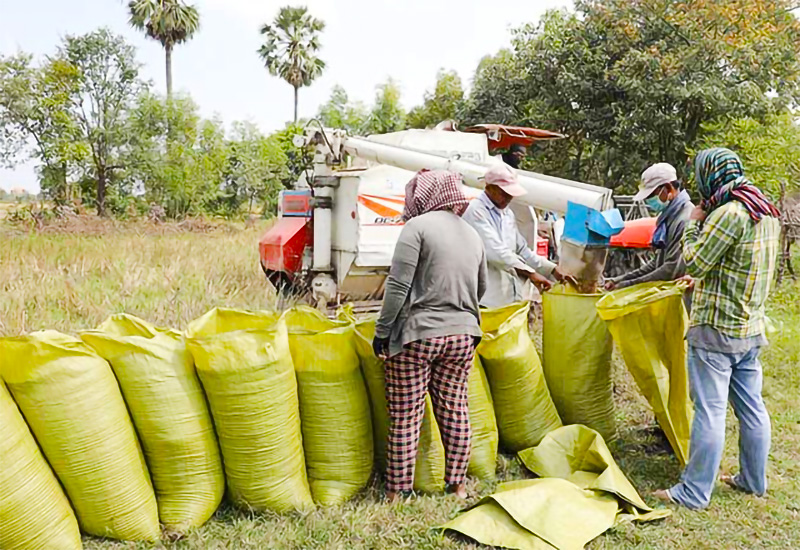
The government yesterday (05) announced the guaranteed prices at which the Paddy Marketing Board (PMB) will purchase paddy from farmers, during a special media briefing.
The guaranteed prices are as follows: Nadu paddy will be purchased at Rs. 120 per kilogram, Samba paddy at Rs. 125, and Keeri Samba paddy at Rs. 132.
Minister of Agriculture K.D. Lal Kantha, alongside Deputy Minister Namal Karunaratne, outlined the new procurement rates, explaining that these rates were determined following an evaluation of rice market trends and farmers’ production costs.
He noted, however, that in many areas traders were paying a higher rate for paddy and advised farmers to sell their produce to the highest bidder.
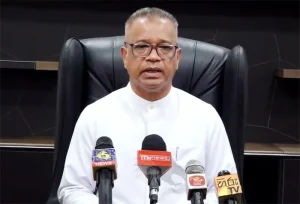 The Minister stressed that the government’s price was merely a mechanism to prevent traders from offering unconscionably low prices that could be detrimental to farmers.
He said that during recent weeks, when only a limited number of farmers were harvesting, prices were elevated due to scarcity, and enforcing a fixed price at that time would have been harmful to the farmers. With an influx of rice stocks now anticipated, there is a risk that prices may collapse; the controlled prices have, therefore, been introduced to counteract that possibility.
The Minister also confirmed that the government will only purchase dry paddy from farmers. He emphasised that the decision was taken to ensure fair prices for farmers while maintaining stability in the rice market, and the Paddy Marketing Board is expected to begin purchasing paddy at these rates immediately. (RK)



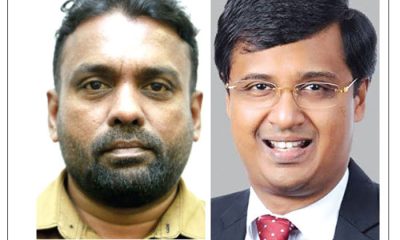
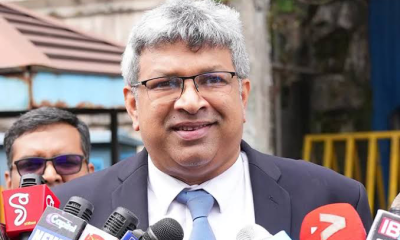

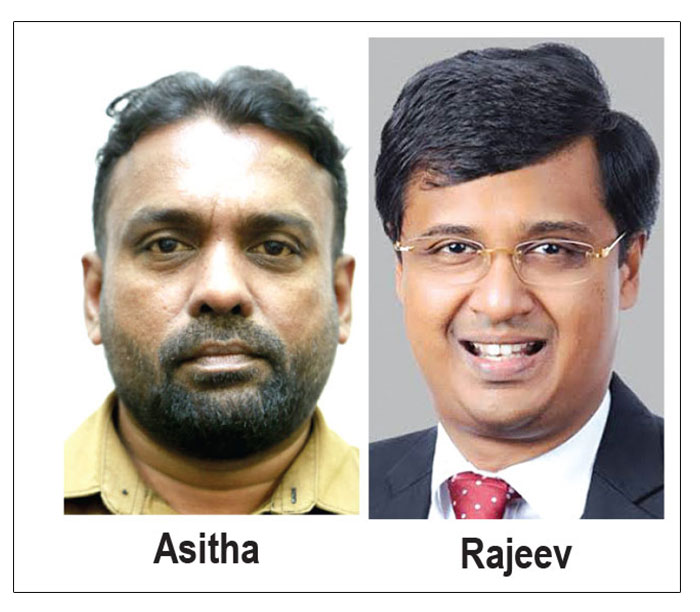
The Bar Association of Sri Lanka (BASL) has challenged NPP MP Asitha Niroshana Egoda Vithana to repeat what it called a false claim made in Parliament about anagreement between SJB leader Sajith Premadasa and BASL President Rajeev Amarasuriya.
The Colombo District MP Vithana alleged that Amarasuriya had recently received an assurance from Premadasa, who is also the Opposition Leader, that he (Amarasuirya) would be fielded as the SJB Chief Ministerial candidate at the Western Province PC polls in return for BASL campaigning against the government’s move to extend the retirement age of the superior court judges.
A top BASL spokesman told The Island that in case the lawmaker repeated the allegation outside Parliament, without the cover of parliamentary privilege, due legal consequences would follow.
The text of the statement: “The Bar Association of Sri Lanka (“BASL”) views with deep dismay the false utterances made today in Parliament by
Government Member of Parliament Mr. Asitha Niroshana Egoda Withanage regarding the President of the BASL, Mr. Rajeev Amarasuriya.
The BASL categorically states that the allegations are utterly false, baseless, and made with malicious intent.
The BASL is deeply concerned by the abuse of parliamentary privilege to make unfounded and defamatory false utterances, thereby seeking to mislead and misguide the public.
Furthermore, such cheap political attacks on the BASL will not succeed. The legal fraternity of Sri Lanka stands united and will face any challenge to its independence and integrity.
In respect of the proposal to increase the retirement age of the Judges of the Court of Appeal and Supreme Court, it has been the firm view of the Bar that constitutional amendments affecting the Superior Courts should never be undertaken in an ad hoc manner or in response to temporary circumstances. Amendments of such constitutional importance should only be introduced where there exists a demonstrable institutional necessity, transparent public justification and broad and defensible stakeholder consultation. Public confidence in constitutional governance depends upon the process adopted as much as the substance of the amendment itself.
The BASL has, throughout its history, stood firm against any threat to democracy, the independence of the judiciary, and the Human Rights of the people including the right to protest. The BASL has spoken out without fear or favour, regardless of which government is in power. The legal community is well aware that the BASL does not, and will not, play politics.
The BASL challenges Member of Parliament Mr. Asitha Niroshana Egoda Withanage to repeat the said false utterance outside Parliament without the cover of Parliamentary Privilege so that due Legal Consequences can follow.”
By Shamindra Ferdinando ✍️
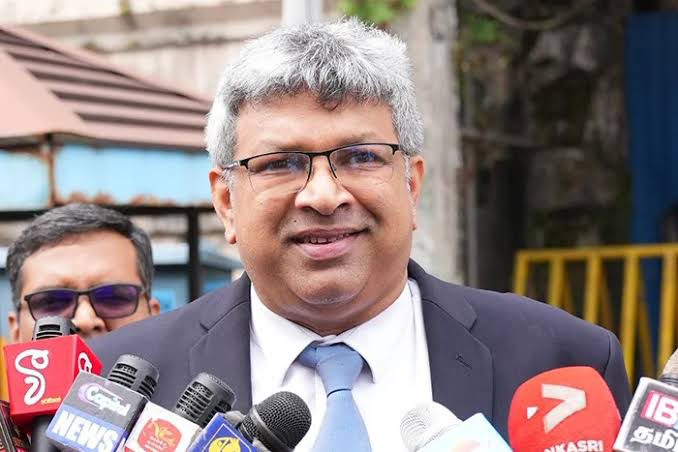
Justice Minister Harshana Nanayakkara will meet a delegation from the Bar Association of Sri Lanka (BASL) this week to discuss the government’s hotly disputed decision to introduce a constitutional amendment to increase the retirement ages of judges of the Supreme Court and the Court of Appeal.
Both the Justice and National Integration Ministry and the BASL confirmed the scheduled meeting.
The BASL, in a letter dated 16 July, 2026, addressed to Minister Nanayakkara, who is also an Attorney-at-Law, requested that a delegation, consisting of members of the executive committee of the BASL, and senior members of the profession, be granted an opportunity to discuss the issues at hand.
Responding to The Island queries, sources revealed that the government, with an overwhelming 2/3 majority in Parliament, was determined to go ahead with the controversial constitutional amendment, whereas the BASL, too, remained inflexible in its opposition to the move.
The BASL reiterated that as emphasised in their 16 July dated letter, addressed to Minister Nanayakkara, the premier legal body expected the government to put on hold the process until meaningful consultations take place among principal stakeholders of the justice sector.
The BASL wrote to Minister Nanayakkara on 30 March, 2026, seeking clarifi-cation regarding the proposed constitutional amendment and in the absence of response, raised the issue with President Anura Kumara Dissanayake on 25 May, 2026. Sources said that the President, too, refrained from responding to the BASL’s letter and they didn’t have any other option than stepping up pressure.

By S.K. Samaranayake ✍️
A team of police officers, led by Kadawatha Police Station Chief Inspector Buddhika Rajapaksha, has arrested two members of an organised motorcycle theft gang, along with three stolen motorcycles, and 14 grams of heroin, in their possession.
The Kadawatha Police are conducting investigations to arrest another suspect connected to the gang. Police stated that the suspects had concealed the stolen motorcycles at their residences in Eldeniya, Kadawatha. Further investigations are being carried out by the Kadawatha Police to determine whether the suspects are addicted to drugs.
Under the supervision of Senior Superintendent of Police, Nuvan Asanga, the Kadawatha Police are conducting further investigations to ascertain whether the suspects have stolen any other motorcycles.

Sooryavanshi the star as India complete 3-0 sweep

US and Iran hit pause on strikes for second day

Showers will occur in the Western, Sabaragamuwa and North-western provinces and in Galle, Matara, Kandy and Nuwara-Eliya districts

Chamika, Colambage help Galle Gallants consolidate top spot

BASL challenges NPP MP to repeat false claims outside Parliament

Judges’ retirement age row: Govt.-BASL powwow on the cards

‘Dates have the highest sugar content to fight Coronavirus’

Sunday Island 27 December – Headlines

#SundayIsland 17th December – Headlines

Sunday Island – 28th March

Sunday Island Headlines – 21 March

Sunday Island – 21st February – Headlines
-

 Features1 day ago
MBS: The Man of the Last Laugh
-
 Features1 day ago
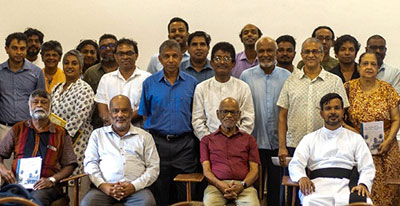
A Landmark Gathering of Minds: The Ceylon Journal Roundtable Revives the Spirit of Intellectual Dialogue
-
 Midweek Review5 days ago
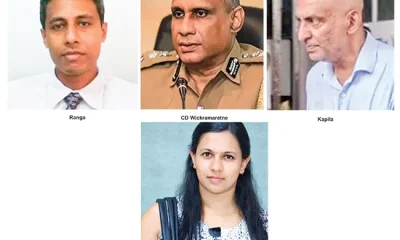
Three high-profile alleged suicides shaping key investigations
-
 Latest News2 days ago
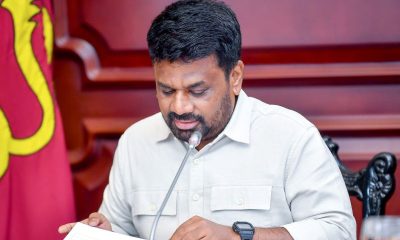
Develop a programme to allocate underutilised state land for investment by returning migrant workers – President
-
 Life style1 day ago
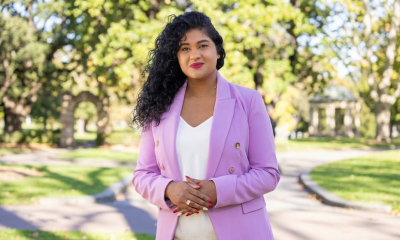
A proud Sri Lankan voice in Australian Parliament
-

 News2 days ago
Fort Magistrate orders arrest of MP Archchuna
-

 Editorial1 day ago
‘Cockroaches’ tame a mighty regime
-
 Editorial2 days ago
An indictment of all parties