
Business
Green Tape is set to revolutionize procurement


A bold new venture seeks to revolutionise Sri Lanka’s tender and procurement system by automating the buyer-seller experience and easing the disruptions caused by the Covid-19 pandemic. www.greentape.lk is Sri Lanka’s online procuring platform that offers a certified and verified vendor base. The Platform which aims to create a level playing field for procurement in the Country was launched in November 2020. Within a short time span it is already serving a base of over 30 high profile buyer companies. They have successfully concluded more than 700 tenders amounting to some half a billion Rupees in business for over 3000 registered suppliers. The Suppliers comprise a good cross-section from very small to large businesses and also businesses from overseas.
Green Tape is a multi-tenant cloud platform conceptualised, designed, developed and brought to market by Affno Virtual Market (Pvt) Limited (AVM). Buyer companies can enhance process and spend efficiency as well as institute an organisational change whilst sellers get easy and cost-effective access to these buyer companies.
Nissanka Weerasekera, Chairman of AVM and a pioneer in the tech institutional investor community in Sri Lanka, explained that procurement is the Cinderella of automation and productivity improvement in business. “Its relative immaturity compared to other corporate functions results in companies standing to lose considerably. The loss is not just financial but also reputational. And what’s worse, the loss is for the most part out of the view of business owners. As such, procurement remains the covert bane of business.”
“By attracting large volumes of B2B buyers and sellers to one place to transact, network effects would multiply the value of any one buyer or seller being present on the Platform, giving each buyer and seller far greater reach”, explained AVM’s Managing Director and co-founder of the Affno Group, Suren Kannangara. Effectively, buyer companies would be in a better position to get the best prices owing to their ability to attract and work with a larger number of suppliers; and suppliers would be able to grow their business faster and cost effectively by being able to easily access new buyer companies.
The Platform streamlines everything for buyers from tender creation, review and approval, to reaching the best suppliers, managing clarifications and submissions, and identifying the best bid. Among the buyer companies on-board are prominent groups such as Sunshine Holdings, Access Engineering and McLarens who have very large procurement functions and an elaborate process. “They need to get multiple approvals and control costs. With such tedious requirements, they now find business easier and smoother with Green Tape. Also, for suppliers, it also dramatically simplifies the process, encouraging them to place greater value on the opportunity to serve the buyer companies’ needs. This ensures buyer companies get the best product at the best price”, added Kannangara.
The initial registration to the platform is offered free of charge while for a nominal fee of Rs. 858 per month a supplier gets access to at least ten buyer companies. “We want to make the platform affordable and accessible to all suppliers irrespective of their size. With a simple, transparent and customizable system, we can reduce the inefficiencies and help buyers find suppliers, and suppliers find clients. Our aim is to make business smoother and to create opportunity”, concluded Amal Karunaratne, Chief Operating Officer of AVM.
Adapting to the new normal amid the current pandemic, Green Tape helps businesses to grow with faster onboarding mechanisms and submissions. Unique features of the system allow users to navigate with ease and allows convenient access to new partnerships and opportunities with minimal effort. Green Tape has set its objectives to streamline the current process of procuring with a more simplistic and transparent system that helps suppliers and buyers to reach out with the aim of creating more business opportunities.

The Commercial Documents Registration Division (CDRD) of The Ceylon Chamber of Commerce has expanded its export support services with the introduction of the Free Sale Letter for Pharmaceuticals, providing Sri Lankan pharmaceutical manufacturers and exporters with an additional document certification service to support their export processes and compliance requirements in international markets.
The new service expands CDRD’s portfolio of trade documentation solutions, which includes Certificates of Origin and the certification of key commercial documents required by overseas buyers, customs authorities, and regulatory bodies. These services assist exporters across sectors by helping ensure their documentation meets applicable requirements for international trade.
Established in 1925 as one of the authorised institutions to issue Certificates of Origin in Sri Lanka, CDRD has supported the country’s international trade for nearly a century. Today, the Division provides certification and verification services to exporters, manufacturers, freight forwarders, logistics providers, and other trade stakeholders, supporting businesses in meeting documentation requirements for global markets.
In addition to pharmaceutical certification, CDRD facilitates the certification of Commercial Invoices, Packing Lists, Price Lists, Health Certificates, Phytosanitary Certificates, Certificates of Analysis, Bills of Lading, Survey Reports, Beneficiary Certificates, and other export-related documents. The Division also issues Free Sale Letters and Surveyor Appointment Letters, while supporting exporters through the Ministry of Foreign Affairs’ Electronic Document Attestation System (e-DAS), enabling secure and efficient document authentication.
Through established processes, digital solutions, and its e-service platform, CDRD continues to enhance the efficiency and accessibility of trade documentation services. Available 24/7 and 365 days of the year, the platform enables exporters to submit and manage documentation requirements conveniently while ensuring that certified documents meet internationally accepted requirements. By providing reliable documentation support and adapting its services to changing trade needs, the Division assists Sri Lankan businesses in managing export requirements and accessing international markets.
For more information on obtaining commercial document registration services, contact Achala via achala@chamber.lk / 0115588886
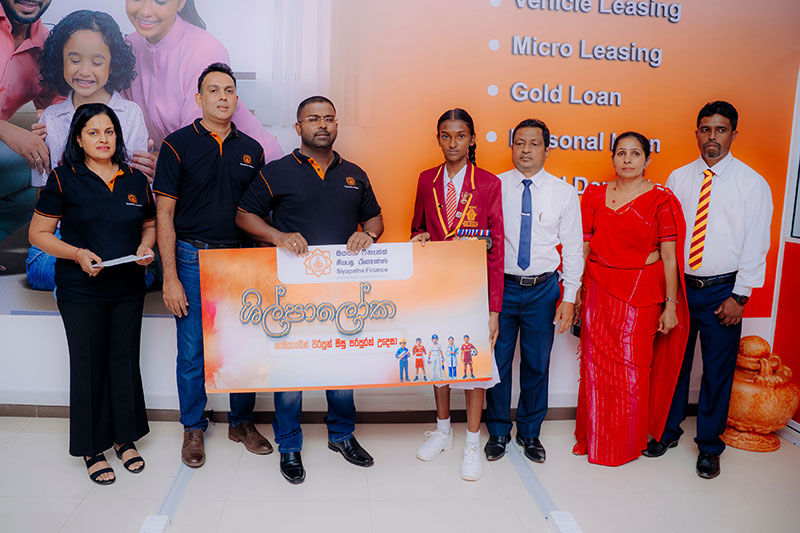
Siyapatha Finance PLC recently expanded its island-wide footprint with the successful inauguration of its 64th branch in Bandarawela. Strategically located in scenic hill town in the Badulla District, the latest branch offers convenient and wider access to tailored, customer-centric financial solutions.
The branch was ceremoniously declared open by Siyapatha Finance PLC Chief Executive Officer (CEO) Mathisha Hewavitharana, joined by Chief Operating Officer (COO)Rajeev De Silva, Ms.D.M. Dewmi Tharindi, a student of Bandarawela Dharmapala Vidyalaya who won the Under-18 Girls’ 3,000m event at the Junior National Athletics Championship, the Senior Management and staff members as well as Traffic OIC Kandasami, Trade Association Secretary Sunanda Rathnayaka, representatives of the government and private banks and insurance companies and well-wishers.
Sharing his thoughts, Siyapatha Finance PLC CEO Mathisha Hewavitharana remarked: “We are deeply honoured to be of service to the people of Bandarawela. Opening this branch is a pivotal step in our 2026 expansion strategy and a reflection of our commitment to strengthen our presence in Sri Lanka. It is a region that showcases potential for greater economic development primarily through the country’s traditional agricultural practices. We look forward to reaching as many different communities as possible in the coming years.”
The Bandarawela branch offers a comprehensive product portfolio including leasing, fixed deposits, gold financing, business loans, personal loans, fast draft, and factoring to Smart Pay, the Company’s bill payment facility. With a thorough understanding about the current socio-economic dynamics of the region, the well-trained team at the newest branch is dedicated to providing flexible financial solutions to aspiring individuals as well as small and medium-scale enterprises (SMEs).
Business
Dialog recognised as Sri Lanka’s Most Loved Service and Telecommunications Brand for third consecutive year


Dialog Axiata PLC, Sri Lanka’s #1 connectivity provider, has once again been recognised as Sri Lanka’s Most Loved Brand in the Service and Telecommunications sectors, while also ranking among the top Corporate Brands in the LMD Brands Annual. Marking its third consecutive year at the top of both categories, the recognition reflects the company’s commitment to enriching Sri Lankan lives and enterprises through technology, while creating value for customers, communities and the nation.
The accolades were awarded through the LMD Brands Annual survey, conducted independently by PepperCube Consultants on behalf of Media Services. Based on responses from 400 readers across Sri Lanka, representing a broad demographic and geographic mix, the survey identified the brands that resonated most strongly with consumers in terms of trust, loyalty and brand affinity.
Lasantha Theverapperuma, Group Chief Marketing Officer of Dialog Axiata PLC said, “Being recognised as Sri Lanka’s Most Loved Brand across both the Service and Telecommunications sectors is a meaningful endorsement of the trust and confidence that Sri Lankans continue to place in Dialog. This recognition reflects our commitment to understanding and serving the evolving needs of our customers while expanding access to digital connectivity, services and opportunities. As we continue to innovate and grow, we remain focused on creating value for communities and supporting Sri Lanka’s digital and socioeconomic progress.”
The recognition also reflects Dialog’s continued focus on innovation, customer-centricity and investments that support Sri Lanka’s digital future, including expanded 5G connectivity, AI-powered digital experiences and broader access to digital services.
Beyond connectivity, Dialog continues to support communities, livelihoods and the environment through initiatives such as Govi Mithuru, which provides AI-driven agricultural advisory services to over one million farmers, and Shishyadhara, which has enabled subsidy distribution to more than 450,000 underprivileged students. The company also continues to advance its Net Zero 2050 ambition through energy optimisation, renewable energy adoption and the expansion of solar-powered network infrastructure.
Further underscoring the brand’s standing among Sri Lankan consumers, Dialog was also recognised as the ‘Service Brand of the Year’ for the fifth time and the ‘Telecommunication Brand of the Year’ for the 15th consecutive year at the SLIM-KANTAR People’s Awards 2026.

History takes centre stage as Mandhana, Harmanpreet fifties steer India

Spain leave it late to book semifinal date with France

Showers will occur in the Sabaragamuwa, Western and North-western provinces and in Galle, Matara, Kandy and Nuwara-Eliya districts

US$ 2.5 mn cyber heist exposes system failures

Opposition signs no-confidence motion against Justice Minister for dereliction of duty over Negombo Prison deaths

AG informs SC of e-visa agreement review

‘Dates have the highest sugar content to fight Coronavirus’

Sunday Island 27 December – Headlines

#SundayIsland 17th December – Headlines

Sunday Island – 28th March

Sunday Island Headlines – 21 March

Sunday Island – 21st February – Headlines
-

 News7 days ago
Singapore-based Buddhist monk marks nearly four decades of humanitarian service
-
 News2 days ago
Herath warns prospective migrant workers not to get fleeced by racketeers
-

 News6 days ago
AI concerned over proposed SL military deployment in Haiti
-

 Midweek Review4 days ago
Unexpected focus on ‘pieces of tin’ worn by military men
-

 Latest News5 days ago
Nyamhuri and Ngarava stun Bangladesh by defending 141
-

 News3 days ago
Negombo Prison riot: Ensuring protection of prisoners fundamental responsibility of the state – UN
-

 Features7 days ago
The NPP’s New Challenge: Balancing Easter Lawfare and Economic Welfare
-
 Foreign News2 days ago
Tensions erupt in Indian state after 11-year-old raped and murdered