
News
Green Growth takes the stage: Sri Lanka hosts high-level event on climate action


The Ministry of Environment and the Global Green Growth Institute (GGGI) organized a High-Level Event on Strategies and Actions to Accelerate Sri Lanka’s Transition to a Green Growth Pathway on February 6.
The event (was) aimed to complement ongoing efforts to transform Sri Lanka’s development, by formalizing the application of a green growth model. It was under the patronage of President Ranil Wickramasinghe and former UN Secretary General Ban Ki-moon, the President of the Assembly and Chair of the Council of the Global Green Growth Institute, the event brought together key stakeholders from government, private sector, development partners, academia, and civil society, a news release connected with the event said.
“Delivering a key statement at the event Ban Ki-moon reinstated a powerful statement, “We have no excess time to spare, nor do we have a Plan B or a Planet B. This is what we will bestow upon our succeeding generation”. A message that resonated strongly with the diverse audience members,” it said.
During his welcome remarks, Dr. Anil Jasinghe, Secretary Ministry of Environment expressed that the Government of Sri Lanka was not able to successfully deliver alone on the transition to a green development pathway and were seeking the support of all the experts invited and looking forward to forging partnerships and working in close collaboration, over the long term.
The event featured a panel discussion on strategies and actions to accelerate Sri Lanka’s green growth pathway, moderated by Dr. Achala Abeysinghe, GGGI Asia Regional Director and Head of Programs. Leaders representing various sectors presented their perspectives on strategies and actions
Ms. Kumudini Vidyalankara, Director of Climate Change at the Ministry of Environment, discussed the development of a green enabling environment in Sri Lanka. She acknowledged that while the country has robust policies and plans in place, there are still significant obstacles that need to be addressed, including a lack of financing, technical expertise, and capacity.
This sentiment was echoed by Environment Minister Naseer Ahamed in his remarks. The Government of Sri Lanka is keen to work closely with development partners, organizations such as GGGI, and the private sector to address these gaps.

Mr. Dimantha Seneviratne, Chief Executive Officer of the National Development Bank PLC [NDB] stated that many banks are currently working towards accessing significant funding from global climate financiers for the purpose of on-lending to green projects, while also building the required institutional capacity to play this role. The Central Bank of Sri Lanka as the regulator has facilitated this process by formulating the required regulatory environment with the launch of the “Green Finance Taxonomy”.
Senaratne further stated that the consideration of a debt-for-nature swap transaction to supplement the sovereign debt restructuring process can serve as a key demonstration project for Sri Lanka that can mirror the success of such transactions executed in the South American region.
Ms. Karin Fernando, Senior Research Professional and Team Leader for Sustainable Development at the Center for Poverty Analysis (CEPA) was of the view that while greening is important, there is also a real need to reduce inequalities and increase opportunities. This means reducing the gap between urban and rural areas through diversifying employment options to include jobs that are not dependent on natural resources. Recognizing the rights and dignity of the poor, ensuring that they are not dispossessed and have support to transition into new jobs is also something to be prioritized, she said.
Mr. Dilhan Fernando, CEO of Dilmah Tea and Chair of Biodiversity Sri Lanka, indicated that only when businesses understand the need for climate action as well as realize the impact that collective action by the private sector can have, can there be a sincere and urgent commitment to Environmental Social and Governance (ESG). This includes considering aspects of business operations that might degrade nature while seeking to innovate in terms of products, processes, materials, and strategies for ending biodiversity loss, reducing pollution, and striving for nature-positive business.
Finally, Prof. Buddhi Marambe, Senior Professor at the Faculty of Agriculture at the University of Peradeniya spoke about the use of climate-smart technologies to increase food security and reduce vulnerability in both urban and rural settings. Along with the importance of observing good agricultural practices coupled with green growth scenarios. Closing the panel discussion Dr. Abeysinghe noted that GGGI and the development partner community were dedicated to supporting the Sri Lankan government in achieving its green goals.
Delivering key remarks at the conclusion of the event, President Wickremesinghe highlighting the nation’s double jeopardy. The ongoing struggle with both an economic crisis and fiscal imbalances to address climate action. He emphasized the need for international cooperation and stronger financial commitments from developed countries to address these pressing challenges.
Additionally, Ban Ki-moon highlighted GGGI’s willingness to support Sri Lanka in new areas such as Debt for Nature Swaps, floating Solar or electric buses; projects that the organization is piloting and developing investment strategies for in numerous countries across the world.
He concluded his recommendations by emphasizing the importance of the proposed steps in creating a comprehensive and ambitious partnership between the Government of Sri Lanka, GGGI, and the private sector. He assured that the GGGI and its members are fully committed to supporting Sri Lanka in its green transition and will spare no effort in doing so.
Dr. Sonali Senaratna Sellamuttu, Country Representative for GGGI in Sri Lanka, stressed in her vote of thanks, that a synopsis from the event would be shared and include the views expressed not just by the speakers, but by all invitees, collated through an online app during the event, on priority actions and concrete steps needed to work collectively to move the green growth agenda forward.
J


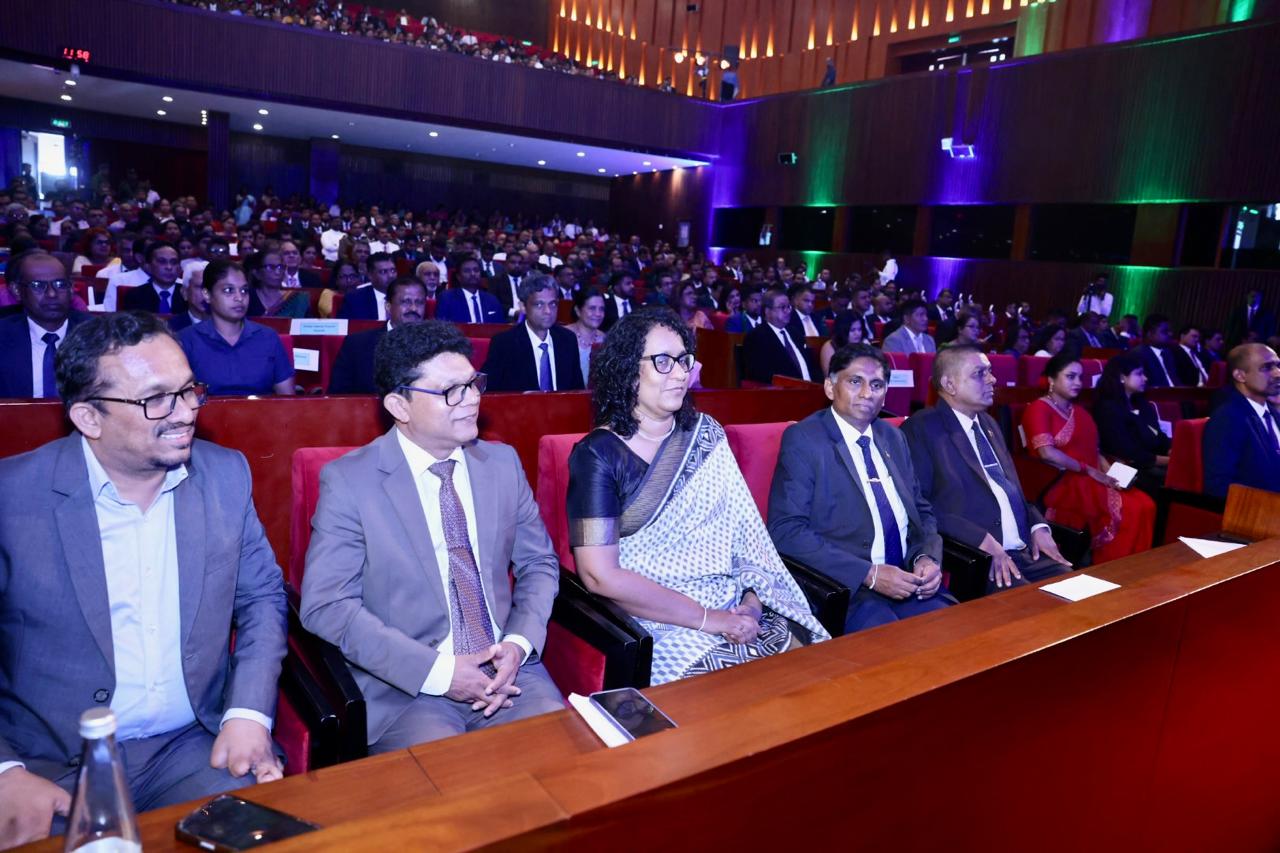
Prime Minister Dr. Harini Amarasuriya stated that the Government was deeply saddened by the unfortunate death of the Tusker Kavanthissa, a national treasure who sustained severe injuries from gunshot wounds. She emphasised that environmental laws would be strictly enforced against those responsible for environmental crimes, without discrimination or favouritism.
The Prime Minister made these remarks while addressing the Presidential Environmental Awards 2026, organised for the 11th time by the Central Environmental Authority under the Ministry of Environment, at the Bandaranaike Memorial International Conference Hall (BMICH) in Colombo on Monday (19 October).
A total of 195 awards, comprising Gold, Silver, Bronze and Merit Awards, were presented to institutions recognised for their sustainable management of natural resources. The Prime Minister participated in presenting the Gold Awards.
Addressing the occasion, the Prime Minister stated:
“A country’s prosperity is measured not only by its economic indicators. Clean air, safe drinking water and a healthy ecosystem are equally essential to ensuring a better quality of life for its people.
The Clean Sri Lanka programme, launched with this objective, is not merely about cleaning roads. It is a national transformation aimed at reducing waste, ensuring proper waste management and changing the way we think about and treating the environment.
We cannot allow tragedies such as the one that befell Tusker Kavanthissa to happen again. Environmental laws must not be influenced by a person’s position, wealth or connections. The law will be enforced equally against everyone. Everything from the issuance of licences to the approval of projects must be carried out on the basis of scientific evidence and with complete transparency.
Development achieved at the expense of environmental destruction can never be considered sustainable development. Wildlife officers and veterinary teams made significant efforts to save the Tusker Kavanthissa. However, the Tusker could not be saved due to the severity of its injuries and the resulting infections.
The Government is deeply saddened by this loss. In order to prevent similar incidents in the future, we will further strengthen veterinary care for wildlife and veterinary education. The Government has already taken a number of practical measures to address the long-standing human-elephant conflict.
Accordingly, 113 forest areas have been designated as reserves, bringing 71,900 hectares (approximately 180,000 acres) under protection. In addition, three elephant corridors are being established to facilitate the free movement of elephants, alongside a dedicated reserve for elephant management.
In order to strengthen the field operations of the Department of Wildlife Conservation, 100 pickup vehicles, 185 motorcycles and nine tractors have been provided. Furthermore, 3,500 elephant fence assistants and 5,000 members of the Civil Security Department have been deployed to maintain elephant fences.
Steps have also been taken to amend the National Environmental Act after 26 years. More than 1,600 new officers are being recruited to the Ministry of Environment.
Environmental conservation must not be treated as a temporary project. It must become an essential component of government policy and the daily lives of every citizen. It is vital to support small and medium-sized enterprises in adopting green technologies, promoting practical environmental skills through school and university education, and fostering environmental responsibility through religious institutions. We seek the support and cooperation of the entire public to ensure that we leave behind a safe, beautiful and clean country for future generations.
The event was attended by Minister of Environment Dhammika Patabendi; Minister of Industry and Entrepreneurship Development Sunil Handunnetti; Deputy Minister of Environment Anton Jayakody; Secretary to the Ministry of Environment K. R. Uduwawala; Chairman of the Central Environmental Authority, Professor Tilak Hewawasam; and a large gathering of government officials, foreign representatives and award recipients.
Prime Minister’s Media Division

President Anura Kumara Dissanayake today (20) paid his last respects to the remains of Most Venerable Kappetiyagoda Siri Wimala Thera, Anunayake of the Sri Lanka Ramanna Maha Nikaya and Chief Incumbent of the Rajopawanaramaya Temple in Gatambe, Kandy, who passed away.
The President visited the Rajopawanaramaya Temple in Gatambe, Kandy, where the remains of the Thera are lying, and paid his last respects. He subsequently expressed his deepest condolences to the Maha Sangha and the temple’s Dayaka Sabha, who are mourning the passing of the Thera.
Central Province Governor and Consultant Physician Dr Harsha Suranga Fernando, Kandy District Secretary Indika Udawatta and several others were present.
President’s Media Division (PMD)

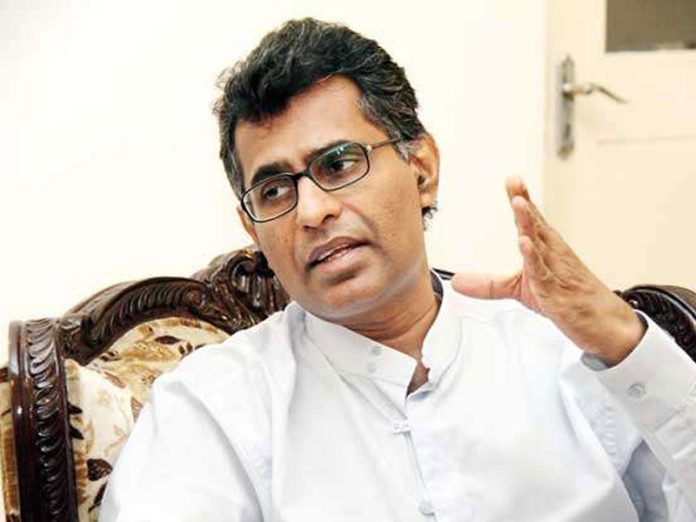
… reminds AKD led over 560 protests during Yahapalanaya
Former Yahapalana Minister and United Republican Front (URF) leader Patali Champika Ranawaka yesterday (19) alleged that the JVP, which carried out over 560 protests during the 2015-2019 period, was now bent on preventing the Opposition from exercising its democratic right to protest.
Recalling the declaration made by the JVP at the height of the violent protest campaign in July 2022 that it would set the Parliament ablaze, the former parliamentarian lashed out at the JVP-led administration for using the police excessively to curb political opposition. Ranawaka said this while addressing the media at the former President Ranil Wickremesinghe’s Flower Road Office .
Commenting on the protest campaign launched by the Maha Sangha, demanding presidential pardon for General Secretary of the Bodu Bala Sena (BBS) Ven. Galagotaatte Gnanasara, the ex-Colombo District lawmaker alleged that President Anura Kumara Dissanayake used a combination of police, investigative units and JVP cadres to break up the monks’ protest. The government went to the extent of compelling the JVP/NPP-run Colombo Municipal Council (CMC) to deprive the peaceful protesters of basic toilet facilities, he alleged.
The government’s actions proved that only those with prior approval from JVP Pelawatte headquarters could launch protests in Colombo, its suburbs or in the provinces. The police have become a political tool in the hands of the JVP, the ex-Minister said. (SF)

Environmental laws will be enforced equally against everyone

President pays last respects to Most Venerable Kappetiyagoda Siri Wimala Thera

Shafali receives demerit point for breaching Level 1 of ICC code of conduct

Heavy showers about 100 mm are likely at some places in the Northern, North-central, Central, Eastern, North-western and Uva provinces

Molineux, Dunkley enter WPL 2027 auction with top base price of INR 50 lakh

Ranawaka accuses govt. of using JVP cadres and police to suppress political opponents

‘Dates have the highest sugar content to fight Coronavirus’

Sunday Island 27 December – Headlines

#SundayIsland 17th December – Headlines

Sunday Island – 28th March

Sunday Island Headlines – 21 March

Sunday Island – 21st February – Headlines
-

 Features3 days ago
Kotahena:A Small Enclave, An Extraordinary Legacy
-

 News7 days ago
Sri Lanka, India caught in US-Iran ship crisis
-

 News4 days ago
Asgiri Mahanayake calls for immediate release of Gnanasara Thera
-

 Latest News7 days ago
Missiles intercepted near Riyadh after Saudi coalition hits Yemen fuel depot
-

 Latest News7 days ago
Kusal Mendis’ unbeaten 87 hands Sri Lanka consolation win
-

 News2 days ago
Record 1,600 students take Russian Classical Ballet examination in Sri Lanka
-
 News6 days ago
AC President recuses himself from hearing prison attire case pertaining to Gnanasara Thera
-

 Latest News6 days ago
Heavy showers above 100 mm are likely at some places in the Western, Sabaragamuwa, Southern, Central, and North-western provinces and in Anuradhapura district.