
Features
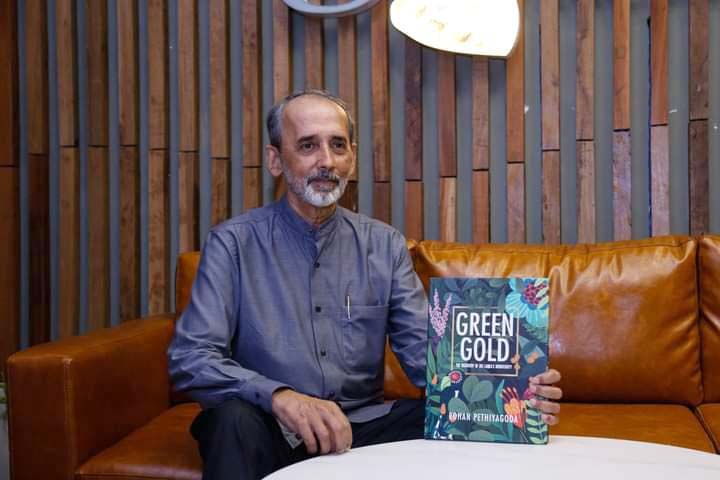
Green Gold: The Discovery of Sri Lanka’s Biodiversity,by Dr. Rohan Pethiyagoda

BOOK REVIEW
By Ifham Nizam
The idea of exploration for its own sake is associated very much with Western culture. The Sinhala word for this pursuit—gaveshanaya, literally ‘to search for cattle’—is evidence of this. While ancient Sri Lankans had names for every useful plant and animal, there was little thirst to discover every single species there is, to describe it, and to give it a name. That was an altogether European idea.
This is not to say that European explorers were all motivated purely by scientific curiosity. Many of them were in search of medicinal and other plants of economic value. Sri Lankan cuisine is defined by plants discovered in the New World by Portuguese colonisers and brought to our shores: sweet potatoes, manioc, cashew nuts and, not least, chilies. And what would European cuisine be if not for potatoes, tomatoes, chocolate and vanilla? Likewise, they ‘discovered’ cinnamon and black pepper in Sri Lanka, in addition to pearls—the mainstays of our pre-colonial export economy—and took these to the world. And then came tea and rubber, discovered in Assam and the Amazon by European explorers and introduced to Sri Lanka, with enormous economic consequences that have lasted to our day. It was these explorers that made the world go around, and their legacy still makes it go around.
Meanwhile, exploration with no expectation of commercial reward became a pursuit of its own: the gentleman explorer. These were people who took to doing what we would now call ‘field work’, collecting plant and animal specimens, and then going on to classify, describe and name them as species, genera and so on. This process of ‘pure exploration’ began in Sri Lanka only during the Dutch period. And it is the lives of these explorers, on to the early post-colonial period, that Rohan Pethiyagoda describes in his new book, ‘Green Gold: the discovery of Sri Lanka’s biodiversity’, published by Dilmah Conservation.
In this, Pethiyagoda draws together the threads that drew European explorers to Sri Lanka’s shores in the 17th and 18th centuries. Between 1717 and 1747 for example, three books were published on the flora of Sri Lanka, drawing the world’s attention to the island’s botanical riches. These expanded on local plant identifications, transliterating names into Latin and formalizing them in the scientific literature. With the establishment of the Herbarium at Peradeniya in 1821, Sri Lanka had an institution devoted to botanical exploration, attracting expert botanists to the island. The establishment of the Colombo Museum in 1877 likewise served zoological exploration.
The book is a completely revised and expanded edition of Pethiyagoda’s 2007 publication, ‘Pearls, Spices & Green Gold’. Two new appendices are of special interest. One of these is the diary of Anna Maria Walker, the first white woman to ascend Adam’s Peak, just two years after the Kandyan Rebellion of 1818. Her account of her second ascent in 1833 is reproduced in full: it makes fascinating reading. The other appendix is an account of the rubber plantation industry which, by the early 20thcentury, made Sri Lanka the most prosperous of British colonies.
But the bulk of the book is devoted to the biographies of the dozens of botanists and zoologists who discovered the island’s astonishing biodiversity. Some professional, some amateur, all dedicated to the pursuit of knowledge. The depth of scholarship the book represents highlights the author’s own dedication to research. The volume is the result of countless visits to overseas museums, archives and libraries and graveyards. For example, Pethiyagoda himself travelled to Tasmania in search of the roots of William Vincent Legge, the most famous ornithologist to have worked in Sri Lanka. Not just that, he sought out the manuscript autobiographies of other well-known naturalists such as GMR Henry and WWA Phillips, allowing him to share details of their lives that would otherwise have been lost to posterity.
Among the most fascinating lives he describes are those of Harmanis de Alwis, a lowly draughtsman from Kalutara, who spend the major portion of his century long life over the 19thcentury illustrating the plants of Sri Lanka. Then there were the apparently gay Swiss cousins Paul and Fritz Sarasin who visited the island four times not just making zoological collections but slaughtering countless elephants in the name of science while raiding vedda graves to discover whether they were the missing link between apes and humans. Their work was inspired by the ideas of Ernst Haeckel, who visited Sri Lanka in the 1880s and was first to illustrate the Horton Plains. Pethiyagoda shows that the ideas of Haeckel and the Sarasins heavily influenced the rise of Naziism in Germany in the early 20thcentury. The quirkiness of the stories seems inexhaustible: it was a Swiss sexologist, Augustus Forel, for example, who made the greatest contribution to our knowledge of the ants of Sri Lanka.
‘Green Gold’ is a treasure trove of historical information and anecdotes that gives meaning and context to the discovery of Sri Lanka’s fauna and flora. The book is full of fascinating stories and insights that everyone interested in this topic will delight in.
Today, gaveshanaya is practised by large numbers of young naturalists who are in every way the peers of their colonial forebears. Exploration has now become a mainstream activity among native Sri Lankans. The example of people like Pethiyagoda, who took the torch of exploration from the colonial era and passed it on, often translated into Sinhala, to young Sri Lankans in the 1990s, greatly accelerated the pace of discovery in Sri Lanka. But the book doesn’t include details of his life or those of other living Sri Lankans: ‘You have to be dead to earn a mention in these pages’, explains the author. But that should not underplay the influence Rohan Pethiyagoda has had on young explorers and scientists in Sri Lanka. Many would argue that he helped enormously to spawn the current generation of taxonomists who now flourish in our jungles, discovering and naming species. What greater legacy can anyone leave to posterity than that?









“We are rather respectable in Colombo. We go to bed fairly early, and we remain there till morning. “
According to Sri Lanka’s diplomatic folklore, the late S.W. R. D. Bandaranaike uttered these words while explaining the reasons for Sri Lanka’s abstention on the UN resolution condemning the Soviet invasion of Hungary. Apparently, SWRD’s foreign ministry officials were asleep at home when the diplomatic cable seeking instructions was received from New York. In those days, there were no cell phones, Internet, or even fax or telex machines. The diplomatic cables were sent through post offices. Decoding them was a slow and time-consuming process. Thus, the government could not provide appropriate instructions to our mission in New York in time, and the Sri Lankan delegation abstained on that sensitive UN vote.
Sri Lanka’s Absence from Section 301 Consultations
But then, how does one explain Sri Lanka’s absence from the crucial bilateral consultation held in Washington by the Office of the United States Trade Representative (USTR) during March-April on “Forced Labour” under the Section 301 of the US Trade Act of 1974? Didn’t our foreign and trade ministries send appropriate instructions to Washington in time? Even if the instructions from the foreign ministry were transmitted to our embassy in Washington by pigeon carriers, there was enough time for Sri Lanka to participate in those meetings.
In March, the USTR initiated these 301 investigations on 60 trading partners, and invited all of them for confidential consultations. Out of the 60, 46 participated in these consultations. Sri Lanka was not one of them. Other countries that didn’t participate in these consultations included China, Russia, and Venezuela! In addition to that, the Section 301 Committee conducted a public hearing with interested parties on April 28 and 29. Washington-based diplomats, representatives from few trade ministries as well as representatives from many foreign trade associations and chambers participated in these hearings. Sri Lanka was once again conspicuously absent.
As a result, when the USTR published the proposed forced labour tariffs on June 2nd, Sri Lanka ended up with a 12.5% duty. Pakistani and Indonesian diplomats participated in these consultations and took appropriate follow-up measures, and managed to enter the 10% duty category. As even a threat of a modest tariff hike could disrupt supply chains and reduce competitiveness, particularly in an industry such as garments, I discussed this issue on 15 June and underscored the importance of Sri Lanka’s participation at the next hearing, which was scheduled to be held from July 7th .
Awakening from Diplomatic Slumber and AKD’s Gazette
Fortunately, Sri Lanka finally awoke from weeks of diplomatic slumber, and Ambassador Mahinda Samarasinghe participated in the public hearing on 9 July, and promised, “…. · We have agreed to the text in our negotiations with the USTR on forced labour, …. The gazette as we speak is being printed and I’m getting the gazette tomorrow morning, and the gazette will be shared with USTR as I get it“.
As promised, President Anura Kumara Dissanayake issued a gazette on 10 July banning the imports of goods produced by forced labour. These new regulations are very similar to what Pakistan and Indonesia enacted in April, after their consultations with USTR in March. Why couldn’t we do it in April? Why did we wait till the very last minute?
Challenges ahead
“War is too important to be left to generals alone,” is a famous saying attributed to former French Premier Georges Clemenceau. Similarly, monitoring our main markets is too important to be left to diplomats alone. The United States is the largest single-country market for Sri Lanka. Therefore, Sri Lankan trade chambers and associations should become more proactive in these markets and participate in these events. For example, the chairman of the Pakistani apparel exporters association participated in the April hearings. Similarly, representatives from the Indian Agricultural and Processed Food Products Export Development Authority, the Federation of Indian Chambers of Commerce and Industry, the Confederation of Indian Industry, and Reliance Industries also participated in July hearings. At an event where each speaker is given only five minutes (strictly enforced), having a number of speakers from a country is an advantage. The presence of industry representatives in these kinds of events also help them understand the market dynamics and the future challenges. This is important, particularly because there will be many more challenges with Trump’s tariffs.
With the gazette issued on 10 July, Sri Lanka has imposed a prohibition on the importation of goods produced with forced labour. Now, the challenge will be to effectively enforce the prohibition. And what are the goods produced with forced labour? The USTR list only focuses on aluminum, cotton, electronics, lithium-ion batteries, rice, and tobacco. However, according to the U.S. Department of Labour, the list is much longer. Hence, this list may change continuously during the next two years and tariffs may fluctuate once again.
So, this is definitely not the time to slumber.
(The writer, a retired public servant, can be reached at senadhiragomi@gmail.com)
by Gomi Senadhira ✍️
After the overwhelming grotesquerie of J K Rowling’s latest Cormoran Strike novel (written, I should have noted, as the others were, under the pseudonym Robert Galbraith), I thought I should return to the world of fun, and also a much shorter description since this thriller moves quickly without the layers of detail that Rowling engages in.
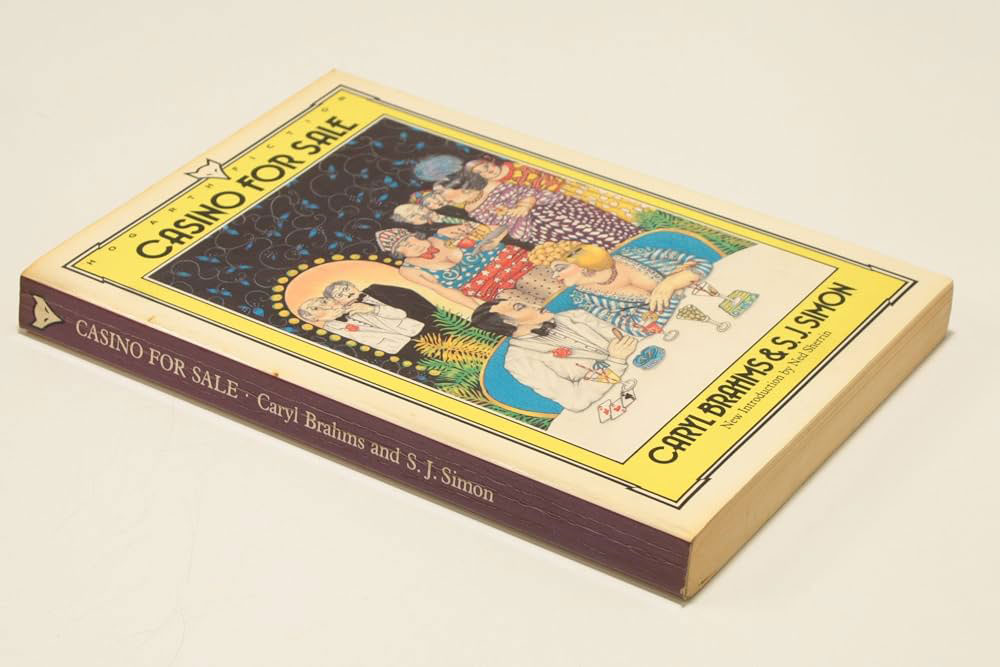
I then move to the second comic thriller by Caryl Brahms and S J Simon. This, their second story to feature Vladimir Stroganoff and Adam Quill, was Casino for Sale, as lunatic a romp as the first, though without the emphasis on the ballet that characterized A Bullet in the Ballet.
This one begins with the impresario Stroganoff buying a casino cheap from Baron Sam de Rabinovich, only to find that it was a rundown place, not the grand casino of La Bazouche, a resort on the Frenc+h Riviera, as he had initially thought. The grand one belonged to Lord Buttonhooke, and Stroganoff could not compete, until he thought of bringing the Ballet Stroganoff to the casino – which of course leads to Buttonhooke deciding to have ballet performances in his Casino too.
Stroganoff invites Quill to visit him, which Quill decides to do since he has left Scotland Yard, having come into a legacy. No one believes this, and he has to face questions as to what he did to have been sacked, with sympathy for having been found out.
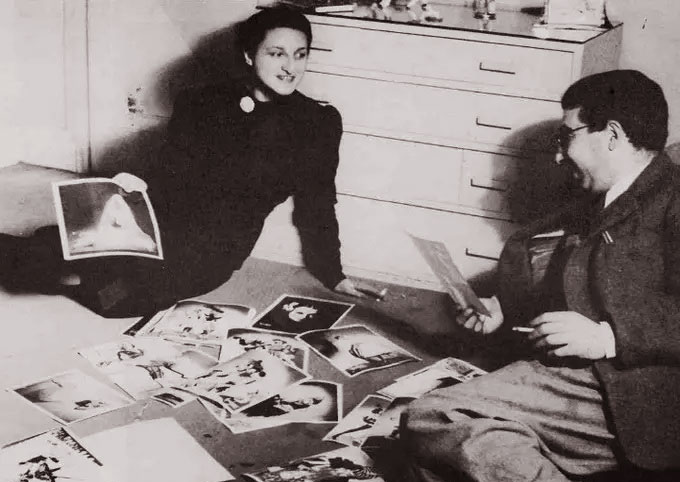
Caryl and Simon
The day he arrives in La Bazouche there is a murder, of a vitriolic critic called Citrolo, in Stroganoff’s office. He had been going to write a damning review of the opening night of the ballet and Stroganoff, when he realizes Citrolo cannot be swayed, drugs him and dictates the review himself to the papers. He leaves Citrolo sleeping and finds him shot the next morning, whereupon he decides to muddy the waters and leave a suicide note and lots of other murder weapons. So much overkill, as it were, of course ensures that he is arrested.
But the excitable French detective who makes the arrest follows up his suggestion that Buttonhooke was also involved, and so the two casino owners find themselves in cells next door to each other, with the detective Gustave quite happy to provide creature comforts for a fee.
Quill decides he must investigate, and finds Gustave most cooperative, since he has a laid back attitude to work. So it is Quill that finds a notebook which makes it clear Citrolo is an accomplished blackmailer, and that there are lots of possible murderers, including Stroganoff’s croupier, who was crooked, Rabinovich, who was now working for Buttonhooke, a confidence trickster called Kurt Kukumber, whose prospectus for a dud gold mine was found in the office and Prince Alexis Artishok who was engaged in a deal to buy diamonds from the ballerina Dyra Dyrakova.
Stroganoff had been trying to get Dyrakova to dance for him, but having done so previously she had refused. But then to Stroganoff’s chagrin she agreed to dance for Buttonhooke. The clearly crooked Artishok had told Buttonhooke’s mistress Sadie Souse, who was not very bright, that Dyrakova possessed diamonds she was willing to sell cheap, and Sadie was determined to have them.
Quill meanwhile finds out that there was a secret passage to Stroganoff’s office, the obvious solution to what had begun as a locked room mystery, and that this was known by almost everyone apart from Stroganoff himself. And then Rabinovich is murdered, just after Gustave had released his two original suspects, leading him to blame Quill for having insisted on that and thus allowing them to kill again.
Soon afterwards Dyrakova arrives, and the town is full of posters announcing that she will appear in the casinos, elaborate posters for either one, since Stroganoff is determined that she will dance for him, and if she does not come willingly, he has devised a scheme to make her do so unwillingly. So, though Buttonhooke has her taken off to his yacht immediately she arrives at the station, Quill along with Arenskaya gets her into a launch and to Stroganoff’s casino, where she performs to tumultuous applause, not knowing for whom she is dancing.
When Quill asked her about the diamonds, she said she had sold them long ago, and that gave Quill the solution to the mystery. Rabinovich had known about this, and Artishok had killed him to prevent Sadie learning it from him, he had killed Citrolo who had recognized him for an accomplished card sharper, not a Russian prince at all. But before he is arrested, he gets away in a boat, and the police launch that pursues him is on the point of catching him up when it runs out of petrol.
Again, lots of excitement, and entertaining references – Gustave grows marrows – and if not quite as brilliant as its predecessor, Casino was certainly a delightful read.

 It was a few years back that a former President of Sri Lanka took it on himself to pronounce SAARC ‘dead’. Since then there have been other sections of Sri Lankan opinion that have joined the critics of SAARC and taken the solemn stance that SAARC has indeed died what may be called a natural death.
Their fatalism is understandable. SAARC has failed to meet at heads of government or state level for the past several years to take the SAARC process notably forward. Regional cooperation has more or less been only an appealing idea. No substantive concrete projects have taken off to make the idea a hard reality. ‘Inner paralysis’ seems to be SAARC’s lot. Hence the fatalism in these circles.
However, being one of the worst cash-strapped regions of the world and a teemingly populated one with people virtually left to their devices, what choices do the ‘SAARC Eight’ have other than to try their best to band together and continue with their cooperation efforts, however small they may be?
There is no escaping the mounting debt trap for many of these countries and bankrupt Sri Lanka is a glaring example, but ‘throwing in the towel’ and abandoning themselves entirely to the diktats of the strongest economies and their agencies will prove a ‘living death’ for many countries in the SAARC fold.
The gains may be meagre but giving-up on SAARC cooperation in full would prove self-defeating for the organization and South Asia. Right now, the collective intention ought to be to salvage what the region could from the tenuous cooperative efforts. Moreover, such initiatives could go some distance to generate a degree of goodwill among the Eight and help in sustaining a dialogue process.
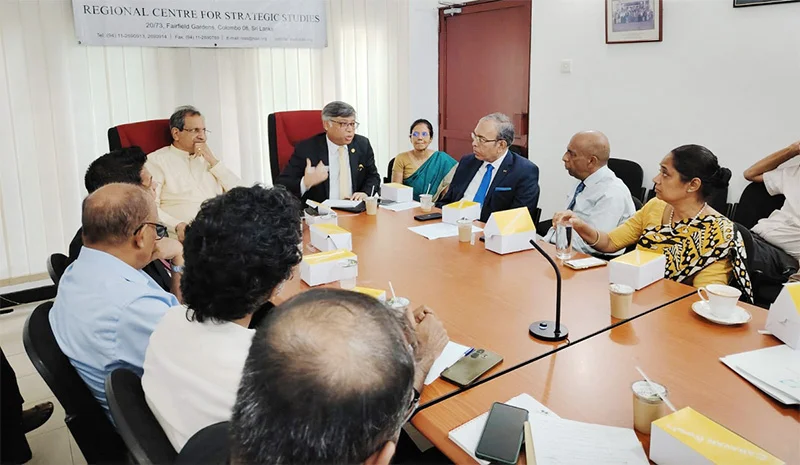
Given this backdrop it proved ‘a stich in time’ for the Regional Centre for Strategic Studies (RCSS), Colombo, to recently host the SAARC Secretary General Ambassador Md. Golam Sarwar to a round table discussion on the unifying potential of SAARC and its future possibilities, besides other related issue areas.
Held on June 24th and moderated by RCSS Executive Director and former ambassador Ravinatha Aryasinha, the forum brought together a vibrant, wide ranging audience comprising academicians, diplomats, senior public servants, civil society activists and many others. Following the presentation by Ambassador Golam Sarwar titled, ‘Reigniting SAARC: Achievements, Challenges and the Way Ahead’, a lively Q&A followed.
The above forum could be described as an act of lighting the proverbial ‘candle’ rather than ‘cursing the darkness.’ It surely is a ‘darkness’ that could be seen as daunting considering that the region’s pivotal powers, India and Pakistan, are failing to act in a spirit of accord but are engaged in bitter finger-pointing on a number of questions of vital importance to SAARC.
On the other hand, what is the rest of the region doing to bring the above sides together? It is disappointing that to date the rest of SAARC has failed to launch a major diplomatic drive to bring peace between the feuding regional heavyweights. It needs to act without delay and establish its earnestness and this effort would need to prove SAARC’s staying power in the unfolding months and even years.
In assessing SAARC’s seeming failure local opinion in particular has failed to factor in what could be described as weak leadership. Since Sheikh Mujibur Rahman of Bangladesh, the founding father of SAARC, the region has failed to produce a visionary leader who could advance the SAARC cause with charisma and drive.
Among other reasons, weak leadership accounts considerably for the faltering and stuttering status, as it were, of SAARC. Badly needed are leaders who could go the extra mile, think less of narrow national interests and work diligently towards the collective well being of the region but SAARC’s millions of ordinary people have been made to wait in vain for leaders of such stature. Instead, they have been burdened with politicians who seem to be relishing the apparently moribund state of SAARC.
Looking back, it could be said that it was the dynamic leadership factor that led to the launching of the Non-Aligned Movement and for its sustenance for a few decades. True, it could be seen in some quarters that NAM is no more, but as in the case of SAARC, the former too has been unfortunate to be burdened over the years with politicians who lack the vision and drive to unflaggingly advance the fortunes of the South. NAM and SAARC lack the dynamism and vision of leaders of the stature of Jawaharlal Nehru, for example, to give them the required guidance and intellectual depth.
The reasons are complex for there not being among us currently political leaders with the vision and the steadfast commitment to advance the legitimate interests of the South. However, it could be stated with conviction that the majority of Southern leaders have too easily caved in to the demands of the global North and its financial agencies.
These leaders have failed to see, for instance, that the largely market economy oriented Northern governments would not view with favour a centrist economic model that attaches priority to the interests of the dis-empowered publics of the South. This realization ought to have dawned on the current government in Sri Lanka, for instance, some while ago but it has no choice but to abide by IMF dictates since economic survival at present is unthinkable without the latter’s succour.
Accordingly for SAARC this should be the time for some soul-searching. Priority needs to be attached to ending the feuding between India and Pakistan since at present the material fortunes of the region hinge largely on these regional giants giving peaceful relations among them a try. This is no easy challenge to meet but some daring, visionary diplomacy needs to take hold among the rest of SAARC.
There is some sense in SAARC bringing the peoples of the region together through programs that address their best collective interests. A meeting of minds among SAARC nations could enable SAARC and its agencies to build a region-wide people’s movement for progressive political and economic change that could in turn lead to the region’s political leaders sensitizing themselves more to the neglected needs of their publics.
However, the time is ‘now’ for the initiation of these progressive changes and the voice of SAARC well wishers would need to drown out those of their critics.

Showers may occur in the Western, Sabaragamuwa and North-western provinces and in Kandy, Nuwara-Eliya, Galle and Matara districts

Dengue outbreak gallops ahead: Infections surpasses 73,455, leaving 50 dead

Evidence recorded in money laundering case against Yoshitha Rajapaksa

Former IGP C.D. Wickramaratne dies in suspected suicide

CAA sets aflatoxin limit for processed liquid milk from January 2027

Son of ex-Justice Minister further remanded till July 28

‘Dates have the highest sugar content to fight Coronavirus’

Sunday Island 27 December – Headlines

#SundayIsland 17th December – Headlines

Sunday Island – 28th March

Sunday Island Headlines – 21 March

Sunday Island – 21st February – Headlines
-
 Features6 days ago
Prison riots and politics: NPP’s biggest challenge and Sri Lanka’s biggest opportunity
-
 Features3 days ago
Dirty Money
-

 Editorial6 days ago
Much ado about crime: Fish or cut bait
-
 Features6 days ago
More on Saudi Arabia: ARAMCO and beyond
-

 News1 day ago
Money laundering case against Yoshitha, fixed for pre-trial conference
-
 Sports6 days ago
The banker who rescued Sri Lankan cricket
-
 Midweek Review3 days ago
The sordid tale of theft and tragedy at Finance Ministry
-
 Latest News4 days ago
Oil prices hit 1-month high as US-Iran attacks dim Strait of Hormuz outlook