
News
Govt will garner best outcomes through proactive engagement with global community

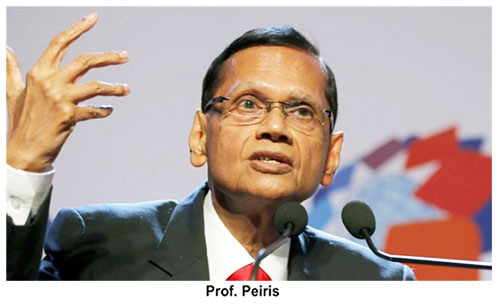
Foreign Minister Prof. G.L. Peiris reassured the Parliament last week that the Government will not rest in its efforts to garner the best outcomes for the nation through continued, proactive engagement with the international community.
Prof Peiris updated the House on the recent multiple global engagements by Sri Lanka with international partners and friends. He specifically referred to three recent high level engagements in Italy, Geneva and New York by President Gotabaya Rajapaksa, Prime Minister Mahinda Rajapaksa and himself. Following are excerpts from Foreign Minister’s speech in Parliament: While we, as a Government, are combatting the current pandemic and dealing with the consequences of economic contraction due to its worst effects, I would like, with your permission, to highlight another aspect of our approach to governance and national wellbeing.
At a policy level, we must stress our President’s commitment to full, candid and open engagement with fellow nation states. Our vistas of prosperity and well-being cannot be achieved in isolation. We all share a common future and owe it to succeeding generations to do the best we can to secure and guarantee that brighter future.
In this vein, I would refer the attention of this House to recent international engagements with our international partners and friends. While we maintain a dialogue with diplomatic representatives in Sri Lanka and with bilateral partner-countries accredited to Sri Lanka, we also seek to engage at an international level – across geographical and other boundaries.
We seek to address the widest possible audience at every given opportunity. This is not only to counter or avoid critical comment, but also, to make our voice heard on the global stage. We do this with bilateral partners, organisations, regional groupings and especially at multilateral fora. We are also imbued with a sense of openness, a willingness to absorb and learn from others’ perceptions and real-life experience in dealing with the myriad challenges we face – individually and collectively.
We are a relatively small island state. However, we are also a nation with a proud history and complex background. We have much to learn from the world but, at the same time, much to share. Our multifaceted diversity is not a social experiment but one that we live with on a day-to-day basis. It causes tensions – from time to time – but we still continue to coexist with a sense of fraternity and goodwill.
We emphasised that during the three recent high level engagements in Italy, Geneva and New York by the President, the Minister and myself. These events provided critical platforms for Sri Lanka to express solidarity with the international community on important global issues of common concern to all countries and also to project Sri Lanka’s own perceptions in this regard.
These recent interactions enabled us to interact with leaders and policy-makers at the highest levels internationally. These engagements provided an important opportunity to address different aspects of what the United Nations Secretary General called the “greatest cascade of crises of our times”, after a long gap in physical connection due to the pandemic.
President Gotabaya Rajapaksa in his statement at the 76th UN General Assembly in New York, stated that Sri Lanka is fully engaged with international partners in order to combat the pandemic and the consequent economic fallout as well as existential crises resulting from climate change. Our engagement is aimed at safeguarding our people from the worst effects of these global challenges.
Equally importantly for Sri Lanka, these visits provided us with the opportunity to address the international community at bilateral and multilateral levels regarding recent domestic developments and difficulties we have faced in Sri Lanka on critical national issues related to human rights and reconciliation and to correct any inaccurate or biased perceptions.
I concluded my statement to the Human Rights Council in Geneva by stating that: “We are open in acknowledging our challenges and, as a responsible and democratic government, we are committed to achieving tangible progress on the entire range of issues relating to accountability, reconciliation, human rights, peace and sustainable development.”
We have taken the position that we do recognise the need to address these challenges and, in that effort, we need to be open and responsive to constructive criticism and international overtures made in good faith. That being said, Mr. Speaker, we do not need to compromise our independence, national sovereignty nor our self-respect as a nation. I myself had the opportunity to personally discuss with Foreign Ministers of a number of key countries, as well as address gatherings which are of direct relevance in Sri Lanka such as the Commonwealth, the Organisation of Islamic Cooperation, the Community of Democracies and the Human Rights Council in Geneva.
Our continued and vigorous efforts to place on record our experience, perceptions and position demonstrates this approach of openness, candour and willingness to engage. We reaffirmed our commitment to democratic norms, ideals and commonly shared values from the standpoint of a nation consistently adhering to this system for nine decades; as one of the oldest representative democracies in Asia.
Of critical importance, is to make these efforts in the expectation that real and tangible benefits will accrue to our people. The main focus at this year’s UN General Assembly was on matters that affect all countries of the world big and small, such as the pandemic, climate change, the global food situation, the attainment of the Sustainable Development Goals and the need for transition to clean energy. It is very clear that these interconnected issues which are global in nature affect the daily lives of all Sri Lankans.
Sri Lanka needs to participate in this dialogue with the international community in resolving these fundamental issues. What is also clear is that we need to reach out to a very broad range of stakeholders domestically and internationally such as scientists, economists, the private sector, leaders in technology, youth as well as primary producers of food. This represents a cross-section of the local and global community, at various levels and across diverse fields of endeavour.
As the President stated, “The economic impact of the pandemic has been especially severe on developing countries. This has placed the implementation of the 2030 Agenda for Sustainable Development Goals at considerable risk.” So this is the great challenge that faces us collectively. It is no empty nor idle boast to state that Sri Lanka has taken leadership in some critical spheres and is at the helm of some key aspects of environmental activism. As a country vulnerable to extremes of climatic change, our forthcoming engagement at the COP26 in the United Kingdom will only underline our commitment to our common, interdependent future.
The President stated that for these many reasons Sri Lanka’s engagement this year with the international community and the United Nations was timely and essential. He stated that Sri Lanka has contributed to these global efforts through the Colombo Declaration on Sustainable Nitrogen Management and our recognition as a Commonwealth Blue Charter Champion. We have pledged to join global efforts to become a carbon neutral country by 2050 and to obtain 70% of our energy resources from renewable sources by 2030. Our domestic efforts to promote sustainable agriculture, increase forest cover and to combat water and plastic pollution were generally welcomed.
Our presence internationally and at the General Assembly was vital because in order to reach these ambitious targets, in the years to come, we need to have significant access to technology, financial cooperation and assistance. We will reiterate these messages at COP 26 later this year.
The other great challenge we need to overcome is that of social cohesion and unity. In the absence of a truly integrated nation devoid of internecine strife, bitterness and rancour, we need to build bridges rather than walls. We need to reach out to all segments of society and repay the trust and confidence placed in the Government at successive elections in 2019 and 2020.
In my statement to the UN Human Rights Council in September I referred to our initiatives to reinvigorate and resuscitate national efforts to promote reconciliation – sorely needed after a protracted conflict. As President Rajapaksa said in New York: “Fostering greater accountability, restorative justice, and meaningful reconciliation through domestic institutions is essential to achieve lasting peace.” I adverted to the several national institutions that we support in this effort to sustain and build upon the hard-won peace of 2009.
In particular, I stressed the importance of The Office on Missing Persons (OMP) which, as its core function, is finalising the list of missing persons in collaboration with other agencies with a view to granting and enabling closure for a number of grieving families. In tandem, the Office for Reparations (OR) has processed 3775 claims this year alone. We have supported the Office for National Unity and Reconciliation (ONUR) in its effort to re energise their implementation of its eight-point action plan. We have continued to support the Human Rights Commission of Sri Lanka in carrying out its mandate to protect and promote human rights in Sri Lanka. We pointed out that a national steering committee on SDG 16 is working towards enhancing peace, justice and strong institutions.
Over and above this, the President was pleased to empower a Commission to take stock of the various efforts aimed at reconciliation and accountability over the past several years and arrive at a conclusion and recommendations, which, we expect, will drive these processes going forward. We are doing all this with sincerity and seriousness of purpose to enable a brighter, more prosperous and peaceful Sri Lanka for succeeding generations of sons and daughters of our soil.
Our Prime Minister, Mahinda Rajapaksa in his address to the G20 Inter-Faith Dialogue recently concluded in Bologna, Italy, stressed the importance of transcending barriers based on religion and other socio-cultural differences. The Prime Minister’s participation at the Interfaith Forum in Bologna further highlighted the important role of education and youth in fostering domestic peace and harmony. This Inter-faith forum was an appropriate moment to reflect on the diversity in our region, exemplified in Sri Lanka, and to reemphasise that this diversity is the bedrock of our strength as a nation. He stated that “rising above these differences, we have responded to the challenge of building a sense of mature nationhood, utilising all the different communities”.
Our message, through you, Mr. Speaker, to the nation and the world is that we seek to celebrate our diversity while forging a sense of oneness – a Sri Lankan consciousness and identity – that will be a source of strength rather than weakness as we address the several local and global challenges.
As the Prime Minister said in his address in Bologna: “Reconciliation is a critical need of our time. Conflicts and escalating tensions are all too evident around us. Peace and stability come from healthy relationships with all who live in our countries, including those with whom we have deep disagreements. Here, again, our religion teaches us that hatred is not conquered by hatred but by love alone. Rather than dwell on grievances derived from the past, we must focus on the present, the need for harmony with points of view different from our own, and the inspiring new frontier which awaits us all if we forge the urgently needed links of brotherhood and understanding.”
I wish, in passing, to stress the role of civil society in these efforts. Representatives of civil society are an integral part of the solutions we wish to devise. They are not a manifestation of the problem but an essential component of the resolution of our problems. There have been concerns raised about the supposed Government initiatives to stifle NGO activities in Sri Lanka. Nothing could be further from the truth. We are actively engaged with the community and are seeking to harness their capabilities and undoubted capacity in support of reconciliation and with regard to SDG16 processes.
I stated this quite clearly in my address to the Human Rights Council in Geneva and I want to assure this House that we consider them a valuable and valued partner in our efforts for the betterment of our people. One of the principal challenges to this unified sense of purpose, is extremism and its progeny, terrorism. We, as a representative government, are taking all measures in close collaboration with international partners to ensure human security in its widest sense. There are several considerations of collective national and international security that must be taken into account in this context.
The guaranteeing of individual freedoms and liberties is not antithetical to the concept of national security. Indeed, it is a stable and secure international and domestic order that enables the enjoyment of individual rights. Like the many-headed Hydra of classic myth and legend, extremism and terrorism crop up elsewhere when one movement is defeated in one country or region. We have seen this in numerous instances. In an interconnected world, such movements and extremist ideologies make nonsense of previously impenetrable national boundaries. Our response must be equally dynamic, adaptive and resilient.
During my exchanges with ministerial colleagues from friendly countries in New York and elsewhere, we have placed a sharp focus on close cooperation, intelligence gathering and sharing and collective action to address issues of funding and interdiction of these criminal networks.
As President Rajapaksa stressed in his address to the UNGA: “Terrorism is a global challenge that requires international cooperation, especially on matters such as intelligence sharing, if it is to be overcome. Violence robbed Sri Lanka of thousands of lives and decades of prosperity in the past half century. My Government is committed to ensuring that such violence never takes place in Sri Lanka again. We are therefore acting to address the core issues behind it.”
In conclusion, Mr. Speaker, I wish to reassure the people of Sri Lanka that we will not rest in our efforts to garner the best outcomes for the nation through continued, proactive engagement with the international community. I will endeavour, in the coming months, to regularly inform the Hon. Members of the House and the nation at large of our endeavours in this regard.

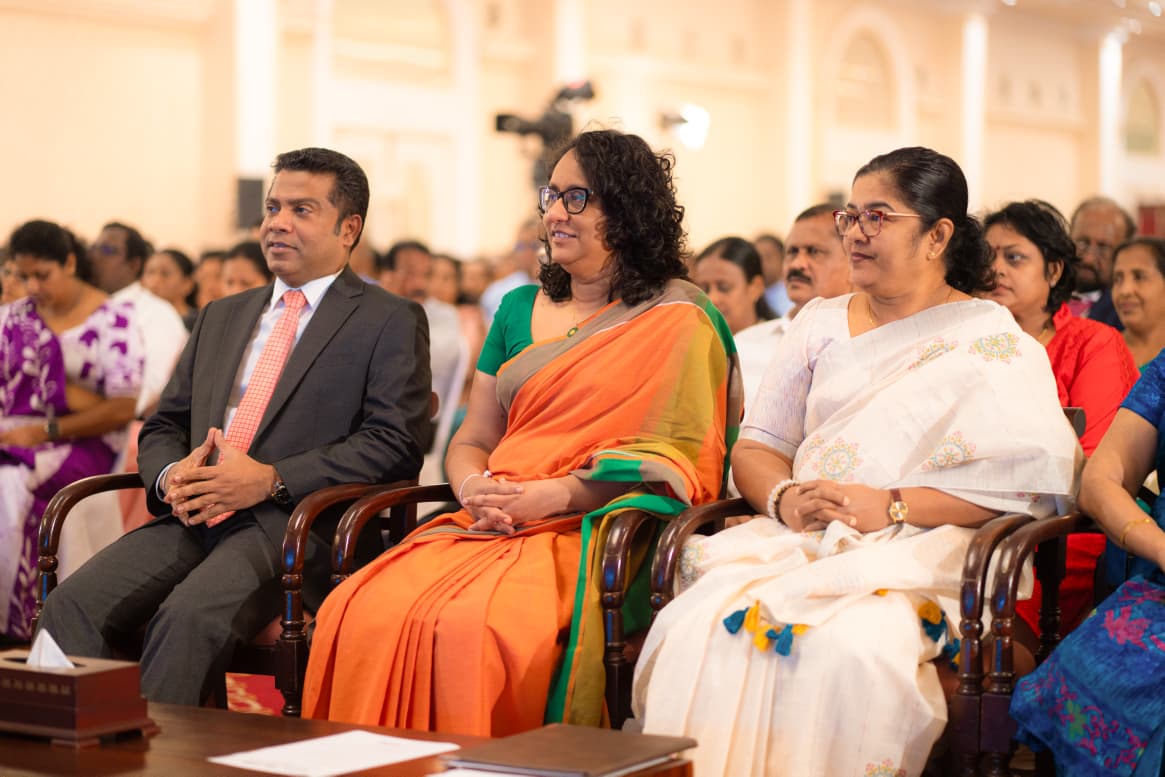
Prime Minister Dr. Harini Amarasuriya stated that the Government has commenced necessary measures to maintain preschool education under a framework, align preschool education with a unified curriculum, conduct teacher training in a systematic manner, and ensure quality standards.
The Prime Minister made these remarks on Saturday (10) at the Temple Trees, participating in the launch of the National Communication Programme for Child Health Promotion, aimed at promoting social and behavioural change (SBCC) among early childhood children. The programme is jointly organized by the Health Promotion Bureau, the Ministry of Women and Child Affairs, the Ministry of Education, Higher Education and Vocational Education, UNICEF, and the Clean Sri Lanka Programme.
Addressing at the event, Prime Minister Dr. Harini Amarasuriya stated:
“Early Childhood Development (ECD) has a major impact on a country’s human development and future progress. It is a widely accepted fact that a child’s future depends largely on early childhood development. Many aspects essential for a child’s growth occur within the first five years of life. The experiences, care, and love a child receives during this period are decisive.
The social integration, relationships, and environmental influences experienced in early childhood form the foundation for shaping an individual as an adult. Early childhood development influences life to an extent that it becomes difficult to change when it grows into adulthood.
The responses of adults to children’s actions, the way they interact with them, and the care they provide are extremely important. Therefore, early childhood development should never be viewed as the sole responsibility of parents. It is a collective responsibility of all citizens.
No child can be raised into a good citizen by parents alone. In all our lives, beyond our parents, there have been many who influenced us, showed us love, and provided care. It is due to the collective support of all these individuals that we have reached where we are today. The government views child care as a social responsibility. Supporting a child, providing care, ensuring protection, education, and health facilities are social responsibilities. In this regard, the intervention of the Clean Sri Lanka Programme to communicate these values to the public is important.
The role of the preschool teachers plays a special and vital role for children. The love, care, attentive listening, and responses children receive during this stage are decisive for their development. Teachers carry out a crucial intervention in the lives of children. An education policy on early childhood development has been formulated, with UNICEF providing technical assistance. Steps are being taken to operate preschool education under a single framework, align it with a unified curriculum, systematically conduct teacher training, and ensure quality standards.
Recognising early childhood development as a specialised area within education, the Prime Minister affirmed that the relevant interventions will be made accordingly.
Addressing the event, Minister of Women and Child Affairs, Ms. Saroja Paulraj stated that the Ministry has identified the standardisation and development of early childhood development as a primary goal for the year 2026. She noted that children who leave the warmth of their mother’s embrace and father’s shoulder and come to preschool teachers expecting the same love and care from their teachers. Conveying that warmth through words and expressions is a responsibility entrusted to teachers. The love and safe environment children receive shape their ability to love the environment and respect others.
Minister of Health and Mass Media, Nalinda Jayatissa, also addressed the gathering, stating that the goal of the government is to build a beautiful future generation capable of leading the country, free from the various hardships and challenges faced today.
He emphasised that creating a healthy population is a challenge, particularly in preventing non-communicable diseases. Children aged three to five today will become a generation aged 18 to 20 by 2040. Continuous and comprehensive programmes such as this are essential to protect that generation from non-communicable diseases. In some instances, interventions are required even during the preconception and prenatal stages.
He further highlighted that preschool and early childhood development centre teachers shoulder a tremendous responsibility in driving a major transformation in the country’s future.
The event was attended by the Governor of the Sabaragamuwa Province, Ms. Champa Janaki Rajarathne; the Governor of the Uva Province, Attorney-at-Law Kapila Jayasekara; the Governor of the North Central Province, Wasantha Jinadasa; the Governor of the North Western Province, Thissa Kumarsiri Warnasuriya; the Deputy Minister of Women and Child Affairs, Dr. Namal Sudarshana; the Member of Parliament, Dr. Najith Indika; the Representative of the United Nations Children’s Fund (UNICEF) in Sri Lanka, Ms. Emma Brigham; the Secretary to the President, Dr. Nandika Sanath Kumanayake; the Senior Additional Secretary to the President (Finance and Economic Affairs), Mr. Russell Aponsu; the Additional Secretary to the President (Clean Sri Lanka), S. P. C. Sugishwara; Secretaries to Ministries; Provincial Chief Secretaries; the Commanders of the Tri-Forces; officials of subject-related ministries; provincial council officials; preschool teachers; preschool children; and parents.


(Prime Minister’s Media Division)
News
Level I landslide early warnings issued to the Districts of Badulla, Kandy, Matale and Nuwara-Eliya extended

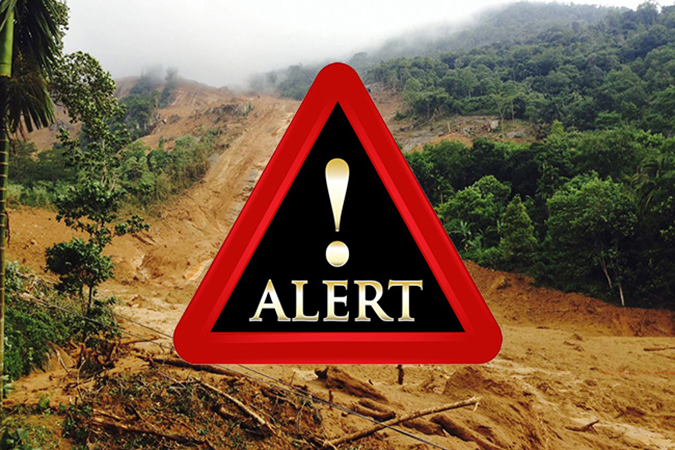
The Landslide Early Warning Centre of the National Building Research Organization (NBRO) has extended the landslide early warnings issued to the Districts of Badulla, Kandy, Matale and Nuwara-Eliya till 1600hrs today (11).
Accordingly, the LEVEL I YELLOW early warnings issued to the Divisional Secetaries Divisions and surrounding areas of Lunugala, Meegahakiwula,Welimada, Kandaketiya, Hali_Ela, Badulla, Uva Paranagama in the Badulla district, Minipe and Ududumbara in the Kandy district, Wilgamuwa, Ukuwela, Ambanganga Korale, Rattota and Laggala_Pallegam in the Matale district, and Nildandahinna, Walapane, Mathurata and Hanguranketha in the Nuwara-Eliya district will be in force until 1600hrs today (11)


Proposed education reforms have drawn sharp criticism from education professionals, teacher unions and student organisations, who warned on Thursday that the changes risk undermining child safety, widening inequality and imposing unaffordable costs on parents.
Addressing a press conference in Colombo, Dr Ayomi Irugalbandara of the Faculty of Education at the Open University of Sri Lanka said the proposed reforms appeared to be largely modelled on foreign education systems without adequate consideration of local realities.
She took particular issue with proposals to integrate social media use into the school curriculum, noting that several developed countries have moved in the opposite direction by preventing children under the age of 15 from accessing social media platforms.
“Most of these modules are not appropriate for this country,” Dr Irugalbandara said. “We warn parents that these reforms place children at risk.”
Concerns were also raised over digital content linked to the revised curriculum. Inter-University Students’ Federation Convener Madushan Chandrajith said the Grade Six Information and Communication Technology (ICT) module included QR codes that directed students to a controversial YouTube channel.
“Who will take responsibility for children accessing such content?” he asked, calling for clear accountability mechanisms for material linked through digital platforms used in schools.
Secretary of the Workers’ Struggle Centre, Duminda Nagamuwa, criticised the government’s approach to the reform process, comparing it to the fertiliser policy introduced under former President Gotabaya Rajapaksa. He alleged that the authorities were pushing ahead with education reforms despite opposition from academics, teachers and other stakeholders.
Nagamuwa also highlighted the economic burden on families, noting that Sri Lanka’s poverty rate had increased from 12.5 percent to 25 percent. He questioned how parents were expected to afford smartphones or tablet computers required for students to access QR code-linked educational content.
“The government is asking parents to bear costs they simply cannot afford,” he said.
Ceylon Teachers’ Union General Secretary Joseph Stalin said schools had already begun collecting money from parents in anticipation of the reforms, including funds to purchase smart boards.

One person dead and 300 buildings destroyed in Australia bushfires

Iran warns it will retaliate if US attacks as protesters defy crackdown

GENERAL WEATHER FORECAST FOR NEXT 36 HOURS

National Communication Programme for Child Health Promotion (SBCC) has been launched. – PM

Level I landslide early warnings issued to the Districts of Badulla, Kandy, Matale and Nuwara-Eliya extended

Rescuers race to find dozens missing in deadly Philippines landfill collapse

‘Dates have the highest sugar content to fight Coronavirus’

Sunday Island 27 December – Headlines

#SundayIsland 17th December – Headlines

Sunday Island – 28th March

Sunday Island Headlines – 21 March

Sunday Island – 21st February – Headlines
-
 News21 hours ago
Sajith: Ashoka Chakra replaces Dharmachakra in Buddhism textbook
-

 News6 days ago
Interception of SL fishing craft by Seychelles: Trawler owners demand international investigation
-

 Features21 hours ago
The Paradox of Trump Power: Contested Authoritarian at Home, Uncontested Bully Abroad
-

 Business21 hours ago
Dialog and UnionPay International Join Forces to Elevate Sri Lanka’s Digital Payment Landscape
-
 News6 days ago
Broad support emerges for Faiszer’s sweeping proposals on long- delayed divorce and personal law reforms
-

 Features21 hours ago
Subject:Whatever happened to (my) three million dollars?
-

 News21 hours ago
65 withdrawn cases re-filed by Govt, PM tells Parliament
-

 Opinion3 days ago
The minstrel monk and Rafiki, the old mandrill in The Lion King – II