
News
Govt.’s recovery strategy recipe for disaster – Sajith


by Saman Indrajith
Opposition and SJB leader Sajith Premadasa told Parliament, on Friday, that the government’s economic recovery plan, announced to the House by President Ranil Wickremesinghe, would give rise to serious humanitarian issues, if implemented.
Premadasa said that the economic plan, envisaged by the government, would lead to a further contraction of the economy, causing more hardships to the public. “We cannot come out of the prevailing crisis by placing the lives of people in danger,” he said.
President Wickremesinghe had, in his roadmap to recovery, failed to address the most vital issues that had to be sorted out for the country to come out of the present crisis, Premadasa said, adding that 6.3 million people were facing severe acute food insecurity and their situation would worsen if the government did not provide relief.
“The President said that the Buddha had, in the Kutadanta Sutta, mentioned four principles that King Maha Vijita should follow in rebuilding a nation. Accepting real advice, understanding the real nature of the problem, taking the problem as a whole and finding solutions according to a plan, and full implementation of the plan, with confidence, were those four points. We, however, have concerns whether the government has identified the problem correctly. We present this 20-point blueprint in the hope that the President would take them into consideration to save the lives of people from imminent danger.
“The first point is the restructuring of debt, and the IMF bailout package for Sri Lanka and their sustainability. The loans we have obtained are bilateral, multilateral, and sovereign bonds. There are reports that a Staff-Level agreement has been reached with the IMF. Again, there are statements that it is not an agreement but an understanding. Some say it is an accord, or a pact. Some others term it a pledge. It is said that the IMF has promised to grant 2.9 billion US dollars, in four years, under its extended financial facility project. The IMF cannot give money if there is no proper agreement. We have been asking the government to produce this agreement to Parliament but the government has not done so. How could the government expect our support to implement a plan for economic recovery when it is not appraising Parliament of the content of this so-called agreement? The incumbent President, as an Opposition MP, kept demanding, in this very same House, that the government should not hide the IMF agreement from Parliament and the people. There is no point in hurling accusations that the Opposition would not support it while the government keeps hiding this agreement from us. We need to know what the government has offered to get financial assistance, during its talks with the IMF, bilateral and multilateral talks and talks with sovereign bond holders, the Paris Club, the London Club.
“The second point is that the government should include a sound economic growth strategy in its plan. We have come down from positive growth levels to negative growth levels. To extricate ourselves from this crisis, the government is to bring about policies to further contract the economy. On the one hand, taxes are increased to boost government revenue, and on the other, welfare expenditure is curtailed to introduce what is termed focussed expenditure. We understand that bankrupt countries need to follow strict measures but we are not agreeable to the plans to make the economy contract further. The President’s speech did not mention any growth strategy. Anyone who knows the Keynesian aggregate demand formula of C+G+I+X-M, will understand that this government is planning to reduce demand to bring down consumption and bring down investment and truncate the economy to get out of the crisis. Consequences of such plans, if implemented, will have a serious effect on people who are already in dire situations. What we need is a growth, strategy not the further shrinking of the economy to place the lives of people in danger. The economy cannot be revived by a small group of people, confining themselves to small rooms, to make plans.”
The Opposition Leader said the government must visit the people and understand their woes and the destruction by wrong economic decisions.The third point is the soaring cost of living and inflation which the President failed to address in his statement. In this country, today, there is a hyper-inflationary situation. The prices of food items are expected to increase by about 100 percent. The government makes the economy contract so it could control demand-pull inflation. What we have now is cost-push inflation. This cannot be sorted out by contracting the economy or by paving the way for the collapse of businesses. Our plan should have a social democratic orientation.
The fourth point is poverty alleviation. Poverty has increased manifold in recent months. Income poverty, consumption poverty and social poverty have increased in our society. Poverty has now reached the middle-class level. Of our population, 60 to 70 percent people are now in poverty. This is having a corrosive effect on our society. Social unrest is high in both urban and rural areas. This crisis demands targeted interventions immediately. We must channel our limited funds to save the lives of the poor. The time has come for the rich to pay attention to this problem.
“Increasing malnutrition is the fifth issue to be addressed. The statistics of UNICEF, UNFEA, FAO and WFP show horrendous social conditions faced by the masses and Lankan children are acutely vulnerable to the worsening social crisis. They show that an estimated 6.3 million people faced moderate to severe acute food insecurity, and that their situation would worsen if no adequate life-saving assistance, and livelihood support, was provided. We are now in second place in Asia’s worst malnutrition countries and in sixth place globally. The President’s statement did not mention how to address this problem. We must provide assistance to children and pregnant mothers.
“The sixth issue is the crisis in the health sector. The hospital system has come to a standstill without medicine and surgeries have been stopped. Prices of medicines have been increased by 300 percent. As per a survey by Save the Children, 75 percent of Lankan children are experiencing strenuous stress conditions and psychological unrest. The President’s statement failed to address this issue, too. We, as the Opposition, provided Rs 159.7 million worth assistance to the hospital.
“Unemployment is the seventh issue that we demand the government should address. Industrial and self-employment sectors have collapsed. People in the top-layer of the workforce are leaving the country. Owing to growing unemployment, we are in the threshold of a massive societal crisis. Huge youth unrest is brewing to explode soon.
“Mounting debt is an issue that needs to be addressed. It is the eighth issue in our 20-point blueprint to save the economy. In 2019, per capita debts stood at Rs 597,605. As at April 2022 it had almost doubled with Rs 1,0952,000. The President’s statement has not addressed this issue either.
“The ninth issue is restoring income earning exports. This could be done despite the crisis. When the country was like a torch, burning at both ends, in the 1988-89 period, the then government successfully completed setting up of 200 garment factories to give jobs amidst the crisis,” Premadasa said.
Premadasa said that the controls on import of raw materials had led to the decapitation of domestic industries and it is the 10th issue that the SJB has identified among the 20-point plan to be addressed.The 11th point was to immediately address the increasing crime wave that is spreading fast all over the country.
Premadasa said that increasing the ease of doing business and ending corruption was the 12th point. He said that the government must recover the money stolen from the state, via various scams, and use that money to boost the state revenue. He urged the government to recover the stolen funds via an anti-corruption programme, and the UN’s Stolen Asset Recovery Assistance programme.Ensuring food security is the 13th issue in the 20-point plan presented by Premadasa.
He said that saving the small and medium scale enterprises on which 4.5 million people were dependent was the 14th issue. Those engaged in SMEs were now in debt and the government had no plan, and it allowed the banks to take over their remaining properties through parate executions, he said.The 15th point was reviving the construction and tourism industries to save the jobs of hundreds of thousands of people.
The 16th point was a state intervention to restore the country’s education sector which was in a mess following the economic crisis that produced reports of hundreds of schoolchildren fainting in schools because they are starving. The government boasts that it provides midday meals to 1.1 million children. There are 4.3 million children and how could the government differentiate hunger of one child from another, he queried.
Taking immediate measures to prevent brain drain, ensuring the youth and skilled professionals in participatory governance, and restarting the development projects were the 18th, 19th and 20th issues of the SJB blueprint to address the economic crisis, he said, adding that the President had failed to provide solutions to those issues.

By Anuradha Hiripitiyage
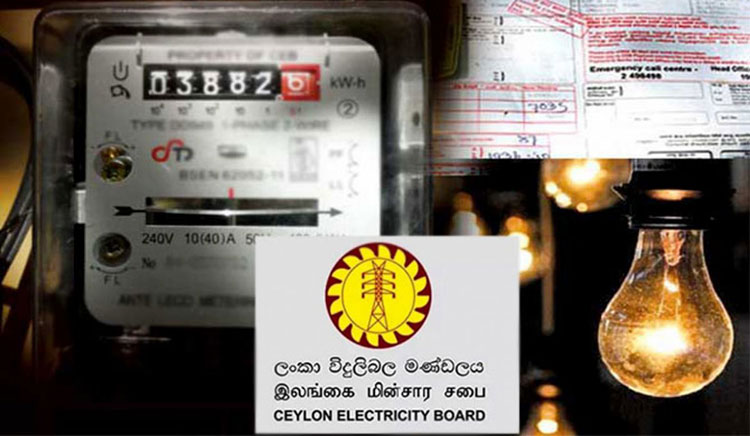
Electricity tariffs should be reduced by between 3 and 5 percent instead of being increased by 2.88 percent in the fourth quarter, as proposed by the National System Operator (NSO), Electricity Consumers’ Association Secretary Sanjeewa Dhammika said.
Addressing a media briefing in Maradagahamula, Divulapitiya, Gampaha, yesterday (16), Dhammika said a proper assessment of electricity generation costs, including the contribution of hydropower, could justify a reduction in tariffs.
He said the NSO had sought approval from the Public Utilities Commission of Sri Lanka (PUCSL) for a 2.88 percent tariff increase, which was expected to generate an additional Rs. 4,438 million.
However, the Commission had indicated that an increase of only 1.46 percent was warranted, amounting to Rs. 2,245 million, he said, adding that even this increase was unnecessary.
Dhammika alleged that the proposed revision sought to pass on to electricity consumers the financial burden arising from the non-arrival of five coal shipments and failed tenders.
“The Government had said that the burden of coal-related losses would not be passed on to the public. It is therefore unjust to make consumers bear these costs,” he said.
He pointed out that the PUCSL had forecast that hydropower would account for 32.34 percent of total electricity generation in the coming quarter, while the cost of such generation would represent only 3.45 percent of the overall cost of electricity production.
Consumers should benefit from the lower cost of hydropower generation rather than bear the burden of more expensive thermal power generation, he said.
Dhammika also questioned the inclusion of Rs. 669 million in capacity charges that had not been approved by the PUCSL, as well as a further Rs. 1,069 million to repay loans relating to incomplete projects.
Including such charges in the proposed tariff revision was unjustifiable, he said.
The PUCSL has given the public until October 30 to submit their views on the proposed tariff revision.
Dhammika said the possibility of increased hydropower generation in the coming weeks, as reservoir levels rise, should also be taken into account when determining electricity tariffs.
He maintained that tariffs could be reduced by 3 to 5 percent if hydropower generation was properly assessed and coal-related losses and unapproved charges were excluded from the calculations.
He further claimed that electricity tariffs could be reduced by as much as 10 percent through the promotion of renewable energy and the effective use of solar power and battery storage systems.
The Electricity Consumers’ Association urged the Government to withdraw the proposed tariff increase, insisting that consumers should not be made to bear costs arising from coal supply problems and other disputed charges.

By S.K. Samaranayake
Most Ven. Warakagoda Sri Gnanaratana Mahanayake Thera of the Asgiri Chapter has called for the immediate release of Ven. Galagodaaththe Gnanasara Thera, who is currently serving a prison sentence, following a court ruling.
The Asgiri Mahanayake made the appeal when a delegation of senior prison officials, including Assistant Commissioner of Prisons and Director of Operations Senaka Pallegedara, called on him on the 16th.
During the meeting, the prelate warned that the continued incarceration of Ven. Gnanasara Thera could lead to a volatile situation and cause public agitation.
Responding to the appeal, the prison officials informed the Mahanayake Thera that the authority to order the release of Ven. Gnanasara Thera did not rest with the Prisons Department but with the President.
Other senior prison officials, including Rajeev Srimal Silva, Sampath Warnakulasooriya and Mangala Welivita, were also present at the meeting.
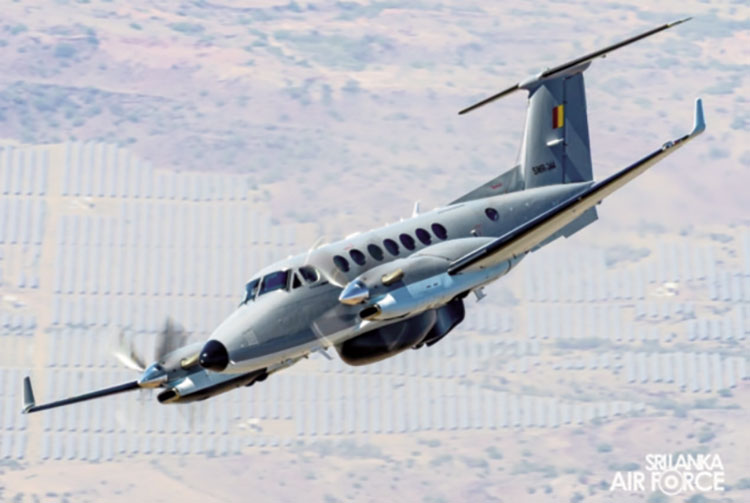
The Sri Lanka Air Force participated in a multinational air exercise in India, alongside the air forces of the United States, France and Germany, as Sri Lanka continues to expand military cooperation with foreign countries.
A Sri Lankan Air Force Beechcraft King Air 360ER aircraft, and a six-member crew, took part in Exercise Tarang Shakti 2026, held at Air Force Station Jodhpur, from September 26 to October 12.
The exercise was hosted by the Indian Air Force, under the theme “Power in Partnership,” and involved Australia, Bangladesh and the United Arab Emirates, among other participating countries.
According to the Sri Lanka Air Force, the exercise was aimed at enhancing operational cooperation and interoperability among participating air forces and providing opportunities to share tactics and operational experience.
India’s public broadcaster reported that the exercise included training and experience in planning and conducting joint multinational combat operations, including counter-air, air defence, reconnaissance and air-to-air refuelling missions.
The exercise also involved 32 countries as observers.
Sri Lanka’s participation comes amid increased military engagement with foreign partners. India and Sri Lanka recently exchanged 240 military personnel under a tri-service exchange programme.
Sri Lankan military personnel also recently participated in a counter-terrorism exercise with Russia, while a senior US Army Pacific official visited Sri Lanka and discussed opportunities for greater joint training.

Rose Bowl expanded to include Australia vs New Zealand T20Is

Trump claims US Navy blockade stops Iranian ships in Hormuz

Showers above 75 mm are likely at some places in the Western, Sabaragamuwa, Central and North-central provinces and in Trincomalee and Mullaitivu districts

Cut power bills by 3-5%, don’t hike them, consumers demand

Asgiri Mahanayake calls for immediate release of Gnanasara Thera

Lanka Air Force joins multinational exercise in India

‘Dates have the highest sugar content to fight Coronavirus’

Sunday Island 27 December – Headlines

#SundayIsland 17th December – Headlines

Sunday Island – 28th March

Sunday Island Headlines – 21 March

Sunday Island – 21st February – Headlines
-

 News6 days ago
Sri Lanka escalates anti-graft drive with Shiranthi’s jailing
-

 Latest News5 days ago
Farhan and Sadaqat help Pakistan seal series in style
-

 News6 days ago
Iranian ships stranded, Lanka fears US sanctions
-

 Latest News4 days ago
Nissanka’s return headlines Sri Lanka’s Test squad against Pakistan
-
 Features5 days ago
Intake 16: 45 years of duty and honour
-
 News5 days ago
Malwathu Chapter issues statement on talks with President over Gnanasara Thera’s robes
-
 News6 days ago
Navi Pillay’s Lankan affairs in focus as she wins 2026 Nobel Peace Prize
-
 News5 days ago
CP alleges NPP has taken the blame for illegal US sanctions on Iranian vessels