
News
Govt. plans to decriminalize LBGTQ


Should not undermine anti-child abuse laws activists say
By APSARA RODRIGO
(ECONOMYNEXT) Sri Lanka’s plans to decriminalize homosexuality to prevent discrimination against the LBGTQ community should not lead to a weakening of child abuse laws which already have some loopholes, activists have warned.
Sections 365 states that ‘whosoever voluntarily has carnal intercourse against the order of nature with any man, woman or child,’ is guilty of an offence. Section 365 A states that ‘any person who, in public or private, commits, or is party to the commission of, or procures or attempts to procure the commission by any person of, any act of gross indecency,’ is also criminally liable.
These offences are aggravated in the case of its commission on a child.
“This will automatically abolish the entire amendment brought under act number 22 of 1995. According to our view, it automatically decriminalizes child abuse under section 365 and section 365A,” said Shermila Gonawala, the chairperson of Urban Citizens, in a letter to the president.
Urban Citizens is a civic group made up of professionals, academics as well as members of the community who advocate for political change.However, the criminal status of child abuse has always been questioned by political and civil rights activists.
“Married women are not eligible to take action against rape if it came from their husband,” said an activist involved with the Sisterhood Initiative.
“Since the Muslim Marriage and Divorce Act recognizes the legality of a marriage of a girl as young as twelve without her consent, there is no protection afforded to Muslim girls.
“Even if an unmarried minor girl is raped, she is often married off to her rapist which allows her rapist to escape prosecution as her husband. Girls younger than 12 can also be married under the act if the marriage is authorized by a Quazi.”
However, this provision of the Penal Code only addresses child sexual abuse and does not address physical, verbal, emotional or psychological abuse.
Section 308 A of the Penal Code criminalizes causing or procuring a child to be ‘assaulted and ill-treated,’ however section 71 (6) states that nothing in this section shall be construed as affecting the right of any parent, teacher or any other person having lawful control or charge of a child or young person to administer punishment to him.’
Although section 71 (6) legalizes corporal punishment of children as a form of discipline, many activists and academics have been calling for this law to be changed.A study done by Piyanjali De Zoysa and Lalini Rajapaksha of the University of Colombo and Peter Newcombe showed that ‘the increasing levels of corporal punishment were significantly associated with a child’s psychological maladjustment.’
In 2021 the Sri Lankan Supreme Court presided over a case where a 15-year-old student had been slapped across the face by one of his teacher’s resulting in permanent hearing loss.The court held that the teacher violated article 11 of the constitution which prohibits torture and cruel, inhumane or degrading treatments.






Latest News
Teacher recruitment examinations will be conducted in accordance with the relevant court decisions – PM


Prime Minister Dr. Harini Amarasuriya stated that the forthcoming two teacher recruitment examinations will be conducted in accordance with the relevant court decisions pertaining to the ongoing legal proceedings and further noted that, taking into consideration the requests received, steps have been taken to make a request to Court’s approval to revise the conditions of the effective date of degree completion.
The Prime Minister made these remarks while addressing a meeting held at Monaragala Royal College to brief education authorities of the Monaragala District on the new education reforms.
Under the new education reforms, Smart Boards will be provided to 132 schools in the Monaragala District as part of the program to equip secondary schools with modern technology. As a symbolic step under this initiative, Smart Boards were presented to 10 secondary schools under the Prime Minister’s patronage. This program is being implemented with the intervention of the Digital Task Force operating under the Prime Minister’s Office. It was also emphasized that a new digital policy, formulated with special attention to child protection, will be introduced in April.
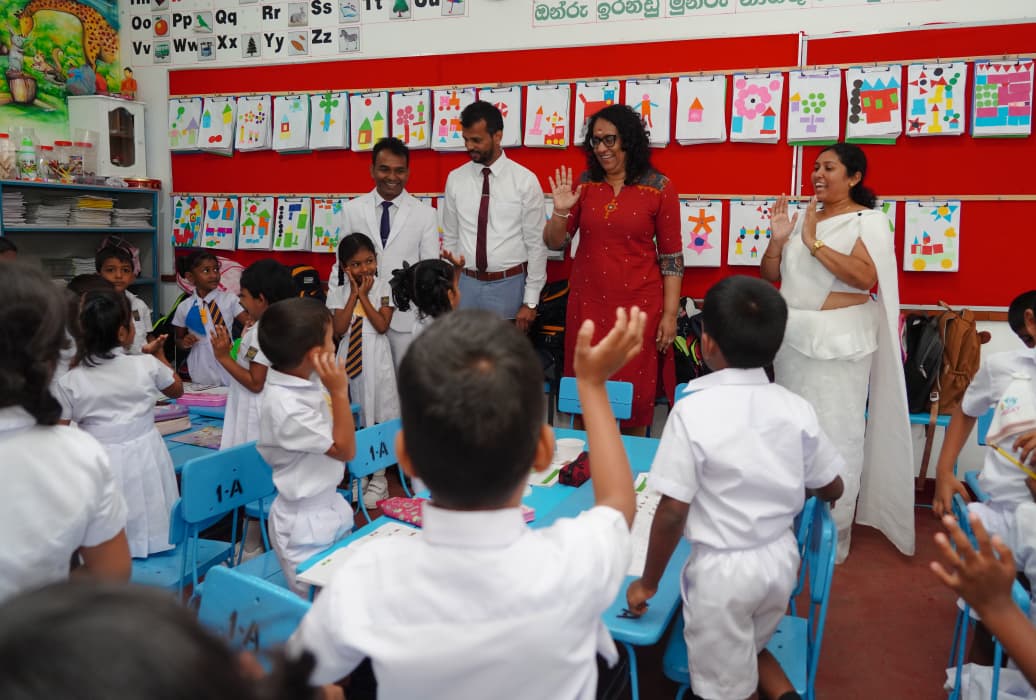
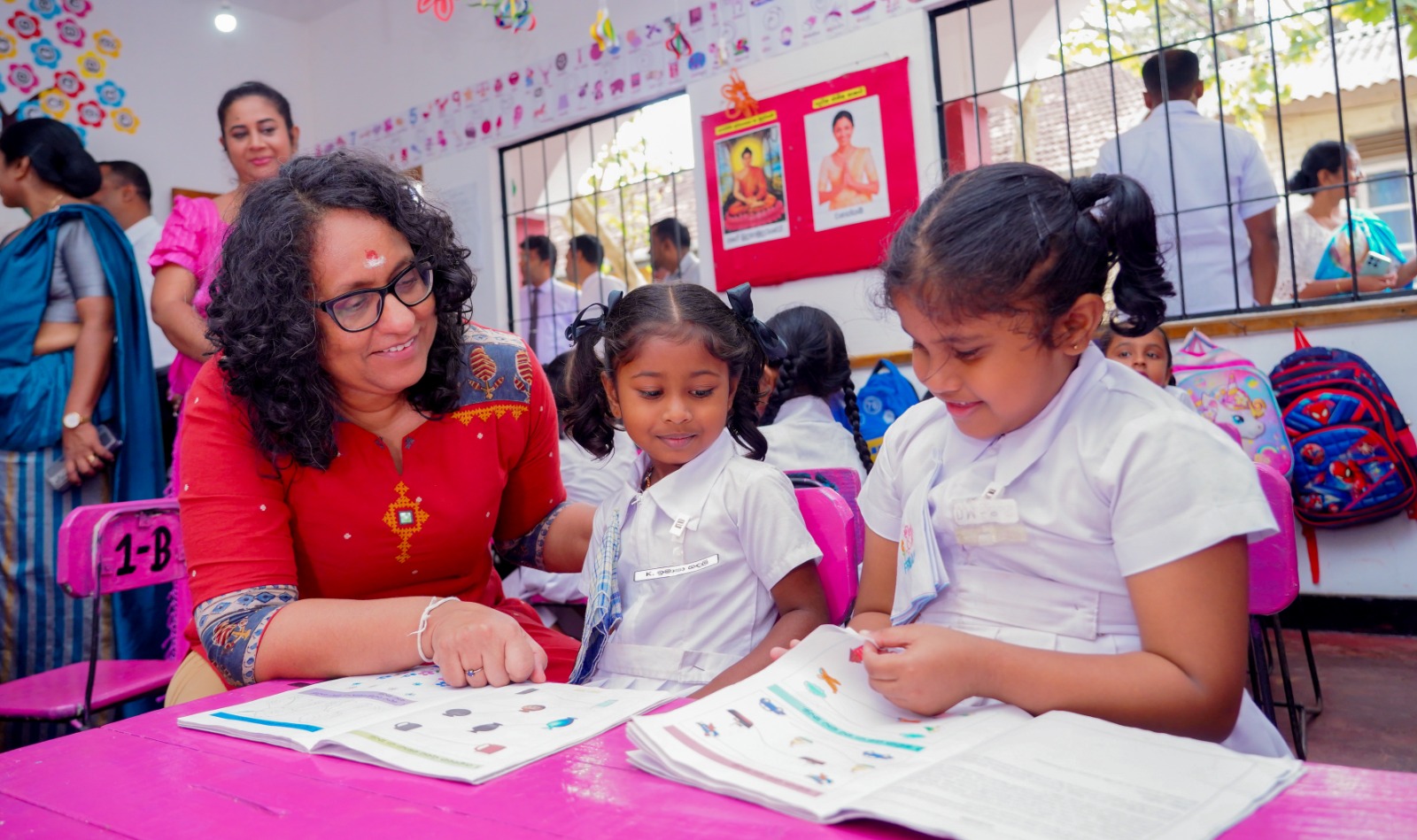
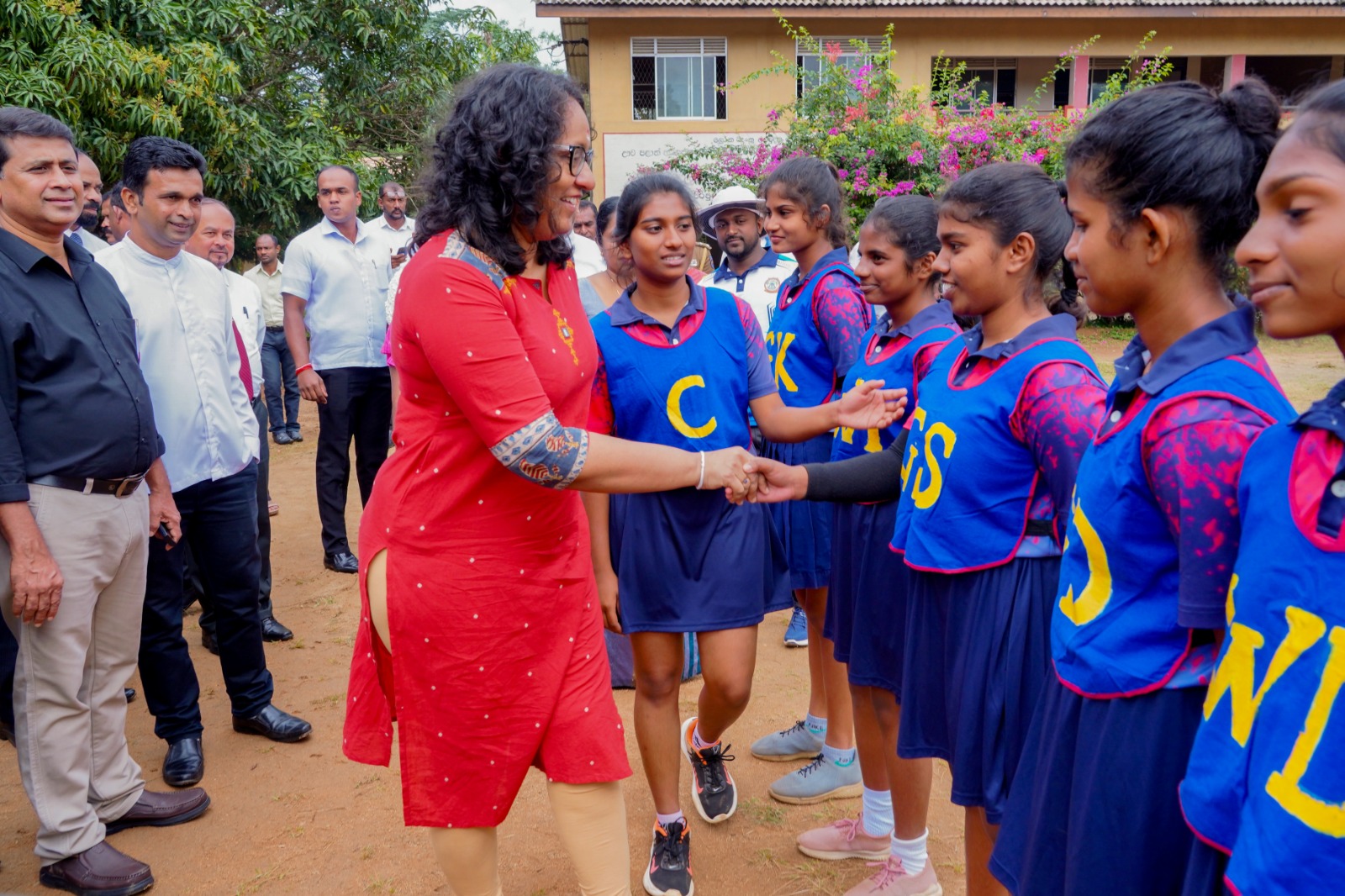
As part of her visit to the Monaragala District on the 13 th of February, the Prime Minister observed the implementation of the new learning methodologies introduced for Grade One under the new education reforms. She visited Kumbukkana Sri Shanmugam Tamil Maha Vidyalaya and Maduruketiya Maha Vidyalaya in Monaragala to observe the educational activities of Grade One students.
Considering the increase of student numbers and the development of infrastructure facilities, the Prime Minister also approved a proposal submitted by the School Development Society to rename Maduruketiya Maha Vidyalaya as Monaragala Dharmaraja Maha Vidyalaya.
Teachers briefed the Prime Minister that the new education system, supported by revised workbooks and activity-based learning methods, has proven to be effective, with students participating enthusiastically.
Addressing education officials further at the meeting held at Monaragala Royal College, the Prime Minister stated:
“Although this will not provide a complete solution to the existing teacher vacancies, these examinations can offer considerable relief. According to the Court’s previous determination, the effective date of degree completion had been set as 30.06.2025. However, considering numerous requests and following the cabinet approval we have sought Court’s consent to revise this date. We will act in accordance with the decision granted.
Funds allocated for school infrastructure must be utilized transparently and in line with proper planning, and progress must be reported accordingly. We cannot move forward by dividing ourselves along national, provincial, rural, or urban lines. As education authorities, you must make swift and accurate decisions based on correct data.
Further, discussions are already underway within the Piriven Committee of the Ministry of Education to develop Piriven education and to address the issues faced by Piriven teachers.”
The event was attended by the members of the Maha Sangha, Uva Province Governor Attorney-at-Law Kapila Jayasekara, Deputy Minister of Trade and Commerce R.M. Jayawardhana, Member of Parliament Ajith Agalakada, Uva Provincial Education Secretary Nihal Gunarathne, and several officials from the education sector.
[Prime Minister’s Media Division]
Latest News
Low-pressure area is likely to form over the southeastern Bay of Bengal around 15th February

Special Weather Bulletin issued by the Natural Hazards Early Warning Centre of the Department of Meteorology
Issued at 10.30 a.m. on 13 February 2026
A low-pressure area is likely to form over the southeastern Bay of Bengal around 15th February.
The general public are requested to be attentive to the future forecasts and bulletins issued by the Department of Meteorology in this regard
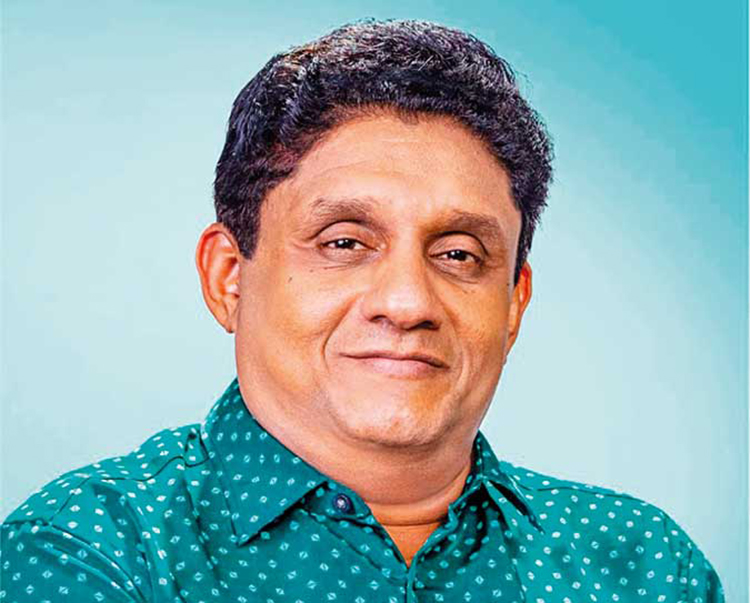
Opposition and Samagi Jana Balawegaya (SJB) Leader Sajith Premadasa has claimed that all five coal shipments, imported recently for the Lakvijaya Coal Power Plant, in Norochcholai, were of substandard quality.
The remarks were made on Thursday during a meeting of the Sectoral Oversight Committee on Infrastructure and Strategic Development at the Parliament complex, which summoned senior officials from the Ceylon Electricity Board (CEB), the Public Utilities Commission of Sri Lanka (PUCSL), and the Lanka Coal Company to discuss the controversial coal imports.
Premadasa raised concerns over the tender process, highlighting a lack of transparency and deviations from the original procurement plan for the country’s key 900-megawatt power plant. He noted that although the order for 2,500 tonnes of coal was issued in April, deliveries were delayed due to the May monsoon season.
The Opposition Leader criticised the shortened tender timeline, which was reduced from the standard 42 days to just 21, and demanded that reports approving the tender, technical instructions, and conditions for both previous and current coal tenders be submitted to Parliament.
Premadasa also questioned the qualifications and experience of the suppliers selected by the government, asking whether responsibility for the nation’s primary electricity production had been entrusted to an unsuitable company.
He also emphasised the coal specifications, stating that the net NCP value should be 5,900 and requested reports if the supplied coal failed to meet that standard. Premadasa asked whether coal had been added to boilers before test results were received, whether samples had been sent to India for testing, and requested the corresponding reports.
In addition, he sought clarity on potential financial losses exceeding one million rupees, reductions in the annual coal requirement due to extra coal burning, and any boiler damage caused by substandard coal.
The Opposition Leader called for a full investigation into the tender process, including a forensic audit, noting that prior questioning through the Sectoral Oversight Committee had already highlighted deficiencies in procurement procedures.

Teacher recruitment examinations will be conducted in accordance with the relevant court decisions – PM

Low-pressure area is likely to form over the southeastern Bay of Bengal around 15th February

Kolkata the stage as England, Scotland resume auld rivalry

Showers will occur at times in the Central, Uva, Eastern, Northern and North-central provinces and in Hambantota district

Sajith points to irregularities in coal procurement deals

Lankan Embassy in Washington welcomes ‘Walk for Peace’ Buddhist monks

‘Dates have the highest sugar content to fight Coronavirus’

Sunday Island 27 December – Headlines

#SundayIsland 17th December – Headlines

Sunday Island – 28th March

Sunday Island Headlines – 21 March

Sunday Island – 21st February – Headlines
-
 Features6 days ago
My experience in turning around the Merchant Bank of Sri Lanka (MBSL) – Episode 3
-
 Business6 days ago
Remotely conducted Business Forum in Paris attracts reputed French companies
-
 Business6 days ago
Four runs, a thousand dreams: How a small-town school bowled its way into the record books
-

 Business6 days ago
ComBank and Hayleys Mobility redefine sustainable mobility with flexible leasing solutions
-
 Business3 days ago
Autodoc 360 relocates to reinforce commitment to premium auto care
-

 Midweek Review3 days ago
A question of national pride
-
 Opinion2 days ago
Will computers ever be intelligent?
-
 Midweek Review3 days ago
Theatre and Anthropocentrism in the age of Climate Emergency