
News
Govt. buckles under pressure: Speaker Ranwala resigns

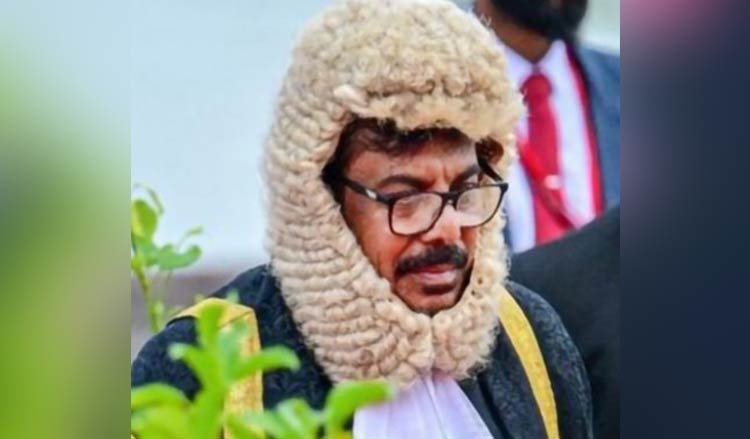
Asoka Sapumal Ranwala resigned as Speaker of Parliament yesterday amidst a controversy over his educational qualifications. The Opposition challenged him to prove his claim that he had a doctorate.
Ranwala has said in a statement that he never misrepresented his educational qualifications but he currently lacks documentary evidence to prove his academic credentials. He insists that he was awarded a doctorate by a research institute affiliated with Waseda University in Japan and has expressed hope of presenting the degree certificate in the future.
“However, given the confusion surrounding this issue and to avoid causing embarrassment to those who trusted and voted for this government, I have decided to resign from the position of Speaker for the time being,” Ranwala has said in his statement.
His resignation followed indications that MPs from the JVP/NPP government were preparing to make a significant decision on a no-confidence motion against him, centred on the legitimacy of his academic qualifications. The motion was prompted by ongoing doubts about the authenticity of his doctoral degree, particularly in the absence of clarification.
Sources within the NPP confirmed earlier on Friday that Ranwala was expected to address the controversy with a special statement when Parliament reconvenes on Tuesday (17). However, he announced his resignation yesterday evening (13).
Kalutara District SJB MP Ajith P. Perera told the media on Thursday that either the Speaker or the JVP/NPP government must clarify the matter regarding Ranwala’s doctorate. He asserted that if the Speaker genuinely holds a valid doctorate, there would be no issue. However, the lack of response to media inquiries and the removal of degree-related information from the parliamentary website raised further concerns.
Perera added that the Speaker should provide evidence of his qualifications within two weeks, failing which the Opposition would proceed with the no-confidence motion. He also suggested that the JVP/NPP MPs would face public scrutiny in their decision to either support or oppose the motion, testing their commitment to party lines against public expectations.
The National Democratic Front (NDF), led by former President Ranil Wickremesinghe, proposed the establishment of a parliamentary committee to verify the academic qualifications of all MPs, including the Speaker and Cabinet Ministers. This initiative seeks to address increasing concerns about the credibility of MPs’ qualifications.
Meanwhile, the SLPP announced its intention to introduce a separate no-confidence motion against Ranwala. Speaking at a press conference in Colombo, Hambantota District MP D.V. Chanaka criticised the Speaker, arguing that the issue undermines public confidence in Parliament. Chanaka further highlighted the Speaker’s responsibility as head of the Parliamentary Council and the Committee on High Offices, which oversees the verification of qualifications for key positions.
SLPP Secretary Sagara Kariyawasam also addressed the press, emphasising the importance of the Speaker’s academic qualifications in upholding the integrity of Parliament.



It has been reported that Attorney at Law Rakitha Rajapakshe, the son of former Minister of Justice Wijeyadasa Rajapakshe, has been arrested by the Commission to Investigate Allegations of Bribery or Corruption (CIABOC) over alleged links with the underworld.


… alleges NPP trying to implement UPFA, UNP plan
Front-line Socialist Party (FSP) yesterday (24) alleged that the NPP government’s move to amalgamate the Employees’ Trust Fund (ETF) and the Employees’ Provident Fund (EPF), under a unified, tripartite governance framework, would be detrimental to the private sector workers.
Addressing the media at Melder Place, Nugegoda, FSP spokesman Duminda Nagamuwa said that the Cabinet of Ministers approved this proposal on 15 June.
Nagamuwa claimed that the NPP was trying to implement what President Mahinda Rajapaksa had sought to do, in 2011, causing the police to open fire on a group of the Export Processing Zone workers, protesting against the move to create a private pension scheme. A worker, identified as Roshen Chanaka, was shot by police on May 30, 2011, and he succumbed to his injuries.
Pointing out that the EPF and the ETF had been established for the benefit of private sector workers but with different objectives, Nagamuwa warned that amalgamation of the two funds could cause unnecessary complications.
The FSP spokesman said that Ravi Karunanayake, in his capacity as the Finance Minister of the Yahapalana government, in late November 2015 had declared their intention to amalgamate the ETF with the EPF.
FSP’s Pubudu Jayagoda told The Island that they expected all political parties, other than the NPP, to disclose their stand on the vital issue. Jayagoda urged the Opposition to take a stand on the vital issue .
By Shamindra Ferdinando
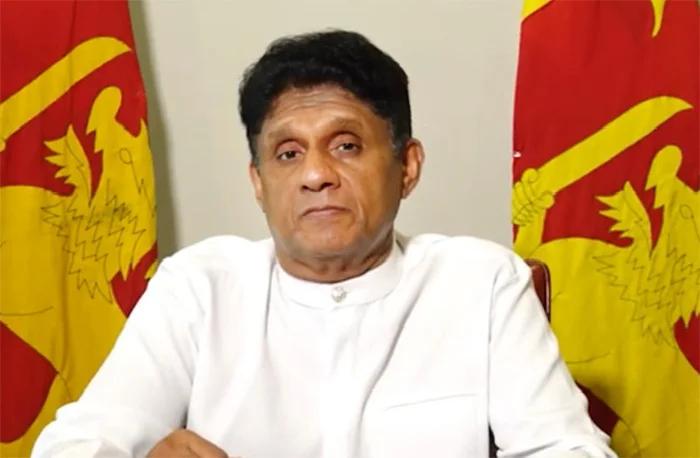
The Opposition yesterday argued in Parliament that the National Environment Amendment Bill was unconstitutional. The Opposition said that it violated the 13th Amendment.
SJB and Opposition Leader Sajith Premadasa argued that the approval of the Provincial Councils was required for the Bill to go ahead, as it was a subject in the Concurrent List of powers as per the 13th Amendment to the Constitution.
The MP also said that the clause which enables the Central Government to file legal actions against Local Government bodies was unconditional as well, since local bodies are included in the Provincial Councils list.
“How can you go ahead at a time when the Provincial Councils do not function properly,” Premadasa questioned.
ITAK MP P. Sathyalingam also raised the issue, but Speaker Jagath Wickramaratne, who responded, said the MPs could raise the relevant matters during the debate.

South Africa stun South Korea to reach World Cup knockouts for the first time

Tremors of 7.5, 7.2 kill 32, injure hundreds in Venezuela

Former Minister Wijeyadasa Rajapakshe’s son arrested by CIABOC

Morocco come back after historic Haiti goals to reach World Cup last 32

Strong earthquake strikes northern Japan

Vinicius nets twice and Neymar returns as Brazil ease by Scotland

‘Dates have the highest sugar content to fight Coronavirus’

Sunday Island 27 December – Headlines

#SundayIsland 17th December – Headlines

Sunday Island – 28th March

Sunday Island Headlines – 21 March

Sunday Island – 21st February – Headlines
-

 News6 days ago
Creditor receives USD 2.5 mn as Lankan public bears loss from theft of Treasury funds
-

 News5 days ago
Creditor not yet paid
-
 News5 days ago
Consumers bearing 22% tax burden despite 18% VAT claim: Dr. Harsha de Silva
-

 Features4 days ago
Nanda Pethiyagoda Wanasundara as three generations of family saw her
-

 Features3 days ago
Sri Lanka developing independent hydrographic capabilities
-

 Opinion6 days ago
SriLankan Airbus struck by lightning
-

 Editorial4 days ago
Fuel crisis: Beyond price debate
-

 Latest News4 days ago
Sooryavanshi thumps fastest List A fifty as India A win tri-series