
Business
Govt. approves major amendments to Electricity Act No. 36 of 2024


By Ifham Nizam
The government has approved major amendments to the Electricity Act No. 36 of 2024 as part of a broader effort to reform the country’s struggling power sector.
The decision follows recommendations from an expert committee appointed by the Ministry of Energy to address inefficiencies and modernize the industry.
The reforms, aimed at ensuring affordable, sustainable and reliable electricity, include structural changes, regulatory adjustments and a shift toward competitive energy markets.
Director General of the Power Sector Reforms Secretariat, Pubudu Heigallage, told The Island Financial Review that the period for written consultations on the proposed amendments to the Electricity Act has been extended until February 14, 2025.
For decades, the Ceylon Electricity Board (CEB) has operated as a vertically integrated monopoly, controlling generation, transmission, and distribution. The government now plans to separate these functions into three independent entities — a move that has been discussed for years but never fully implemented.
Under the proposed restructuring, Sri Lanka’s electricity sector will be divided into: Generation – Power plants and electricity production units will operate independently.
Transmission – A new entity will manage the transmission of electricity countrywide.
Distribution – Regional companies will be responsible for delivering electricity to consumers.
He added: “We are moving away from a state-owned monopoly towards a system where efficiency and competition drive the market.”
While the restructuring has been welcomed by some, concerns remain over its implementation:
Financial Viability – The transition will require significant investment in new infrastructure and regulatory mechanisms.
Regulatory Oversight – A strong regulatory framework is needed to ensure fair pricing and prevent monopolistic practices.
Public Confidence – Consumers and businesses remain uncertain about whether the reforms will lead to lower electricity costs and improved service.
“People want to know if this will actually make electricity more affordable,” he added. “The answer is yes, but it will take time to see the full benefits, the electrical engineer stressed.
One of the most significant proposals is the creation of a wholesale electricity market. This will allow multiple energy producers, including renewable energy providers, to sell electricity under a regulated pricing system, reducing reliance on expensive fossil fuels.
The amendments also propose dissolving the National Electricity Advisory Council (NEAC), arguing that its responsibilities overlap with existing regulatory bodies such as the Public Utilities Commission of Sri Lanka (PUCSL) and the Sri Lanka Sustainable Energy Authority (SLSEA).
Additionally, the government plans to introduce an Energy Transition Act, aligning national policies with global energy trends and climate commitments.
However, CEB trade unions have raised concerns about job security, potential privatization, and tariff hikes. Critics argue that private sector involvement could lead to higher electricity costs for consumers.
As Sri Lanka grapples with an energy crisis and mounting economic pressures, these reforms mark a turning point for the power sector. The government insists that the amendments will lead to greater efficiency, transparency, and long-term energy security.
Whether the reforms succeed in reducing electricity costs and ensuring energy stability remains to be seen. However, one thing is clear—Sri Lanka’s electricity sector is on the brink of transformation.
Meanwhile, industry experts have questioned the composition of the appointed committee, which consists primarily of key stakeholders.
“Half of them are university professors—when did they become key stakeholders?, an industry expert queried.
He also pointed out that there is no representation from the energy industry, no energy expert or legal professional, and no representatives from the Chamber of Commerce or similar organizations.


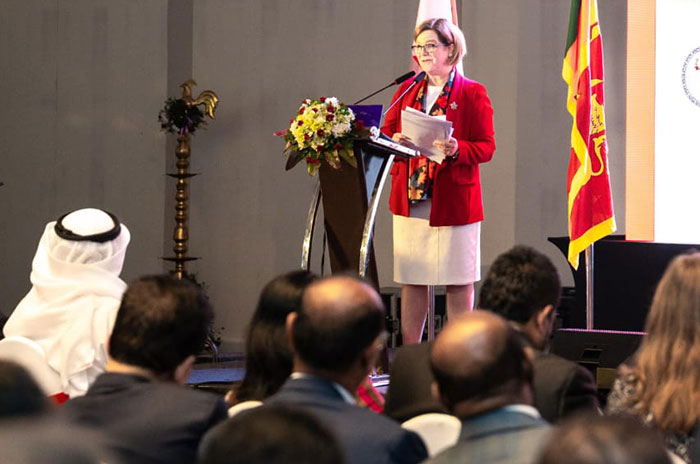
The vibrant celebration of Canada’s 159th National Day in Colombo brought together diplomats, government representatives, leading business executives and members of the Sri Lankan and Canadian communities, highlighting the growing strength of bilateral economic and commercial relations between Sri Lanka and Canada.
Hosted by the Canada Sri Lanka Business Convention (CanCham Sri Lanka), the event attracted one of the largest gatherings in its history, providing an important platform for business networking while celebrating the enduring friendship between the two countries.
Addressing the gathering, High Commissioner for Canada in Sri Lanka and the Maldives Isabelle Martin said Canada and Sri Lanka continue to enjoy a warm and expanding partnership built on shared values, people-to-people links, trade, investment and development cooperation.
“Canada Day is an opportunity not only to celebrate our country but also to celebrate the strong friendships and partnerships we have built with Sri Lanka.
The remarkable turnout this evening reflects the strength of those relationships and the growing collaboration between our two nations,” Martin said.
She noted that the close engagement between Canadian and Sri Lankan businesses continues to create new opportunities in trade, innovation, education, sustainable development and investment.
CanCham Sri Lanka officials said this year’s celebration was among the most successful Canada Day events ever organised by the Chamber, drawing an outstanding crowd and creating exceptional opportunities for business networking.
“What an incredible celebration of Canada Day. This was truly one of the most successful Canada Day celebrations in history, with an outstanding crowd and exceptional networking opportunities. It was wonderful to see so many distinguished guests, business leaders and community members come together,” the organisers said.
They thanked sponsors, partners, supporters and volunteers whose dedication ensured the success of the event.
The evening showcased Canada’s multicultural heritage while reaffirming the Chamber’s commitment to promoting stronger commercial links between Sri Lanka and Canada.
Guests representing a wide cross-section of industries exchanged ideas on expanding trade, investment and innovation partnerships.
Canada remains an important economic partner for Sri Lanka, with bilateral trade spanning apparel, agriculture, seafood, ICT services, education and professional services.
Canadian companies continue to explore opportunities in renewable energy, infrastructure, technology and sustainable development, while Sri Lankan exporters maintain a significant presence in the Canadian market.
Business leaders attending the celebration expressed confidence that closer collaboration between the two countries would further strengthen economic resilience and create new opportunities for investment, entrepreneurship and knowledge sharing.
The event concluded on a celebratory note, reaffirming the longstanding friendship between Canada and Sri Lanka and the shared commitment to fostering stronger business and people-to-people ties in the years ahead.
By Ifham Nizam
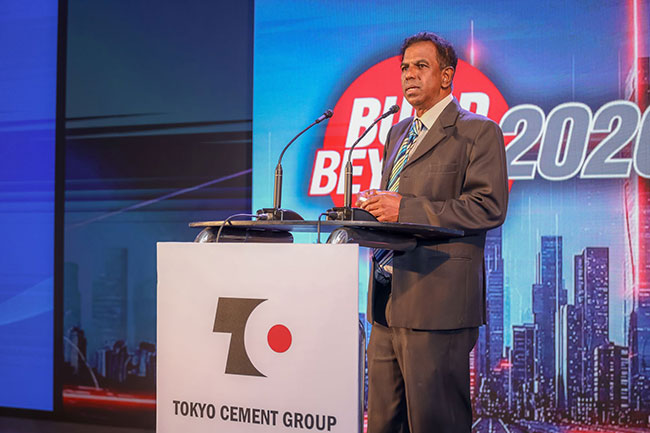
Tokyo Cement hosted ‘Build Beyond 2026 Summit’, a premier knowledge-sharing conference that brought together leading academics, civil and structural engineering experts and professionals of the Sri Lankan construction industry. The event featured keynote addresses by renowned construction technology specialists, Professor Shashank Bishnoi from the Indian Institute of Technology (IIT) Delhi-Abu Dhabi, and Senior Professor Priyan Mendis from the University of Melbourne.
The summit marked the second edition of the Build Beyond Engineering Technology Summit organized by the Tokyo Cement Group, designed to foster collaboration between academia and industry while highlighting global trends, innovations, and emerging technologies in cement and concrete. This year’s discussions focused on advancements in material science that are driving more sustainable and cost-efficient construction practices.
The event drew participation from state-sector authorities, research institutions, academia, engineering students, and public and private sector organizations, creating a dynamic platform for engagement across the construction industry. A key feature of the summit was a high-level panel discussion on “Building a Resilient and Sustainable Construction Future,” featuring several distinguished industry leaders.
The panel included Eng. Nissanka Wijerathne, the Secretary General/CEO of the Chamber of Construction Industry Sri Lanka (CCI), Founder and Deputy Chairman of Civil & Structural Engineering Consultants (Pvt.) Ltd.; Eng. Shiromal Fernando, the Chairman of CTBUH Sri Lanka and Vice President of the Green Building Council Sri Lanka, Adjunct Senior Lecturer at the General Sir John Kotelawala Defense University and visiting lecturer at the University of Moratuwa; Eng.

Strengthening its commitment to making vehicle ownership more accessible and affordable, Commercial Bank of Ceylon has entered into a strategic partnership with Carmart (Pvt) Ltd. to offer specially structured leasing facilities for Peugeot and Leapmotor vehicles.
Formalised through a Memorandum of Understanding (MoU), the collaboration brings together the Bank’s expertise in flexible financing and Carmart’s portfolio of internationally recognised vehicle brands, creating a value-rich proposition for customers seeking to purchase new vehicles.
Under this MoU, valid until 30th June 2027, Commercial Bank will offer attractive interest rates, concessions on documentation charges, and a complimentary credit card with the first year’s annual fee waived. These benefits are designed to reduce upfront costs and ease the financial commitment associated with vehicle ownership.
With leasing facilities available through Commercial Bank’s island-wide branch network, a cross section of customers will be able to part-finance their vehicle purchases while structuring repayments to align with their income patterns, enabling greater financial flexibility.
Further enhancing the value proposition, Carmart (Pvt) Ltd. will offer customers a range of added benefits, including a complimentary full tank of fuel, free vehicle registration, and other exclusive privileges, making the overall vehicle ownership experience more rewarding.
The Bank said the partnership reflects its continued focus on delivering practical and customer-centric leasing solutions in collaboration with reputed vendors. By combining competitive rates with cost-saving concessions, the Bank aims to make vehicle ownership more attainable for both existing and new customers.
This collaboration is particularly significant in the current market context, as it offers customers the opportunity to benefit from preferential leasing terms while managing repayments in a way that suits their financial circumstances.
As a pioneer in leasing solutions, Commercial Bank continues to innovate through strategic alliances that enhance value, broaden choice, and support customers in achieving their lifestyle aspirations.

Ronaldo scores as Portugal come back to win, Croatia denied by late VAR

Lister replaces injured Sears for ODI series in the West Indies

Showers will occur in the Western, Sabaragamuwa and North-western provinces and in Galle, Matara, Kandy, Nuwara-Eliya and Anuradhapura districts

CIABOC to question Harak Kata on Rs. 200 mn bribery allegation

Petrol, diesel prices could be reduced by Rs. 141 and Rs 126 per litre: Udaya

CBCSL: Only the Pope has authority to decide the retirement of Archbishop of Colombo

‘Dates have the highest sugar content to fight Coronavirus’

Sunday Island 27 December – Headlines

#SundayIsland 17th December – Headlines

Sunday Island – 28th March

Sunday Island Headlines – 21 March

Sunday Island – 21st February – Headlines
-
 News4 days ago
LAWASIA warns against ad hoc initiative to increase judges’ retirement ages
-

 News6 days ago
Another 1,132 Sri Lankan Personnel to be deployed for United Nations Peacekeeping Missions
-

 News3 days ago
Chamuditha to seek removal of injunction on Youtube programme
-

 Business6 days ago
Month-end profit-takings drive stock trading; indices up
-

 Features3 days ago
Climate action to bring South Asia together
-

 Features5 days ago
People’s Bank expands digital banking network with 125th cheque deposit kiosk
-

 News6 days ago
FSP complains of irregularities in a Guinness World Record event held in Sri Lanka
-

 News3 days ago
CPRP alleges another death in custody, seeks protection for witness