
Latest News
GovPay Concludes 2025 with Rs. 2 Billion in digital transactions, marking a major milestone in Sri Lanka’s digital transformation


GovPay, Sri Lanka’s Government Digital Payment Platform concluded the year 2025 by surpassing Rs. 2 billion in total digital transaction value, marking a major milestone in the country’s digital transformation journey. Notably, GovPay doubled its collections from Rs. 1 billion to Rs. 2 billion in just 45 days, reflecting rapid adoption, growing public trust, and strong institutional uptake across the public sector.
Since its official launch on 07 February 2025, GovPay has processed over 69,000 digital transactions, enabling payments for 3,372 government services across 215 government institutions. This accelerated growth underscores the increasing reliance on secure, convenient, and transparent digital payment mechanisms by both citizens and government institutions.
Implemented under the strategic leadership of the Ministry of Digital Economy, the Information Communication Technology Agency of Sri Lanka (ICTA) in collaboration with LankaPay, GovPay has emerged as a key pillar of Sri Lanka’s national digital public infrastructure. The platform plays a critical role in advancing financial inclusion, improving service efficiency, and strengthening transparency in public service delivery.
A key milestone in 2025 was the launch of the Online Traffic Fine Payment System through GovPay on 10 April 2025. Since its introduction, the system has facilitated over 50,000 digital traffic fine payments, generating more than Rs. 66 million in revenue. The service is currently operational across the Western, Southern, Northern, North Western, and North Central Provinces, including the Southern, Katunayake, and Central Expressways. While the island wide rollout planned for December 2025 was postponed due to adverse weather conditions and disaster-related challenges, ICTA, in coordination with the Sri Lanka Police and with the support of LankaPay, has agreed to complete the nationwide rollout in January 2026, with a landmark launch in the Central Province.
GovPay has continued to expand its reach across local authorities, including Divisional Secretariats, Municipal Councils, Urban Councils, and Pradeshiya Sabhas, significantly enhancing access to government services in citizens’ day-to-day activities. The platform has enabled digital transactions for all local authorities in the Northern Province and all Divisional Secretariats in the Southern Province, with a national target to digitize all local authorities by 2026.
Institutions such as Kotelawala Defence University, Sri Lanka Police, the Department of Technical Education and Training, the University of Moratuwa, and the Sri Lanka Atomic Energy Board emerged as some of the highest contributors to GovPay in 2025. Strong adoption by the education sector in particular highlights the readiness of younger generations to embrace digital transformation and demonstrates the platform’s scalability and reliability.
Beyond routine government services, GovPay also supported national disaster response efforts. Since 30 November 2025, the platform facilitated digital donations to the Rebuild Sri Lanka Disaster Relief Fund, collecting almost Rs. 14 million across 909 transactions, including contributions from Sri Lankans living abroad, ensuring transparency and ease of contribution during a national emergency.
As GovPay continues to grow, ICTA is working on revamping www.govpay.lk with enhanced features to support institutional onboarding, service management, and reporting capabilities. With Rs. 2 billion in digital collections achieved within its first year of operation and the last Rs. 1 billion reached in just 45 days, GovPay stands as a strong testament to the impact of coordinated digital transformation, reinforcing Sri Lanka’s vision of achieving a USD 15 billion digital economy by 2030.

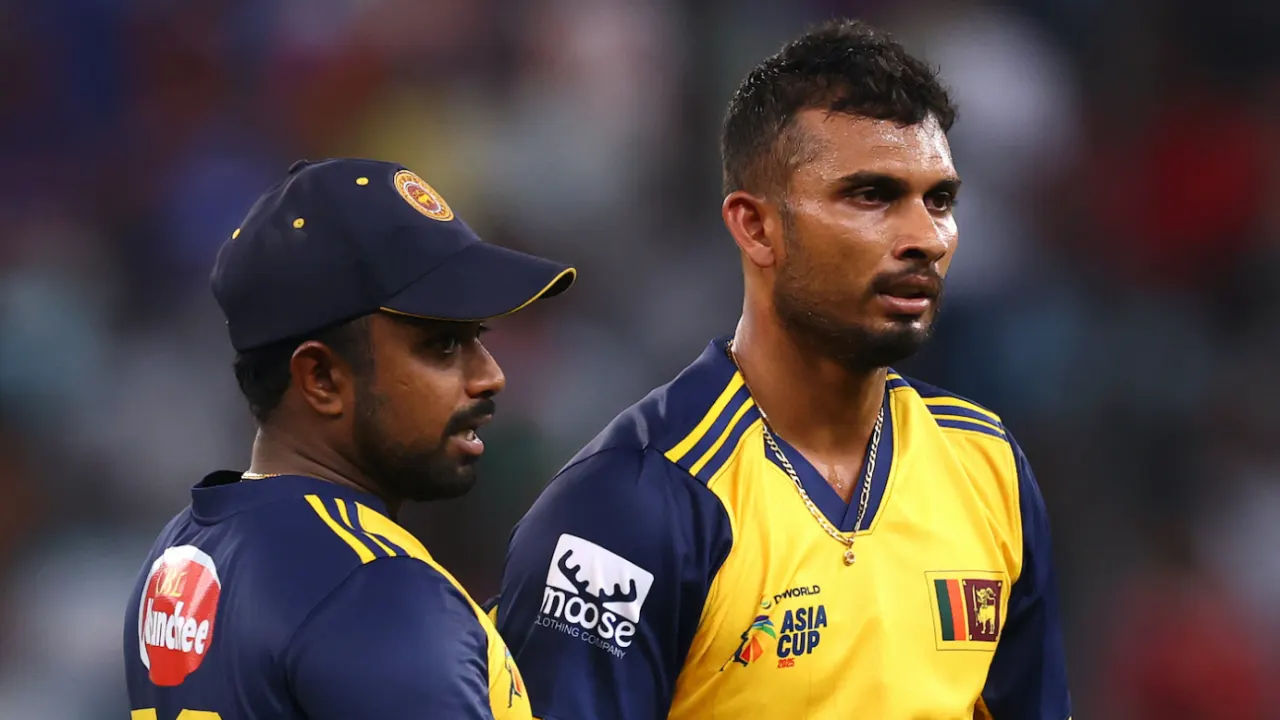
Dasun Shanaka will be Sri Lanka’s T20I captain until the end of the forthcoming T20 World Cup. The move to replace Charith Asalanka as captain in the format had been bloated by the previous selection committee under Upul Tharanga, whose term expired this month. But new chief selector Pramodya Wickramasinghe confirmed that Shanaka would lead the team as he announced the preliminary squad for the tournament.
“We decided that Dasun Shanaka should be captain until the end of the World Cup, after talking to head coach Sanath Jayasuriya as well,” Wickramasinghe said on Friday. “The previous committee had chosen a list of 25 players. We spoke to Jerome Jayaratne, the head of the high performance, as well as Sanath Jayasuriya. We decided to announce that same 25 as a preliminary squad for the World Cup.”
“We are looking at Dasun as an allrounder. We’ll have to talk to Sanath Jayasuriya and work out what is required of him.”
Shanaka had been made stand-in captain for the tri-series in Pakistan last month, after Asalanka was sent home from that tour to recover from an illness, although standard protocol is to keep unwell players within the team for a minor illness of the kind Asalanka had. Sri Lanka had lost to Zimbabwe through the course of that tournament, but managed to earn qualification for the final, in which they were comfortably defeated by Pakistan.
“For now we’ve got to continue with what the previous committee was doing,” Wickramasinghe said. “They had been following a plan. If I were to come in and change a lot of things, that would not be ideal. My plan is to keep this team together for the World Cup, and then see how best we can build after that.”
Although sacked as captain, a job he had been doing since the last World Cup in mid-2024, Asalanka remains in the squad. It has been his modest form in the format that had helped prompt his ouster. Asalanka had hit 156 runs at a strike rate of 122 from 12 innings this year, and he has not had a history of being an outstanding T20I batter, with his overall strike rate at 126. He remains among the new selectors plans, according to Wickramasinghe.
The preliminary squad also opened the door for the return of Niroshan Dickwella, who last played for Sri Lanka back in March 2023, and that in Tests. But Wickramasinghe said the wider squad wanted for a top order batter who could keep wickets, which has seen Dickwella come back into contention.
Sri Lanka preliminary World Cup squad:
Dasun Shanaka (Captain), Pathum Nissanka, Kusal Mendis, Kamil Mishara, Kusal Perera, Dhananjaya de Silva, Niroshan Dickwella, Janith Liyanage, Charith Asalanka, Kamindu Mendis, Pavan Rathnayake, Sahan Arachchige, Wanindu Hasaranga, Dunith Wellalage, Milan Rathnayake, Nuwan Thushara, Eshan Malinga, Dushmantha Chameera, Pramod Madushan, Matheesha Pathirana, Dilshan Madushanka, Maheesh Theekshana, Dushan Hemantha, Vijayakanth Viyaskanth and Traveen Mathew.
[Cricinfo]
Latest News
King and Campbell give West Indies century opening stand after New Zealand declare on 575

Devon Conway brought up a double-century and pushed New Zealand into such a strong position in Mount Maunganui that they actually got carried away with it.
With their fifth-highest Test total at home – 575 for 8 declared – on their back, Jacob Duffy, Zak Foulkes and Michael Rae ran in expecting wickets to tumble. They bowled far too full and were taken for far too many and, as a result, both teams have now wasted the new ball on a green pitch.
West Indies were flying – 88 in 15 overs – with 13 fours coming in that time. That’s not including ten wides. Brandon King and Johm Campbell did not bat like they had been weighed down by 155 overs in the field or the 500-plus deficit. They focused on playing late, playing straight and were still alert enough to punish an overly enthusiastic New Zealand attack.
West Indies go into the third day still trailing by 465 but in games like these you can’t look at the scoreboard too much. You just put your head down and keep going. That’s what King and Campbell did to produce their first century partnership as an opening pair, and only the sixth in the last 11 years for West Indies. King even had time to bring up a fifty, his second in Test cricket.
Such treats were on offer on day one too, only New Zealand were at the other end now. Twenty-four hours has produced a sea change with the visitors also finding their discipline with the ball.
Justin Greaves set up Kane Williamson beautifully to dismiss one of the best batters in the world for just 31 and Roston Chase bowled 25 overs unchanged from morning drinks to cover for the loss of Kemar Roach to a hamstring injury. Shai Hope is of more pertinent concern because he spent the entire day at the hotel unwell and might not be allowed to bat at his usual No. 4 spot.
Ojay Shields and Tagenarine Chanderpaul were carrying niggles as well so when Greaves had to step away for a bit in the second session, West Indies had no subs left and had to rope in local Tauranga boy, 19-year-old Sebastian Heath, who is also registered with the Denmark cricket team, to field for them.
Given all these handicaps, the seven wickets West Indies took on Friday, the composure that followed with the bat, and the fact that they have all their run-scoring resources in hand for when the pitch flattens out were unlikely but hard-earned outcomes.
Greaves may just have heralded that with his extraction of Williamson, where he beat the outside edge several times, the batter struggling to come to terms with the pace of his own home ground. With the pressure sufficiently built, Greaves dangled the bait wide outside off stump and Williamson couldn’t resist having a go. He threw his head back – but dared not look back – when he heard the nick go through to the keeper. This was what was missing from West Indies on day one when Conway and Tom Latham cruised to 323 for 0. The ability to hold a line and length and build up to a wicket.
West Indies allowed only one man to score more than fifty runs on the second day – Rachin Ravindra making 72 not out. It was a much more appropriate outcome given the conditions. Balls on a good length continued to misbehave. Jayden Seales hitting more or less that area against Conway, batting on a double-century, had the batter recoiling as one kicked up alarmingly.
The opening batter’s wicket – for 227 – was the result of another ball nipping in and keeping low to trap him lbw. There is still help for the bowlers out there, just that their margin of error is small. When they focus outside the 6m length, the pitch speeding up has made hitting through the line easy.
Conway was tiring at the end of his 508-minute innings. West Indies’ bowlers were right there with him. Seales had roused himself to go one-on-one against Daryl Mitchell. He was emotional enough to curse so loud it was caught on the stump mic when Greaves put down a straightforward catch off Mitchell at second slip in the 127th over. He has six wickets at an average of 50.33 on this tour. He’s bowled better than that.
Day three will bring different challenges. Chase’s offbreaks were already getting grip and turn and bounce. Ajaz Patel will have a lot to say and this match remains interestingly poised, not to mention one of a kind – the first in New Zealand history to include two century opening stands in the first innings.
Brief scores: [Day 2 Stumps]
West Indies 110 for 0 in 23 overs (Brandon King 55*, John Campbell 45*) trail New Zealand 575 for 8 dec in 155 overs (Devon Conway 227, Tom Latham 137, Rachin Ravindra 72*; Jayden Seales 2-100, Anderson Phillip 2-154, Justin Greaves 2-83) by 465 runs
[Cricinfo]

At times during the first half of the third day at Adelaide Oval, England threatened to keep their Ashes hopes alive, but on his home ground Travis Head’s second century of the series as an opening batter carried Australia to a 356-run lead which will surely be turned into a 3-0 Ashes retention at some point over the weekend.
For Head, who was dropped on 99 by Harry Brook at gully, it was the continuation of a magnificent run in Adelaide which has brought four of his 11 Test centuries, all of them coming in his last six innings at the ground. This one could also have gone a long way towards cementing him as an opener following his hasty promotion in Perth and the blazing hundred which followed. Overall it was Head’s fourth hundred against England and by the close his career-best 175, which also came in Adelaide, was looming into view.
Initially, at least, the wheels did not come off for England as they had threatened to do on the second day at 168 for 8. But any hopes of the type of run chase that has characterized the Bazball era appeared forlorn during a desperate final session that saw Australia pile up 152 in 35 overs as Head combined with fellow South Australian Alex Carey in an unbroken 122-run stand.
That Australia only led on 85 after the first innings was down to a resilient 106-run stand between Ben Stokes and Jofra Archer as England showed impressive character during the first session, and for a time it was far from a foregone conclusion that Australia would dominate.
Having been forced to take the second new ball to wrap up England’s innings, where Stokes threatened to play one of his game-changing innings before falling to Mitchell Starc for the 12th time in Tests, Australia then lost Jake Weatherald before lunch. He was lbw to Brydon Carse, who produced his best spell since the first day in Perth either side of the break, although Weatherald would have been saved with a review as the ball pitched outside leg.
But after Josh Tongue removed an out-of-sorts Marnus Labuschagne England were unable to apply any pressure on Head and Usman Khawaja as the pair added 86 in 113 balls. Though Khawaja and Cameron Green fell in quick succession any sense of vulnerability soon vanished as Head and Carey set about their partnership. Carey continued his outstanding match with a half-century to follow the first-innings hundred.
Brief scores:
Australia 371 and 271 for 4 (Travis Head 142*, Alex Carey 52*; Josh Tongue 2-59) lead England 286 (Ben Stokes 83, Jofra Archer 51, Scott Boland 3-45, Pat Cummins 3-69, Nathan Lyon 2-70) by 356 runs
[Cricinfo]

Sri Lanka replace Asalanka with Shanaka as captain ahead of T20 World Cup

GovPay Concludes 2025 with Rs. 2 Billion in digital transactions, marking a major milestone in Sri Lanka’s digital transformation

Swift restoration of Religious, Cultural and Archaeological sites damaged by the disaster

Maria Perez and Evan Dunfee confirmed winners of World Athletics Race Walking Tour

King and Campbell give West Indies century opening stand after New Zealand declare on 575

Head’s hometown century floors England after brief hopes of fightback

‘Dates have the highest sugar content to fight Coronavirus’

Sunday Island 27 December – Headlines

#SundayIsland 17th December – Headlines

Sunday Island – 28th March

Sunday Island Headlines – 21 March

Sunday Island – 21st February – Headlines
-

 Features6 days ago
Why Sri Lanka Still Has No Doppler Radar – and Who Should Be Held Accountable
-

 Midweek Review3 days ago
How massive Akuregoda defence complex was built with proceeds from sale of Galle Face land to Shangri-La
-

 News2 days ago
Pakistan hands over 200 tonnes of humanitarian aid to Lanka
-
 News2 days ago
Pope fires broadside: ‘The Holy See won’t be a silent bystander to the grave disparities, injustices, and fundamental human rights violations’
-

 Latest News5 days ago
Landslide early warnings in force in the Districts of Badulla, Kandy, Kegalle, Kurunegala, Matale, Nuwara Eliya and Ratnapura
-

 News3 days ago
Burnt elephant dies after delayed rescue; activists demand arrests
-
 Features6 days ago
Srima Dissanayake runs for president and I get sidelined in the UNP
-

 News7 days ago
Govt. okays postgraduate medical training for Maldivian medical officers and dental surgeons