
Business
Government of Sri Lanka and UNDP Map Out SDG Investment for Private Sector to Support Recovery


The SDG Impact Standards were also introduced to the Sri Lankan market to guide investors and enterprises on integrating sustainability and the SDGs into management practices
The Government of Sri Lanka and UNDP in Sri Lanka on Aug. 30 announced the launch of the Sri Lanka SDG Investor Map (the Map), a market intelligence tool that seeks to direct private capital where Sri Lanka’s Sustainable Development Goals (SDG) priorities, Government policy and market opportunity intersect, as the country seeks to rebuild its economy sustainably, using the SDG framework as its guide. The methodology for the Map was created by UNDP SDG Impact, a press release from participants said.
Explaining the Map will be a crucial tool to accelerate Sri Lanka’s recovery pathway and build forward better, the reease said it can be used by:
Investors wishing to explore Sri Lanka as an investment destination while also rendering benefits for local communities and the environmentEnterprises that want to adjust their business strategy towards inclusive models and are seeking market intelligence and investment rationale to validate their approach
Government agencies seeking to address entry level barriers for the private sector and to build an amenable ecosystem for the development of SDG enabling sectors
“In Sri Lanka, the Map was the result of a strong collaboration between UNDP and Sri Lanka’s Sustainable Development Council, the nodal government institution responsible for coordination, facilitation, monitoring, evaluation and reporting on the implementation of the 2030 Agenda for Sustainable Development in Sri Lanka,” the release said.
“Sri Lanka’s apex investment promotion agency, the Board of Investments (BOI) of Sri Lanka, also provided input and validation during the development of the Map and is a key partner for the Map’s launch. Through secondary research and over 50 consultations with public and private sector organizations, the Map has identified 15 Investment Opportunity Areas (IOAs) that cover investment themes and business models across five SDG priority sectors: Renewable Energy, Healthcare, Infrastructure, Food & Beverages and Consumer Goods,” the release added.
At the event, UNDP called on the private sector to adopt the SDG Impact Standards, the independent and global management standards that guide businesses and investors in their decisions to optimize interrelated economic, social and environmental impacts. The forthcoming SDG Impact Standards Assurance Framework and SDG Impact Seal recognizes investors and enterprises who are more likely to be contributing positively to sustainability, reducing the risk of impact-washing.
Speaking at the event, Mr. W.A. Sarath Kumara, Deputy Secretary Treasury, Ministry of Finance stated, “Sri Lanka’s commitment to achieving the SDGs is explicit in our continued pursuit of national policies and development plans and programmes in alignment with SDGs over the years. Innovative financing mechanisms become imperative to synergize the government, private sector, and capital markets to generate the additional resources needed to finance the SDGs. The SDG Investor Map is therefore a timely intervention that would provide the potential investors with the required market information relating to potential investment opportunity areas.”
Highlighting how the map will inform Sri Lanka’s efforts to rebuild its economy sustainably, Ms. Hanaa Singer-Hamdy, Resident Coordinator, United Nations in Sri Lanka, said “a whole-of-society approach is needed to mitigate the immediate impacts of Sri Lanka’s economic crisis and assure the country’s long-term sustainable development. The Sri Lanka SDG Investor Map offers a compelling pathway for private sector entities to increase the alignment of their investments with the SDGs. It complements the recently launched United Nations Sustainable Development Cooperation Framework 2023–2027 by translating relevant country-level SDG gaps and priorities into private sector investment opportunities that will have lasting impacts on lives and livelihoods across the country.”
Commenting on the collaboration, Ms. Chamindry Saparamadu, Director General, Sustainable Development Council stated, ‘Partnerships underpin the success of the 2030 Agenda for Sustainable Development. Each stakeholder has particular strengths to bring to bear in delivering on the SDGs. Partnership and collaboration between the Sustainable Development Council and the UNDP in creating Sri Lanka’s first ever SDG Investor Map provides a classic example of how the strengths of each agency was leveraged to produce an innovative solution that could help bridge the financing gap for SDGs in Sri Lanka’.
Highlighting UNDPs role, Ms. Malin Herwig, Officer-In-Charge, UNDP in Sri Lanka commented, “The SDG Investor Map has provided us market intelligence on SDG aligned investment opportunities for Sri Lanka at this critical juncture. UNDP together with the Government of Sri Lanka, through the Map, calls for development partners, IFIs and private impact investors to come together to formulate financing solutions to contribute to the country’s recovery and SDG acceleration.”
Ms Fabienne Michaux, Director of SDG Impact concluded, “While there is much to be done, there is a great opportunity for the private sector to integrate sustainability and the SDGs into their investments and businesses to help Sri Lanka build forward better. The Sri Lanka SDG Investor Map has done a large part of the leg-work by identifying those sectors that will have the most development impact and that are aligned to the Government’s SDG targets. This coupled with the adoption of the SDG Impact Standards which guides the private sector to manage their impact, will further the country’s ability to build a more resilient future, leaving no one behind”.
About SDG Impact
SDG Impact is a UNDP flagship initiative, working to accelerate private sector contributions towards sustainability and the achievement of the Sustainable Development Goals (SDGs) by 2030. Its aim is to make it easier for organizations to place sustainability, the SDGs and managing for impact at the core of business and investment purpose, how value is created, and how capital is allocated through its SDG Impact Standards and the SDG Investor Maps.
Learn more sdgimpact.undp.org and follow us on Twitter @SDGImpact
About UNDP
UNDP is the leading United Nations organization fighting to end the injustice of poverty, inequality, and climate change. Working with our broad network of experts and partners in 170 countries, we help nations to build integrated, lasting solutions for people and planet.
Learn more at www.undp.org/srilanka or follow us at @UNDPSriLanka
For more information, please contact:
Contact: socialmedia.lk@undp.org | 0779804188 | 011-2580691 Ext. 1501 Get in touch: UNDP on Twitter | Facebook | Instagram


HNB FINANCE PLC has strengthened its Board with the appointment of four Independent Non-Executive Directors, effective September 8, 2026.
The new directors are Renuke Wijayawardhane, Shanti Gnanapragasam, Nabiha Mohamed and Dr. Thisuri Wanniarachchi, who collectively bring extensive experience in financial regulation, banking, risk management, corporate finance, investment strategy, development finance and public policy.
Wijayawardhane, an Attorney-at-Law and capital market professional, retired in July 2025 as Chief Regulatory Officer of the Colombo Stock Exchange after more than 31 years with the Exchange. His experience covers securities regulation, corporate governance, market infrastructure and compliance.
Gnanapragasam has over four decades of banking experience spanning treasury, risk management, credit and trade finance. She currently serves as an Independent Non-Executive Director of Cargills Bank, Wealth Trust and Vision Fund Lanka.
Mohamed is a corporate finance and investment professional who previously served as Lead Transaction Advisor at the State-Owned Enterprise Restructuring Unit of the Ministry of Finance, where she led five divestiture transactions worth over US$600 million.
Dr. Wanniarachchi brings over a decade of experience in development finance, institutional reform and social protection, including work with the World Bank and the Government of Sri Lanka.

Prime Lands Residencies PLC has completed and officially handed over The Palace Gampaha, described as the largest planned gated residential community in Gampaha, to its homeowners.
The development, which commenced construction in 2021, is located two kilometres from Gampaha town and 100 metres from the Colombo-Kandy main road.
Spread across 13.5 acres, The Palace Gampaha comprises 480 two- and three-bedroom apartments in a ground-plus-three-floor development, with prices starting from Rs. 27.5 million.
The project allocates about 80% of its land to landscaped areas and common facilities, while the remaining 20% is used for apartment development. Facilities include a swimming pool, gymnasium, clubhouse, library, community kitchen, laundry, mini-mart and a daycare centre managed by the Lyceum Group.
The fully gated community also incorporates solar power for common areas, underground electricity cabling and a sewage treatment plant with water recycling facilities.
Prime Residencies said all statutory approvals required for the handover had been secured, including certifications from the Condominium Management Authority and registration of the Condominium Plan and Deed of Declaration.
Prime Group Chairman Premalal Brahmanage said the project reflected the company’s vision of creating large-scale residential communities designed to enhance the quality of life of Sri Lankan families.
The project is the latest addition to Prime Group’s portfolio of more than 70 gated community and apartment developments.

Sri Lanka’s Non-Vessel Operating Common Carrier (NVOCC) sector is losing ground despite the expansion of the industry in several regional markets, Sri Lanka Association of NVOCC Agents (SLANA) Chairperson Swabha Wickramasinghe said.
Wickramasinghe, re-elected for a third consecutive term at SLANA’s ninth Annual General Meeting last week said the continued difficulty in collecting Colombo Terminal Handling Charges (THC) as a separate land-based cost was among the key challenges facing the industry.
She said the practice placed Sri Lanka at a competitive disadvantage as principals consider the overall economics of operating through Colombo.
“When Sri Lanka becomes less commercially attractive compared with other regional destinations, the consequences eventually reach our members,” she said.
Wickramasinghe said a committee had been proposed at a recent meeting with the Minister and Deputy Minister to evaluate the THC issue, urging the authorities to expedite its appointment and review.
She also called for an early solution to the problem of uncleared salt containers at the Port of Colombo, which has resulted in delays in releasing empty containers.
With more than 75 NVOCC lines operating in Sri Lanka, she stressed the sector’s importance to regional trade, particularly links with India and China.
Ports Minister Anura Karunathilaka said Sri Lanka should expand regional business while exploring areas such as bunkering, freight forwarding and e-commerce logistics.

Death toll from Philippines ferry fire rises to 76, with more still missing

Anthropic boss Dario Amodei calls for AI development to slow down

It’s spin vs spin as India and Sri Lanka battle for Asia Cup title

Atmospheric conditions are favorable for afternoon thundershowers in most parts of the Island today [13]

Gnanasara Thero absconding after SC ruling

House to debate 22A, Judicature Bill next week

‘Dates have the highest sugar content to fight Coronavirus’

Sunday Island 27 December – Headlines

#SundayIsland 17th December – Headlines

Sunday Island – 28th March

Sunday Island Headlines – 21 March

Sunday Island – 21st February – Headlines
-

 Sports2 days ago
DDS set to lose Test captaincy
-

 Features6 days ago
After the parade: What a traffic OIC’s walk-out tells us
-

 Editorial6 days ago
Arrests as theatre
-
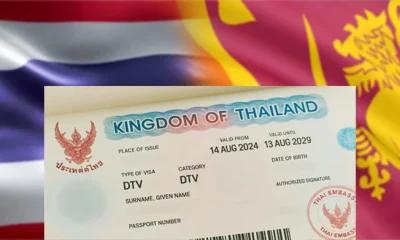
 News5 days ago
Thailand shuts door on undesirables from Sri Lanka
-

 Latest News6 days ago
Harshitha’s composed knock seals Sri Lanka’s semi-final berth
-

 Business5 days ago
CEB successor company breaks into top three in competitive BESS tender
-

 News6 days ago
‘Choka Malli’ slips out of country before travel ban
-

 News2 days ago
Sri Lanka faces new grid challenge as rooftop solar surges: former CEB GM