
Business
‘Golden Memories & Sensational Melodies’ – A Tribute to Legacy and Charity


Continued from yesterday
My father was very skeptical about politics and politicians, and dissuaded him about it and anyway told him, don’t go into politics unless you’re financially independent because you have to be your own master. That he listened to but his relatives in Jaffna said, if you do not speak Tamil and you have not lived here, you will not make it. So he threw himself into being a lawyer and of course, he was very successful.
Then came 1971, the insurrection, which rattled him. I am afraid, I think, I see President Kumaratunga in the audience, but I think of the squeeze economic policies of the times also made him realize that he could not succeed as an independent lawyer here. So he went back to England and those were, in some ways, years of exile for him till he went back to Geneva and was successful in the UN. But I know that this is not really just his life story that I’m recounting, but what he meant to us in the family, as an uncle, as a brother, as a brother-in-law, he had a very special place. I think what was special for us as children is that he saw us as adults and he would engage with us as adults.
I did notice that he was able to communicate with people, irrespective of class or religion or ethnicity. Maybe that was a trait he picked up in Trinity or it may have been his own ingrained personality, but he did manage to cross those worlds which I thought was very special. It is ironic and wonderful, in a way, that he realized his dream to go back into politics when President Kumaratunga asked him to join. At that time, I was very enthusiastic, but I thought he could be a bridge between Tamils and Sinhalese and also between the UNP and the SLFP, which was more hostile to each other than anything else but politics has a life of its own, I think. His own personal life was also such that he was now transiting into a different space in his life, that I think, in some ways, the man we knew and were very familiar with, to some extent, we lost him when the nation gained him. His move into politics really meant an end to the informal gatherings and moving and intellectual challenges that we were able to have with him, and I felt there was more of an isolation from him at that time.
But what are some of the takeaways that I think of with my uncle? I mean, on a personal level, I always thought that I was his favorite niece till I met my cousin who lived in America, who said, no, no, I thought I was his favorite niece. So I said, perhaps he had a way of making each one feel special, specially engaged but some things he reminded me, which I will remember. He did make a reference saying, I was emotionally detached after my mother died and I think that sort of helped, whether helped or hindered him, in the way he navigated life. He did not take things intensely personal. He also gave me a lesson in life when I told him I was going to wing it at some exam and he told me, nothing is ever winged.
You do not know how much hard work goes into making things look seamlessly effortless. So I realized that behind that, there was a very dedicated professional and I think that showed a lot, even in his interactions in Parliament and as a politician. Even today, if I get into an Uber or PickMe they see my name and they ask me whether I’m related to Lakshman Kadirgamar and mourn that the country doesn’t have politicians like him. I would remind them that when President Kumaratunga wanted him to be Prime Minister, people said he could not be Prime Minister because he is not a Sinhalese or a Buddhist and then they mourn it and say, we should have gone with that. So, this is the time that I’m going to pass on to Dayan. So where I finish with my own memories of him as an uncle and what he meant to us in our family and Dayan, you now take over with the Foreign Minister….”
Dr. Dayan Jayatilleka :
“…Lakshman Kadirgamar be friended me after the death of his friend, my father, Mervyn de Silva. I think it was at some event when he had suddenly turned around, he told me, he suddenly turned around because he had heard a laugh just like Mervyn’s and it happened to be me because he knew Mervyn had died, and he did not know who it was. So that’s how we got to know each other personally. My father, Mervyn, and Lakshman Kadirgamar had been students together at university and Law College. When Dr. Gamani Corea and Mervyn de Silva commenced the Foreign Affairs Study Group to review and restructure Sri Lanka’s foreign relations after the battle of the late 1980s, the airdrop and so on and so forth, the Foreign Affairs Study Group was then approached by President Premadasa who appointed Bradman Weerakoon, his Advisor on Foreign Affairs, to be a member of that group and to liaise with it. Mervyn invited his old friend, Lakshman Kadirgamar, who had come back to Sri Lanka after his stint at WIPO and inducted him into the FASG. That was his transition from international law to international relations and international politics. So after my father died, it was in 1999, Mr. Kadirgamar used to invite me. I don’t know whether his wife Sugandhi is in the audience, but if she were, she would confirm that he would send the car for me at 8 pm. The car brought me to his place and took me back at 3 am. He used to have this bottle of rum from the Caribbean, not Cuban, which he used to share with me and we used to discuss the problems of Sri Lankan politics at the time, in wartime. Very complex, the Norwegian negotiations, the ceasefire agreement of Prime Minister Ranil Wickremasinghe, the knock-on effects on our security in India. There were many, many complex problems, and he thought that somehow inviting me over for those long one-on-one chats was of some use.
Now, to move from the personal to Lakshman Kadirgamar’s thinking, which is what he leaves us, I think I was privy to that, not only through my conversations, but in the sense that all of us are, because he was a public person, and there’s nothing that he said in private that was at variance with his publicly held positions. I would go so far as to say that whenever we fret about the absence of Lakshman Kadirgamar, we should remember what he thought and did, and try to extract from that the principles concerned, which we may then apply and fight for in the political and intellectual arena today. Lakshman Kadirgamar did what was very difficult to do. He balanced antinomies, managed contradictions, reconciled and synthesized opposites, which is very, very difficult to do. He was a principled man who took principled positions on difficult matters, but did so while remaining perhaps the most civilized, cultured, cultivated, and charming personality in public life that we have seen for a very long time. His affability and his wit in no way were at the expense of principle.
Now, what are these issues, and of what relevance are they? I would say that the problems with which Lakshman Kadirgamar grappled are in one way or the other the same problems that we face today, and which will intensify in the new period in international affairs we have stepped into with, if I may say so, the second Trump administration. Now, Lakshman Kadirgamar reconciled the need for an autonomy-based or devolution-based political solution to what was known as the Tamil question or the question of the coexistence of the constituent communities of Sri Lanka, the one side of the equation, with the need for safeguarding national sovereignty, independence, and territorial integrity. Now, this was very difficult to do, because in Sri Lanka at that time, during wartime, you had a schism between the narrow nationalists who were opposed to devolution, just as they were opposed to peace; you had those who were for devolution, but were willing to engage in negotiations leading to policies which Kadirgamar considered to be those of appeasement, and which he opposed.
So, he proposed devolution; he made a brilliant speech when President Kumaratunga presented her August 2000 constitutional reform package, the draft constitution, a very impassioned plea to Parliament that it be supported. I was at his place, he had wanted me to come over, and when he came back from Parliament, he was crestfallen because Mr. Sambandan and the TULF, which had promised to support him, had let him down on the occasion. So he was very much for devolution, he never stopped being for an autonomy-based solution, but he was also very strongly, very firmly, opposed to the LTTE, and he was opposed to excessive unilateral concessions which he thought were being made by the Norwegian facilitators. He and President Kumaratunga tried to manage that by bringing in Vidar Helgesen and talking to the Norwegians and trying to change the mix at that end. So this is one issue, how one reconciles the need for autonomy with the need to safeguard the Sri Lankan state, and to resist any kind of secession.
Lakshman Kadirgamar was a very, very strong votary of national sovereignty, and he went to sort of a war of ideas on the matter. When Prime Minister Wickremasinghe signed the ceasefire agreement, Mr. Kadirgamar made a landmark speech in Parliament, and then sought its publication, and obtained it in the Sunday Times. The Foreign Ministry itself was not quite sure as to whether he should be more muted, so he brought, I think, either Mr. Sinha Ratnatunga or Iqbal Athas home, he told me he brought them home and said: this is the speech; here is my transcript. And it was published as a full page in the Sunday Times, making the point that the ceasefire agreement bore the danger of a division, of recognizing two territories in the country which could become a hard border.



CSE trading kicked off on a positive note yesterday but turned negative on account of selling pressure from investors deriving from tensions in the West Asian region, market analysts said. Amid those developments both indices moved downward. The All Share Price Index went down by 115.36 points, while the S and P SL20 declined by 55.67 points.
Turnover stood at Rs 5 billion with nine crossings. Top seven crossings were as follows: ACL Cables 7.5 million shares crossed for Rs 727 million; its shares traded at Rs 97, Ceylinco Holdings 185,000 shares crossed to the tune of Rs 616 million; its shares sold at Rs 3300, Renuka Agri 8.3 million shares crossed for Rs 111.6 million; its shares traded at Rs 12.56, HNB 164000 shares crossed for Rs 70.2 million; its shares traded at Rs 428, Hemas Holdings 2.2 million shares crossed for Rs 70 million; its shares traded at Rs 31.60, Commercial Bank 200,000 shares crossed for Rs 42.8 million; its shares traded at Rs 240 and JKH two million shares crossed for Rs 42.6 million; its shares sold at Rs 21.
In the retail market companies that mainly contributed to the turnover were; HVA Foods Rs 226 million (35.9 million shares traded), ACL Cables Rs 196 million (two million shares traded), Colombo Dockyard Rs 175 million (1.2 million shares traded), HNB Finance Rs 174 million (17.5 million shares traded), Lanka Credit and Business Finance Rs 135 million (16.3 million shares traded), Softlogic Capital Rs 122.8 million shares traded) and Sampath Bank Rs 118.8 million (718,000 shares traded). During the day 196.5 million share volumes changed hands in 33719 transactions.
Royal Ceramics announced an interim dividend of Rs one per share. The share was trading at Rs 47.80, up 0.21 percent.
The banking, find manufacturing sectors performed well. Among banks Commercial Bank and Sampath Bank were impressive. In the manufacturing sector JKH led.
Yesterday the rupee was quoted at Rs 311.30/60 to the US dollar in the spot market,weaker from Rs 310.50/311.10 the previous day, dealers said, while bond yields were broadly steady across the yield curve with the exception of the 01.062033 which saw demand and edged down.
A bond maturing on 01.05.2028 was quoted at 9.10/14 percent.
A bond maturing on 15.10.2029 was quoted at 9.58/62 percent, down from 9.59/62 percent.
A bond maturing on 15.12.2029 was quoted at 9.58/62 percent, down from 9.60/65 percent.
A bond maturing on 01.03.2030 was quoted at 9.60/64 percent, down from 9.65/68 percent.
A bond maturing on 01.07.2030 was quoted at 9.67/72 percent.
A bond maturing on 15.03.2031 was quoted flat at 9.85/90 percent.
A bond maturing on 01.10.2032 was quoted at 10.22/28 percent, from 10.20/30 percent.
A bond maturing on 01.06.2033 was quoted at 10.48/51 percent, down from 10.50/55 percent.
A bond maturing on 15.06.2034 was quoted at 10.67/75, up from 10.65/75 percent.
A bond maturing on 15.06.2035 was quoted flat at 10.75/80 percent.
A bond maturing on 01.07.2037 was quoted at 10.85/95 percent.
By Hiran H Senewiratne
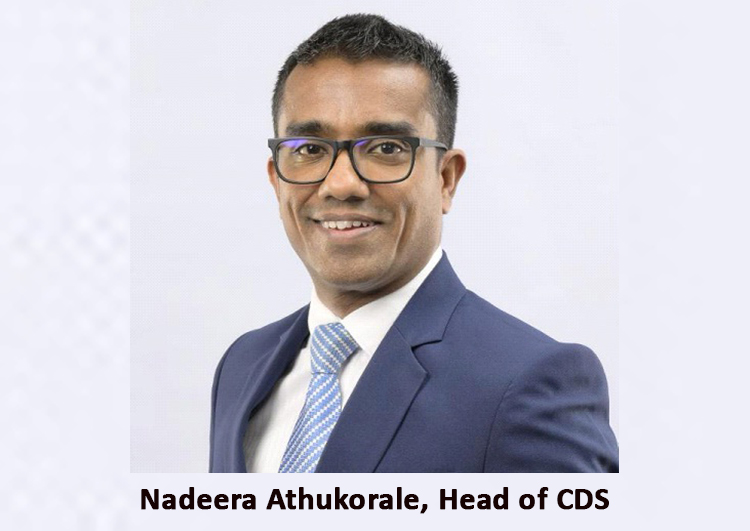
Central Depository Systems (Pvt) Ltd (CDS), a subsidiary of the Colombo Stock Exchange (CSE), has reached a milestone as total registered accounts surpassed the 1 million mark. This achievement coincides with the approach of the organization’s 35th anniversary in September 2026, marking three and a half decades of providing depository infrastructure for the Sri Lankan capital market.
Since its inception in 1991, the CDS has held the distinction of being the first depository in the South Asian region. In its core capacity as a depository, the institution is responsible for holding a wide array of securities including shares, debentures, corporate bonds, and units belonging to investors in electronic form.
The crossing of the one million account threshold also reflects the aggressive broad basing of the retail investor market over the past five years. This expansion is largely attributed to the comprehensive digitalization of the CSE, which has created accessibility for individuals across the country. Digital tools such as the CSE Mobile App and the “CDS e-Connect” portal have revolutionized how investors interact with the stock market, providing them with real time access to their holdings and a seamless interface for account management. The “CDS e-Connect”, originally launched in 2016 and revamped in 2021, has become a one stop shop for stakeholders, by offering services such as client profile management, real time balance and transaction viewing, eNomination facility, monthly statements and newly introduced dividend payment history viewing option. From 2016, by offering eStatements and SMS alert facilities CDS ensures transparency and security for the CDS accountholders. By decentralizing account openings and introducing online facilities in 2020, the CDS successfully brought the stock market to the fingertips of the general public, moving away from the traditional, paperwork heavy processes that once characterized the industry.
A critical pillar of this 35-year history was the 2011 launch of the full dematerialization drive. This initiative was designed to significantly reduce the movement of physical certificates, which were prone to loss, damage, and forgery. Today, the success of this drive is evident as the CDS holds 97 percent of listed equity and 100 percent of corporate debt in scripless form. This near total transition to electronic records has provided a secure and accessible service environment. The Central Control Unit plays a vital role, ensuring that all functions performed by the depository and its participants align with strict rules and regulatory guidelines. By identifying operational, financial, and market risks early, the CDS maintains the integrity of the ecosystem and fosters trust among both domestic and international investors.
Beyond its primary depository functions, the CDS has significantly expanded its influence through the Corporate Solutions Unit (CSU), established in 2017. The CSU was created to standardize and elevate the benchmarks for corporate action services in Sri Lanka and has since grown through the strategic acquisition of PW Corporate Registrar arm. This diversification allows the CDS to expand registrar services and manage corporate actions for both listed and unlisted companies, providing a holistic suite of services that includes the distribution of dividends, rights issues, and e-applications for Initial Public Offerings (IPOs). The digitization of issuer services has been a hallmark of the CSU’s work, introducing innovations such as eDividend payments, eWarrants, and eNotices. These advancements have streamlined the process for issuers while ensuring that shareholders receive their entitlements promptly and securely.
The strategic outlook for the CDS is now centred on the newly formed Research and Development Unit, which is essential to the organization’s vision for the future. This unit functions as a Project Management Office and is responsible for developing innovative services. By cultivating strategic alliances and international collaborations, the R&D unit ensures that the CDS remains a future forward institution capable of adapting to the evolving needs of the global financial sector.
As the CDS looks toward its 35th year of service, it remains focused on digital transformation, strategic partnerships that power progress, new service offerings and enhanced international relations. The integration of new technologies continues to ensure robust infrastructure for the next generation of market participants.
Head of CDS Nadeera Athukorale commenting on the vision of the CDS, remarked “By balancing its core depository duties with non-core registrar and consultancy services, the CDS has positioned itself for long term sustainability and industry leadership.”
The achievement of one million accounts serves as a testament to the resilience and adaptability of the Sri Lankan capital market infrastructure, demonstrating CDS’ ability to facilitate a growing digitized market while continuing to serve as the backbone of the nation’s investment landscape. (CSE)

TONIK, a new hospitality venture under Sri Lanka’s Acorn Group, has unveiled its vision to place culture, storytelling and design at the heart of island exploration, positioning itself as the next Sri Lankan hospitality brand to achieve global recognition.
Built on the Acorn Group’s decades of expertise across aviation, travel, logistics and leisure in multiple Asian markets, TONIK aims to elevate Sri Lanka’s tourism by translating the “soul” of destinations into curated experiences. The brand’s philosophy, “Every Stay Is a Story”, treats villas and boutique hotels as “living narratives” shaped by architecture, memory, craft and community.
The venture addresses a key market gap: while Sri Lanka features exceptional independent villas, many struggle with visibility and global reach. TONIK seeks to resolve this by amplifying each property’s unique value proposition – transforming distinctiveness into revenue -generating potential for owners.
“TONIK’s philosophy aligns with the evolution of our industry- where authenticity and meaningful experiences are no longer optional but essential,” said Harith Perera, Partner at Acorn Group. “Sri Lanka’s narrative deserves platforms that elevate its voice globally.”
For property owners, TONIK offers access to Acorn’s intelligence networks across the Maldives, Middle East, Europe and Asia, including insight into High-Net-Worth travel patterns.
CEO Sundararajah Kokularajah said: “By nurturing properties as living narratives, we aim to shape a new chapter for tourism – authentic, future-ready and deeply Sri Lankan.”
By Sanath Nanayakkare

Selling pressure makes a dent in CSE’s early trading gains

Qatar partially reopens airspace as Iranian strikes continue to hit Gulf

The final voyage of the Iranian warship sunk by the US

AI-generated Iran war videos surge as creators use new tech to cash in

Huge explosions rock major Tehran airport as Israel strikes ‘regime infrastructure’

India hit back but Sutherland, Hamilton impress to give Australia the edge

‘Dates have the highest sugar content to fight Coronavirus’

Sunday Island 27 December – Headlines

#SundayIsland 17th December – Headlines

Sunday Island – 28th March

Sunday Island Headlines – 21 March

Sunday Island – 21st February – Headlines
-
 Features6 days ago
Brilliant Navy officer no more
-

 Opinion6 days ago
Sri Lanka – world’s worst facilities for cricket fans
-

 News2 days ago
University of Wolverhampton confirms Ranil was officially invited
-

 News3 days ago
Legal experts decry move to demolish STC dining hall
-

 Features6 days ago
A life in colour and song: Rajika Gamage’s new bird guide captures Sri Lanka’s avian soul
-

 Business3 days ago
Cabinet nod for the removal of Cess tax imposed on imported good
-
 Features7 days ago
Overseas visits to drum up foreign assistance for Sri Lanka
-

 News2 days ago
Female lawyer given 12 years RI for preparing forged deeds for Borella land