
Business
Global aviation in turmoil as US – Iran conflict escalates

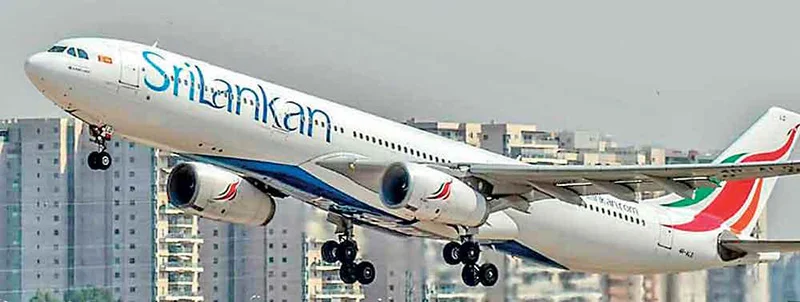
SriLankan Airlines aligning its response to evolving developments
The military strikes involving the United States and Israel against Iran have sent shockwaves through global aviation networks, particularly across the Gulf region – a key air transit corridor linking Europe, Asia, and Africa. In the wake of the attacks and swift Iranian retaliation, eight countries including Iran, Iraq, Israel, Qatar, Kuwait, Bahrain, and the United Arab Emirates have either fully or partially closed their airspace. Major international hubs in Dubai, Abu Dhabi and Doha have been heavily affected, leading to the suspension or cancellation of flights and the grounding of aircraft on a scale not seen since the COVID-19 pandemic.
Air traffic analytics show tens of thousands of flights delayed, thousands cancelled, and hundreds of thousands of passengers stranded or diverted as airlines avoid conflict zones and reroute around restricted skies. Closure of airspace over the Gulf has particularly disrupted east-west routes that normally go through Iranian and Iraqi flight information regions, forcing detours via longer, costlier corridors.
Authorities and carriers alike have emphasised that safety is the top priority amid heightened military risk and uncertainty over how long the closures will persist.
SriLankan Airlines, the national carrier, has been directly affected by these disruptions linked to the Gulf crisis:
The airline cancelled at least 30 flights to and from Middle Eastern destinations – including Riyadh, Kuwait, Dammam, Dubai and Doha — citing airspace closures and safety concerns as the reason.
The cancellations were implemented explicitly “in the interest of passenger and crew safety and operational security,” according to the airline’s statements.
SriLankan has been advising affected passengers to contact customer service or travel agents for rebooking, refunds or assistance as required.
Additional adjustments include flight rerouting and monitoring of dynamic changes in airspace status. Some flights are reported to be diverted via alternate routes, such as via Saudi Arabian airspace, to avoid the closed regions.
The carrier stressed that schedules will be reviewed continually and that services will resume “once conditions permit safe operations.”
by Sanath Nanayakkare


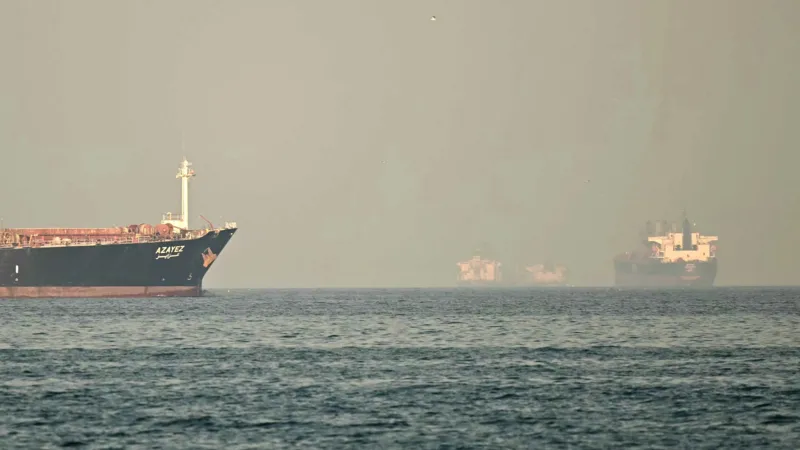
Global oil prices have risen after at least three ships were attacked near the Strait of Hormuz, as Iran continues to launch strikes across the Middle East in response to ongoing attacks by the US and Israel.
Two vessels have been struck, and an “unknown projectile” was reported to have “exploded in very close proximity” to a third, the UK Maritime Trade Operations Centre (UKMTO) said.
Iran has warned ships not to pass through the strait, which carries about 20% of the world’s oil and gas.
International shipping has almost come to a standstill at the strait’s entrance, with analysts warning that a prolonged conflict could push energy prices even higher.
In early trade in Asia on Monday, global oil prices jumped by more than 10% before those gains eased during the morning.
At 02:00 GMT, Brent crude was more than 4% higher at $76.16 (£56.53) a barrel, while US-traded oil was also up by around 4% at $69.67.
“The market isn’t panicking”, Saul Kavonic, head of energy research at MST Research told the BBC.
“There is more clarity that so far, oil transport and production infrastructure hasn’t been a primary target by any side,” he added.
“The market will be watching for signs that traffic through the Strait of Hormuz returns, which would see oil prices subside again.”
But some analysts have warned it could go over $100 in the event of a prolonged conflict.
On Sunday, the Opec+ group of oil producing nations – which includes Saudi Arabia and Russia – agreed to increase their output by 206,000 barrels a day to help cushion any price rises, but some experts doubt this would help much.
Edmund King, president of the AA, warned the disruption could drive up petrol prices around the world.
“The turmoil and bombing across the Middle East will surely be a catalyst to disrupt oil distribution globally, which will inevitably lead to price hikes,” he said.
“The magnitude and duration of pump price increases depends on how long the conflict goes on.”
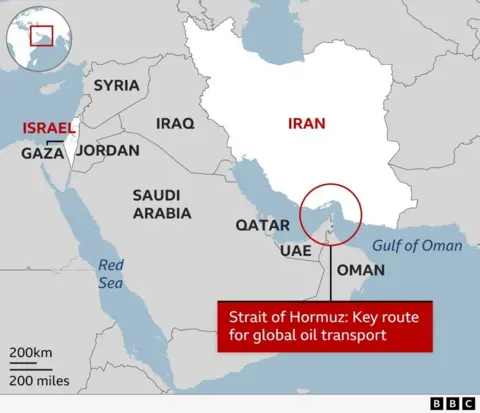
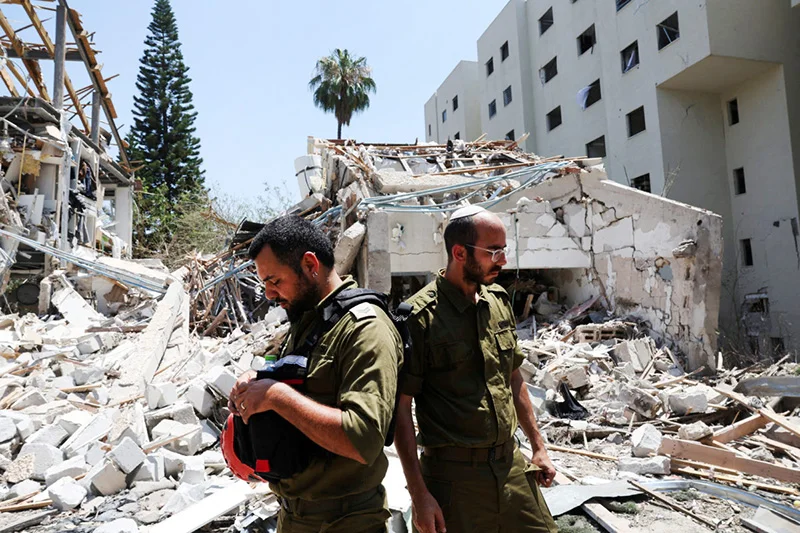
The U.S. and Israeli strikes on Iran have reignited geopolitical tensions in the Middle East, stoking fears of a broader conflict that could disrupt critical energy supply routes – particularly the Strait of Hormuz, through which roughly one-fifth of the world’s oil supply flows. Brent crude has already edged higher, and global oil markets warn prices could climb toward, or even exceed, US$80–100 a barrel if hostilities escalate.
Against this backdrop, an independent economic analyst told The Island that for Sri Lanka – a small, fuel-importing economy with limited domestic energy resources – the implications could be significant.
“Sri Lanka imports over 90% of its petroleum requirements, and any sustained rise in global crude prices would expand the annual import bill, placing renewed pressure on already tight foreign exchange reserves,” he said.
Even moderate spikes in oil prices, he noted, tend to filter quickly through the domestic economy. “Higher fuel costs translate into increased transport and production expenses, which feed into inflation and erode household purchasing power. Freight charges for essential goods – from food items to industrial inputs – would also rise.”
“The Middle East remains a key source of remittances and export demand,” the analyst explained. “A large share of Sri Lankan migrant workers are employed in Gulf economies, while regional markets absorb tea and other exports. Heightened instability could weaken remittance inflows and soften demand, further straining the balance of payments.”
When asked whether the Central Bank of Sri Lanka (CBSL) might be compelled to shift policy in response, the analyst said the monetary authority faces a delicate balancing act.
“Rising import inflation stemming from higher global energy prices could push the Central Bank to maintain – or even tighten – its monetary policy stance in order to safeguard price stability and support the rupee. A firmer stance may be deemed necessary to anchor inflation expectations and preserve market confidence. The Central Bank is therefore likely to monitor inflation data closely in the coming weeks to assess whether energy-driven price pressures prove temporary or more entrenched,” he said.
Meanwhile, Ceylon Petroleum Corporation (CPC) Chairman S. Rajakaruna said that Sri Lanka’s fuel imports – sourced primarily from Singapore and India – reduce immediate exposure to supply disruptions directly linked to Middle Eastern routes. He also sought to allay public concerns, noting that the country currently maintains sufficient fuel stocks for approximately one month and that there need not be any queueing up by the public to hoard supplies.
However, the analyst cautioned that while physical supply may remain stable, global price pass-through effects are an unavoidable risk.
Meanwhile, Opposition politician Wimal Weerawansa said that official assurances of “one month’s stock” tend to unsettle the public, arguing that such statements evoke memories of past shortages and public distress.
By Sanath Nanayakkare

The Ministry of Education officially recognised LOLC Holdings PLC for its flagship humanitarian initiative, Divi Saviya, at a special ceremony held on 27th February 2026 in Battaramulla. The event marked the second time the Ministry has acknowledged the programme’s contribution to the nation’s education sector.
Group Managing Director/CEO Kapila Jayawardena presented a project update to Prime Minister and Education Minister Dr. Harini Amarasuriya, highlighting the rapid restoration of 200 schools under Phase 02 of ‘Obai, Mamai, Ape Ratai’. The schools were repaired and handed over within just 45 days, enabling students displaced by Cyclone Ditwah to safely resume learning.
Phase 02 follows a needs assessment that identified 200 damaged schools and 4,000 displaced families. Implemented with Divisional Secretariats and Disaster Management Centres, the Rs. 500 million programme has delivered Family Super Packs and school renovations across six districts.
Kapila Jayawardena stated, “It was a privilege to share these outcomes with the Prime Minister. This recognition reflects how private sector collaboration can complement government efforts during national challenges.” Plans are underway to fully rebuild select schools destroyed by the cyclone.

Oil prices rise after ships attacked near Strait of Hormuz

War photographer Paul Conroy dies as tributes paid

Allies of US in the Gulf bear brunt of Iran attacks

Dry weather will prevail in most parts of the island

Israel resumes attacks as Iran vows to avenge supreme leader’s death

CPC has enough fuel stocks

‘Dates have the highest sugar content to fight Coronavirus’

Sunday Island 27 December – Headlines

#SundayIsland 17th December – Headlines

Sunday Island – 28th March

Sunday Island Headlines – 21 March

Sunday Island – 21st February – Headlines
-

 Opinion4 days ago
Jamming and re-setting the world: What is the role of Donald Trump?
-

 Sports7 days ago
Dottin out obstructing the field as Sri Lanka clinch series
-

 Features4 days ago
An innocent bystander or a passive onlooker?
-

 Features6 days ago
Building on Sand: The Indian market trap
-

 Opinion6 days ago
Future must be won
-
 Features5 days ago
Ratmalana Airport: The Truth, The Whole Truth, And Nothing But The Truth
-

 Business6 days ago
Dialog partners with Xiaomi to introduce Redmi Note 15 5G Series in Sri Lanka
-
 Business5 days ago
IRCSL transforms Sri Lanka’s insurance industry with first-ever Centralized Insurance Data Repository