
News
GL: Under 19A President has responsibility sans authority

20A does not dilute powers of Parliament
By Saman Indrajith
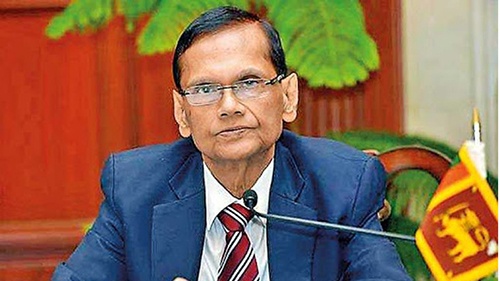
The main issue with the 19th Amendment to the Constitution was that while it delegated responsibilities; it did not assign the necessary powers to ensure that those responsibilities could be fulfilled, Education Minister Prof. G. L. Peiris told Parliament yesterday.
Speaking during the second day of the two-day debate on the 20th Amendment, the Minister elaborated that the best example was with regard to defence. “Under Articles 3 and 4 of the Constitution, a key responsibility of the President is to safeguard national security. Yet, under the 19A, though the President was elected by 6.9 million voters, he can’t be the Minister of Defence. In fact, he can’t hold any ministries. He is the Commander of the armed forces and police, but he can’t command them.”
Prof. Peiris said that a lot of responsibilities had been heaped upon the President, but he had not been given the necessary powers to carry out those responsibilities. “There is responsibility without authority; that is the basic flaw in the structural framework of the 19th Amendment,” the one time top law academic said.
Prof. Peiris also asked whether the framework established by the 19th Amendment was really in line with democracy. “The Constitutional Council was the centrepiece of 19A. All appointments to the so-called independent commissions are made by the CC. Take for example, the civil society members in the CC. They can’t be removed, though a new President and government is in power. They will be in power for another year until their term ends, and no one can do anything about it.”
“We don’t fear the independent commissions, but their conduct is unjust. They have become totally politicised,” he said.
While there must be checks and balances on those in power if those checks and balances went beyond a certain limit and became excessive, the end result was that nothing would get done, he argued. “Those who hold positions of power would not be able to do anything. There will be a gridlock situation.”
The minister also dismissed claims made by the Opposition that the 20A would considerably reduce Parliament’s powers. “Under Article 148 of the Constitution, it is Parliament that is responsible for public finance. No matter how powerful a President is, he must still come before Parliament to obtain the necessary funds for the function of the governance mechanism. This cannot be done through any other entity. That is why the Finance Minister is due to present the Budget to Parliament in November; a Budget you all have every right to pass or defeat. As such, 20A will not reduce the powers of Parliament by one bit.”

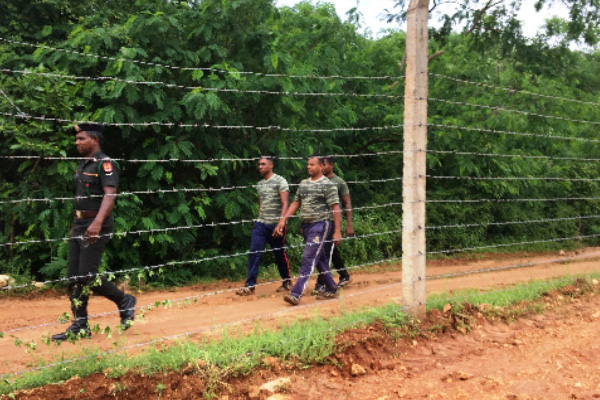
The Army has vacated the Chulipuram camp in the Jaffna peninsula. Those who were stationed there have been moved to the Chankanai camp.
The withdrawal followed a formal notification process, with a letter informing of the vacation of the camp by the Commanding Officer of the 513th Infantry Brigade to Kavitha Udayakumar, Divisional Secretary of the Sangaanai Division.

In the wake of a deeply disturbing incident involving the circulation of explicit video content allegedly exchanged between adult schoolteachers and a head prefect of a leading school in Colombo and subsequently released onto social media platforms, there is an urgent need for decisive national action to protect children from digital exploitation and abuse, the National Media Foundation said yesterday.
The text of NMF statement: “This incident has exposed serious failures in safeguarding minors in an era of unregulated social media access, weak digital literacy, and the absence of enforceable age-verification mechanisms. While investigations must determine individual culpability, the broader issue is systemic and cannot be ignored.
Children below the age of 16 lack the emotional maturity, judgment, and legal capacity to navigate social media platforms that are increasingly used for exploitation, manipulation, and permanent reputational harm. Once shared online, such content can never be fully erased, condemning victims—especially minors—to lifelong trauma and stigma.
The National Media Foundation (NMF), therefore called upon the Government of Sri Lanka to immediately introduce a nationwide ban on social media access for children under 16, with mandatory age-verification systems enforced on all platforms operating in Sri Lanka. Many countries have imposed such regulations, the latest being Australia.
It is also necessary to hold social media companies legally accountable for failing to protect minors and for allowing the rapid spread of harmful and illegal content.
NMF call upon the Government to strengthen laws on cyber exploitation, online grooming, and digital consent, with strict penalties for adults who abuse positions of trust. It is essential to establish clear professional conduct standards and monitoring mechanisms for educators, recognising their special duty of care toward students”.
This is not a debate about censorship or moral policing. It is about child protection, responsibility, and the urgent need to align our laws with digital realities. The safety of children must take precedence over unchecked digital freedoms and corporate indifference.
Sri Lanka cannot afford to react only after irreparable danage has occurred. The time for half-measures is over. Strong preventive action today is the only way to avoid greater tragedies tomorrow.”
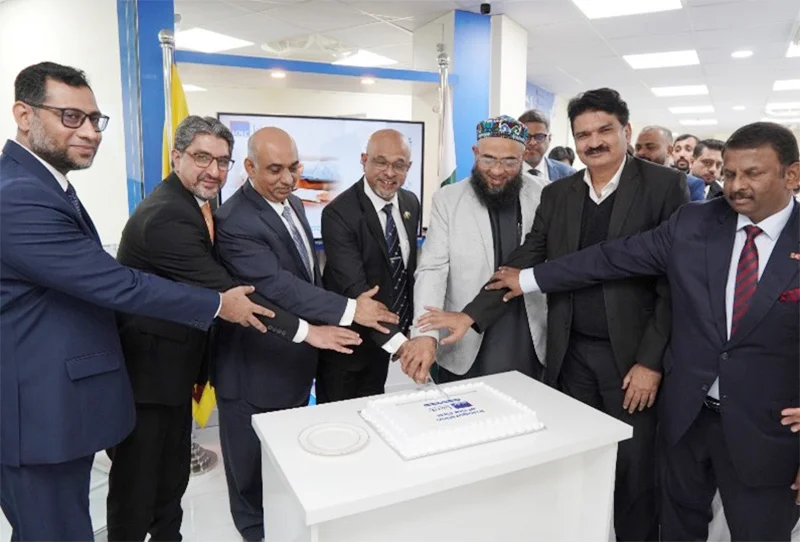
The High Commissioner of Sri Lanka Rear Admiral (Rtd.) Fred Seneviratne officially inaugurated the 88th microfinance branch of LOLC at Bara Kahu, Islamabad, on 23 December, 2025, marking another significant milestone for the organisation, according to a press release issued from the Sri Lanka HC in Islamabad.
This branch represents LOLC Group’s entry into a new era of Shariah-compliant banking in Pakistan with the inauguration of “LOLC Islamic” and the launch of its first Islamic microfinance branch in Bara Kahu, Islamabad.
Addressing the gathering, as the Chief Guest, the High Commissioner commended LOLC for its continued contribution to financial inclusion and economic empowerment, while emphasising the crucial role of ethical and inclusive finance in fostering economic cooperation between Sri Lanka and Pakistan. He noted that the expansion of LOLC’s microfinance services, particularly through Islamic banking principles, constitutes a noteworthy achievement and a significant milestone in the financial sector.
The High Commissioner further highlighted the long-standing and friendly relations between Sri Lanka and Pakistan, emphasising the importance of sustained cooperation in trade, investment, and development, while also briefing the audience on Sri Lanka’s current economic situation and underscoring the country’s resilience and ongoing efforts toward recovery and growth.
The event was also attended by the Minister/Head of Chancery and the Defence Advisor of the High Commission, Mufti Shafique Ahmed Jakhura, Chairman of the Shariah Supervisory Board of LOLC Sri Lanka, senior officials of LOLC, representatives of the financial sector, and other invited guests.

Some heretical thoughts on educational reforms

Port City Colombo’s first residential project breaks ground

to pathi

Savi excells as Petes take first innings points

Securing public trust in public office: A Christian perspective – Part II

Chulipuram vacated, troops move to Chankanai

‘Dates have the highest sugar content to fight Coronavirus’

Sunday Island 27 December – Headlines

#SundayIsland 17th December – Headlines

Sunday Island – 28th March

Sunday Island Headlines – 21 March

Sunday Island – 21st February – Headlines
-
 Business2 days ago
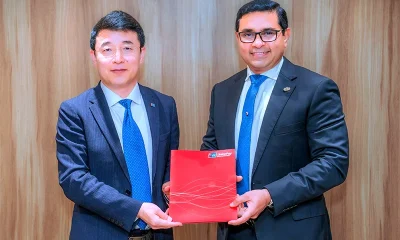
ComBank, UnionPay launch SplendorPlus Card for travelers to China
-
 Business3 days ago
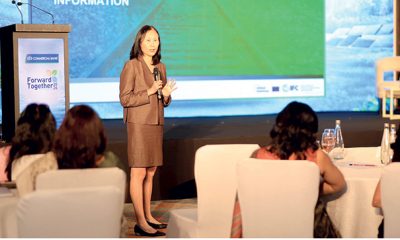
ComBank advances ForwardTogether agenda with event on sustainable business transformation
-
 Opinion6 days ago
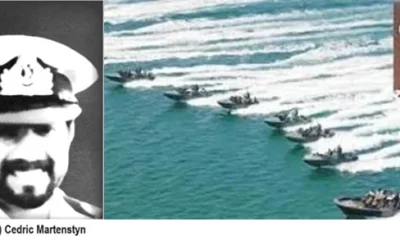
Remembering Cedric, who helped neutralise LTTE terrorism
-
 Business6 days ago
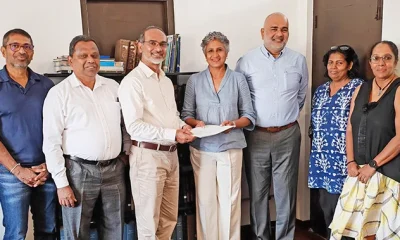
CORALL Conservation Trust Fund – a historic first for SL
-
 Opinion3 days ago
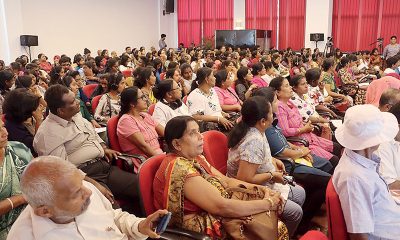
Conference “Microfinance and Credit Regulatory Authority Bill: Neither Here, Nor There”
-
 Opinion5 days ago
A puppet show?
-
 Opinion2 days ago
Luck knocks at your door every day
-
 Features5 days ago
‘Building Blocks’ of early childhood education: Some reflections