
Latest News
Gisèle Pelicot’s ex-husband jailed for 20 years in mass rape trial


French rape survivor Gisèle Pelicot’s ex-husband has been jailed for 20 years after drugging and raping her, and inviting dozens of strangers to also abuse her over nearly a decade.
Dominique Pelicot, 72, was found guilty of all charges by a judge in Avignon, southern France, and cried in court as he was sentenced to the maximum term.
He was on trial with 50 other men, all of whom were found guilty of at least one charge, although their jail terms were less than what prosecutors had demanded.
Ms Pelicot and her children looked emotionless as the verdicts were read out, occasionally glancing at the defendants and resting their heads against the wall.
The convictions brought an end to France’s largest ever rape trial, which over the course of three months has shocked the country and the world.
On Thursday morning, police shut the road opposite the courthouse to accommodate hundreds of people who turned up to offer their support to Ms Pelicot.
A large banner reading “Thank you Gisèle” was spread across a wall facing the entrance.
Underneath it, several members of the public chanted “rapist, we see you” as defendants trickled in ahead of the trial.
Speaking outside of the court following the verdicts, Ms Pelicot said the trial had been a “very difficult ordeal”.
Her grandson, who is in his late teens, was standing next to her for the first time, his arm over her shoulder as she addressed the media. Her voice faltered only once as said she “never regretted” her decision to make the trial public “so society could see what was happening”.
The 72-year-old’s decision to waive her automatic right to anonymity was highly unusual. She attended almost every day of the trial, appearing in the same courtroom as her husband of 50 years, who she has now divorced.
French and global media followed the case with growing interest and hundreds of journalists were present in court on Thursday.
As Ms Pelicot spoke, hundreds of people chanted her name and sang feminist songs.
She gave her “profound” thanks to her supporters and said she had “confidence” in there being a “better future” where men and women can live in “mutual respect”.
Ms Pelicot’s ex-husband Dominique Pelicot – who had already confessed to his crimes – was found guilty of aggravated rape.
He was also found guilty of the attempted aggravated rape of the wife of one of his co-accused, Jean-Pierre Maréchal.
Maréchal – who was described as Dominique’s “disciple” as he drugged and raped his own wife for years and invited Dominque to do the same – was jailed for 12 years.
Dominique Pelicot was also found guilty of taking indecent images of his daughter, Caroline Darian, and his daughters-in-law, Aurore and Celine.
Caroline – who was in court on Thursday – previously told the trial she felt she was the “forgotten victim” as, unlike in her mother’s case, there was no record of the abuse she is convinced was inflicted on her.
Dominique denied drugging and abusing his daughter.
“I will never come see you and you will die alone like a dog,” she shouted at him in court in November.
After the verdict were delivered, Dominique Pelicot’s lawyer said her client was “somewhat dazed” by his sentence and would consider whether to appeal. He has 10 days to decide whether to do so.
Dominique Pelicot stood accused alongside 50 other men, 46 of whom were found guilty of rape, two of attempted rape and two of sexual assault.
Several of them have already spent years in jail as they were arrested when police conducted their initial investigation in 2021, and will therefore be free relatively soon.
Most of the men on trial had denied that what they did was rape.
They argued they did not realise Ms Pelicot was unconscious and therefore did not “know” they were raping her. It is an argument that sparked a nationwide discussion about France’s legal definition of rape.
The defendants’ jail terms range from between three and 15 years.
In a statement to AFP news agency, the Pelicot children said they were “disappointed” by the “low sentences”.
For almost a decade from 2011, Dominique Pelicot drugged his now ex-wife and raped her, and recruited dozens of men online to have sex with her while she was unconscious.
His crimes were discovered in 2020, when police arrested him over a separate charge of filming up the skirts of women in a supermarket.
Police seized his devices and found thousands of videos on his laptop, with evidence of around 200 rapes.
Investigators used the videos to track down his co-accused, although they were unable to identify an additional 21 men.
Dominique Pelicot admitted the charges in 2020.
The trial sparked a discussion about whether the issue of consent should be added to France’s legal definition of rape, as it has been in other European countries.
Rape in France is currently defined as “any act of sexual penetration committed against another person by violence, constraint, threat or surprise”, meaning prosecutors must prove intent to rape.
Many of the defendants argued they did not realise Ms Pelicot had not consented, claiming they were “tricked” by Dominique Pelicot, and believed they were going to the couple’s house for a threesome involving a fantasy that the woman would be asleep.
The trial also shone a light on the issue of chemical submission, or drug-induced sexual assault.
Most of the 50 men came from towns and villages in a 50km (30 mile) radius of the Pelicots’ home village of Mazan.
They included firefighters, lorry drivers, soldiers, a journalist and a DJ and were been described by defence lawyers as being “ordinary people”, earning them the nickname Monsieur-Tout-Le-Monde (Mr Everyman).
The trial also brought sexual violence against women into the spotlight in France, with many praising Ms Pelicot for her bravery in opening up the case to the public.
She previously said she was determined to make “shame change sides” from the victim to the rapist. It is a phrase that has been repeated by her supporters.
But Ms Pelicot has been clear that behind her facade of strength “lies a field of ruins” and despite the widespread acclaim for what she has done, she is a reluctant hero.
“She keeps repeating, ‘I am normal’ – she does not want to be considered as an icon,” her lawyer Stéphane Babonneau told the BBC.
“Women generally have a strength in them that they can’t even imagine and that they have to trust themselves. That’s her message.”
[BBC]


Without Mark Chapman and Rachin Ravindra, the hosts have a top-three spot for Devon Conway. They have as many as six seamers in the squad to pick from, with Glenn Phillips and Michael Bracewell offering part-time spin in a fairly stacked bowling attack.
[Cricbuzz]
Latest News
Bangladesh and Nepal to host Women’s Under-19 T20 World Cup from January 21 to February 6

Four venues in Bangladesh and Nepal will host the 2027 Under-19 Women’s T20 World Cup, which is set to run from January 21 to February 6. Chattogram, Sylhet, Kirtipur and Mulpani are the four venues, with Chattogram set to host the two semi-finals on February 4 as well as the final on February 6.
The 16-team event will feature four groups of four teams each, with the group stage set to be followed by a two-group Super Six stage, and then the semi-finals and final.
This is the third edition of the tournament, with India having won the first two back-to-back in 2023 and 2025. The defending champions have been drawn in group A alongside Ireland, West Indies and Nepal. Group B has 2025 runners-up South Africa as well as New Zealand, Pakistan and Samoa.
Australia, Bangladesh, Nigeria and UAE make up Group C, while England, Sri Lanka, USA and Scotland have been drawn in Group D.
The tournament will kick off with four matches on January 21, with Sylhet hosting Bangladesh vs UAE and Australia vs Nigeria, and Mulpani hosting Sri Lanka vs Scotland and England vs USA. The other two venues and other eight teams will be involved on January 22: New Zealand vs Samoa and South Africa vs Pakistan in Chattogram, and Nepal vs Ireland and India vs West Indies in Kirtipur.
All 41 games of the tournament will be played during the day. Morning matches will begin at 9.30am local time, and afternoon games at 1.30pm local time.
“The ICC U19 World Cup is the stage that showcases the future of our sport and serves as the ultimate platform for young players to make the leap towards elite careers representing their countries,” ICC CEO Sanjog Gupta said. “These future stars representing 16 teams will garner the world’s attention and become relatable role models for many young girls playing the sport, serving inspiration for their continued cricket journeys.
“The choice of our hosts – Bangladesh and Nepal – is also reflective of the ICC’s belief and investment in the future of the cricket ecosystem. With deep passion for cricket and nearly 40% of the two countries’ populations below the age of 20, they serve as the ideal hosts for one of the world’s biggest youth sporting events.”
(Cricinfo)

President Anura Kumara Dissanayake today (20) paid his last respects to the remains of Most Venerable Kappetiyagoda Siri Wimala Thera, Anunayake of the Sri Lanka Ramanna Maha Nikaya and Chief Incumbent of the Rajopawanaramaya Temple in Gatambe, Kandy, who passed away.
The President visited the Rajopawanaramaya Temple in Gatambe, Kandy, where the remains of the Thera are lying, and paid his last respects. He subsequently expressed his deepest condolences to the Maha Sangha and the temple’s Dayaka Sabha, who are mourning the passing of the Thera.
Central Province Governor and Consultant Physician Dr Harsha Suranga Fernando, Kandy District Secretary Indika Udawatta and several others were present.
President’s Media Division (PMD)

Crystal Palace urged to retire bald eagle mascot

Little time to unpack as India open in Christchurch

Senior England players to miss Sri Lanka T20Is for WPL 2027

Bangladesh and Nepal to host Women’s Under-19 T20 World Cup from January 21 to February 6

Showers above 100 mm are likely at some places in the Western, Sabaragamuwa, Central, North-western, Northern and Southern provinces and in Anuradhapura district.

Low-quality coal causes power cuts: Ex-LECO Chief

‘Dates have the highest sugar content to fight Coronavirus’

Sunday Island 27 December – Headlines

#SundayIsland 17th December – Headlines

Sunday Island – 28th March

Sunday Island Headlines – 21 March

Sunday Island – 21st February – Headlines
-

 Features3 days ago
Kotahena:A Small Enclave, An Extraordinary Legacy
-

 News4 days ago
Asgiri Mahanayake calls for immediate release of Gnanasara Thera
-

 News3 days ago
Record 1,600 students take Russian Classical Ballet examination in Sri Lanka
-
 News6 days ago
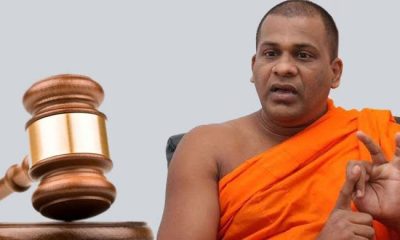
AC President recuses himself from hearing prison attire case pertaining to Gnanasara Thera
-

 News5 days ago
Naval officer testifies Yoshitha received Rs. 5.15 mn in salaries during SLN service
-

 News3 days ago
Karannagoda pushed for £24,536 for Yoshitha’s UK training, Court told
-

 Editorial5 days ago
Saving Anojan: Beyond Executioner’s Blade
-

 News6 days ago
CID informs Fort Magistrate’s Court investigation into money laundering case against Namal completed