
Midweek Review
Genocide charge reiterated

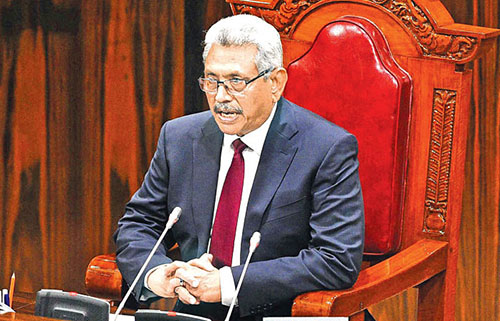
August 20, 2020, parliament: President Gotabaya Rajapaksa delivers his policy statement.
By Shamindra Ferdinando
Lawmaker Gajendrakumar Ponnanbalam, 46, on August 21, in Parliament, alleged that the Tamil community, in the North-East, had been subjected to genocide, Sri Lanka committed war crimes during phase IV of the war and that they wanted international accountability.
Ponnambalam deviated from the Geneva Accountability Resolution, co-sponsored by the previous UNP-SLFP/UPFA coalition, in Oct 2015. That resolution was meant to set up hybrid war crimes courts, comprising local and foreign judges, in terms of a tripartite agreement, involving Sri Lanka, the US and the four-party Tamil National Alliance (TNA).
Having represented the LTTE mouthpiece, the TNA twice, in Parliament, in 2001 and 2004, Ponnambalam addressed Parliament, last week, as the leader of the Ahila Illankai Tamil Congress (AITC), a constituent of the Tamil National People’s Front (TNPF). The TNPF, established in 2010, had never been previously represented in Parliament, though it contested both the 2010 April and 2015 August parliamentary polls. In addition to Ponnanbalam, the TNPF secured one National List slot. Ponnambalam accommodated Selvarasa Gajenthiran, who quit TNA, along with him in 2010, on the National List.
Angajan Ramanathan, elected to Parliament on the Sri Lanka Freedom Party (SLFP) ticket, from the Jaffna electoral district, was in the chair at the time Ponnambalam delivered his explosive statement. Former UPFA National List member Ramanathan is the Deputy Chairman of Committees.
Gajendrakumar dismissed an attempt made by the State Minister of Provincial Councils and Local Government, retired Rear Admiral Sarath Weerasekera, to intervene. In fact, the Sri Lanka Podujana Peramuna member Weerasekera was the only one to make an attempt to challenge Ponnambalam, in Parliament, on that day. The former Navy Chief of Staff was not successful. On the previous day, Weerasekera wanted to respond to C.V. Wigneswaran, leader of the Thamizh Makkal Kootani (TMK), though was asked by his party not to, as only party leaders addressed Parliament, during the inaugural session.
GP, Wiggy mount frontal assault
Both Ponnambalam and Wigneswaran represented the R. Sampanthan-led TNA earlier. Ponnambalam quit the TNA, in March 2010, having successfully contested the Jaffna district twice, in 2001 and 2004, with the blessings of the Liberation Tigers of Tamil Eelam (LTTE). At that time, TNA nominations, as well as the National List, were subjected to the LTTE’s approval. Former Supreme Court Judge Wigneswaran functioned as the first Chief Minister of the TNA-run Northern Province, during Mahinda Rajapaksa’s tenure as the President.
The TNA stood solidly with the LTTE as it declared Eelam War IV, in August 2006, with simultaneous attacks on the Army, both in the Northern and Eastern Provinces.
Ponnambalam attacked President Gotabaya Rajapaksa’s policy statement. The lawmaker targeted the following section in particular: “It is equally important to precisely interpret the mandate given by the people. We respect the trust that the people have placed in me and the Prime Minister and the newly elected people’s representatives. We have a clear understanding of the expectations with which the people gave such a powerful mandate to the government. We will leave no room for such expectations to be dashed for any reason. It should always be remembered that the prime responsibility of a people’s representative is to serve the public. We will be sensitive to fulfilling the needs of the people, keeping in mind that all these positions are responsibilities and not privileges.”
Ponnanmalam declared that President Gotabaya Rajapaksa’s mandate (2019 November presidential and 2020 August parliamentary polls) did not extend to the North-East region. Ponnambalam depicted the vote received by all Tamils, including SLFP’s Ramanathan and the Eelam People’s Democratic Party (EPDP) Douglas Devananda, elected to the new Parliament, as one that overwhelmingly endorsed self-determination of the Tamil speaking people. Ponnambalam justified international intervention on the basis of the Tamil community being deprived of the security it deserved.
Declaring them (Tamil lawmakers) received a mandate for Tamil rights to be recognized, Ponnambalam declared: “two nations exist in this country.”
Int’l intervention justified
“Sovereignty can never be a defence. This country has gone through a war and the whole world says that heinous crimes have been committed and the state is the number one accused party,” Ponnambalam declared, adding “Under no circumstances can any President, or any country, for that matter, try to hide behind the concept of sovereignty, to prevent accountability for heinous crimes. The victims of these heinous crimes stand as Tamils… the major victims stand as Tamils and they have consistently said that genocide has been committed and that they want international accountability.”
When Ponnambalam went on and on repeating war crimes allegations, in Parliament, former Presidents and Commanders-in-Chief, Mahinda Rajapaksa and Maithripala Sirisena, as well as war-winning Army Chief Field Marshal Sarath Fonseka, were present. Opposition Leader Sajith Premadasa, too, was present.
It would be pertinent to ask lawmaker Ponnambalam whether, as a member of the TNA, he endorsed the party’s decision to vote for the then common presidential candidate General Sarath Fonseka at the January 26, 2010 presidential election. Did the TNA decision to join the UNP-led coalition, comprising the Janatha Vimukthi Peramuna (JVP), the Sri Lanka Muslim Congress (SLMC), All Ceylon Makkal Congress (ACMC) et al unanimously approved by all constituents of the TNA?
Why North, East endorsed Fonseka?
Now that Ponnambalam reiterated genocide allegations, he owed an explanation why the Tamil community overwhelmingly endorsed Fonseka at the presidential election. Fonseka comfortably won all electoral districts, in the Northern and Eastern Provinces, though the South ensured Mahinda Rajapaksa secured a second term, with a staggering 1.8 mn majority. Mahinda Rajapaksa polled 6,015,934 votes (57.88%) whereas Fonseka received 4,173,185 votes (40.15%). Fonseka comfortably won the predominantly Tamil electoral districts of Jaffna, Vanni, Batticaloa, Trincomalee, Digamadulla and Nuwara-Eliya.
The 2010 presidential election was held less than a year after the armed forces eradicated the LTTE. Blindly accusing Sri Lanka of war crimes, and genocide, seemed ridiculous, after having voted for the very man who conducted the ground offensive that brought the LTTE to its knees, in May 2009.
Accusing the Sri Lankan state of attacking Tamils, Ponnambalam justified international intervention here. But not so much as even a word about many Tamils, including so many moderates who were butchered by the terrorists in cold blood like internationally respected jurist and TULFer Dr Neelan Thiruchelvam or even a person like TULF Leader Appapillai Amirthalingam for merely ruffling the feathers of the LTTE. Both Ponnambalam and Wigneswaran conveniently forgot how India transformed a low level insurgency, in the North, to an unprecedented terrorist campaign.
Interpreting ‘own citizens’
Ponnambalam advised President Gotabaya Rajapaksa, who, during his 20-year service as a frontline combat officer of the Sri Lanka Army, fought Indian-sponsored terrorist groups. “What the President must also realize is that when it comes to international relations, sovereignty comes with a certain baggage, one of the most cornerstone principles on which sovereignty will be compromised is if within the country the state does not protect its own citizens, or, even worse, if, within the country, the state attacks its own citizens,” Ponnambalam declared.
Perhaps, other members of Parliament should remind Ponnambalam that the LTTE, as well as half a dozen other Tamil groups, that consisted of Tamils who waged war on the State. Fighting among Tamil groups claimed the lives of hundreds before they all, except the LTTE, renounced violence, in 1990. Those who had been categorized as ‘own citizens’ also killed over 1,300 Indian servicemen and wounded over 2,500 (Oct 1987-January 1990) and blew up one-time Indian Prime Minister Rajiv Gandhi.
Former Indian High Commissioner in Colombo J.N. Dixit, didn’t mince his words when he admitted direct Indian involvement in destabilizing Sri Lanka in ‘Makers of India’s Foreign Policy: Raja Ram Mohun to Yashwant Sinha.’ India paid a terrible price for destabilizing Sri Lanka. Indian-trained Sri Lankan terrorists tried to capture power, in the Maldives, in Nov 1988. The Tamil community cannot absolve itself of the culpability for the mass killings perpetrated in the name of ‘Eelam.’ Where were those elected representatives of the Tamil people when the LTTE used the Vanni population as human shield in its last bastion Mullaitivu?
Perhaps, those propagating war crimes allegations, in Parliament, should peruse Australia-based ex-terrorist Niromi de Soyza’s ‘Tamil Tigress’, first published in 2011, two years after Sri Lankan military finished off the LTTE on the banks of the Nanthikadal lagoon. S. Attanayake of Kottawa, Pannipitiya, sent the writer ‘Tamil Tigress’ having read the Midweek piece, titled ‘Chargie’s predicament inspires novel, highlights Lanka’s pathetic response to external threats,’ published on March 18, 2020. It was a comment on award-winning author Sena Thoradeniya’s ‘Nimala Mala-Miya Giya Soldaduwekuge Nomiyena Kathawa’ (Immortal Story of a Dead Soldier). Attanayake quite rightly guessed the writer hadn’t read ‘Tamil Tigress’ hence sending it by post soon after the government lifted the ‘Covid lockdown.’
GP’s entry into TNA politics
Qualified as a barrister-at-law, in the UK, in 1997, Gajendrakumar Ponnambalam received Sri Lanka qualification as an attorney-at-law, two years later, before entering active politics, in the wake of his father Kumar Ponnambalam’s assassination, in early January 2000.
Gajendrakumar Ponnambalam’s All Ceylon Tamil Congress/Ahila Illankai Tamil Congress. Its roots can be traced to his legendary grandfather G.G. Ponnambalam QC, who was a colossus as a lawyer and politician. ACTC had been among the four parties which formed the TNA, in Oct, 2001, at the behest of the LTTE. Constituents included, in addition to Ahila Illankai Tamil Congress, the TULF (Tamil United Liberation Front) and two former terrorist groups TELO (Tamil Eelam Liberation Organization) and the PLOTE (People’s Liberation Organisation of Tamil Eelam). The TNA functioned as the political wing of the LTTE. The TNA had been subservient to the LTTE to such an extent; it recognized Prabhakaran as the sole representative of the Tamils.
The TNA remained mum when the sole representative quit the negotiating table, in April 2003, to pave the way for the presidential takeover of ministries and, subsequently, the sacking of the UNP government. Kumaratunga called for early general election, in April 2004. The LTTE unleashed violence against those who dared to challenge the TNA in the then temporarily merged North-East region. Thanks to the LTTE intervention, the TNA secured 22 seats. Having won the lion’s share of seats in the North-East region, the TNA-LTTE combine, in Nov 2005, ordered Tamils to boycott the presidential election. The move was meant to ensure UNP leader Ranil Wickremesinghe’s defeat. The UNPer lost by 186,000 votes. Those who allege the Rajapaksa Camp bribed the LTTE to disrupt election in the North and East to Mahinda Rajapaksa’s advantage should explain whether the LTTE received money from them. As the TNA announced the polls boycott, on behalf of the LTTE, it owed an explanation to the public. Did the LTTE receive money from the Rajapaksa Camp?
The truth is that the LTTE and the TNA really believed they could take care of Mahinda Rajapaksa far more easily than Wickremesinghe. Having dug its own grave, the LTTE faced a relentless three-year military onslaught, once it initiated a military offensive in the second week of August 2006.
The armed forces eradicated the LTTE, in May 2009. In the following year, the TNA backed the very man who led the campaign against the LTTE at the presidential poll.
Accusations pertaining to war crimes and genocide, in Parliament, should be examined against the backdrop of the TNA losing political clout, following the poor performance at the general election. The TNA parliamentary group now comprises 10 lawmakers. In the last Parliament, the TNA group consisted of 16. The TNA won 16 seats when it contested the general election, for the very first time, in 2001. At the 2004 general election, the LTTE threw its full weight behind the TNA to enable the coalition to win 22 seats, 14 seats in 2010 and 16 in 2015. In spite of the setback suffered by the TNA, Gajendrakumar Ponnambalam and Wigneswaran are likely to go flat out against the government.
In the wake of President Gotabaya Rajapaksa presenting his policy statement, a section of the much-depleted TNA met the Indian High Commissioner. The meeting took place on Friday, August 21. The TNA, in a brief statement issued on the same day, quoted Indian High Commissioner Gopal Bagley as having assured India’s continuing commitments to finding a resolution to the Tamil national question in Sri Lanka. The TNA delegation consisted of R. Sampanthan Mavai Senathirajah, Dharmalingam Siddarthan, Selvam Adaikalanathan and M.A. Sumanthiran. ITAK (Illankai Tamil Arasu Kadchi) leader Mavai Senathirajah is no longer an MP having been defeated at the August 05 general election.
It would be interesting to see whether Gajendrakumar Ponnambalam and Wigneswaran received invitations from the Indian High Commission.
Over 100 LTTE cadres in
custody poisoned
Let me finish this piece by reminding how the likes of Wigneswaran propagated lies. Minister Vasudeva Nanayakkara’s brother-in-law, Wigneswaran, chided the government over the July1983 violence, while insisting the need to consult India, if the government wanted to do away with the 13th Amendment, introduced in line with the Indo-Lanka Accord. Wigneswaran should know that the July 1983 violence wouldn’t have happened if not for India providing the LTTE expertise to wipe out a mobile military patrol. India sponsored terrorism here to create the conditions required for direct military intervention. The incumbent government should set the record straight, at least now.
Sri Lanka never took tangible measures against those who propagated lies as part of an overall strategy to ruin the country. Some cannot stomach the LTTE’s annihilation, on the Vanni east front, over a decade ago. Wigneswaran is one such person. Wigneswaran, and a section of the Tamil media, in August 2016, accused the military of killing over 100 LTTE combatants, in custody, by poisoning them. The PTI and NDTV were among the international media which reported unsubstantiated allegations.
Accusers placed the number of such deaths at 104. Accusations were made while the U.S. Pacific Command’s ‘Pacific Angel’ exercise was underway, in the Jaffna peninsula.
Wigneswaran brashly declared that the U.S. Air Force’s medical team, in Jaffna, would examine the former rehabilitated LTTE cadres, who, he alleged, had fallen sick because they were injected with poisonous substances, at government detention, or rehabilitation camps.
The then State Defence Minister Ruwan Wijewardene and Health Minister Dr. Rajitha Senaratne dismissed the vicious accusations. Wijewardene offered the international community access to rehabilitation facilities. What the Minister didn’t realize was that by August 2016, the vast majority of ex-LTTE combatants had been released.
The US conveniently refrained from making its position clear on Wigneswaran’s claim when the writer raised the issue with the US Embassy in Colombo. There had never been such a claim, before Wigneswaran sought to humiliate Sri Lanka with it. It would be pertinent to mention that one-time LTTE subordinate, the TNA, backed common candidate Maithripala Sirisena, at the 2015 presidential poll, having earlier supported Gen. Sarath Fonseka at the previous poll. On both occasions, the TNA delivered all northern and eastern electoral districts to Fonseka and Sirisena, who contested on the New Democratic Front (NDF) ticket with the ‘Swan’ as its symbol. The TNA did the same for Sajith Premadasa, in the North and the East at the last presidential poll, though the South overwhelmingly defeated the UNPer.
In answer to several questions The Island posed, regarding ex-LTTE cadres being poisoned, the US Embassy said: “Operation Pacific Angel is providing assistance, based on the specific needs of the local communities. Among the nearly 70 members of this multilateral assistance programme – including some medical staff and engineers from Bangladesh, Nepal, and the Maldives, as well as the United States – are over 40 doctors, providing basic medical services: dental procedures; physical therapy; general medical assistance; and optometry. These are the only services being provided.”
The writer asked the US Embassy whether it could confirm that US Pacific Command personnel, conducting medical tests on ex-LTTE cadres, allegedly poisoned by the previous government; whether they would be moved to overseas medical facility for further tests; whether the GoSL had been informed of the development; when did the TNA request the US intervention and whether the US military had conducted similar tests in other countries. For obvious reasons, the US refrained from responding to The Island queries.
The five-day ‘Operation Pacific Angle’ was launched, in Jaffna, by the then US Ambassador in Colombo Atul Keshap.
The New Indian Express quoted Wigneswaran as having said that the US Air Force’s medical team would examine ex-LTTE cadres who had been sick because they were injected with poisonous substances by the Sri Lankan armed military while they were undergoing detention, or rehabilitation. Wigneswaran, according to the New Indian Express, had told the NPC (Northern Provincial Council) that he had mentioned the plight of the former combatants in his conversation with the US Ambassador, Atul Keshap, and asked if the USAF team could examine them and give an independent report.
Wigneswaran’s allegations died a natural death. The TNA, or the US, never discussed the issue publicly. But, such calculated lies caused massive damage.
************************************************************************************
ICRC on genocide accusation
A leaked cable, dated July 15, 2009, signed by the then Geneva-based US Ambassador, Clint Williamson, cleared the Sri Lankan Army (SLA) of crimes against humanity during the Vanni offensive. The cable addressed to the US State Department, was based on a confidential conversation Ambassador Williamson had with the then ICRC head of operations for South Asia, Jacque de Maio, on July 9, 2009. Ambassador Williamson wrote: “The army was determined not to let the LTTE escape from its shrinking territory, even though this meant the civilians being kept hostage by the LTTE were at an increasing risk. So, de Maio said, while one could safely say that there were ‘serious, widespread violations of international humanitarian law,’ by the Sri Lankan forces, it didn’t amount to genocide. He (Maio) could cite examples of where the army had stopped shelling when the ICRC informed them it was killing civilians. In fact, the army actually could have won the military battle faster with higher civilian casualties, yet chose a slower approach which led to a greater number of Sri Lankan military deaths. He concluded, however, by asserting that the GoSL failed to recognize its obligation to protect civilians, in spite of its approach resulting in higher military casualties.” Sri Lanka never properly used available information, including Wikileaks revelations, pertaining to Sri Lanka and Lord Naseby’s disclosure to counter lies. The travel ban slapped on Lt. Gen. Shavendra Silva, as well as Field Marshal Sarath Fonseka, by the US is evidence of Sri Lanka’s continuing failure to set the record straight.

The sinking of an Iranian frigate in India’s backyard, closer to Sri Lanka’s southern coast, in early March this year, a few days after the eruption of war after the unprovoked Israeli-US attack on Iran, posed quite a significant challenge for India and Sri Lanka. They grappled with the escalating situation. No one wanted to blame the US for the death of over 100 unarmed Iranian Navy personnel.
By Shamindra Ferdinando
Reference was made at the Media Fest 2026 to the false claim regarding the resignation of Prime Minister Ranil Wickremesinghe at the height of protests in Colombo, in July, 2022, to highlight the failure on the part of the non-traditional media to report the developing situation accurately.
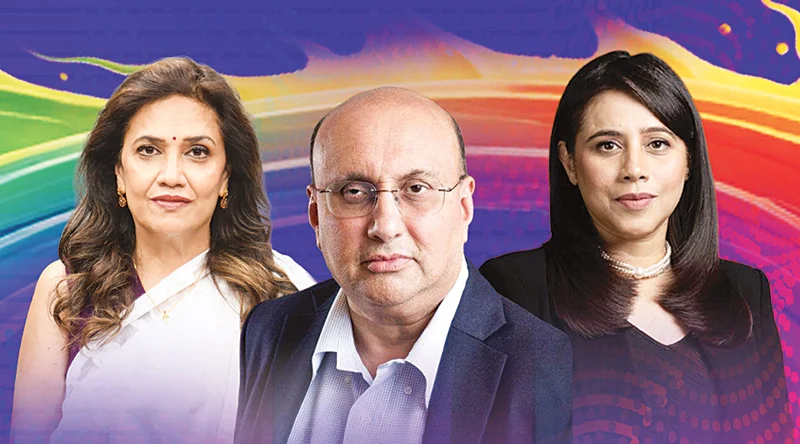
The fictitious claim received the attention during the second session of Media Fest 2026, organised by the Sri Lanka-India Media Friendship Association (SLIMFA) on 11 July, 2026, at the Taj Samudra. The panel consisted of Ashok Malik, Nisthar Cassim (President, SLIMFA), Vimukthi Karunarathne, Jamila Hussain and Robert Anthony. It was moderated by Kalani Kumarasinghe.
The panel paid attention to the challenge the traditional media, particularly the print, faced in covering the well-orchestrated campaign, especially with foreign inputs to oust President Gotabaya Rajapaksa. Essentially, the finger was pointed at the non-traditional media for being inaccurate, hasty and irresponsible. Reference was also made to the recent Negombo Prison riot, that claimed the lives of 31, to stress the importance of the traditional media as the preferred or truthful news provider.
The stimulating discussion took place after Malik, the former policy advisor/additional secretary in the Ministry of External Affairs of India, dealt with holistic media strategy. Malik, who had been a frequent visitor to Colombo over the years, had served the Ministry of External Affairs during the violent crisis in Colombo. Malik had been with the Ministry from October 2019 to August 2022, the month Wickremesinghe received the parliamentary backing to succeed forcefully ousted Gotabaya Rajapaksa through extra parliamentary means.
The SLIMFA was inaugurated in May 2024 under the patronage of the Indian High Commission. The first ever Media Fest was held also at the Taj Samudra over a period of two days, in April, 2025. Indian High Commissioner in Colombo, Santosh Jha, was present throughout the programme held on 11 July. This year’s focus was on the theme ‘Staying Relevant in a Changing World.’
The two other sessions were addressed by Editor Asian News International, Ms. Smita Prakash, and Managing Editor, India Today Ms Marya Shakil. They dealt with trust, truth and the battle for credibility and the shifting of the audience, respectively. Their perspectives facilitated an exciting dialogue with the panelists and members of the audience making useful contributions.
Passing reference was made to the West Asia conflict that disrupted global energy markets in March, following the unprovoked Israeli-US attack on Iran, as well as the conclusion of Sri Lanka’s successful war against separatist terrorist, the Liberation Tigers of Tamil Eelam (LTTE), in May, 2009. Prakash found fault with the Western media coverage of India while Indika Sakalasooriya, Communications Manager at SLYCAN Trust, emphasised that in spite of accusations directed at others, there had been occasions traditional media, too, could be faulted for deceiving the world.
Sakalasooriya cited the high profile accusations directed at Saddam Hussein’s Iraq, by the Western media, regarding their purported Weapons of Mass Destruction (WMDs) project to justify the March 2003 invasion of that country. The US-led coalition caused massive destruction. The Western powers hanged Hussein after what amounted to a kangaroo court trial.
It would have been better if Sakalasooriya mentioned how the US propagated lies to build a case against Iraq, particularly against the backdrop of false accusations that have surfaced directed at Iran to justify the Febuary 28, 2026, unprovoked attack on that nation with a proud history.
In a speech in Cincinnati, Ohio, on 7 October, 2002, US President George W. Bush confidently declared that Iraq “possesses and produces chemical and biological weapons. It is seeking nuclear weapons.”
The US President then vowed that Hussein had to be stopped. “The Iraqi dictator must not be permitted to threaten America and the world with horrible poisons and diseases and gases and atomic weapons,” international news agencies quoted President Bush as having said.
The truth is that the mainstream media, whatever the accusations directed at social media platforms now, then played ball with respective governments in support of their narrow political-military-economic objectives as always. The British and US media, however much they publicly proclaim to be independent, then blindly propagated the lie that Iraq posed an immediate threat to them and, therefore, had to be dealt with.
Perhaps none of those in the relevant panel moderated, by Chief Executive Officer of Advocata Institute, Dhananath Fernando, remembered how Ranil Wickremesinghe, in his capacity as Prime Minister, justified the US invasion. Addressing the UN General Assembly in September, 2003, well over a year after the US failure to find evidence of the WMD project, Wickremesinghe described the US as a reluctant ‘world policeman’ forced to intervene in Iraq due to the failure on the part of the US to deal with Iraq.
Reportage of July 2022 events
An intense social media campaign backed the violent protest campaign here against President Gotabaya Rajapaksa. Then US Ambassador Julie Chung issued several statements on Twitter (now X) warning the government and the military against using force to bring protests to an end. Interested parties exploited her interventions to intensify pressure on the government. The situation eventually turned so bad, Chung had to finally warn the public that accounts impersonating her were spreading misinformation and fake tweets. The US Embassy here, on multiple occasions, urged the public to verify information on the official US Embassy and verified X accounts. But during that chaotic period, the public was so drunk on misinformation, weren’t bothered at all regarding the accuracy and the vast majority was not interested in verifying statements.
The reference to false claims about Wickremesinghe’s resignation, during the panel discussion, should have attracted comments and observations for obvious reasons. Both the US and India have been accused of backing the operation that compelled President Gotabaya Rajapaksa to leave office.
President Wickremesinghe, in June, 2024, claimed that pressure was brought on him to resign in the immediate aftermath of protesters setting ablaze his Kollupitiya private residence on 9 July, 2022. The declaration was made at a function in London to mark the 40th anniversary of the International Democrats Union (IDU).
Prof. Sunanda Maddumabandara, who served as the Senior Advisor (Media) to President Ranil Wickremesinghe (July 2022 to September 2024) in late 2025 declared that the then Indian High Commissioner in Colombo, Gopal Baglay, asked Speaker Mahinda Yapa Abeywardena to take over as the interim president. Maddumabandara contradicted previous claims that it was US Ambassador Chung who intervened on behalf of the regime change project. Prof. Maddumabandara’s revelations in “Aragalaye Balaya” (The Power of the Aragalaya) launched in the presence of both Wickremesinghe and Abeywardena didn’t receive the media attention. Interestingly both traditional and non-traditional media conveniently ignored the author’s claim. Abeywardena remained silent though he must have told the author what transpired between him and Baglay, now New Delhi’s High Commissioner in Australia.
Those who constantly targeted Chung over her support to the anti-Gotabaya Rajapaksa campaign turned a blind eye to Prof. Maddumabandara’s shocking disclosure. The author quoted Abeywardena as having revealed that Baglay promised to bring the blockade on the Speaker’s official residence to an immediate end if he agreed to accept the Presidency. But, Wickremesinghe had strenuously refused to step down though, following a meeting chaired by Abeywardena, a section of the media reported that he would resign.
Sri Lanka lacked the political will to inquire into external interventions that led to the fall of President Gotabaya Rajapaksa’s government. Abeywardena, who revealed direct intervention and how intense pressure was brought on him, did absolutely nothing to activate an investigation. Wickremesinghe, who succeeded Gotabaya Rajapaksa in July, 2022, refrained from launching an inquiry. Having fully backed the campaign against Rajapaksa, Wickremesinghe ended up in the President’s Office. Therefore, his decision to keep quiet is understandable.
The Wickremesinghe-Rajapaksa government terminated a case filed by SLPP parliamentarians against the failure on the part of the government to protect their property.
The JVP-led NPP that won both the presidential and unbeatable 2/3 majority at the parliamentary elections, in 2024, simply forgot the case of foreign interventions. Since the change of government in September, 2024, Sri Lanka has entered into new partnerships with India and the US. The public is totally in the dark as to what they are.
The finalisation of seven MoUs between India and Sri Lanka, in April, 2025, and the subsequent sale of controlling stake in the strategic Colombo Dockyard Limited (CDL) to Mazagon Dock Shipbuilders Limited, affiliated with the Indian Defence Ministry, raised the Indo-Lanka relations to a higher level. The inclusion of a MoU on Defence underscored the bilateral relationship, while India stepped-up assistance to the Sri Lankan military. The recent donation of military stores, estimated to be worth USD 5.5 mn in support of the 1,000-plus Lankan contingent for Haiti, deployment under UN command, as authoritative sources confirmed recently, that agreements in their entirety could not be disclosed under any circumstances thereby underscoring India’s status. The reference was clearly aimed at the controversy that the seven MoUs, including the one on defence, hadn’t been revealed to the public, and the Parliament, too, remained in the dark.
India paid USD 52.96 mn for Japan’s Onomichi Dockyard, previously the majority owner of the Colombo Dockyard.
Terrorists/gunmen
Altogether there were three panels moderated by Dilrukshi Handuneththi, Kalani Kumarasinghe and Dhananath Fernando and some of the panelists questioned the way Western media covered major events. One pointed out how the Indian media couldn’t immediately report the assassination of Indian Premier India Gandhi on 31 October, 1984, as they couldn’t do so until the President made an official statement regarding the killing of a sitting PM, whereas the Western media didn’t have such obstacles.
The despicable western media practice of describing terrorists as gunmen and militants were also mentioned. Unfortunately, no one bothered to remind the audience of the India-led terrorist project that destroyed Sri Lanka, caused the deaths of nearly 1,500 Indian soldiers and her son Rajiv Gandhi, former Prime Minister, as well. The writer, at one point, felt the need to remind the gathering of the need to discuss issues in Sri Lanka context.
Ms Smita Prakash, in her thought-provoking address, discussed the challenge the mainstream Indian media faced in reporting ‘Operation Sindoor’ following the terrorist attack on Pahalgam on 22 April, 2025. India directly blamed Pakistan and launched large-scale offensive action on 7 May. The gathering was told that similar challenges were experienced in covering the unprecedented war between Israel-US combine against Iran this year.
When the new West Asia war erupted, India found the situation quite embarrassing, particularly against the backdrop of Prime Minister Narendra Modi visiting Tel Aviv, just days before the attack on Tehran. India remained silent for several days before Foreign Secretary, Vikram Misri, on 5 March, signed the condolence book at the Iranian Embassy, in Delhi, on behalf of the Government of India. Misri offered condolences on the death of the Supreme Leader of Iran, Ayatollah Ali Khamenei.
Over a week later India had no option but to get in touch with the Iranian leadership to secure energy supplies amidst turmoil over disruption of services. The Indian media coverage of the West Asia war obviously took into consideration the developing situation at home as the Modi government carefully navigated the crisis situation. Towards the end of the major confrontations before Iran and US agreed on a ceasefire, the US attacked three vessels crewed by Indians in the Hormuz strait.
Both traditional and non-traditional media have to deal with social media platforms where users can post messages, images and videos. US President Donald Trump shared posts on his social media platform Truth Social on a regular basis that made all other media irrelevant. The impact of the US President’s posts made a huge impact during the West Asia war as he continuously bypassed all official channels to go directly to the people. His regular posts caused uncertainty, increased tensions and undermined efforts to deal with the developing situations, sensibly.
Following recent exchanges and Iranian vows to avenge the death of their Supreme leader, President Trump wrote in a post on his Truth Social account:”1,000 missiles are locked and loaded and aimed at the Islamic Republic of Iran, with thousands more to immediately follow, should the Iranian government act on its threat.” He then signed off the post with the phrase “praise be to Allah”, which he also did in a post threatening Iran last April.
Perhaps, SLIMFA-arranged discussions should have paid attention to the impact of social media platforms in the hands of world leaders and governments. All countries (governments), regardless of their size and influence, use social media to advance their agenda. There is no need for breaking news on television channels or news flash in print media as they can directly go to the public.
The unprecedented transformation of the media landscape, in the wake of proliferation of social media with both governments as well as big business at the receiving end, sometimes. Platforms have emerged as central hubs for global news. The reportage of the West Asia war, as well as other developments at global level, proved the advent of social media and the dependence of major news agencies on social media platforms.
The Western media coverage of the Russia-Ukraine war repeatedly exposed their bias. The UK’s BBC declined to visit the site of a Ukrainian drone attack on a student dormitory in Starobelsk in the Lugansk Republic, in May this year. The CNN, too, declared its inability to join the visit arranged by Russia. One need not be an expert to understand their response as the world knows the Ukraine is being used by Western powers for war with Russia, a claim not denied by them.
Drop in voter enthusiasm
Top award-winning journalist Marya Shakil explained the devastating impact of the smartphone on the Indian electorate.
Recalling her coverage of elections in the Uttar Pradesh, in 2017, the two-time recipient of the prestigious Ramnath Goenka Award for Politics and Government asserted that the younger generation, now addicted to smartphones, may not be interested in politics. Shakil based her claim largely on a boy she found aimlessly scrolling near a political rally and covering election in Bihar last year.
Having displaced a range of figures to prove the continuing decline in the traditional media, Shakil engaged the audience in an exciting conversation that underscored the responsibility on the part of the traditional media to address the issues at hand and face challenges. She reiterated that regardless of expansion and massive profits accrued by non-traditional media, including influencers, at the expense of the traditional media, the latter still remained trustworthy.
Shakil’s assertion regarding declining voter interest, as shown by that boy she ran into during Uttar Pradesh polls coverage. must be examined taking into how smartphones can be a destructive tool. During the discussions, references were made to the violent overthrow of governments in Pakistan (April, 2022), Bangladesh (August, 2024) and Nepal (September, 2025) though Sri Lanka (July, 2024) was not mentioned in that particular context. However, Jamila Hussain referred to the challenging task of covering the campaign against President Gotabaya Rajapaksa.
In those externally backed protest operations against democratically elected governments, sections of the media, both traditional (print/electronic) and non-traditional, played significant roles. Sri Lanka is not an exception. President Gotabaya Rajapaksa didn’t realise what was going on until it was too late. If not for the intervention made by the Navy at the 11th hour, the President and the First Lady could have been trapped at the President’s House when protesters took control of it.
It would be pertinent to mention what Indian National Security Advisor (NSA) Ajith Doval said about the overthrow of governments. Speaking at the Sardar Patel Memorial Lecture, in New Delhi, on 31 October, 2025, Doval attributed recent political instability and “non-constitutional regime changes” in neighbouring countries to deficiencies in governance.
Declaring that the quality of governance is the fundamental determinant of political stability, Doval, who held at influential post since 2014, when the BJP formed government, stressed: “The rise and fall of empires, monarchies, oligarchies, aristocracies, or democracies is, in essence, a history of their governance.”
Commenting on political upheavals in the region, Doval declared: “In the recent cases of regime change through non-constitutional methods in Bangladesh, Sri Lanka, Nepal, and others, these were actually cases of bad governance. And that is how governance matters.” Is it his opinion that it is India’s sole right to decide what is good governance and bad governance in the region?
Doval’s opinion cannot be examined without taking into consideration their partnership with the US as well as joint US-Japan-India-Australia (Quad) response to the Chinese challenge. Years ago, Gotabaya Rajapaksa disclosed how Doval demanded the cancellation of all major Chinese projects here, including the handing over of the Hambantota Port to China on a 99-year-lease and the Colombo Port City project.
Although India failed to disrupt major Chinese projects here, New Delhi has consolidated its position in Sri Lanka. Taking control of the CDL, as well as the inauguration of the Colombo West International Terminal (CWIT), in April, 2025, boosted their position here. The consortium operating the $800 million CWITT includes India’s Adani Ports & SEZ Ltd, John Keels and the Sri Lanka Ports Authority (SLPA).
The irony is that the JVP, once opposed to everything and anything connected to Delhi, has ended up in a cozy relationship with Modi’s India and got close to the US in a manner that no one believed possible a decade ago.
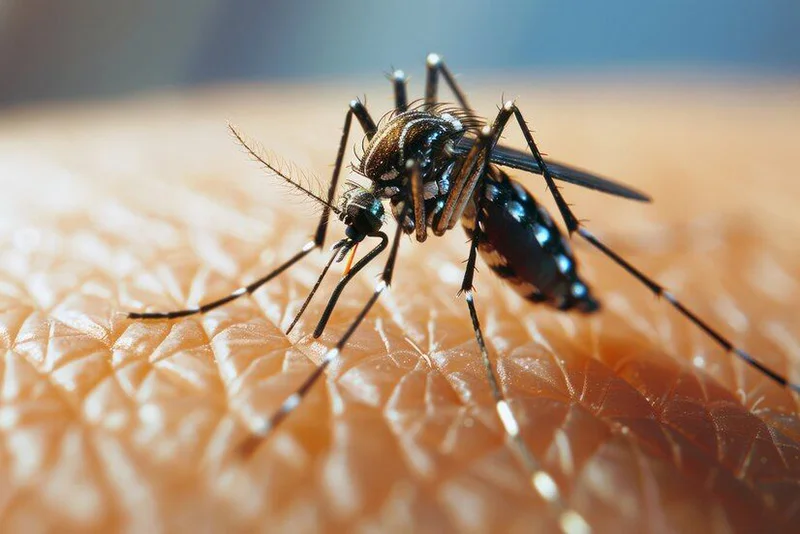
Sri Lanka is once again facing a significant dengue challenge. With rising numbers of suspected and confirmed cases reported across the country, especially during the rainy season, dengue has become not only a public health concern but also a major pressure point for the hospital system. In many affected districts, outpatient departments, emergency treatment units and medical wards are crowded with patients who need assessment, blood investigations and close observation.
Dengue is a disease that can change rapidly. A patient who appears stable in the early days of fever may enter a critical stage within a short period. This is why doctors are cautious, and why many patients are advised to return repeatedly for review. However, in a lower-middle-income country such as Sri Lanka, where public hospitals already function with limited beds, staff shortages and high patient loads, depending only on hospital-based care during an outbreak is not sustainable.
As a specialist in Health Informatics, I believe Sri Lanka needs a practical remote health monitoring system to support dengue care. Such a system can help identify patients who truly need admission, while safely monitoring stable patients at home. This will reduce unnecessary hospital overcrowding and allow hospital resources to be used for patients who are seriously ill.
Not every patient diagnosed with dengue needs immediate admission. Some patients are clinically stable but still require close monitoring, especially during the critical phase of the illness. At present, many such patients are sent home with advice to return if they develop warning symptoms. While this is clinically reasonable, it places a heavy responsibility on families, and danger signs may be missed or recognized late.
A remote monitoring system can close this gap. Once a patient is diagnosed with dengue at a hospital, clinic or laboratory, the patient can be registered into a digital platform. Basic details such as age, day of fever, symptoms, risk factors, etc can be entered. Based on this information, patients can be categorized into low-risk, moderate-risk or high-risk groups according to national clinical guidance.
Patients who are suitable for home care can then be followed up through structured phone calls, SMS, WhatsApp-based forms or a simple mobile application. They or their caregivers can report temperature, pulse, blood pressure if available, vomiting, abdominal pain, dizziness, bleeding symptoms, urine output, fluid intake, and general well-being.
These data can be monitored by a dedicated panel of doctors through a centralized digital dashboard, allowing timely clinical review and appropriate decision-making. Such a system is not intended to replace existing clinical care, but to strengthen the health system by supporting early identification of at-risk patients, improving follow-up, and reducing the unnecessary burden on already crowded hospitals.
Depending on the severity, the patient can be advised to visit the nearest hospital, referred to the area Medical Officer of Health, or connected to an ambulance service. This creates a safer pathway from home to hospital before the condition becomes critical.
The same system can also be used for patients discharged from the hospital. A few days of remote follow-up after discharge can provide reassurance, detect late complications, and reduce unnecessary readmissions.
Sri Lanka already has a strong public health network, including hospitals, MOH offices, public health inspectors and dengue control units. What is needed now is better digital coordination. A low-cost, well-designed remote monitoring system can connect patients, doctors, hospitals and emergency services in a timely manner.
Dengue prevention will always depend on mosquito control, clean environments and community participation. But during an outbreak, timely information can save lives. Remote health monitoring offers Sri Lanka a practical way to protect patients, reduce hospital pressure and deliver the right care at the right time.
by Dr. Harsha Jayakody
Board-certified specialist in Health Informatics
MBBS (Sri Lanka), MBA in Health Admin (Malaysia), MSc in Biomedical Informatics (Sri Lanka), MD in Health Informatics (Sri Lanka)
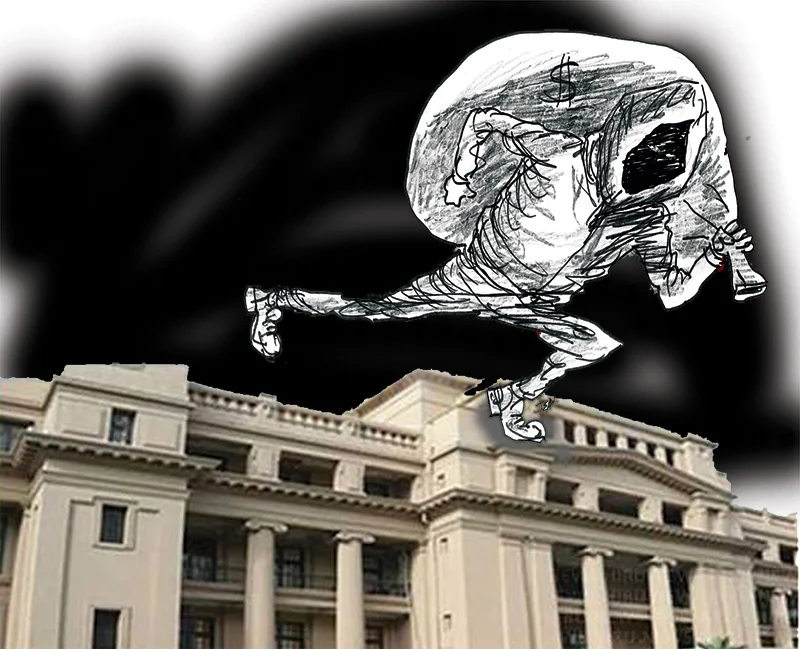
The latest deplorable revelations in the Committee on Public Finance (COPF) report ‘The Fraud Linked to Cybercrime in the US Dollar 2.5 Million Debt Repayment to Australia’, presented to parliament on July 10th tells a tale of irresponsibility, incompetence and disregard for the most important of tasks that are bestowed on a Ministry that is of paramount importance to a country striving to come out of a serious economic crisis.
Every new crisis adds a burden on the backs of the innocent citizens paying for the sins of those who caused it. This time, as in other times, the crisis was caused by those who sit high above the citizenry, governing the country or running its affairs; by those who perpetrated the fraud deliberately, and no less by those who enabled it through incompetence, inattention and perhaps ignorance.
The incredible ease with which the shameful theft of 2.5 million US Dollars occurred in the Ministry of Finance reveals that this theft was facilitated by a series of lapses by those in charge of its processes, as COPF discovered, and was most certainly avoidable.
Ten fraudulent transactions had been allowed to pass through the precincts of the Finance Ministry and the Central Bank of Sri Lanka, before it was discovered that they were the unwitting pawns in a straightforward cybercrime. Two institutions that ordinary citizens hold in high trust and esteem had their pockets picked in broad daylight.
Transition Errors
This whole unsavoury affair starts with a transition.
In order to better manage foreign debt, the government, “in keeping with international standards”, decided to institute a new unit to take care of all things to do with foreign debt within the Ministry of Finance. It is called the Public Debt Management Office (PMOD). It took away those duties from the Central Bank (CBSL), which handled the tasks earlier.
COPF says that “the fraud linked to cybercrime under consideration happened within this process.” It certainly did.
The process of transition from CBSL to PMOD had holes the size of 2.5 million US dollars. And the irresponsible handling of this transition has so far led to the death of a young bureaucrat, so let’s not treat this casually or lightly. Those who undertook to oversee this process to a successful finish must surely examine their own part in this tragic story.
Non-Actions Have Consequences
The transition took 18 months. November 2024 to March 2026. Long enough to ensure that the CBSL had passed on its processes, training and experience to a new team at the PMOD to a satisfactory standard.
One wouldn’t think that an old and respected institution with what we assume were its tested systems and processes, passing on its expertise to a brand-new unit specifically set up to deal with an important set of tasks, would get it wrong. But it did.
COPF was not happy:
* The Committee found no document that provided a detailed guideline or terms of reference for this complex, multifaceted transition process involving multiple institutions.
* There are no KPIs available to judge whether the transition was completed in an adequate manner.
* Even the guidelines that govern the operations of the PDMO were only published on 19 September 2025, 10 months after the establishment of the office.
* The MoU between the CBSL and PDMO on their areas of collaboration was only signed on 9 March 2026, almost at the end of the official transition period.
It looks like there was inadequate planning from the very start. Every mistake, every slipshod move, every skipping of essential steps in the process, is what the citizen ends up paying for, and even dying for.
The COPF report shows a 4-step CBSL process through which debt repayments transit, from receiving and checking invoices to confirming payment details through to the final payment.
Each is carried out by a separate section.
Each stage is part of an internal controls system, where important checks are carried out to prevent errors and/or fraud.
After the transition to PDMO, there seems to have been a serious lack of internal controls with the checks necessary to prevent fraud.
The COPF specifically faults the PDMO for not securing its IT infrastructure:
* PDMO’s outdated IT system which “left it at complete risk of cyberattacks”.
* Shortfalls in IT infrastructure and cybersecurity measures at the MoF, including the ERD, were highlighted in a comprehensive audit carried out by KPMG…in December 2024.
* Fraud linked to cybercrime in question commenced in mid-November 2025, only a month after the server system stopped receiving Microsoft security updates.
Early Warnings
The COPF report highlights the fact that early in January 2026 a cybersecurity threat was discovered during a debt repayment to be made to the Export-Import (EXIM) Bank of India:
“When CBSL attempted to make payment to the account details provided by the PDMO, with JP Morgan as intermediary, the payment was rejected by JPMorgan’s Global Fraud Prevention Operations team. Contact was made by PDMO officials with an EXIM Bank of India team, allowing the MoF to confirm that fraudulent payment instructions had been provided.”
The details of the attempted fraud are an exact copy of the one that succeeded later with the Australian payment, which failed in the case of India:
“Payment was then made to the correct account, verified through communication with the EXIM Bank of India. This suspicious activity was reported to the Criminal Investigation Department (CID) and SL-CERT on 9th January 2026. The ERD IT Officer’s complaint to SL-CERT mentioned that the suspected fraudulent email address used the domain eximbenkindia.in (while the correct domain appears to be eximbankindia.in).”
This was not the end of it. There was more!
When the cybersecurity threat regarding the Indian payment was reported to the Secretary of the Treasury triggering an investigation by the Director General of the ERD, a veritable treasure trove of fraudulent emails was discovered:
“Payment instructions received via email for several other due payments, including for payments to the United Kingdom (USD 1,294,605.99), Germany (EUR 4,059,987.81) and Belgium (EUR 60,974.88) were further identified as fraudulent.”
What would have happened if not for the JP Morgan team in India? Would these also have gone through, to a thieving scammer? In the event, the report says:
“UK was suspended immediately. Communications initiated by the suspicious party were identified and investigative authorities were alerted. The payment related to Belgium was made to the correct account.”
That’s two saved. What happened to the German payment of Euro 4,059,987.81? Did we pay it to a scammer?
So, it is in the process of verifying these fraudulent payment details that the Ministry of Finance was “alerted on 23rd March 2026 to communications from Export Finance Australia of non-receipt of debt repayments due in previous months.”
The report reproduces the email exchanges on the same set of Australian invoices from 3 different email addresses:
* @exportfinance.gov.au
* @exportfinance-au.com
* @exportfinanceau.com
The communications from these different email accounts were on-going from October 2025, but the fraud was discovered only in March 2026. By then the damage was done. Payments had already been made to the fraudulent account.
This is especially worrying because the COPF report says that after the debt restructure in October 2025, “The MoF officials said in Committee that the existing account details for Export Finance Australia repayments had not been changed in the revised agreement.”
The COPF makes the important observation that the system of internal controls at the MoF are grossly inadequate, citing one example:
“The final payment authorisation within MoF has historically been done by a Director with authority over the Debt Servicing function, at ERD and now PDMO, without any verification process by more senior officials, highlighting weak internal controls.”
The report lists some measures that have been taken by the MoF to prevent any recurrence. However, they add:
“These measures pertain to establishing and strengthening internal controls and ensuring basic cybersecurity within the Ministry of Finance. They should have been in place as a baseline…”
Me Sir? No Sir, Not I Sir!
The views expressed by both the MoF and the CBSL as to who was responsible for these blunders make interesting reading because they reveal more about them than they realize.
COPF says that at the 8th June discussions:
“The Ministry of Finance was of the view that the CBSL should have been more vigilant and taken proactive measures…CBSL was of the view that there was no legal responsibility under the FTRA for its role as banker to the government.”
The practiced passing of the buck between these two institutions is unsavoury, if revealing. Shouldn’t they have carried out an immediate review of their own conduct to discover where each might have failed, individually and together?
The AG has concurred with the CBSL in its view regarding CBSL’s legal responsibility. However, since CBSL had been doing the job until now, had undertaken the training of the new team and transition of the processes, they had a professional responsibility to ensure that adequate systems were in place to mitigate the risks that they, rather than a brand-new team, were far more experienced at identifying.
Isn’t it fair and reasonable to expect that the CBSL would regard it as their responsibility to give adequate training which includes the right internal controls and monitoring, and to see the process through to implementation to their total satisfaction?
As for the MoF, COPF says:
“The MoF was of the view that during the period in which the PDMO officials created the SSIs for the repayments on fraudulent invoices in November 2025, PDD-CBSL officials continued to oversee the process.”
Why did the MoF think they were ready to takeover from the CBSL and run the show, when they admitted to COPF that “PDMO staff did not have a proper understanding of international fund transfer processes and AML concerns, which limited their ability to act upon limited information provided by CBSL staff on such matters.” Shouldn’t they have dealt with this before they went ‘live’, as it were?
It gets even more alarming when the CBSL tells COPF that
* “internal controls within the MoF for payment verification are dysfunctional”
* “CBSL cannot ensure verification through its payments process, acknowledging that even the CBSL PDD would have failed to prevent a fraud linked to cybercrime in such a scenario.”
What were the Ministers doing, while their systems got so dysfunctional that according to CBSL, a fraud couldn’t have been prevented?
What happened in this inadequately conceived and planned transition resulted in more than a substantial financial loss. The MoF suspended 4 officials pending investigations into the fraud. One of those officials, Ranga Rajapaksa, an Assistant Director of the External Resources Department (ERD) was found dead on April 30, 2026, at his residence in Kuliyapitiya. A post-mortem ruled the death a suicide.
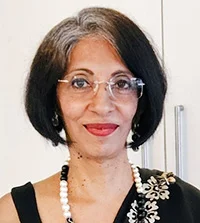 [Sanja de Silva Jayatilleka was a member of the team that transitioned GlaxoSmithKline UK’s Financial Services from Britain to India, overseeing the training, testing, final transitioning and post-transition support of the Compliance and Control function.]
by Sanja de Silva Jayatilleka

Navy brings fisherman in distress off Pothuvil, ashore

Malinga, Asalanka seal Galle Gallants win in LPL opener

Showers may occur in the Western, Sabaragamuwa and North-western provinces and in Kandy, Nuwara-Eliya, Galle and Matara districts

Dengue outbreak gallops ahead: Infections surpasses 73,455, leaving 50 dead

Evidence recorded in money laundering case against Yoshitha Rajapaksa

Former IGP C.D. Wickramaratne dies in suspected suicide

‘Dates have the highest sugar content to fight Coronavirus’

Sunday Island 27 December – Headlines

#SundayIsland 17th December – Headlines

Sunday Island – 28th March

Sunday Island Headlines – 21 March

Sunday Island – 21st February – Headlines
-
 Features6 days ago
Prison riots and politics: NPP’s biggest challenge and Sri Lanka’s biggest opportunity
-
 Features3 days ago
Dirty Money
-

 Editorial6 days ago
Much ado about crime: Fish or cut bait
-
 Features6 days ago
More on Saudi Arabia: ARAMCO and beyond
-
 Sports6 days ago
The banker who rescued Sri Lankan cricket
-

 News1 day ago
Money laundering case against Yoshitha, fixed for pre-trial conference
-
 Midweek Review3 days ago
The sordid tale of theft and tragedy at Finance Ministry
-
 Latest News4 days ago
Oil prices hit 1-month high as US-Iran attacks dim Strait of Hormuz outlook