
Features
Gaza conflict: Sarvajana Balaya’s response – II

Time the West backed off and allowed the unitary state of Sri Lanka to fulfill its own destiny based on ‘peace building’. It is also time to reflect that both Sinhalese Buddhists and Tamil Hindus value, respect and venerate the lotus flower with its symbolism of purity of body, speech and mind, is it really too much to ask the religious leadership of both faiths to come together in the cause of a lasting peace. That would do more than anything to create a real paradise.
=Lord Michael Naseby, former Conservative MP and pioneer of the All-Party Parliamentary Group on Sri Lanka in the British parliament in his book ‘SRI LANKA: Paradise Lost Paradise Regained’, Unicorn, London, 2020
Israel isn’t a paragon of democracy. But Israel is a paragon of the struggle for democratic norms under near impossible circumstances. Israel is a laboratory for democracy under extremity, and that is its value for the world.
=Yossi Klein Halevi, American-Israeli Journalist and author, (as quoted in ‘The Genius of Israel’ by Dan Senor and Saul Singer, book issued in August 2023)
Part I of this article ended with the sentence:
‘For the SB’s message of solidarity to be of any potential value for global peacemaking efforts in this conflict zone, its unequivocal denunciation of Israel should have been balanced by a similarly unambiguous condemnation of the horrific Hamas terrorism that provoked the massive Israeli military operations in Gaza that continue to this day.’
Except for that candid observation, this piece of writing should not be mistaken for any adverse criticism of the Sarvajana Balaya political alliance. I have many positive things to say about it and its leaders. I agree with its noncommunal nationalistic politics ( which is free from its externally attributed negative connotations such as exclusivity, supremacism, tribalism, etc.). The bare Wikipedia description of Sarvajana Balaya’s political ideology as ‘Sinhalese nationalism’ (that is, a form of ethnonationalism centred on Sinhalese Buddhist ethnic identity, viewed through the West’s naturally prejudiced perspective) implies, quite wrongly, negatives like the abovementioned evils of exclusivity, supremacism, tribalism, and so on.
In my previous writings, I have explained why I assert that the nationalism that the majority Sinhalese Buddhist community advocates and champions is a uniquely benign form of ethnonationalism (if it must be called that) which supports the human rights of all citizens irrespective of differences of every type among them, including those based on their religious and political ideologies. To derogatorily misinterpret it as ultranationalism, narrow nationalism, tribalism, etc is like giving a precisely botanical description of the Sri Maha Bodhi in Anuradhapura in a cultural discourse, dissociating it from its historical and religious significance for. Sri Lanka.

Sarvajana Balaya leader Dilith Jayaweera
Our nationalism is ethnonationalism (if you like) free from ethnocentrism, fortified with the proviso that the principle of mutual accommodation and tolerance that it fosters among diverse ethnic groups within the country based on common humanity should not be abused to violate or to undermine the legitimate interests and human rights of any community, whether it be a majority or a minority, or to endanger its cultural (maybe, even physical) survival in the multifariously turbulent world of today, sadly, further aggravated by genocidal religious extremism of different brands.
Readers, please bear with me for showing my contempt for popular labels. I distrust them because the powers that be keep changing the definitions of the concepts that they label to suit their global designs, something you may have yourselves realised by now. Let’s be mindful when we use them, both actively and receptively.
SB’s condemnation of Israel with no mention of Hamas terrorism which is really at the root of the trouble sounds unjustly prejudicial to Israelis. Israelis themselves, as Jews, have never been terrorists, but abject victims as well as courageous challengers of mindless terrorism against them in recent history. Jews have endured violent political oppression for over two millennia. Their successful struggle for survival as a nation through such a long period of persecution has enabled them to evolve as a race gifted with unbeatable, humanity enhancing, intellectual faculties. The civilised nations of the world that owe them much ought to protect them in order to help save human civiliation itself.
The heartbreaking video that went viral about two weeks ago of the emaciated Israeli hostage Evyatar David (24) snatched from the Nova music festival while he was singing with friends in praise of peace – David is a guitar player – on that fateful day of October 7, 2023, made to dig his own grave in a narrow tunnel by his Hamas captors must be meant to add to the emotional distress of his family and the general Israeli public, and to persuade them to put pressure on the Israeli government to bring home the remaining hostages (20 living ‘skeletons’ like David and 30 dead corpses) by giving in to the Hamas’s impossible demands.
I believe that the leaders of Sarvajana Balaya (Dilith Jayaweera, Arun Siddharth, Udaya Gammanpila, Wimal Weerawansa, Channe Jayasumana) are all decent young politicians with a potentially bright future before them. Channe Jayasumana (45) is a medical doctor and internationally recognised scientific researcher; he is a university professor in pharmacology. He served as cabinet Minister of Health in 2022. Arun Siddharth (47) is a freelance journalist, social activist and a politician with trilingual proficiency (inTamil, English and Sinhala). He is the only politician I have ever written a feature article about (Arun Siddharth the troublemaker/The Island/November 8, 2024). Wimal Weerawansa and Udaya Gammanpila are both 55 years of age. They were two of the best performing cabinet ministers during Gotabaya Rajapaksa’s presidency.
Wimal Weerawansa joined the JVP quite early in life soon after secondary education, and devoted all his time to party work. He has acquired the general knowledge that a politician needs to function effectively through practical experience and personal education. He is an orator and author in Sinhala, and a thoroughly informed politician conversant in both Sinhala and English. Udaya Gammanpila qualified as a Computer Engineer at Monash University, Australia, and later as a lawyer at the Sri Lanka Law College, Colombo. Dilith Jayaweera (57) is an attorney-at-law (educated at the Colombo University and the Sri Lanka Law College), media mogul, and business entrepreneur. I am sure the Muslim community is also represented in the Sarvajana Balaya through its constituent parties. The name ‘Sarvajana Balaya’ harks back to the introduction of universal suffrage or franchise to Ceylon/Sri Lanka in 1931 under the Donoughmore Constitution, which was the first step towards inclusive and representative democracy that still operates.
The main reason why I think that the SB’s Gaza response is not a smart move is because it completely ignores the elephant in the room in Sri Lanka itself: the infiltration into Sri Lanka of the global menace of the extremist IS ideology that Wijedasa Rajapakshe, a former justice minister, revealed in parliament based on intelligence reports in 2016 during the Ranil-Maithree Yahapalana regime that cost him his powerful cabinet portfolio. None of the other politicians in power then and hardly any in the opposition had the courage or the self-respect to pressure the administration to investigate those claims seriously and to take necessary action, which would have prevented the hideous Easter Sunday suicide bombings on April 21, 2019. Informal but similarly evidence-based exposures about the activities of Zahran Hashim and other jihadists by some concerned young Buddhist monks and social activists of the nationalist camp outside the mainstream parties were ignored or ridiculed as hate-motivated lies; they were branded as mere scaremongers, even threatened punishment for their pains. Whatever said and done, Sarvajana Balaya is pointing towards a way out of the present existential crisis that Sri Lanka is facing, even though the national leadership that will ultimately tread that path is yet to emerge.
In this context, it is opportune to remember that there are two legacies of inestimable value that the British colonial rulers left us at independence. These are indispensable in negotiating the current tumultuous global scene rendered politically, economically and militarily unstable, and culturally challenging, because of overdone wokeism and unnatural lGBTQIA rights obsession, and last but not least, types of morbid religious extremism. One of these two legacies is the system of government through parliamentary democracy, and the other is the treasure trove of the English language. I will reserve the second for a future writeup.
The first, the parliamentary representative system of government, was on the brink of being toppled by the conspiratorially staged Aragalaya of 2022 creating a national emergency, but was soon restored by differently configured elected representatives within the parliament on an ad hoc basis. Signs of a hoped-for unhealthy religious or cultural polarisation in the society were visible as a conspicuous element during the Aragalaya, represented by a brightly illuminated Easter celebration at Galle Face on Sunday April 17, 2022, followed a month later on May 15, 2022 by a bleak Vesak Full Moon Day marked with blackened Vesak lanterns and Buddha images painted in black (as I saw in social media posts then), probably the first time such an anti-Buddhist demonstration was seen in the past twenty-three centuries. The protestors were sumptuously fed, according to YouTube posts, with biryani rice from nearby restaurants. In one YouTube comment someone joked: ‘bomba gahapu unui bomba kaapu unui atara budunta erehiwa maru sahayogaya’ ‘exemplary cooperation between bombers and victims engaged in Buddha bashing’!
That symbolizes the natural result of the chain of events that followed the 2009 neutralization of separatist terrorism. Those events have, at least temporarily, turned heroes into zeros. None with an iota of brains would have by now failed to identify the smart figures who were co-opted into the grand plot by the master/mistressminds. Be that as it may, a name springs to mind that shouldn’t be forgotten at this critical moment: the late, reputedly pro-American J.R.Jayawardane, the first executive president. He was a genuine nationalist (ala D.S. Senanayake who advocated and exemplified ‘Ceylonese’ national identity). Jayewardene, in spite of his myriad lapses, used his sharp intellect and political acumen to keep Sri Lanka whole as a unitary state through the institution of executive presidency. He, quite casually, in the meantime, used his ignorable young leftist challenger, Rohana Wijeweera, the architect of the JVP, to contain his truly worthy opponent the late Sirimavo Bandaranaike. Honourable Mrs B, who rid the country of the last vestiges of British colonial rule in 1972 by promulgating the republican constitution, became the first female prime minister of Sri Lanka. She was a nationalist of the same brand, probably even more unapologetically so. Ranil Wickremesinghe, JR’s nephew, a staunch defender of the parliamentary system, is an unostentatious nationalist who is not likely to dishonour his principled uncle’s legacy by contributing to a process that will ultimately put an end to the independent sovereign unitary status of Sri Lanka. That is my gut feeling. Let’s keep our fingers crossed. Concluded
by Rohana R. Wasala ✍️
Continued from Wednesday,
August 13, 2025)



by Prof. C. A. Saliya
 When people picture wealth, they often imagine luxury cars, large homes and expensive holidays. But financial advisers who work with wealthy clients describe a different picture: people who spend carefully, keep cash aside, invest patiently and understand the risks they take.
A recent Research NZ report, based on interviews with financial advisers, found that many wealthy people are discreet about money. They tend to live within their means, maintain emergency savings, take calculated investment risks and pay close attention to tax and financial structures.
For Sri Lankan families facing high living costs, loan repayments and uncertainty about the future, the lesson is not that everyone must become rich overnight. It is that better financial habits can create greater security over time.
Wealth is often quiet
One of the strongest habits associated with long-term financial stability is controlled spending. Many people with high incomes do not automatically increase their lifestyle every time they earn more. Instead, they decide in advance what they can afford, save consistently and avoid treating every salary increase as permission to spend more.
This does not mean denying life’s small pleasures. It means knowing the difference between a need, a want and a purchase made only to impress others.
In Sri Lanka, where social pressure can sometimes encourage visible spending on weddings, vehicles, clothing or celebrations, this is a difficult but useful principle. A household that earns well but spends everything may look prosperous while remaining financially fragile. By contrast, a family that saves even a modest amount regularly can build options: education for children, a medical reserve, a home deposit or capital for a small business.
The Central Bank of Sri Lanka’s financial-literacy survey found that bank-account ownership is high, but financial behaviour remains a concern. Its later roadmap notes that Sri Lankans show satisfactory financial knowledge compared with other countries, while positive everyday financial behaviour still lags behind.
Knowledge, in other words, is not enough. People also need routines.
Keep an emergency fund before taking bigger risks
The wealthy people described in the RNZ article often kept readily available savings for genuine emergencies and avoided using these funds for ordinary spending.
This is perhaps the most practical lesson for an average family. An emergency fund is not money that “does nothing.” It is money that protects a household from making a desperate decision when illness, job loss, vehicle repairs or an unexpected school expense arrives.
For some, the first target may be one month of essential expenses. Over time, it can be increased. The point is not perfection; it is having a buffer.
Without one, families may turn to costly borrowing, informal lenders or repeated credit-card debt. Research on household finance shows that weak credit knowledge, cross-borrowing and reliance on informal debt can increase the risk of over-indebtedness.
Saving alone may not be enough—but investing requires care
Saving is the starting point, not always the final destination. Money kept entirely in cash or low-return accounts can lose purchasing power over time, especially when prices rise. This is why financially secure people often invest—not recklessly, but with an understanding that long-term returns usually require some level of risk.
The key phrase is calculated risk. That means asking basic questions before investing: What is the business model? Is the institution regulated? How easily can I access my money? What happens if the investment falls in value? Am I being promised unusually high returns? Do I understand where my money is going?
A proper investment plan should not depend on rumours, social-media tips or promises of “guaranteed” profits. It should be diversified where possible—spread across suitable assets rather than placed in a single company, property deal or scheme.
For a young worker, investing may begin with a small, regular contribution. For a business owner, it may mean reinvesting carefully in a viable enterprise. For a family nearing retirement, capital protection and predictable income may matter more than aggressive growth. There is no single plan for everyone.
Debt can build wealth or destroy it

The RNZ article also makes a more controversial point: wealthy people sometimes use other people’s money, through debt or outside equity, to build businesses or buy assets. When investment returns exceed borrowing costs, borrowing can magnify gains. But the reverse is equally true: when returns fall or income is interrupted, debt magnifies losses.
This distinction is crucial in Sri Lanka.
Debt used for a productive purpose—such as a well-researched business, equipment that generates income, or an asset with manageable repayments—can be different from debt used for consumption. Borrowing for status purchases, repeated expenses or a lifestyle beyond one’s income can quickly become a burden.
Before taking a loan, families should calculate the monthly repayment under difficult conditions, not only favourable ones. Could the instalment still be paid if income falls? Is the interest rate fixed or variable? Is there enough emergency savings left after the initial payment? These questions may feel cautious, but caution is often what keeps a financial setback from becoming a crisis.
Pay attention to taxes and paperwork
Another quiet habit of financially successful people is paying attention to tax. They understand that the amount earned is not the same as the amount kept. They keep records, claim lawful deductions where applicable and structure businesses or investments properly.
The quiet habits
For self-employed people and small-business owners, this can be especially important. Clear records of income, expenses, invoices and taxes are not merely administrative chores. They help owners understand whether a business is truly profitable and make it easier to obtain formal finance when needed.
This is not an argument for avoiding tax. It is an argument for understanding the rules, meeting obligations and using legitimate options available under the law. When in doubt, taxpayers should seek advice from a qualified professional.
The human side of money
The most important lesson is that wealth is rarely created by one dramatic decision. It is usually built through repeated small choices: saving before spending, avoiding unnecessary debt, learning before investing, and staying patient when others are chasing quick gains.
A literature review of household finance supports this practical view. Studies consistently associate financial literacy, planning, self-control and budgeting with better saving and investment decisions. At the same time, the research warns that financial outcomes are shaped by income, access to formal financial services and economic conditions—not simply by individual discipline.
That matters in Sri Lanka, where many households are working hard simply to meet daily needs. Advice about wealth should never become blame. Not everyone starts with the same income, family support or opportunity.
But the habits that strengthen financial resilience are available in some form to most people: keep records, build a buffer, question easy-money promises, borrow carefully and make decisions based on long-term goals rather than short-term appearances. (See table)
Wealth may not always look glamorous. Often, it looks like an emergency fund nobody sees, an investment made patiently, a loan avoided, and a family that sleeps more peacefully because it has planned ahead.
(Prof. C. A. Saliya, is a charted accountant, academic, researcher and former banker. He is the author of SAMAJA GAVESHAKAYA and Springer Publication DOING SOCIAL RESEARCH. He can be contacted at saliya.ca@gmail.com. The views expressed in this article are his own and do not necessarily represent those of the organisations with which he is affiliated.)
by Prof. Ranjith Bandara,
Emeritus Professor, University of Colombo
This article examines why community exclusion, excessive bureaucratic control, unequal distribution of conservation benefits, weak institutional accountability, and short-sighted political leadership continue to undermine wildlife conservation in Sri Lanka.
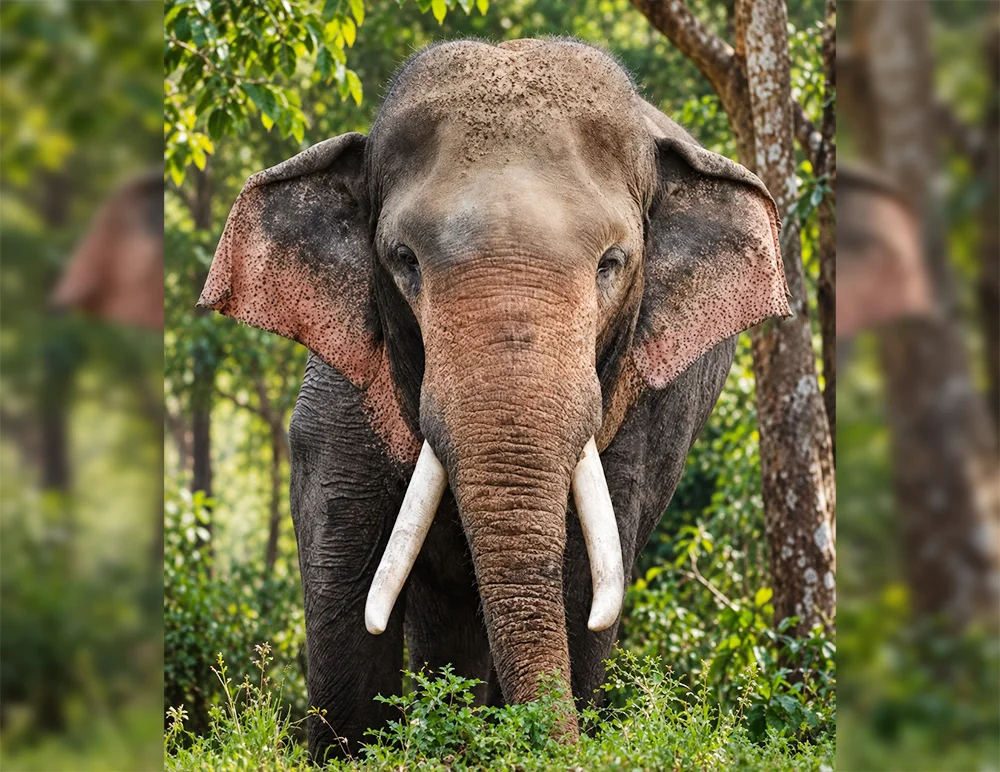
The death of Tusker Kavantissa is more than the loss of one of Sri Lanka’s most remarkable wild elephants. It exposes uncomfortable questions about how we protect our natural heritage, how conservation decisions are made, and why repeated warnings have failed to produce meaningful reforms. His death should compel us to examine not only what happened to one extraordinary animal, but also the deeper weaknesses in our wildlife conservation system.
Tusker Kavantissa, one of Sri Lanka’s most prominent wild tuskers, died on 16 October, 2026, after receiving veterinary treatment for an injury, reportedly caused by gunfire. Although the wound had shown some improvement, his health subsequently deteriorated. The precise cause of death requires confirmation through a proper post-mortem examination. Nevertheless, the circumstances raise serious questions about preventive protection, wildlife management, and institutional preparedness.
The wider picture is equally disturbing. According to recently reported figures, Sri Lanka has lost an average of approximately 402 elephants and 138 people annually, since 2019, due to human–elephant conflict. These figures reflect a continuing national tragedy affecting both wildlife and rural communities.
What Sri Lanka faces today is not merely a wildlife conservation problem. It is also a crisis of environmental governance, shaped by institutional weaknesses, political decisions, and the failure to recognise the economic and social realities of conservation.
Conservation without communities
One of the fundamental weaknesses of our conservation approach is that local communities are often treated as subjects of regulation rather than partners in conservation. They are expected to bear the risks, respect restrictions, and cooperate with government programmes, yet their influence over decisions affecting their lives remains limited.
For rural families living alongside wild elephants, conservation is not an abstract environmental objective. It directly affects their safety, agricultural income, property, and everyday lives.
Farmers frequently possess valuable knowledge about elephant movements, vulnerable locations, seasonal changes, and practical protection measures. Yet conservation interventions are sometimes designed without adequately considering this experience.
When decisions are imposed from above, communities may feel excluded from programmes they are expected to support. This weakens trust, reduces cooperation, and ultimately undermines conservation outcomes.
We must recognise that protecting elephants and protecting farmers are not conflicting objectives. Both are essential. A conservation policy that safeguards wildlife while neglecting human security cannot be considered successful.
The real challenge is to replace conservation imposed on communities with conservation undertaken alongside them. Meaningful participation requires more than consultation meetings. Communities must have a genuine role in planning, implementing, monitoring, and evaluating conservation activities.
Bureaucratic authority versus public accountability
Wildlife conservation requires strong institutions, professional expertise, and effective regulations. However, excessive bureaucratic control can become an obstacle when administrative authority takes precedence over practical outcomes.
Decision-making in Sri Lanka’s conservation system remains heavily dependent on central institutions. Administrative procedures, overlapping responsibilities, and limited coordination can delay responses to urgent problems.
More importantly, excessive centralisation can discourage local innovation and prevent communities from contributing practical solutions.
When administrative authority becomes more important than results, conservation risks becoming an exercise in controlling people rather than protecting nature.
This criticism should not be confused with questioning the dedication of frontline wildlife officers and veterinarians. Many work under difficult conditions with limited resources. The efforts undertaken to save Tusker Kavantissa deserve recognition.
However, individual commitment cannot compensate indefinitely for institutional weaknesses.
We must ask whether our conservation institutions have the capacity to identify risks early, protect vulnerable animals, coordinate emergency responses, and evaluate the effectiveness of their interventions.
Public accountability should, therefore, extend beyond compliance with administrative procedures to measurable conservation outcomes.
Who bears costs, and who receives benefits?
Perhaps the most neglected dimension of wildlife conservation in Sri Lanka is the unequal distribution of its economic costs and benefits.
Wild elephants contribute substantially to tourism, biodiversity, cultural heritage, and the country’s international image. Their conservation generates benefits enjoyed by society as a whole.
Yet the financial and personal costs are concentrated among rural communities living within elephant habitats.
A study published in 2023, involving 300 farming households in southern Sri Lanka, revealed a striking imbalance. Although these households lived near two national parks, none received economic benefits from tourism. Meanwhile, 57 percent had experienced elephant-related crop damage.
The findings raise a fundamental economic question: if the entire country benefits from elephant conservation, why should a relatively small and vulnerable section of society bear a disproportionate share of its costs?
Conservation cannot remain economically sustainable when its benefits are widely enjoyed but its costs are concentrated among those least able to bear them.
A separate study, published in 2024, involving 439 affected farming households, examined the possibility of financing compensation through tourism revenue. It demonstrated the potential for tourism-based financial mechanisms to support human–elephant coexistence.
The policy implications are significant
A proportion of wildlife tourism revenue could be directed towards affected communities through transparent benefit-sharing arrangements. Such measures could support compensation, village protection, local employment, community enterprises, and agricultural improvements.
However, financial compensation alone is insufficient. The 2023 study also indicated that fear of elephants and concerns about crop damage strongly influenced community attitudes. People must feel safe in their homes and farms, not merely receive payment after suffering losses.
Equitable benefit-sharing is, therefore, more than an act of generosity. It is an economic and social requirement for sustainable conservation.
Political decisions and absence of long-term vision
The weaknesses in wildlife conservation cannot be attributed solely to public officials. Political leadership must accept its share of responsibility.
Poor land-use planning, habitat fragmentation, obstruction of elephant movement corridors, and development decisions that inadequately consider environmental consequences have contributed to human–elephant conflict.
Political decisions made for immediate gains can create environmental and economic costs lasting for decades.
Another weakness is the preference for visible, short-term interventions.
Constructing electric fences, relocating elephants, and launching emergency operations can attract considerable publicity. However, such interventions should be evaluated according to their effectiveness, not their visibility.
Political leadership should be judged not by the number of conservation programmes announced, but by the lives protected, conflicts prevented, and long-term improvements achieved.
There is also a serious problem of policy continuity. Conservation cannot be governed according to electoral cycles or changing political priorities.
Elephant habitats, migration patterns, and ecological processes do not change with governments. Successful conservation, therefore, requires consistent national commitments extending beyond individual political administrations.
Without such continuity, public investment may be wasted while the underlying problems remain unresolved.
Problem is not always a lack of policy
Sri Lanka’s conservation crisis cannot be explained simply by a shortage of scientific knowledge or policy recommendations.
In many instances, the greater challenge lies in translating available knowledge into coordinated, adequately funded, and politically supported action.
The National Action Plan for the Mitigation of Human–Elephant Conflict, prepared in 2020, proposed a science-based approach that emphasised community participation, protection of villages and agricultural land, and more effective conflict-management strategies.
Yet an important question remains: how much of this plan has been implemented successfully?
Have implementation difficulties arisen from inadequate resources, weak institutional coordination, administrative resistance, or insufficient political commitment?
An independent assessment of the plan’s implementation would help identify these obstacles and establish clear responsibilities.
We must also recognise that a substantial proportion of Sri Lanka’s wild elephants live outside protected areas. Attempting to confine all elephants within national parks and forest reserves is, therefore, neither realistic nor sustainable.
Effective conservation requires land-use policies informed by elephant ecology, settlement patterns, agricultural needs, and the practical realities of human–wildlife coexistence.
A sound policy that remains largely unimplemented offers little protection to either elephants or people.
Towards more responsible conservation system
Sri Lanka needs a fundamental change in how wildlife conservation is governed.
Four priorities deserve immediate attention.
First, local communities must become genuine partners in conservation management, with meaningful responsibilities and decision-making opportunities.
Second, conservation benefits must be distributed more fairly. Wildlife tourism should contribute directly to protecting the livelihoods and safety of communities that bear conservation costs.
Third, existing national conservation plans should be independently reviewed to identify implementation gaps and establish a realistic timetable for corrective action.
Fourth, conservation institutions must become more accountable for measurable outcomes, including reductions in human deaths, elephant mortality, crop losses, and property damage.
These reforms require cooperation among wildlife, forestry, agriculture, land, irrigation, and local government institutions.
They also demand political leadership willing to prioritise long-term results over short-term publicity.
For exceptional animals, such as Tusker Kavantissa, improved risk monitoring, preventive protection, and timely veterinary responses are particularly important. However, conservation should not be limited to protecting a few well-known animals.
Every wild elephant has ecological value, just as every person living alongside elephants has an equal right to safety.
The objective must be a system that protects both.
Lesson tusker Kavantissa leaves behind
The death of Tusker Kavantissa should not become another moment of national sorrow that gradually fades from public memory. It should mark a turning point in how Sri Lanka approaches wildlife conservation.
A proper investigation into his death is essential. Equally important is an honest examination of the conservation system within which such tragedies continue to occur.
The real challenge is not choosing between people and elephants. It is creating a system in which both can coexist safely, and where the responsibilities, costs, and benefits of conservation are shared fairly.
This requires more than scientific expertise and stronger regulations. It demands accountable institutions, meaningful community participation, economic fairness, and political leadership guided by a clear long-term vision.
Our greatest failure would not be the loss of Tusker Kavantissa alone. It would be allowing the same weaknesses in our conservation system to claim more lives while we continue to avoid the reforms that could prevent them.

by Jehan Perera
The government appears set to overcome the first major challenge to one of its foundational principles. It has faced down demands from sections of the Buddhist clergy and opposition parties to release Ven. Galagodaatte Gnanasara from his prison sentence for contempt of court.
Ven Gnanasara is best known as the general secretary of the Bodu Bala Sena, a nationalist Sinhala grouping. The government seemed unfazed by a protest march organised by Buddhist monks and the opposition parties and its supporters organised an even bigger march to support the government’s position. It is notable that the general population did not get involved in either march in any substantial number. The issue has now become a test of whether the government will uphold its commitment to apply the law equally, irrespective of a person’s position or status, even when doing so brings it into conflict with a powerful constituency.
The case has a specific legal history. Ven. Gnanasara was sentenced to six years’ imprisonment by the Court of Appeal in 2018 for contempt of court in a case involving former military personnel where he disrupted the proceedings. The Supreme Court rejected his appeal in 2018. Former President Maithripala Sirisena subsequently granted him a presidential pardon in 2019. Last month, the Supreme Court invalidated that pardon. The initial demand by Buddhist monks and their lay supporters was that Ven. Gnanasara should be permitted to wear his Buddhist robes when appearing in public before the courts. The government has indicated its willingness to examine the procedures governing the treatment of Buddhist monks in prison, in consultation with the relevant religious authorities. However, the initial demand has now been escalated into a demand for a presidential pardon.
One of the central promises of the National People’s Power (NPP) during its election campaign two years ago was to apply the law equally to all. This commitment has shaped the government’s approach to allegations of corruption and criminality involving individuals who previously wielded political power. The NPP government was swept into power on a wave of antipathy towards those in previous governments who were perceived to have abused their positions for private gain. The economic collapse Sri Lanka experienced in 2022, and the hardships endured across society, remain vivid in the public memory. The past two years have seen the government pursuing those accused of corruption and other offences. Several high-ranking members of previous governments have faced arrest and legal proceedings and been sentenced to jail.
Religious Concerns
The ability of opposition parties to mobilise widespread resistance against proceedings involving their leaders has been limited, as much of the general population continues to favour accountability for past financial crimes. However, the case of Ven. Gnanasara is different. It does not concern allegations of financial corruption, but the relationship between religious authority, the courts and the law of the land. This is where the distinction between respecting religious traditions and upholding the law becomes crucial. There is a sense among sections of the general population that Buddhist monks should not be treated on a par with others and that requiring Ven. Gnanasara to appear in court without his robes was unjust and contrary to the national ethos. Such sentiments reflect the special place Buddhism occupies in Sri Lanka’s history and society. Sinhala Buddhist nationalism has been a potent political force throughout the country’s history, drawing on a heritage that extends back more than two millennia. The question is whether respect for Buddhism needs to also entail the exemption of individual monks from the ordinary requirements of the law and thereby treat them differently.
The challenge would be to accommodate legitimate religious concerns through rational and lawful procedures without allowing religious status to become a source of legal privilege. The government has been amenable to addressing the issue of monastic robes, but has so far resisted the demand to release Ven. Gnanasara through a new pardon. President Anura Kumara Dissanayake and government members have made it clear that the government would not bend the law to accommodate any individual. They have taken the position that any shortcomings in existing rules should be addressed by changing the rules through proper procedures, rather than by making an exception for a particular individual. If the government holds its position, it will demonstrate that its commitment to the rule of law extends even to constituencies that have historically enjoyed considerable political influence.
This is important not only for the country’s democratic institutions but also for its economic future. Sri Lanka is seeking to recover from its economic collapse and establish the foundations for sustained growth. The International Monetary Fund’s analysis of Sri Lanka’s governance weaknesses has repeatedly emphasised the economic costs of corruption and institutional deficiencies. Its 2024 analysis of governance and growth concluded that comprehensive and coherent reforms could bring significant macroeconomic benefits. The IMF’s 2025 assessment also highlighted the importance of sustained governance reforms in unlocking the country’s growth potential. Investors, both domestic and foreign, need confidence that public institutions function according to predictable rules, that contracts and property rights are protected, and that political connections or social status will not determine how the law is applied.
Sensitive Issue
Sri Lanka has long sought the leap towards prosperity that has proved elusive under successive governments. Economic reform alone will not achieve it. The connection between the rule of law and economic prosperity is direct. Businesses are more likely to invest when they can expect disputes to be resolved fairly, public resources to be managed transparently and regulatory decisions to be made on rational grounds. No country can achieve a durable economic take-off if its institutions are perceived to operate according to political favour, inherited privilege or communal pressure. Sri Lanka cannot afford to return to a political culture in which powerful interests are shielded from accountability while ordinary citizens bear the costs.
Changing a political culture that has evolved over the decades if not centuries is a difficult undertaking, particularly in a country where political leaders have long relied on religious and communal identities to consolidate their support. It requires not only firmness but also sensitivity, dialogue and a willingness to reform laws and institutions where genuine deficiencies exist. The present controversy offers an opportunity to demonstrate that these objectives need not be in conflict. The government can respect the Buddhist clergy’s concerns about the treatment of monks in prison while refusing to grant an individual an exemption from a judicial sentence. It can recognise the importance of Buddhism to the country while maintaining that no religious or political authority stands above the law.
The question is whether national traditions and ethos are interpreted in ways that strengthen justice, responsibility and social harmony, or invoked to defend privileges that undermine them. The country needs a transformation in public expectations from privilege to accountability, from communal claims to equal citizenship, and from personal discretion to institutions governed by law.
The government’s handling of the case involving Ven. Gnanasara is therefore about more than one monk or one sentence. This particular case will determine whether the government can build a system in which no government, religious authority or politically influential individuals can place themselves beyond the law. A just society must be able to honour both its traditions and its commitment to equality before the law.

Showers above 100 mm are likely at some places in the Western, Sabaragamuwa, Central, North-western, Northern and Southern provinces and in Anuradhapura district.

Low-quality coal causes power cuts: Ex-LECO Chief

Power cuts continue

GL stresses importance of post-war Shangri-La investment after CIABOC questions him

Coal inquiry gets extension until 16 December

Dilshan, Hirupama named best athletes at All Island Schools Games Athletics Championships

‘Dates have the highest sugar content to fight Coronavirus’

Sunday Island 27 December – Headlines

#SundayIsland 17th December – Headlines

Sunday Island – 28th March

Sunday Island Headlines – 21 March

Sunday Island – 21st February – Headlines
-

 Features3 days ago
Kotahena:A Small Enclave, An Extraordinary Legacy
-
 News4 days ago
Asgiri Mahanayake calls for immediate release of Gnanasara Thera
-

 News3 days ago
Record 1,600 students take Russian Classical Ballet examination in Sri Lanka
-
 News6 days ago
AC President recuses himself from hearing prison attire case pertaining to Gnanasara Thera
-
 News5 days ago
Naval officer testifies Yoshitha received Rs. 5.15 mn in salaries during SLN service
-

 News3 days ago
Karannagoda pushed for £24,536 for Yoshitha’s UK training, Court told
-

 Editorial5 days ago
Saving Anojan: Beyond Executioner’s Blade
-
 News6 days ago
CID informs Fort Magistrate’s Court investigation into money laundering case against Namal completed