
Sports
Gayanthika, Nilani, Sarangi in contention for Asian Games glory


100th National Athletics Championships
by Reemus Fernando
Long distance veteran Gayanthika Abeyratne, steeplechaser Nilani Ratnayake and long jumper Sarangi Silva produced remarkable feats which put them in contention for international medals as they excelled at the centenary National Athletics Championship at Diyagama.
The event was hampered by rain on all three days forcing Sri Lanka Athletics to postpone a number of events scheduled for Sunday to April 23. Of the completed events the women’s 800 metres, women’s 1,500 metres, women’s 3,000 metres steeplechase and the women’s long jump witnessed performances which were of medal winning standard at Asian level.
Sri Lanka Athletics had set tough selection standards to pick teams for both this year’s Asian Games and the Commonwealth Games. Abeyratne responded positively bettering the standard in one and breaking the national record in the other. She commenced the historic championship with a 4:12.41 seconds feat in the 1,500 metres before clocking 2:01.44 seconds to regain the 800 metres national record which she lost to Dilshi Kumarasinghe last year. With the 800 metres record now in her possession, Abeyratne has three national records against her name (800m, 1500m, 5000m).
The 800 metres final was a treat to watch despite the absence of national record holder Kumarasinghe as a fine mixture of youth athletes and veterans propelled the race pace to record breaking standards. Olympian Nimali Liyanarachchi joined fellow veteran Abeyratne to set the pace and emerging athletes Tharushi Karunaratne, N.A. Kumari and Shanika Lakshani followed them in the fray. Abeyratne led from the start to break the record established in 2021. Liyanarachchi was given a scare by young Karunaratne who shared the second and third places in a photo finish. Karunaratne who had already reached qualifying standards for this year’s World Junior Championships erased the National Junior record held by her senior training partner Kumarasinghe as she clocked 2:04.40 seconds.
Nilani Ratnayake, who missed Olympics participation after being the leading candidate to win the ticket for Tokyo for a better part of the year (due to lack of top grade competitions), produced a new steeplechase national record as she obliterated her previous record with a 9:40.24 seconds finish. She bettered the qualifying standards by some three seconds.
Less than a month after established a new national record in the long jump, Sarangi Silva cleared 6.52 metres to write her name against the championship record as well. It was the second time that Sarangi produced a performance better than the qualifying standard set for the Asian Games.
In the women’s pole vault, Sachini Kaushalya improved her won national record by one centimeter when she cleared the 3.71 metres mark.
While women’s events witnessed as many as three athletes producing locally set qualifying standards for the Asian Games, several men’s events where athletes were anticipating top performances were postponed to April 23 after the entire afternoon session was washed off by rain.
The men’s javelin throw and the men’s 400 metres were among such events.
The men’s long jump which was considered as a potential event for athletes to reach standards for the Asian Games had a feat of 7.69 metres achieved by Janaka Prasad as the beat performance. The qualifying standard set for the Asian Games is 8.05 metres.


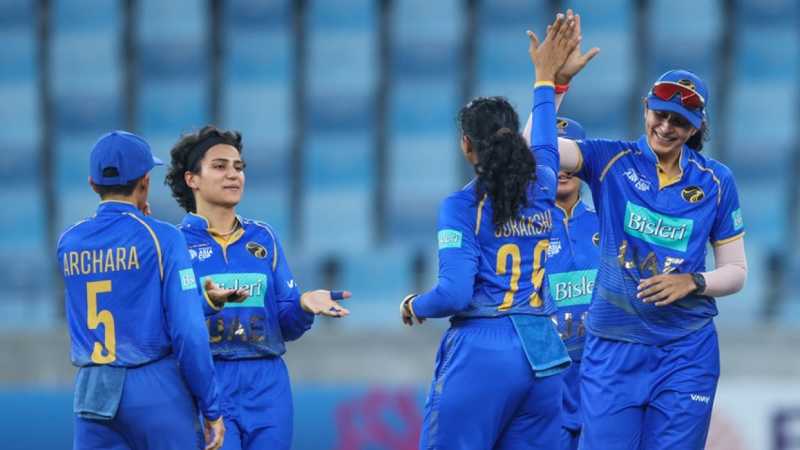
A complete performance from UAE’s bowling unit kept their semi-final hopes alive at the 2026 Women’s T20 Asia Cup, skittling Indonesia for 73 and then completing the chase with six wickets to spare. They now have to beat Bangladesh on September 8 and also hope other results go their way.
UAE were on top right from the first ball courtesy offspinner Suraksha Kotte, who starred with 3 for 16. Kotte struck with the first two balls of the innings, dismissing Indonesia opener Maria Corazon and No. 3 Ni Luh Dewi for first-ball ducks. UAE captain Esha Oza (2 for 11) then dismissed the other opener Rahmawati Pangestuti in the fourth over.
Indonesia captainN8 Puu Ayu Nanda Sakarini top-scored with a lone hand of 39 off 52 balls, with four fours and a six, accounting for 53.4% of Indonesia’s runs. But with little support, they could not find a way back in and were bowled out for 73.
Slow left-arm spinner Heena Hotchandani (2 for 6) and seamer Samaira Dharnidharka (1 for 12) also got among the wickets. Legspinner Vaishnave Mahesh struck twice in the 20th over to clean up the tail.
UAE openers Theertha Satish and Oza put on 17 for the first wicket. After losing Theertha in the fifth over, Oza hit two boundaries in each of the sixth and eighth overs. No. 3 Rinitha Rajith then hit three fours off Sofia Velic in the ninth over.
A brief wobble followed for UAE as they slid from 62 for 1 to 68 for 4. Oza fell for a 29-ball 30 at the start of the 11th over to Ni Ariani and Velic grabbed two wickets in the 12th. However, with only six runs needed, UAE wrapped up the chase at the start of the 14th over, the tournament hosts securing two points with 41 balls to spare. This was also Indonesia’s final match of the campaign, bowing out with losses in all three games.
Scores:
UAE Women 75 for 4 8n 13.1 overs (Esha Oza 30, Rinitha Rajith 22; Ni Riani 1-10, Sang Maypriani 1-17, Sofia Velic 2-25) beat IndonesiaWomen 73 in 19.4 overs (N8 Putu Ayu Nanda Sakarini 39, Desi Wulandari 12; Suraksha Kotte 3-16, Heena Hotchandani 2-06, Esha Oza 2-11, Samira Dharnidarkha 1-12 ) by six wickets
(Cricinfo)

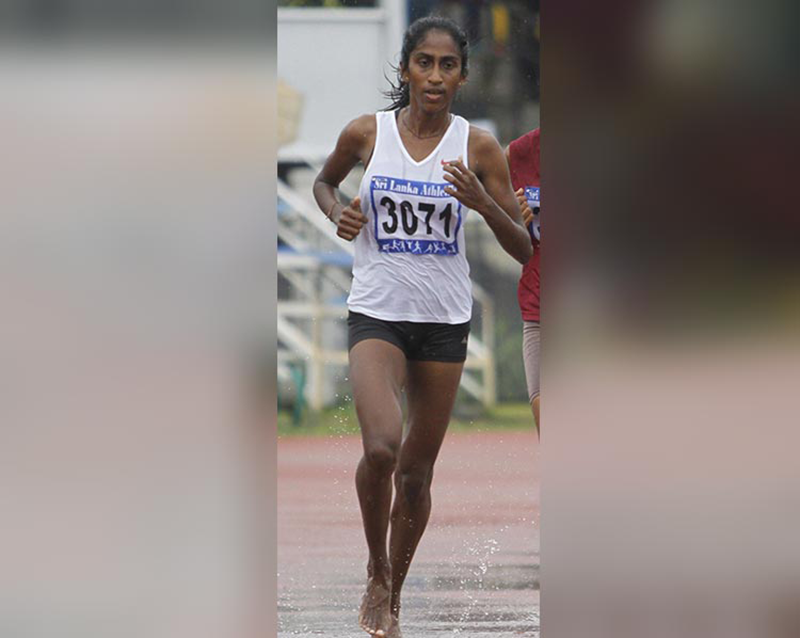
The 104th National Athletics Championship got off to an impressive start at the Diyagama Stadium, with Rasara Wijesuriya and Arunthavarasa Puvitharan producing record-breaking performances on an action-packed opening day.
Rasara dominated the women’s 10,000m to win the gold medal in 33:32.77 seconds, setting a new meet record in the process. G. W. O. N. Fonseka finished second in 38:25.55, while H. I. S. Fernando took the bronze in 39:00.69.
Puvitharan provided another record-breaking highlight in the men’s pole vault, clearing 5.10m to establish a new meet record. H. S. Eranga Janith followed with 5.00m for silver, while M. H. I. Sandaruwan secured bronze with 4.90m.
The men’s 10,000m produced a closely contested battle, with M. Kobinathan claiming the national title in 30:58.50. M. S. A. Fernando was second in 31:10.08, while D. P. S. S. Senanayaka completed the podium in 31:22.72.
As expected Madushani Herath secured the women’s triple jump title with a best effort of 13.60m, finishing ahead of I. S. W. Arachchi, who recorded 13.13m. G. I. S. Lankathilaka took third with 13.00m.
In the men’s shot put, Suseenthirakumar Mithunraj produced a winning throw of 16.41m to take gold. W. J. R. Alwis was second with 14.91m, while R. S. Jayawardana secured bronze with 14.47m.
Ovini Chandrasekara completed the women’s shot put podium-topping performance, winning gold with a throw of 12.82m. V. D. V. Gimhani took silver with 12.29m and A. D. W. Mendis won bronze with 11.84m.
With two new meet records already providing the opening-day highlights in thr morning, the championship has begun on a high note, setting the stage for further strong performances as Sri Lanka’s leading athletes battle for national honours.
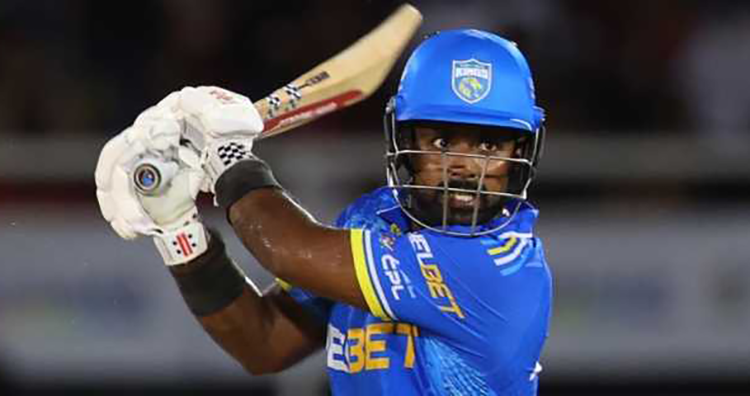
Kusal Mendis and Binura Fernando have been ruled out of Sri Lanka’s upcoming T20I series against England with the SLC saying that the two were “still undergoing rehabilitation” after injuries picked up at the 2026 Lanka Premier League.
The update came just over a day after the two were named in the 16-member squad, with Kusal retained as captain of both the T20I and the ODI sides.Charith Asalanka, who had returned to the vice-captain’s position for the series, will now lead the side in the T20Is. Though Kusal hasn’t been ruled out of the ODIs just yet, were he to miss out, Asalanka, as the designated vice-captain, might step in there too.
Kusal has been out of action since July 19 with a right hamstring injury, while Binura hasn’t played since August 5, SLC putting his absence down to a back injury.
Pavan Rathnayake, the 24-year-old top-order batter, has replaced Kusal in the T20I touring party, while Dilshan Madushanka, the fast bowler who was in the squad for the Tests against India recently but didn’t get to play, has come in for Binura.
Asalanka returned to the leadership group three months after being deposed as ODI captain and six months after being sidelined from the T20I unit. He last played a T20I in February this year, but is currently part of St Lucia Kings’ line-up at CPL 2026. His returns have been mediocre, though: 93 runs at a strike rate of 124 from six innings.
The T20Is will be played on September 15 (Southampton), September 17 (Cardiff) and September 19 (Manchester), while the ODIs will take place on September 22 (Chester-le-Street), September 24 (Leeds) and September 27 (The Oval).
Sri Lanka T20I squad for the tour of England
Pathum Nissanka, Kamil Mishara (wk), Lahiru Udara (wk), Kamindu Mendis, Charith Asalanka (capt), Janith Liyanage, Pavan Rathnayake, Dasun Shanaka, Dunith Wellalage, Wanindu Hasaranga, Maheesh Theekshana, Tharindu Rathnayake, Dushmantha Chameera, Eshan Malinga, Nuwan Thushara, Dilshan Madushanka
(Cricinfo)

Malaysia declares emergency in Sarawak as haze from Indonesia worsens

UAE keep semi-final hopes alive after convincing win over Indonesia

Sun directly overhead Moratuwa, Kesbewa, Handapangoda, Idalgashinna, Yudhaganawa, Kotiyagala and Panama about 12.08 noon today (05)

Showers above 75 mm are likely at some places in the Uva, Central and Eastern provinces and in Polonnaruwa and Mullaittivu districts after 2.00 p.m

Namal remanded until Sept. 18 over Airbus deal investigation

Dengue cases surpass 96,000 this year

‘Dates have the highest sugar content to fight Coronavirus’

Sunday Island 27 December – Headlines

#SundayIsland 17th December – Headlines

Sunday Island – 28th March

Sunday Island Headlines – 21 March

Sunday Island – 21st February – Headlines
-

 Features7 days ago
“Wrap Me Up in My Blazer”— A Gentlemanly Bradby Reminiscence
-

 Features6 days ago
When Sri Lankan stories find their own voice
-
 Features7 days ago
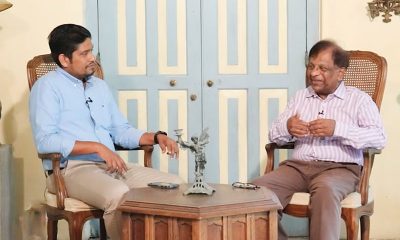
JVP/NPP government as seen from outside by Lionel Bopage now domiciled in Australia
-

 News6 days ago
BASL takes exception to Justice Ganepola being denied a place in SC
-
 Features7 days ago
Prof. Savitri Goonesekere: What has she done?
-

 News3 days ago
Denied of promotion to SC despite vacancies, justice Gurusinghe retires
-

 Latest News3 days ago
Grade 5 scholarship exam results released
-

 News3 days ago
22A: SC urged to suspend hearing, appoint full bench