
Editorial
Gaslighting


Thursday 13th January, 2022
Is the government gaslighting the public? There is reason to believe that it is psychologically manipulating the people into doubting their own reality and even sanity. When they listen to the ruling party politicians and government propagandists, they wonder whether the things that they see and hear are real or illusory.
Power cuts are on at least in some parts of the country. Everybody knows that. The electricity supply is suddenly interrupted at night, and people look for candles and lamps. The Ceylon Electricity Board (CEB) has announced a power cut schedule. When the demand for electricity exceeds the supply thereof, load shedding is the only way to keep the grid stable. (It’s not rocket science.) But Minister of Power Gamini Lokuge insists that there are no power cuts! He said so yesterday as well. If the people go by his claim, then they will wonder whether they are hallucinating.
Farmers are protesting against a severe fertiliser shortage, which has destroyed their cultivations. But Minister of Agriculture Mahindananda Aluthgamage insists that there are enough fertiliser stocks in the country, implying that the farmers are protesting for no reason. He sounds very confident and cites statistical data in support of his claim. So does the government media. They are trying to make the public doubt reality.
There have been many gas explosions, injuring and killing several persons. Videos, pictures and eyewitness accounts of these incidents abound, but Chief Government Whip and Minister of Highways Johnston Fernando says the situation is not so bad, and there is a conspiracy against the government! If one goes by his claim, one will doubt one’s sanity and wonder whether gas explosions are illusions.
In 1964, Sri Lanka purchased from the British the Trincomalee oil tank farm, bringing under its control all 100 tanks including a damaged one. Today, India has got 14 of these tanks on lease, and 61 will be under a joint venture to be set up by India and Sri Lanka thanks to the recently-inked questionable agreement between the two countries. Only 24 tanks will be under Sri Lanka’s direct control. The current administration is full of patriots, who vowed to protect national assets and regain the Trinco tank farm.
Minister of Energy Udaya Gammanpila insists that the tank farm deal has been a huge victory for Sri Lanka! A previous government had entered into an MoU to lease all the tanks to India, which held on to them pending a formal lease agreement, the present-day leaders once said, calling the deal illegal. The people thought their patriotic leaders would declare the MoU null and void ab initio and ask the Indians to leave, the way the late President Ranasinghe Premadasa ordered the Indian army out. But nothing of the sort has happened. If one buys into the government version of the deal, then one will doubt not only one’s reality but also one’s basic mathematical skills.
The people are aware that the government is scared of elections as it is highly unpopular, and that is the reason why the Local Government (LG) elections have been put off by one year. But Co-Cabinet Spokesman Dr. Ramesh Pathirana insists that the polls postponement is due to the prevailing pandemic. The government has also said the current LG institutions should be given some more time because they could not function properly for nearly two years under the yahapalana government. At the same time, it says it will hold the delayed Provincial Council elections in 2022. It has left the people confused and unable to figure out what is happening around them.
Did George Orwell foresee in the 1940s what Sri Lankans would face today when he wrote Nineteen Eighty-Four?


Thursday 1st Octobber, 2026
Media reports about a Police Headquarters decision to transfer Senior Deputy Inspector General of Police (SDIG) Ranmal Kodithuwakku, who oversees the Central Crime Investigation Bureau (CCIB), and several other senior police officers involved in uncovering a massive drug haul recently have raised many an eyebrow. The Police Department is reported to have sought the National Police Commission’s approval for their transfers, citing organisational/service requirements. The news about the proposed transfers has come while an inquiry is underway into the recent seizure of a large quantity of crystal methamphetamine (Ice) at the Colombo Port. Kodithuwakku has already made a statement to the Criminal Investigation Department in connection with that inquiry. The sequence of events is noteworthy.
On 31 August 2026, the police, acting on intelligence passed by the US Drug Enforcement Administration, searched a shipping container at the Colombo Port and seized a large quantity of crystal methamphetamine weighing about 471 kg. The intelligence had been received by SDIG Kodithuwakku. Officers of the CCIB had obtained a search warrant from a Magistrate before opening the container, together with some officers of the Police Narcotics Bureau and Sri Lanka Customs. The drugs were concealed among towels or body wipes.
The Police Special Investigation Unit lost no time in commencing the inquiry under discussion into alleged shortcomings, omissions and possible lapses in the handling of the drug investigation. However, it is generally believed that those who carry out successful operations of this nature deserve praise and rewards. The challenge for the police therefore is to prove that the ongoing inquiry and controversial transfers are not aimed at taking the gloss off the successful anti-narcotics operation.
Police have also claimed that the internal inquiry will not interfere with the main criminal investigation being conducted by the CCIB. However, it may be recalled that the leaders of the incumbent administration accused the SLPP government of having disrupted investigations into the Easter Sunday terror attacks and other major cases by transferring the then CID Director SSP Shani Abeysekera in late 2019. So, how can the police top brass convince the public that the transfers of SDIG Kodituwakku and others will not adversely impact the ongoing probe into the port drug haul?
One can argue that the reasons given by the police for the inquiry and the transfers in question are not plausible, for it is widely believed that whenever senior officers conduct investigations or operations that are not to the liking of their superiors or politicians in power, they face inquiries and transfers. The National Police Commission is also widely perceived as a rubber stamp for the Executive. It is therefore hardly surprising that the media and the discerning public do not readily accept the explanations offered by the Police Spokesman and his superiors about internal inquiries and lightning transfers. There is a huge trust deficit.
Meanwhile, one may recall that nobody was transferred over the Colombo Port container scandal. As many as 323 red-flagged freight containers were released from the Colombo Port without mandatory Customs inspections, in January 2025, and what those big boxes carried is anybody’s guess. The Customs made a shameful attempt to defend the indefensible, and its Spokesman who trotted out lame excuses in a bid to mislead the media and the public became the Customs Chief and received a top position at the Presidential Secretariat after his retirement.
Sri Lankans are familiar with the local folk-story character, King Kekille, who invariably let wrongdoers off and punished the innocent in cases brought before him. Going by the way Sri Lankan politicians have been handling crucial issues under successive governments, one wonders whether King Kekille actually lived in this country and whether the present-day rulers are his descendants. Kekille once punished a goldsmith over a defect in a newly built wall around his palace. When questioned by the king, the mason who built the wall claimed that he had been distracted, during construction work, by a good-looking woman, who passed the worksite several times a day. The woman, summoned by the king, said she had been forced to visit the goldsmith frequently as he had not finished making her jewellery. So, the king shifted the blame to the goldsmith and punished him.
One need hardly be surprised even if those who smuggled drugs into the country through the Colombo Port walk free while the police officers who conducted the successful operation find themselves in the dock. Anything is possible in this country. The onus is on the police top brass to provide a credible justification for the controversial internal inquiry and transfers ordered by them.
Wednesday 30th September, 2026
Underworld death squads are in overdrive, eliminating their rivals. On Sunday, a gunman armed with an assault rifle opened fire on a trishaw, killing its driver and a woman in Baddegama. Another woman, injured in the attack, died in hospital. A video of the attack shows the assassin, who arrives in a car, using controlled, individual shots rather than a burst. Such killings carried out by professional hitmen remind us of Hollywood blockbusters depicting street violence in Chicago of the 1920s. Close on the heels of Sunday’s killings, a man suffered serious injury in a shooting incident at Rathgama. The police have attributed these attacks to underworld rivalries.
About 25 people have perished in 35 shooting incidents so far this year. Two children were killed in a grenade attack in Dehiwala about three weeks ago. The increasing number of underworld attacks shows that criminal gangs remain strong despite the ongoing operations against the underworld. Several hardcore criminals have been arrested and remanded, but their gangs are still operating, making one doubt the effectiveness of the much-advertised offensives against the netherworld of crime and drugs.
Crime syndicates have emerged so powerful that they do not spare even holy shrines. One of the women killed in Baddegama on Sunday is believed to have aided and abetted the killing of a trustee of a famous devale in the Ambalangoda area, where another shrine reportedly cannot hold its annual procession due to underworld threats.
In July, Kanjipani Imran, a drug dealer operating from overseas, threated to attack the historic Devinuwara Devale perahera unless the shrine lifted a ban on a kavadi dance group sponsored by him. The police asked the shrine to hold the procession without the kavadi segment, accusing kavadi dancers of improper conduct. But the government intervened, directing the shrine to allow all kavadi groups, (including the one supported by Kanjipani Imran), to participate in the perahera. Thus, the political authority, devale officials and the police danced to Kanjipani Imran’s tune, as it were.
The underworld is often described as a criminal subculture separated from mainstream society, but criminologists point out that criminal networks are rooted in mainstream society and can have links with business and political elites. This may explain why the underworld has become so powerful in this country.
When Kanjipani Imran was arrested in Dubai and brought back in 2019, it was widely thought that he would not be able to secure bail because Sri Lanka police and their UAE counterparts had worked tirelessly for months to arrest him and Makandure Madush, another notorious criminal, who was also extradited. Madush was shot dead while in police custody, and the then government claimed that he had been caught in the crossfire between police and an underworld gang while being taken to a place where a haul of narcotics was believed to have been buried. But Kanjipani Imran obtained bail in 2024 and fled the country. Janith Madushanka de Silva (Podi Lasi), another drug dealer, also escaped to India after being released on bail in 2024.
Kavadi
dancers are not the only ones who have benefited from the largesse of drug dealers and other criminals. Following the assassination of High Court Judge Sarath Ambepitiya, this newspaper revealed that Kudu Nauffer, the drug dealer who ordered the killing, had sponsored food and beverages at a judicial officers’ function through a front. The police could not arrest Kudu Lal, the main supplier of heroin in Colombo, because of his political connections. In 2010, he left for London, with the help of a Cabinet minister in the UPFA government. Strangely, this incident has gone uninvestigated. There is a pressing need to monitor campaign funds of politicians and political parties closely.
It is hoped that the government and the police will stop bellowing rhetoric and step up their crime-busting operations to neutralise the underworld once and for all. Otherwise, the day may not be far off when powerful criminal gangs run a parallel government.
Tuesday 29th September, 2026
The government is busy concocting various theories in a bid to justify the manner in which the 22nd constitutional amendment (22A) was enacted. Its leaders claim that even in India, the retirement ages of judges have been increased recently, but there have been no protests. Their reference is to an order of the Indian Supreme Court in All India Judges Association v. Union of India case, directing seven states to raise the retirement age of district judicial officers from 60 to 62, subject to an assessment of their suitability and performance by the concerned High Court at the age of 60.
What the Indian Supreme Court order envisages and what 22A seeks to achieve are as different as chalk and cheese. The judges of the Indian Supreme Court did not seek to increase their own retirement age, which is constitutionally fixed at 65 years. The JVP-NPP politicians are therefore comparing apples and oranges. What drew criticism here was basically the arbitrary manner in which the government increased the constitutionally set retirement ages of the incumbent judges of the Supreme Court and the Court of Appeal; it did so even without any stakeholder consultation.
22A bears comparison only with a 2021 constitutional amendment that raised the retirement ages of the serving judges in Zimbabwe. As we pointed out in a previous editorial comment, President Emmerson Mnangagwa’s government hurriedly secured the passage of a constitutional amendment Bill to raise the retirement ages of judges, provoking a debate over whether it was proper to amend the Constitution to increase judicial tenure just in time to keep an incumbent Chief Justice in office. That amendment was obviously not part of a wider judicial reform initiative; it immediately opened the way for the then Chief Justice Luke Malaba to remain in office for another five years. Sri Lanka now finds itself in the exalted company of Zimbabwe.
Now that a precedent has been created, what guarantee is there that the JVP-NPP government will not seek to increase the mandatory retirement ages of the superior court judges again? A future government with a two-thirds majority will also be able to amend the Constitution and extend the retirement ages of the Supreme Court and the Court of Appeal judges.
The JVP-NPP politicians are asking the Opposition to stop protesting and come to terms with 22A, which has become law. Curiously, former Minister Vasudeva Nanayakkara is ‘rooting for’ the government. He has fully backed 22A, insisting that there is nothing wrong with increasing the retirement ages of the superior court judges. Addressing the media, yesterday, Nanayakkara claimed that it was an exercise in futility to keep on protesting against 22A, and the Opposition should face reality. He is entitled to his opinion, but the question is why he has led so many protests against the current Constitution and the Executive Presidency, since 1978, instead of coming to terms with them.
Government leaders are also asking the Opposition and the Bar Association of Sri Lanka to abandon their protests as 22A, reviewed by the Supreme Court and passed by Parliament with a special majority, is now part of the Constitution. Will they explain why they took up arms in the late 1980s in a bid to scuttle the 13th Amendment (13A), the establishment of the Provincial Councils (PCs) and the first PC elections? 13A also passed muster with the Supreme Court and was passed by Parliament with a two-thirds majority. Had the JVP leaders done at that time what they are now urging the Opposition to do, there would have been no bloodbath. They also campaigned hard against the 18th and 20th Amendments, and rightly so. Why didn’t they stop protesting after the enactment of those bad constitutional amendments?
One may argue that 22A differs from 13A, 18A and 20A in many respects, but that does not make it any less inimical to democracy. One may recall that the SC in its determination on the Inland Revenue (Amendment) Bill in 2022 held that a constitutional amendment affecting the retirement age or the period of office of the incumbent judges of the superior courts would impinge on judicial independence and therefore require approval at a referendum.
No amount of rhetoric and propaganda will help the government silence the critics of 22A, and their protests are bound to intensify.

Trump hints US could strike Iran, warns time coming

Showers or thundershowers will occur at most part of the island after 1.00 p.m.

US-assisted ‘Ice’ detection: NPC to examine IGP’s move to transfer drug-busting team

2027 Budget to be held from 12 Nov. to 14 Dec.

CB Governor confident over timely disbursement of next IMF tranche; hands post-2027 programme decisions to govt.

Cabinet spokesman explains why Thileepan statue was removed

‘Dates have the highest sugar content to fight Coronavirus’

Sunday Island 27 December – Headlines

#SundayIsland 17th December – Headlines

Sunday Island – 28th March

Sunday Island Headlines – 21 March

Sunday Island – 21st February – Headlines
-

 Features6 days ago
Beyond traditional jobs: Why Sri Lanka needs to facilitate the gig economy
-

 Editorial5 days ago
Birth of a bad law
-

 News3 days ago
Police remove Thileepan statue in Jaffna
-
 Latest News6 days ago
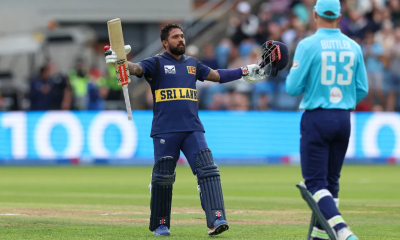
Kusal, Wellalage star as Sri Lanka defend 322 in Headingley thriller
-

 News5 days ago
TIN mandatory for key transactions from Nov. 1
-

 Features3 days ago
The 22nd Amendment, constitutional recovery and illiberal slippage
-

 Features3 days ago
Of foreigners as CEOs of Lankan ventures
-

 News3 days ago
Sajith rejects Jt. Opp. protest sabotage claim; SJB TU chief demands remedial action