
Opinion
Full implementation of 13A: Final solution to ‘national problem’ or end of unitary state? – Part IV

By Kalyananda Tiranagama
Executive Director
Lawyers for Human Rights and Development
(Part III of this article appeared in The Island yesterday (28 Sept. 2023)
President Jayewardene stands up against Ranil Wickremesinghe
President J. R. Jayewardene, on the occasion of the Opening of Parliament on 20 Feb., 1986 said: ‘‘Permit me to speak on the government’s attempts since 1977 to seek a political solution to the problems arising in the Northern and Eastern Provinces.
‘‘Our first attempt to do so was outlined in the UNP Election Manifesto of 1977. These proposals were prepared in consultation with some of the TULF MPs at that time. I have in my Address to Hon. Members on 23rd February 1984 outlined the steps taken to implement them as follows:
‘‘Since 1977 the government has made Tamil a National Language in the Constitution; amended rules governing entrance to universities and removed any racial bias governing those rules; removed the regulations prescribing racial considerations governing entry to the Public Services and promotion in the services.
‘‘District Councils have been created and District Ministers appointed. The TULF accepted them and worked for them for two years and contested elections. Last year they withdrew from them as sufficient powers and finance had not been allotted to them.
‘‘The search for a political solution was the profound concern of the government of SL. It was this commitment to reach a peaceful solution to the problem that led SL to take the unprecedented step on the part of any Sovereign State of sending her accredited representatives to explore the possibility of reaching a settlement at two Conferences held in Thimpu, Bhutan in August 1985 … arranged with the Tamil groups through the good offices of India.
‘‘However, neither the TULF nor the groups who attended these talks showed any serious inclination to discuss any of the proposals placed before them by the Govt. of SL. Their final response was an outright rejection of the government proposals and an invitation to the Govt. of SL to make new proposals that would accord with the so-called cardinal principles which they enunciated, which were no more than a re-statement of the demand for Eelam.
‘‘On 12th July 1985 the 6 Tamil groups made a statement of the ‘Four Principles’ on which they were working. On 13th August 1985 the leader of the SL Delegation, Dr. H.W. Jayewardene responded to it with a statement on the ‘Four Principles’ mentioned by the Tamil groups.
‘‘He dealt with the (i) recognition of the Tamils as a distinct nationality, (ii) a separate homeland and (iii) self-determination for the Tamils; and (iv) the linkage of the Northern and Eastern Provinces as a reaffirmation of the demand for a separate state and could not be the subject of discussion and acceptance by the SL govt.
‘‘The SL delegation also submitted an outline of the structure of the sub-national units of a Participatory System of Governance on 16th August, but this too was not considered by the Tamil groups though it indicated areas on which discussion and agreement were possible.
‘‘The Accord reached in Thimpu and New Delhi were to be the basis of any future discussions. Such discussion would not reopen the Four Principles mentioned earlier in any form whatsoever. This was the basis of the understanding of both the Govts of India and Sri Lanka ….
” There are certain principles which we cannot depart from arriving at a solution. We cannot barter away the unity of Sri Lanka, its democratic institutions, the right of every citizen in this country whatever his race, religion, or caste to consider the whole Island as his Homeland, enjoying equal rights, constitutionally, politically, socially, in education and employment are equally inviolable.”
“At present the Sri Lanka Tamils are in a minority in the Eastern Province while the Sinhalese and the Muslims together constitute nearly sixty per cent of the population. Since the Sri Lanka Tamils constitute more than ninety per cent of the population in the Northern Province, the object of the amalgamation of the North and the East is clear – the Sri Lanka Tamils will after amalgamation become the majority group in the combined unit of administration. Once the amalgamation is achieved the concept of the traditional homeland of the Tamils which has been a corner-stone of agitation in the post-independence period will be revived as this is the only ground on which the T.U.L.F.
denies the legitimate rights of the Sinhala people to become settlers in the Northern and Eastern provinces. Nor does the traditional homelands theory recognise any rights for the Muslims either except as an attenuated minority in the amalgamated territory. So, on the one hand while professing to urge the case for all Tamil speaking people in fact the T.U.L.F. is covertly seeking to secure the extensive areas for development, especially under the accelerated Mahaweli Program, for exploitation by the Sri Lankan Tamils alone. This in short is the duplicitous motivation behind the demand for amalgamation.
‘’ Quite candidly, the Sinhala people do not regard the demand for the amalgamation of the Northern and Eastern Provinces as a bona fide claim but as one motivated by an ulterior purpose, namely, as a first step towards the creation of a separate state comprising these two Provinces. The recent outrages by Tamil terrorists against the Sinhala civilian population settled in the North and East killing vast numbers of them, ravaging their homesteads and making thousands of them refugees in their own land has only made their apprehensions seem more real than ever before.
” Even the most naive of people could not expect a single Sinhalese to go back to the North and/or East if the maintenance of law and order within those areas becomes the exclusive preserve of the political leaders and patrons of the very terrorists who chased them out. Could one for instance expect the survivors of Namalwatta to go back to their village if the leader of the Tamil Terrorist gang that murdered their families is the A S.P. of the area? Not only would those poor refugees not go back but those Sinhalese, including those in Ampara and Trincomalee, who are still living in the North and East, would necessarily leave their lands and flee to the South, if these proposals are implemented.”
” These proposals are totally unacceptable. If they are implemented, the T. U. L. F. would have all but attained Eelam. It need hardly be said that even if the demand for a Tamil Linguistic State is granted, further problems and conflicts are bound to arise between that Tamil Linguistic State of the North and East and the Centre. Water, hydropower and the apportioning of funds are some of the areas in which conflicts could arise. A cause or pretext for a conflict on which to base a unilateral declaration of independence could easily be found.
There can be little doubt that what T.U.L.F. seeks to achieve by its demands is the necessary infrastructure for a State of Eelam, after which a final putsch could be made for the creation of a State of Eelam, comprising not only of the North and East, but of at least the hill country and the NCP as well.” (quoted in the Judgement of Wanasundara J in the 13th Amendment Case, Pp. 377 – 379)
With all our criticism of JR for the harmful consequences the country had to face with his open economy and executive presidency introduced after 1977, from the above statement it clearly appears that JR was not a traitor to this country, but a patriot who had some genuine concern for the country and its people. He had the wisdom to see through the danger posed to the very existence of this country as a unitary state by giving into unreasonable and crafty demands of the Tamil political leaders in the North-East.
President Jayewardene not only refused to accept these proposals of the TULF and other Tamil groups; he was not even prepared to discuss them. His firm response was that they are totally unacceptable.
(To be continued)







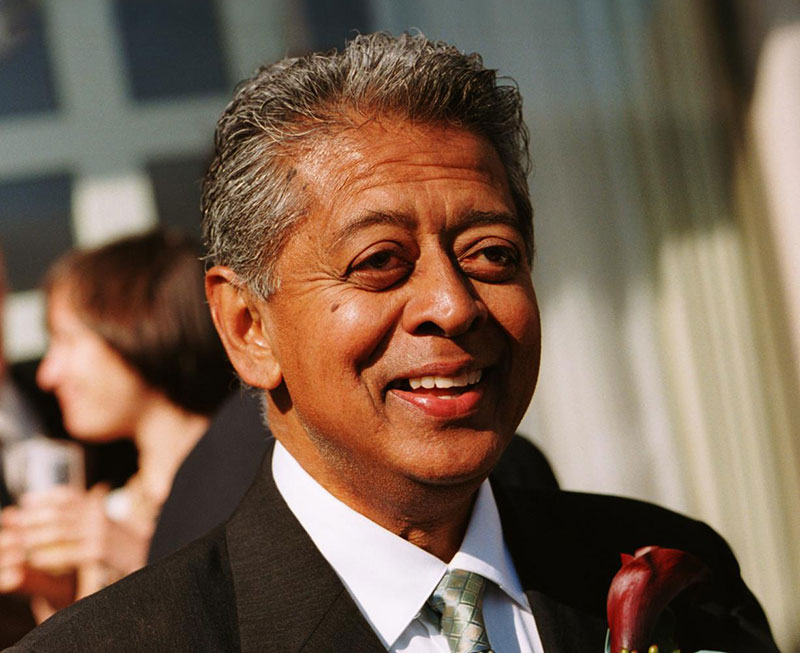
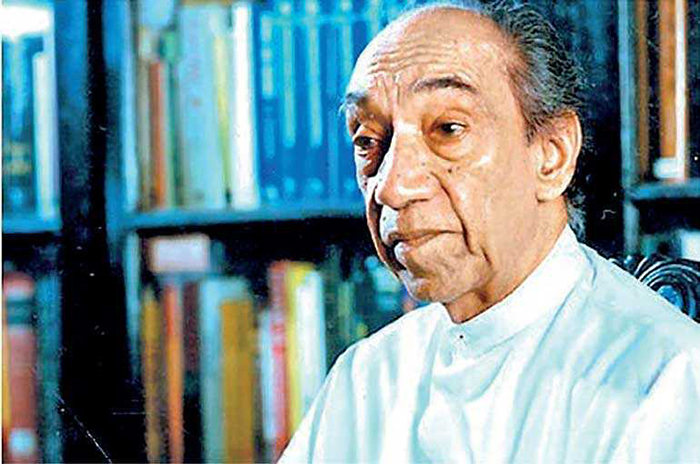
Vijaya Chandrasoma, a frequent and valued contributor to this newspaper I edit passed away at 85+ in Colombo a few days ago, far from his family domiciled in the United States; but his children with whom he was in close touch were able to make it for the funeral on Sunday. Vijaya or Vicky as he was best known to friends and family had a visceral hatred of President Donald Trump, no doubt shared by a majority of mankind. This he was not slow in expounding in the widely read columns he wrote for us.
In the covering letters accompanying his articles, he always included a cryptic note: “Yours to do as you please” demonstrating the generosity of his nature leaving open the exercise of any editorial judgment with no hard feelings whatever. That was the quintessential Vicky who sometimes wondered whether he was indulging in an overkill of Trump whom he detested as much as he loved Obama.
He loved Obama as much as he loved the USA which he felt had given him and his family a second chance which his family seized but he, as he freely admitted, allowed to slip by. He had the honesty to publish a self-deprecating book titled All Show And No Substance sub-headed A Cautionary Tale he meant mainly for his grandchildren “in the hope that they may learn something of the life and times of their grandfather and the world in which he lived.”
Vijaya Chandrasoma was second of the four sons of M. (Tissa) and Gertie Chandrasoma, his father being a member of the prestigious Ceylon Civil Service (CCS) reputed for his efficiency. While Vicky had classified his family as “upper middle class” a better description might have been “well to do.” As schoolboys we used to walk home for lunch together from Royal College along Fifth Lane, him to turn off at the barrel drain behind Ladies College now called 27th Lane and I onward to Charles Way further down the lane.
Vicky being a couple of years senior, my memories of him in school are dim but I do remember his telling me how his father, a reputed university athlete, cheered him with a “come on Vicky” at an inter-house athletics meet and how he and a partner defeated a champion combination in a game of tennis doubles. We had a distant kinship too through my mother’s paternal roots in Galle and he was very close to my cousin, best known by his nickname Koiman, who teamed up with him as fellow students in London.
The Chandrasomas went off to London after Tissa, a favourite of then Prime Minister, Sir. John Kotelawela, resigned after a disagreement with SWRD Bandaranaike, Sir John’s successor. He got a plum private sector job, number two at the foreign-managed Shell Company which dominated the petroleum import and distribution market in then Ceylon. Vicky makes no secret of what he called his “dissolute” life in London as a teenager concentrating on booze, horses and greyhounds.
Nevertheless he was accepted by St. Andrew’s University in Scotland, Cambridge and Oxford he eventually joined only to be “rusticated” after a year. His life in Colombo on his return from the UK was predictably fast with a stint in an accountancy firm his father got him into as an articled clerk, managing a hotel in the Maldives whose tourism industry was just taking off, running a tourism business in Colombo, an attempt at immigrating to Australia and finally ending up in Los Angeles.
He eventually relocated, alone to Colombo with his family remaining in LA. To his immense pride his children did very well in Ivy League Universities and thereafter “no thanks to me.” I bumped into him at the HSBC branch then at Dharmapala Mawatha and was able to introduce him to the bank to open an account. We reconnected and hence his many columns to these pages all written free gratis and for nothing.
He, like his father before him wrote very well and his copy was not all Trump bashing. There were so many readable pieces of his time at Oxford, his days with his friend Gamini Disssnayake to whom he was a trusted aide and speechwriter, and a memorable interview he did in Canada with Singapore Prime Minister Lee Kwan Yew. “This was sprung on me and I was absolutely unprepared. My heart was in the pit of my stomach. But PM Lee helped me through.”
A colourful life has ended, one where he blamed nobody but himself for anything that went wrong. Rest in peace my friend. Pity our long-promised meeting never happened.
Manik de Silva
by Sena Thoradeniya
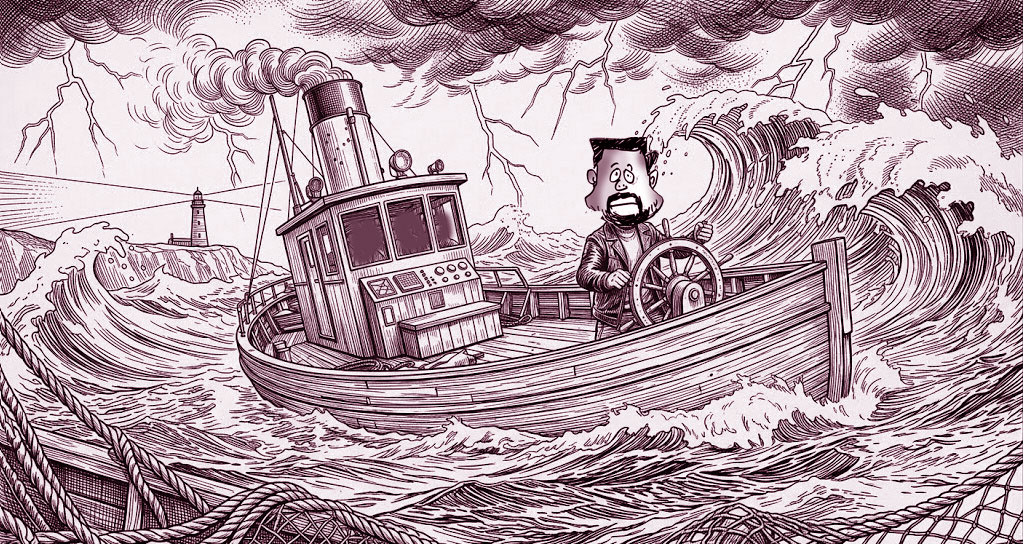
I Refer to the article published under the above title in The Island of 14 Sept. It was written by Dr. Uswatte-aratchi, whose insights into art, literature, and culture have long resonated with mine. In those domains, we have shared similar views; yet in matters of political theory, political leadership, and governance, our perspectives have not converged.
I do not intend to discuss the entire article by Dr. Uswatte, for he is entitled to his views on our politicians, even to the point of publicly attacking them when opportunity arises. I am neither an apologist nor an agent of any among those he has named. My concern here is solely to highlight Uswatte’s curious attribution of his knowledge of mathematics and physics to a person who, in his public addresses, has revealed no trace of intellectual capacity.
Dr. Uswatte says: “Unlike the earlier rulers Dissanayake (referring to the President) attended government schools in Tambuttegama and Kelaniya University. He studied science and mathematics. He can differentiate an equation for you and speak intelligently about Paul Dirac and Higgs Boson with the same felicity as accusations against former politicians”.
We are waiting for a theoretical or scientific publication by the current President that might justify such a claim. To ascribe scholarly depth to one whose record is not noticeable is absurd. It is a gesture that compliments without foundation and confers laurels where none have been earned.
This is what Dr. Uswatte says about the Prime Minister: “There is a Prime Minister who can talk to you impromptu about Auguste Comte and Claude LéviStrauss”.
A person who is said to have studied sociology should be knowledgeable about Comte, regarded as the father of sociology and the founder of positivism, and Claude Lévi-Strauss, a leading figure in structural anthropology; yet we remain uncertain whether she speaks of them with genuine familiarity and scholarly understanding, or is merely name-dropping them in an impromptu fashion. What on earth is she saying about these men on public platforms?
Since I possess no knowledge of either physics or mathematics, it was sheer curiosity that led me to consult AI only to discover what a marvelous President we have!
Paul Dirac was a pioneering English physicist, who helped establish quantum mechanics, co-founder of quantum electrodynamics and contributed to quantum field theory. In 1933, he shared the Nobel Prize in Physics. The Higgs boson is a fundamental particle discovered in 2012 that explains how particles acquire mass, solving a central mystery in physics. Peter Higgs, a British theoretical physicist won the Nobel prize for physics in 2013, decades after Anura Kumara obtained his degree.
Trying to rediscover theoretical physicists among ordinary science graduates who left university decades ago is indeed a futile exercise, like looking for a needle in a haystack. Theoretical physics thrives on continuity, requiring sustained engagement with evolving mathematics, new theories and experimental findings, and is a discipline that demands lifelong intellectual engagement.
Dr. Uswatte should listen to speeches made by his new found friends at public meetings and see the reaction of social media activists. As Chairman Mao observed, theory divorced from reality is useless. “No investigation, no right to speak (“Preface and Postscript to Rural Surveys” -1941).
For the time being, I refrain from commenting on some of the President’s promises, such as ‘producing graphite from graphene’ (which ought, of course, to be the reverse), producing sulphuric acid using seawater, fortifying the stem of the banana through advanced research, devising lifesaving remedies for cancer, or unveiling the world’s first app for locating shoals of fish. The list is too long to reproduce here. An exaggerated parade of claims and the sheer implausibility of such boasts are not the stuff of theoretical physics.

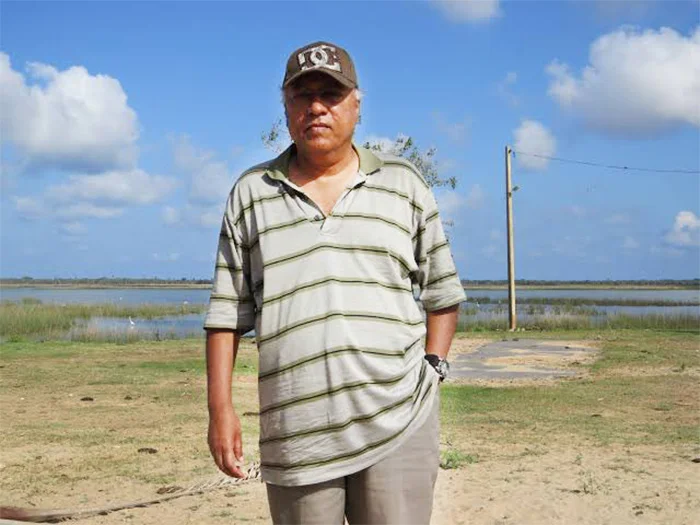
by Jehan Perera
There are some journalists whose work we read and then move on. And there are others whose writing makes us stop, think and look at the country differently. D. B. S. Jeyaraj who passed away on 17 May 2026 was one of them. Whenever I saw an article by DBS, as he was widely known, appear in a newspaper, it was the first I read. He was primarily a columnist and political analyst, with a deep knowledge of the history of Sri Lanka’s ethnic conflict. But his columns were not simply analysis or opinion. They were rooted in what was happening in Sri Lanka and in what people involved in those developments were saying. We could see this in his frequent references to first-hand comments from people he had spoken to. He did this both when he lived in Sri Lanka and later, when he was living in Canada. That was no easy task.
In a 2013 interview, after returning to Sri Lanka for the first time in 25 years, DBS described how he had continued to report on Sri Lanka from Canada by maintaining contacts at home. He said that he broke his rest daily to communicate with contacts in Sri Lanka and that this dual existence of living physically in Canada and mentally in Sri Lanka took a heavy toll on his health and finances. But that commitment mattered and allowed him to write about Sri Lanka from afar without losing touch with what was happening on the ground. His writings gave readers a sense of what was happening in the north and east, as well as of politics more generally in Sri Lanka.
Speaking at the commemoration and book launch organised by the Tamil Media Alliance last week, Vijitha Yapa, the founding editor of The Island and Sunday Times, under whom DBS worked, captured an important quality of his journalism when he said, “DBS had no venom. That was his greatness.” He also recalled how DBS stood up to pressure and threats and continued writing about the Tamil community while insisting on fair play irrespective of race or religion. M. A. Sumanthiran, General Secretary of the ITAK, put another aspect of DBS’s contribution even more directly: “Truth is the first casualty of war. DBS fought to keep the truth alive.” He recalled that DBS always cross-checked his news and noted that even those who hated him read his columns to find the truth.
These observations capture two qualities that made DBS special. The first was his commitment to truth and, second, was his ability to write about a deeply divisive subject without venom. DBS was a Tamil writing about the north and east and the Tamil national question in a deeply polarised environment. Yet he wrote for the mainstream English-language press and was widely read not only by Tamils but also by people from other communities. His writing helped make the concerns, political aspirations and historical experiences of the Tamil community accessible to readers beyond it. His importance was not limited to his being a Tamil journalist. His writing mattered because it addressed the country as a whole. Issues and perspectives that might otherwise have remained within particular communities could become part of a wider national debate.
Another noteworthy feature of DBS was his ability to be realistic in his assessments. With his wide knowledge of history, he understood that each side in the national conflict had its own history, fears and perceptions of threat. He recognised that the conflict could not be properly understood through the narrative of one side alone. He understood that there could be no unilateral solution imposed by one side or the other. That realism is particularly important in a country where political positions have often been presented as if the concerns of one community could be resolved without addressing those of another. A journalist who understands this complexity needs to do more than simply take sides. He or she can help readers understand why the conflict has endured, why trust has been so difficult to establish, and why lasting peace requires more than one dominant story.
There was also something revealing about DBS’s return to Sri Lanka in 2013. In the interview he gave during that visit, he said he deliberately avoided politics. He wanted to experience the country from the perspective of an ordinary person rather than through the views of politicians or political associates. He observed a disconnect between the needs of the people and those of the political class. In retrospect, that observation was remarkably prescient. The disconnect he identified in 2013 would become dramatically visible in the Aragalaya of 2022.
In the same interview, he offered an observation that deserves to be remembered. A journalist may not be able to write all that he or she wants because of external constraints, he said. But no journalist should write what he or she does not want to write because of external pressure. His commitment to independent journalism came at a considerable personal cost. He was arrested and detained by the Sri Lankan Police in 1987 after his reporting on the war in Jaffna, and in 1993, while living in Canada, he was brutally assaulted by LTTE supporters who fractured both his legs.
For all these reasons, I consider DBS to have been a mentor of mine. I never said so to him. Mentors are not always people who formally teach us or with whom we have a close personal relationship. Sometimes they are people whose work we follow, whose judgement we respect and whose example helps shape our own understanding of what we should strive to do. DBS was such a person for me. His passing has left a gap. His journalism was informed by history but connected to the present, rooted in facts but open to interpretation, and concerned with the realities of all communities.
The collection of his writings launched in his memory by the Tamil Media Alliance is therefore more than a record of an important period in Sri Lanka’s history. It is also a reminder of what journalism can be at its best. DBS showed that a journalist could understand one community without becoming confined to it, analyse conflict without being partisan, and take a position without losing sight of complexity. Above all, he showed the value of journalism that seeks to keep the truth alive. For those who read him regularly, the greatest reminder of his absence is the absence of his next column.

Flood warning issued to the Divisional Secretariat Divisions of Ganga Ihala Korale, Udapalatha, Doluwa, Udunuwara, Yatinuwara, Gangawata Korale, Harispattuwa, and Pathadumbara

Landslide Red Alerts issued to the districts of Kandy, Kegalle and Nuwara Eliya

Shafali dazzles with 49-ball unbeaten 100 and India march into Asian Games final

Development projects can deliver results to the people more quickly when the political authority and the public service work together towards a common goal – PM

Landslide Early Warnings issued to the Districts of Colombo, Galle, Kalutara, Kandy, Kegalle, Matara, Nuwara Eliya and Ratnapura

Chamari Athapaththu’s unbeaten 83 leads Sri Lanka into final

‘Dates have the highest sugar content to fight Coronavirus’

Sunday Island 27 December – Headlines

#SundayIsland 17th December – Headlines

Sunday Island – 28th March

Sunday Island Headlines – 21 March

Sunday Island – 21st February – Headlines
-

 Opinion7 days ago
From Galkissa (Mount Lavinia) to Tambuttegama
-

 News4 days ago
US embassy won’t comment on IGP’s probe into joint drug raid
-
 Features6 days ago
The emptying university: why are academics leaving?
-

 Features7 days ago
Sri Lanka’s university crisis: Brain drain and union action demand urgent reform
-

 News3 days ago
Bid for Basil’s extradition nears final stage: Police
-

 Business4 days ago
All-new Bolero MaXX unveiled in Sri Lanka
-

 Opinion7 days ago
Ashraff: From the SLMC towards the National Unity Alliance
-

 Editorial7 days ago
Muscle flexing, astroturfing and dog-and-pony shows