
Business
‘Fuelling Growth for 26 Years – SDB bank’s Journey of Empowerment, Progress and Partnership’

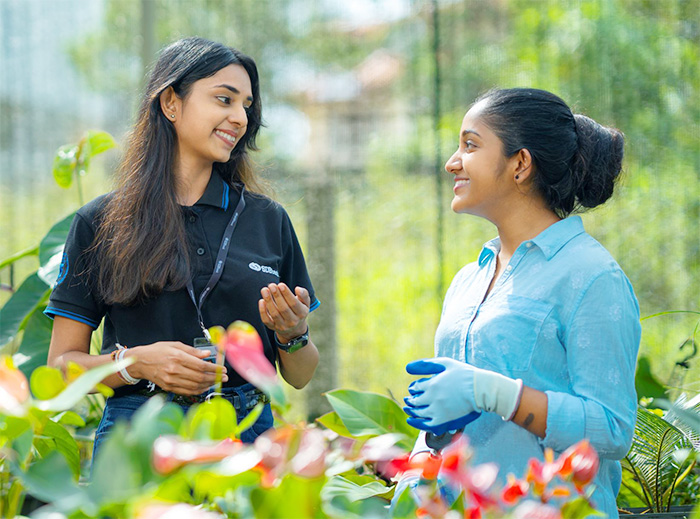
SDB bank, a unique bank with a clear vision to bolster the local economy by providing customized banking solutions to SMEs and all progressive Sri Lankans, marks the important milestone of its 26th anniversary, this August. For over a quarter of a century, the bank has stood as an example of value-based banking, steering economic growth by empowering individuals and communities. As it embarks on another year of enriching partnerships, SDB bank is proud to celebrate its incredible journey, underscored by its unwavering commitment to progress, sustainability and inclusivity.
Since its inception, SDB bank has been synonymous with progress and empowerment. Guided by a resolute dedication to its founding principles, the bank has fostered a unique bond with its customers. Through turbulent times and moments of triumph, SDB bank has remained a steadfast partner in their financial journeys. This legacy of trust and support forms the cornerstone of the bank’s 26th-anniversary celebrations.
As SDB bank commemorates this millstone, the spotlight shines brightly on its resolute dedication to meeting the evolving banking needs of progressive customers. The bank recognizes the dynamic shifts in the financial landscape and has embraced cutting-edge technologies, positioning itself at the forefront of digital banking and finance. Through these innovative initiatives, SDB bank has effectively democratized access to contemporary banking services, empowering individuals and enterprises to flourish in the digital era.
The bank also wishes to acknowledge its longstanding collaboration with the cooperative network, a pivotal partnership that has significantly contributed to enhancing outreach and fostering collaborative growth opportunities within the communities it serves. This strategic alliance has been a foundational pillar of SDB bank’s remarkable 26-year journey, resulting in many shared successes and mutual triumphs over the years.
As its 26th-anniversary celebrations unfold, SDB bank is gearing up to honour what have become the hallmarks of its incredibly journey – the unwavering trust of its customers and the dedication of its employees. Thus, the bank’s anniversary is being celebrated this year under the theme, “Enriched Through Partnerships” – a heartfelt tribute to the collaborations that have fuelled its growth over the past 26 years.
This spirit of collaboration, fellowship and commitment is being marked with various initiatives – including a blood donation programme at SDB bank’s Head Office and the inauguration of an IT lab at Devahandiya Primary School – which stand as a testament to SDB bank’s holistic approach to community engagement.
The bank also hosted a special 26th Anniversary Celebration event, which served not only as a moment of revelry and camaraderie but also an occasion to formally recognize and appreciate individuals who have been the driving force behind its success. Accordingly, a Commemorative Gold Coin was presented to members of staff who have completed 25 years of service at SDB bank, as a gesture of appreciation for their dedication and unwavering loyalty.
SDB bank’s contribution to Sri Lanka’s economic growth is a testament to its unwavering commitment. Beyond the traditional confines of banking, the institution has emerged as a catalyst for change, focusing on initiatives that foster sustainable development. From SMEs to burgeoning entrepreneurs, SDB bank has tirelessly championed the cause of economic progress at every level of society, breathing life into a kaleidoscope of Sri Lankan dreams and aspirations.
As SDB bank embarks on its 26th year, its focus remains resolute – to continue nurturing progress and fostering inclusivity. Through every challenge, triumph and endeavour, SDB bank has been the steadfast partner of choice for countless individuals and businesses across Sri Lanka. As the bank marches forward, it invites its stakeholders to join hands in creating a future that is not only financially prosperous but also socially and environmentally responsible.
In an industry defined by change, SDB bank’s commitment to values, progress, and sustainability remains unwavering. As the bank celebrates its remarkable journey of 26 years, it also takes this opportunity to reflect on the bonds that have been forged, the dreams that have been realized, and the promise of a brighter tomorrow that lies ahead.






Business
Indian business leader urges SL entrepreneurs to tap into India’s rapidly expanding consumer market


By Sanath Nanayakkare
Speaking at the Sri Lanka Economic and Investment Summit 2026, T. Krishnakumar, Chief Executive Officer of Reliance Consumer Products Ltd (RCPL), emphasised that local enterprises can unlock substantial economic benefits by strategically aligning with India’s booming consumer base.
Addressing business leaders and policymakers at the Shangri-La Hotel in Colombo, Krishnakumar highlighted that geographical proximity and rich cultural ties provide a natural foundation for deeper commercial collaboration.
He noted that instead of viewing bilateral trade narrowly, regional partnerships should act as conduits to build robust, scalable enterprises capable of plugging into wide-reaching regional value chains.
“For Sri Lankan exporters dealing in traditional staples as well as value-added goods, accessing India’s rising middle class presents a phenomenal growth window,” he said.
Drawing insights from Reliance Consumer Products’ rapid expansion – which scaled efficiently to thousands of employees and multi-billion-dollar metrics – Krishnakumar stressed that modern corporate success relies on disciplined execution, localised consumer understanding, and smart technology integration.
Furthermore, he underscored that while rapid growth is critical, businesses must consistently anchor their models in affordability and consumer trust.
Concluding his address at the summit, the RCPL chief noted that pairing regional trade integration with resilient business practices and predictable regulatory frameworks will be vital as Sri Lanka transitions firmly toward accelerated economic development.
Addressing the Summit during a subsequent fireside chat, President Anura Kumara Dissanayake underscored that a core concern currently being targeted by the government is developing a critical mass of local entrepreneurs equipped to engage with international enterprise counterparts.
Business
SriLankan Airlines wins prestigious SATA 2026 Visitors’ Choice Award for Leading International Airline

SriLankan Airlines has once again been honoured with the prestigious Visitors’ Choice Award for Leading International Airline at the South Asian Travel Awards (SATA) 2026, reaffirming its continued recognition in the regional travel and tourism industry. The airline, which has received this award in previous years, was the only international airline to be recognised in this category at this year’s event. The 10th anniversary edition of the awards ceremony was held earlier this month at Hotel Barcelo Nasandhura in Male, Maldives.
Recognised as one of the key events on the Maldivian tourism and travel industry calendar, SATA celebrated its 10th anniversary on a grand scale, bringing together prominent industry stakeholders, including Government Ministers, distinguished dignitaries, diplomats and senior representatives from leading airlines and their respective head offices.
Commenting on the achievement, Dimuthu Tennakoon, Head of Commercial, SriLankan Airlines, stated, “We are honoured to receive this recognition at the South Asian Travel Awards 2026. Being named the Leading International Airline in the Visitors’ Choice Awards once again is a meaningful acknowledgement of our commitment to serving our passengers and strengthening our presence in the region. This award inspires us to continue enhancing the travel experience we offer and to build stronger connections with the markets and communities we serve.”
Complementing its commitment to service excellence, SriLankan Airlines offers an extensive flight network with convenient connections to destinations across the globe. In South Asia, the airline operates nearly 130 flights each week to 15 destinations across India, Pakistan, the Maldives, Nepal, and Bangladesh. With schedules thoughtfully designed to suit the needs of travellers, SriLankan Airlines provides seamless connectivity for those visiting Colombo for business or leisure, as well as passengers travelling onwards to destinations worldwide.
Business
JXG enters LMD’s Most Respected Entities in Sri Lanka 2026 for the first time, securing a place among the first 50

JXG (Janashakthi Group), Sri Lanka’s leading financial conglomerate, has been ranked 44th in LMD’s Most Respected Entities in Sri Lanka 2026, marking the Group’s first appearance in the prestigious listing. The recognition places JXG among Sri Lanka’s most respected companies and marks an important milestone in the Group’s master-brand journey.
As the holding company, JXG was also recognised across key attributes including Aspirational Workplace, Business Expansion, Business Innovation, Corporate Culture, Corporate Dynamism, Crisis Management, Employee Wellbeing, Honesty and Integrity, and Leadership Profile. The recognition reflects the growing strength of the JXG brand and the collective contribution of its businesses and people in building trust and confidence among its stakeholders.
JXG’s subsidiaries, including Janashakthi Life and First Capital, have also been recognised in the main table of LMD’s Most Respected Entities 2026 rankings, while Janashakthi Finance has been recognised under the Business Expansion attribute, reflecting the strength of the Group’s individual businesses alongside its growing master brand.
Conceptualised and commissioned by LMD and conducted by PepperCube Research Consultants, the Most Respected Entities special edition recognises companies based on an independent survey of Sri Lanka’s business community.
Commenting on the recognition, Gamika de Silva, Group Chief Marketing Officer at JXG, said, “This is a proud moment for all of us at JXG. We set out to build a Group brand that is not just seen but lived by our people and reflected in everything we do. Ultimately, the true testament to any brand lies in its people, and the credit for this recognition goes to everyone across JXG who brings our values to life every day. This recognition is an encouraging milestone for us, while also reminding us to keep raising the bar and earning the respect of our stakeholders through what we do.”
JXG’s approach to building trust is anchored in its core values of Integrity, Collaboration, Respect, Performance Driven and Innovation. These values guide how its businesses operate, how its people engage with one another and how the Group serves its customers and wider stakeholders.
As JXG continues to expand its businesses, the Group remains focused on strengthening its market presence, creating long-term value and contributing to the growth of Sri Lanka’s financial services sector, guided by its purpose, Breaking Barriers, Forging Futures.

Asian Cup in Saudi Arabia could be postponed by a year amid Houthi attacks

Houthi missile attack on Yemeni presidential palace kills five, minister says

Physical development must be matched by the enrichment of people’s inner lives through aesthetics and culture – PM

Review of the operations of the 1818 Hotline introduced to report drug-related information

Showers in the Western, Southern, Central, Sabaragamuwa, North-Western and Northern provinces and in the Anuradhapura District

SJB: Govt. trying to reappoint Jayakody, who resigned from Cabinet amidst coal scam

‘Dates have the highest sugar content to fight Coronavirus’

Sunday Island 27 December – Headlines

#SundayIsland 17th December – Headlines

Sunday Island – 28th March

Sunday Island Headlines – 21 March

Sunday Island – 21st February – Headlines
-

 News5 days ago
Sri Lanka escalates anti-graft drive with Shiranthi’s jailing
-

 News6 days ago
NPP govt. reminded of its responsibilities as US warship leaves Colombo
-

 Latest News7 days ago
Farhan, Sadaqat help Pakistan ace 183 chase to go 1-0 up
-

 Latest News5 days ago
Farhan and Sadaqat help Pakistan seal series in style
-

 News5 days ago
Iranian ships stranded, Lanka fears US sanctions
-

 Latest News3 days ago
Nissanka’s return headlines Sri Lanka’s Test squad against Pakistan
-

 News6 days ago
Interdicted top House official Kularatne receives special recognition in Mexican Parliament
-

 Features4 days ago
Intake 16: 45 years of duty and honour