
News
Fuel crisis has affected fight against dengue, Neelika tells Nature


Attempts by Sri Lankan scientists to identify biomarkers that can help determine whether a person has been afflicted with severe dengue have been affected by fuel shortages and power cuts, Immunologist Prof Neelika Malavige told the publication Nature recently.Pro. Malavige said that while most people with dengue had mild disease, and around 15% of people who arrive at hospitals developed dengue haemorrhagic fever, which causes severe bleeding and can be fatal.
“There is no way we can predict at the early stages of an infection whether someone will develop severe dengue, which means that people have to visit the hospital daily for blood tests and monitoring to pick up the signs as early as possible. That’s a huge strain on the health-care system. We are trying to identify biomarkers that can help determine if someone will go on to develop severe dengue. We are also trying to determine the immune response associated with protection from severe disease, which is still unknown for dengue,” she told Nature.
Prof Malavige said that her lab is also looking for drugs that can be repurposed to treat dengue — for which there is no safe and effective vaccine — and has completed several clinical trials.
“We are recruiting and collecting samples for a study with a group in Latin America to compare the epidemiology and pathogenesis of dengue in the two regions. At the same time, we are trying to sequence and isolate the dengue virus to understand what is driving the current outbreak,” she said.
Prof Malavige said that the fuel crisis faced by Sri Lanka was affecting her research as well scientists and researchers in general.
“There are a lot of things we are not doing that we could have done last year. Recruiting participants and collecting samples from the hospital, which is 16 kilometres from our lab, is especially difficult right now because of the lack of fuel. A lot of people have started cycling to/from work, including myself, but cycling between 8 a.m. and 4 p.m. in temperatures above 33 °C, with 80–90% humidity, under the scorching Sun, is a nightmare,” she said.
Excerpts of Prof. Malavige’s interview with Nature: “The power cuts and lack of fuel for back-up electricity generators mean that we cannot use equipment such as our Illumina genomic-sequencing machine, which needs to run continuously for at least 24 hours. Instead, we rely on nanopore sequencing, which can run on a powerful battery. Nanopore sequencing is easier and cheaper and gives better coverage, but has slightly lower accuracy rates. Last week, we managed to sequence a few samples of SARS-CoV-2, because cases have slowly started to rise this month.
“Due to the foreign-reserve crisis, we cannot buy reagents for some of our dengue experiments, so we are freezing many samples for when we can get the reagents. But in March, we had power cuts lasting for up to 13 hours, so we lost samples stored in some of our freezers.
“Some procedures, such as flow cytometry, have to be done on fresh samples, so we have to work around the planned power cuts and restricted opening hours at the university to conduct those experiments. It’s very challenging. I spend most of my time troubleshooting.
“Inflation has driven up the price of many essential lab items. For example, a bottle of the cell-culture medium we use was 4,000 Sri Lankan rupees (US$11 at current conversion rates) in 2021, and is now 36,000 rupees. I’m still just scratching my head trying to figure out how to solve this problem. Can we get the medium at a cheaper rate from manufacturers in China? Immune cells are very sensitive, so they might not grow as well in the new medium.
Our staff are also severely affected by the rising food prices. An egg now costs 50 rupees, up from 17 in 2020. The price of rice, lentils and coconut oil has also shot up. My research assistants and PhD students are really struggling to make ends meet.”


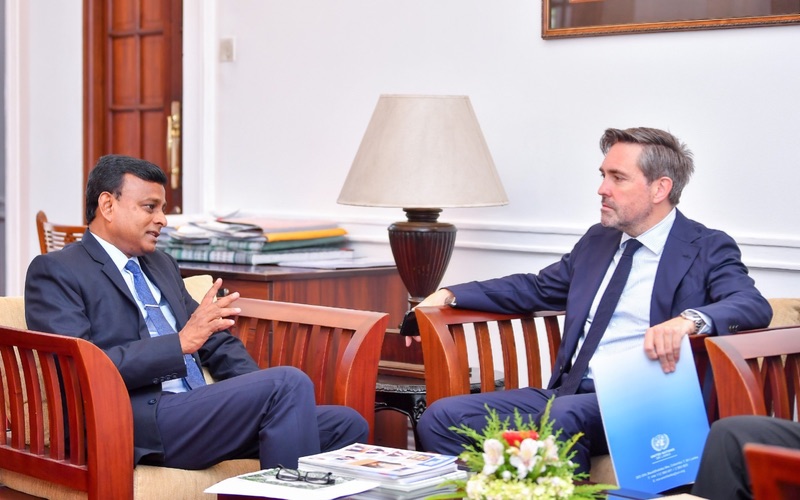
A meeting between UN Resident Coordinator Marc-André Franche and Chief of Staff to the President Prabath Chandrakeerthi was held on Monday (07) morning at the Presidential Secretariat.
Particular attention was given to the Government’s programme to resettle people who lost their homes due to Cyclone Ditwah.
The Government’s programme to address potential disasters that may arise in the future amid El Nino conditions was also discussed. The Chief of Staff to the President briefed the UN Resident Coordinator on the Government’s preparedness and plans to address such challenges.
Mr Franche stated that the United Nations was prepared to provide the necessary assistance to the Government to support the successful implementation of these programmes.
Partnerships and Development Finance Specialist at the United Nations Azam Bakeer Markar and UN Sri Lanka Humanitarian and Resilience Officer Wagisha Perera also participated in the discussion.
[President’s Media Division]

[ Cricbuzz]
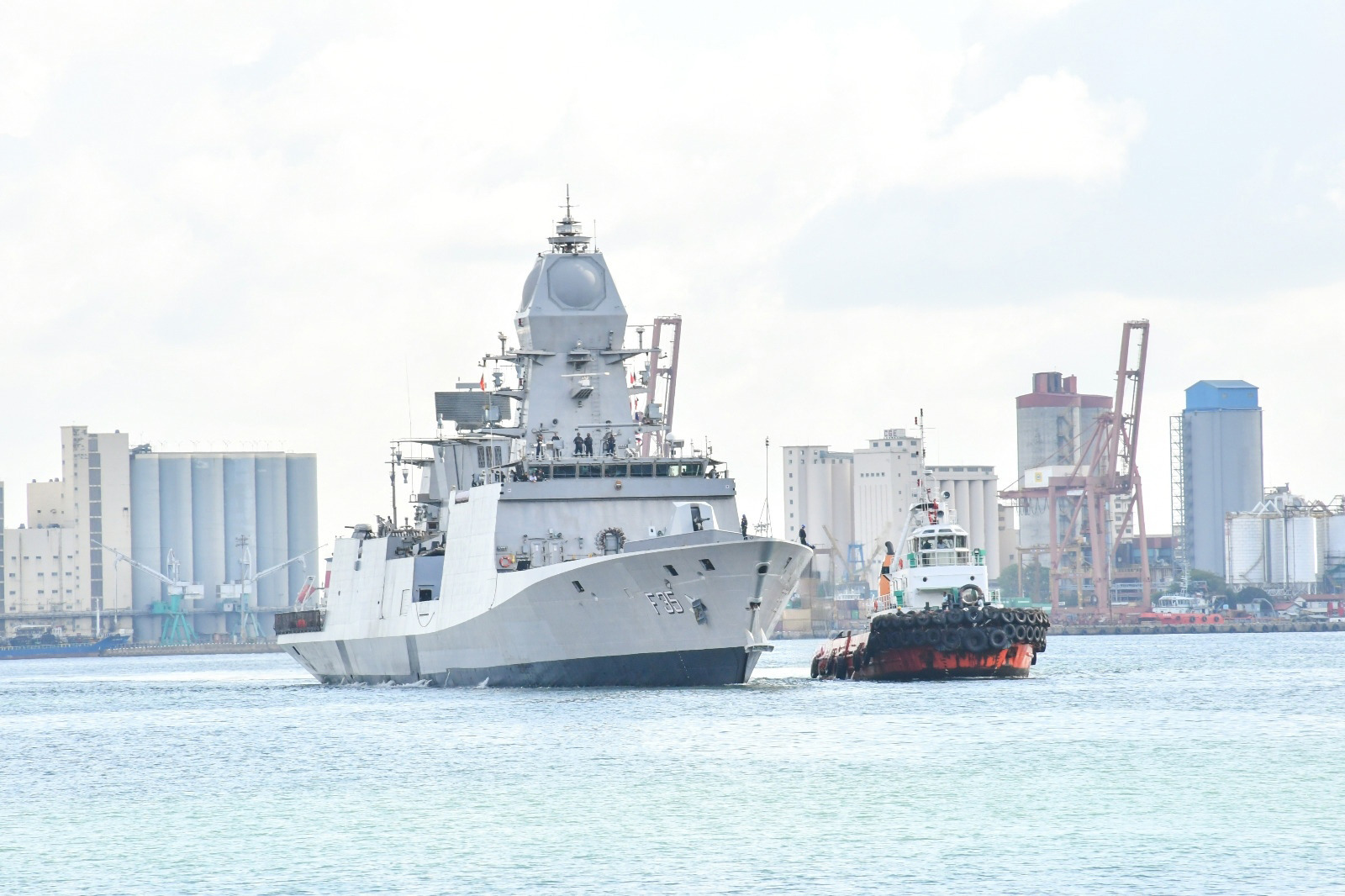
The Indian Naval Ship (INS) Udaygiri arrived at the Port of Colombo on an official visit today, 8 September 2026, where it was received by the Sri Lanka Navy in accordance with time-
honoured naval traditions.
INS Udaygiri is a 149.02m long Frigate, Commanded by Captain Vikas Sood. Meanwhile, the Commanding Officer of the visiting ship is scheduled to call on Commander Western Naval
Area, Rear Admiral Harsha De Silva at the Western Naval Command Headquarters.
Captain Sood served as the Defence Adviser at the Indian High Commission in Sri Lanka from July 2020 to October 2023.
During their stay in the island, the crew of INS Udaygiri will participate in several goodwill events organized by the Sri Lanka Navy to enhance camaraderie between the two forces.
The visiting personnel are also scheduled to visit prominent tourist and cultural locations across the island.
Additionally, Sri Lanka Navy personnel are expected to visit the ship for capability observation and knowledge sharing, and will conduct onboard training during its stay.

UN Delegation Meets Chief of Staff to the President

Afghanistan to host Zimbabwe, Bangladesh in ODI tri-series

Sandhu’s 6 for 7 seals Pakistan’s semi-final spot

INS Udaygiri makes port call in Colombo

Showers in the Uva, Central and Eastern provinces and in Polonnaruwa district

22A: Exclusion of 8 petitions questioned, action filed against SC Registrar, others

‘Dates have the highest sugar content to fight Coronavirus’

Sunday Island 27 December – Headlines

#SundayIsland 17th December – Headlines

Sunday Island – 28th March

Sunday Island Headlines – 21 March

Sunday Island – 21st February – Headlines
-

 News6 days ago
Denied of promotion to SC despite vacancies, justice Gurusinghe retires
-

 Latest News6 days ago
Grade 5 scholarship exam results released
-

 News6 days ago
22A: SC urged to suspend hearing, appoint full bench
-

 Midweek Review7 days ago
The local and global dynamics of Sri Lanka’s 22nd Amendment
-

 News4 days ago
Namal remanded until Sept. 18 over Airbus deal investigation
-

 Latest News3 days ago
Tharanga creates history with Diamond League crown in Brussels
-

 News6 days ago
Govt. seeks NATO assistance
-

 News7 days ago
40 professional organisations and TU oppose proposed 22A