
News
FTA with Sri Lanka: India seeks duty concessions on vehicles, easier visa norms for its professionals’ entry

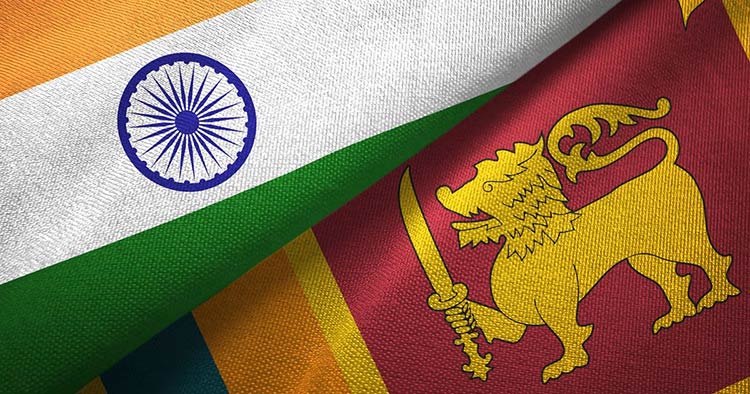
India is seeking customs duty concession on a number of goods including cars, commercial vehicles and machinery from Sri Lanka under a comprehensive free trade agreement (FTA), talks for which are underway, PTA has reported quoting an official.
India has also sought easier visa norms to further facilitate entry of Indian professionals, according to the official.Text of the PTI report: The 14th round of talks between senior officials of India and Sri Lanka was concluded recently in Colombo.
Issues which came up for the talks included rules of origin, goods, services, and technical barriers for trade.On the other hand, Sri Lanka has sought removal of a quota on apparel exports to India. The island nation is also asking for duty concessions on tea and certain agricultural commodities.
The official said that as elections are announced in Sri Lanka, the next round of negotiations between the two countries will be held after that.The two nations have already implemented a free trade agreement in goods and now they are negotiating to expand the pact by including more goods and services.
The India-Sri Lanka Free Trade Agreement (ISFTA) came into force in March 2000. It enhanced economic relations between the two countries by reducing tariffs on a wide range of goods.
Since the original ISFTA focused solely on goods, both countries have been negotiating for several years to expand it into a Comprehensive Economic Partnership Agreement (CEPA), which would include services, investment, and other areas of economic cooperation.
Under the current FTA, India allowed limited imports of garments from Sri Lanka at a 50 percent tariff (or customs duty) concession for up to eight million pieces annually, with a requirement that six million of these pieces use Indian fabric.
Additionally, India offered a 50 percent tariff concession on up to 15 million kg of tea from Sri Lanka each year.
Think tank Global Trade Research Initiative (GTRI) said that Sri Lanka may be seeking removal of the quota on garments, especially considering that India has allowed duty-free imports of garments from Bangladesh under the South Asia Free Trade Agreement (SAFTA) for Least Developed Countries (LDCs).
“However agreeing to this request may not be easy for India as allowing duty free imports has led to a significant increase in garment imports from Bangladesh, growing from USD 144.25 million in FY’2014 to USD 739.06 million in FY’2024, a cumulative growth of 412.34 per cent,” GTRI Founder Ajay Srivastava said.
Sri Lanka has placed items like automobiles and electrical goods on its negative list, restricting their import.
Since the implementation of the ISFTA, trade between the two countries has experienced fair growth.
India’s exports to Sri Lanka increased from USD 499.3 million in FY’2000 to USD 4.17 billion in 2023-24, a cumulative growth of 735.2 percent. Meanwhile, imports grew from USD 44.3 million to USD 1.4 billion over the same period.
In the last fiscal, India’s key exports to Sri Lanka included petroleum products (USD 704 million), cotton (USD 260 million), pharmaceuticals (USD 255 million), refined sugar (USD 206 million), fabric (USD 223 million), machinery (USD 171 million), pepper (USD 90.9 million), car and motorcycle parts (USD 79.3 million), onions (USD 63.4 million), and pulses (USD 32 million).
Notably, India’s exports to Sri Lanka fell from USD 5.1 billion in FY’2023 to USD 4.17 billion in FY’2024, primarily due to a significant reduction in petroleum product exports, which declined from USD 1.78 billion to USD 704 million, GTRI said.
India’s major imports from Sri Lanka in FY 2024 were coffee (USD 103.7 million), garments (USD 55.65 million), animal feed (USD 72.2 million), areca nut (USD 65.5 million), light pepper (USD 44.4 million), rough diamonds (USD 26.9 million), and rubber (USD 26.7 million).
A Sakthivel, Apparel Export Promotion Council Southern Region in-charge, said that India should not extend concessions for garments to Sri Lanka, as the domestic industry could be impacted because of that.
“We, too, make those garments and I think India should not give more concessions,” Sakthivel said.


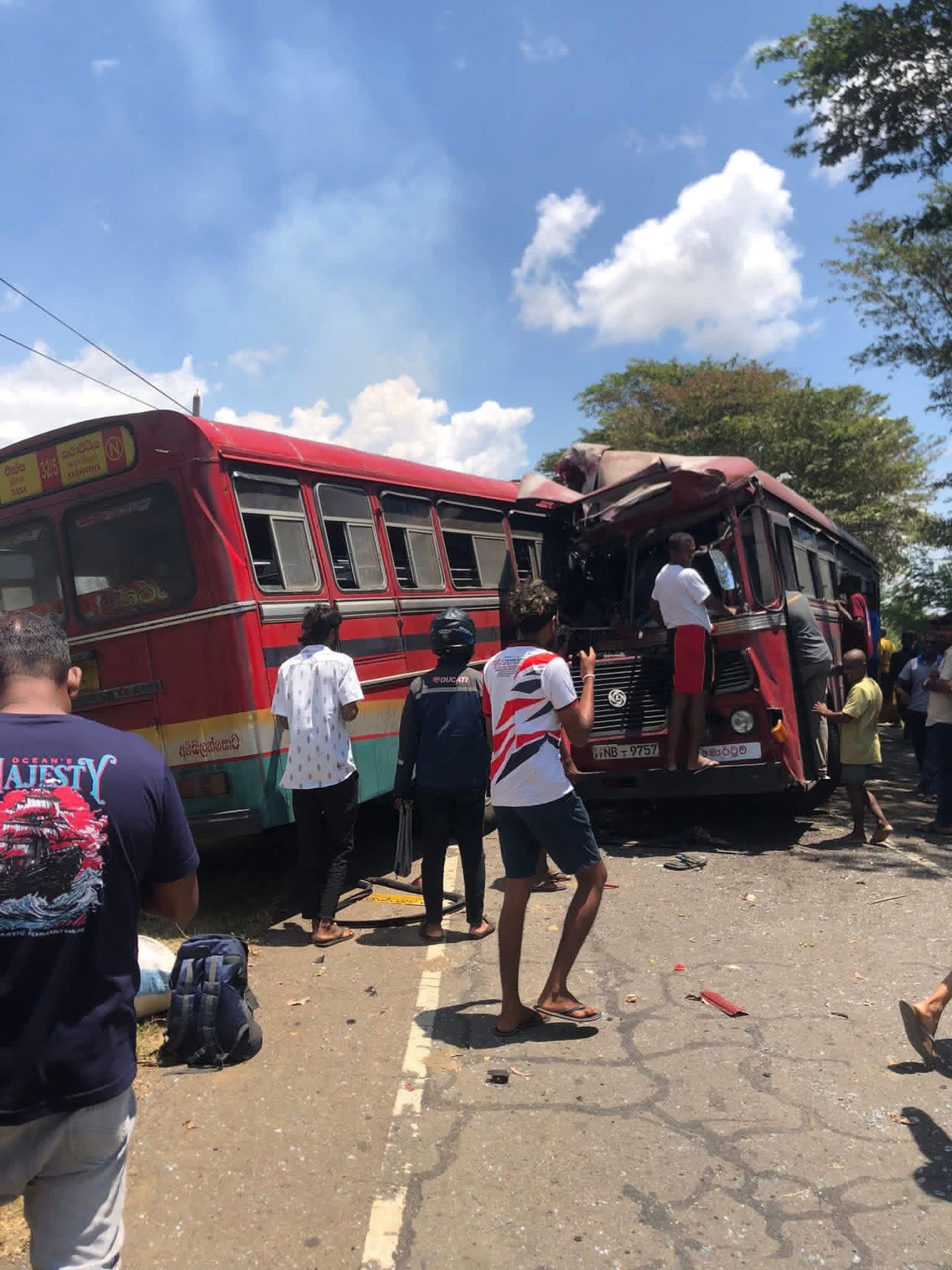
Four persons including a Budhist monk died and 32 others were injured when two SLTB buses collided head on at Weerawila at arond 12 noon today (18).
Three of the deceased were women. 22 of the injured were admitted to the Hambanthota Hospital while 10 others have been admitted to the Debarawewa hospital.
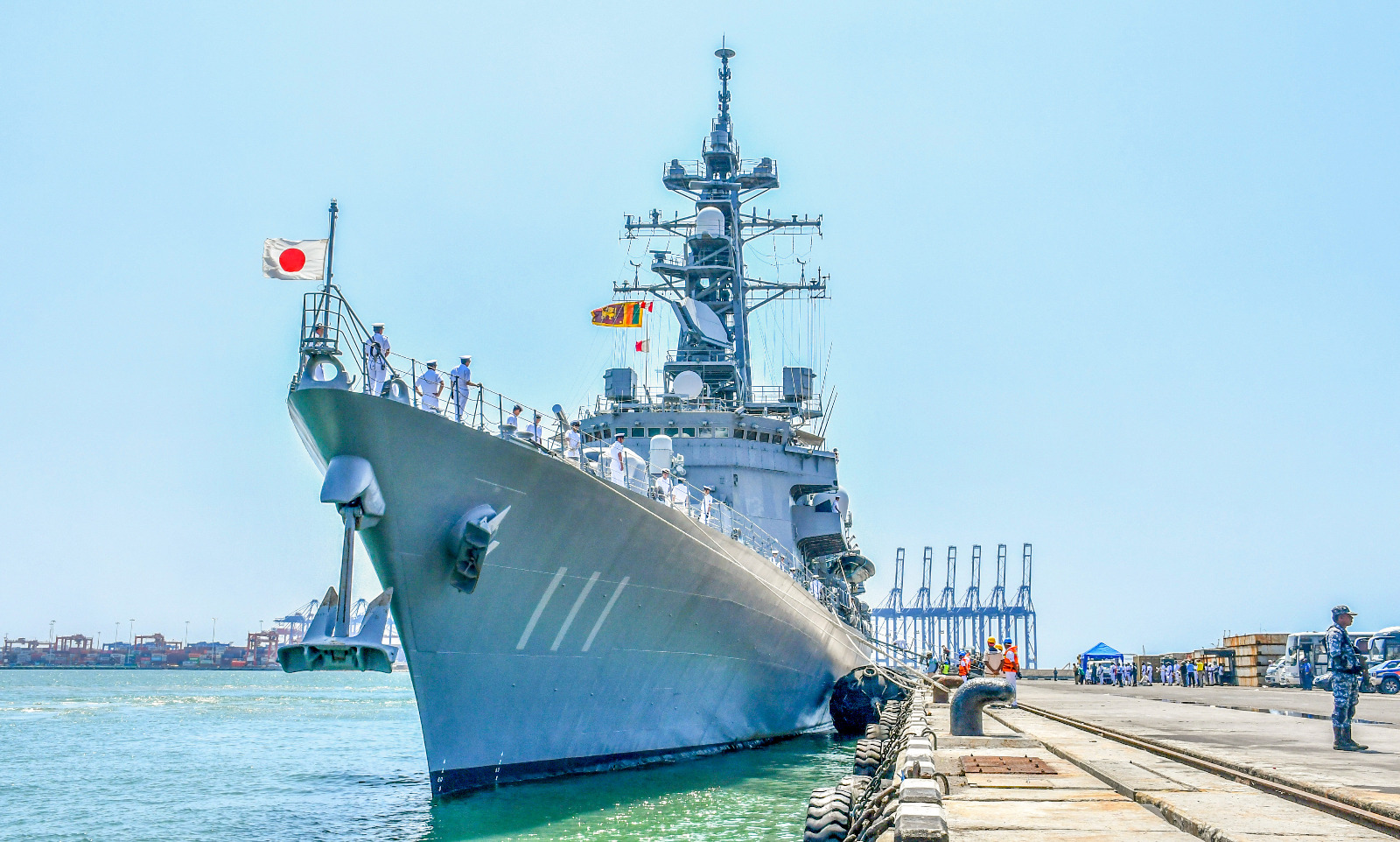
The Japan Maritime Self-Defence Force (JMSDF) ship OONAMI which arrived at the port of Colombo on a goodwill and replenishment visit on 09 Mar 26 departed on 11 March.
The departing ship was given a formal farewell from the Sri Lanka Navy, in keeping with naval traditions at the Port of Colombo.
The 150.5m long JMSDF OONAMI is commanded by Commander IIO Hiromasa.
During the stay in the island, crew members of the ship explored some tourist attractions in Colombo. The itinerary also included a coastal clean-up drive participated by naval personnel of both countries and engagements with the Sri Lanka Navy, designed to strengthen the bonds of friendship and cooperation.

The Central Cultural Fund established under the provisions of the Central Cultural Fund Act No. 57 of 1980 is responsible for development of cultural and religious monuments in Sri Lanka, settling the expenditure borne for development, renovation and conservation of local and foreign cultural monuments, awarding financial donations for artisans as well as awarding those who served the nation in the fields of culture and religious sectors.
The said act has been passed in Parliament 45 years back and, the requirement to revise the provisions of the act according to the contemporary requirements haa been recognized.
Accordingly, the Cabinet of Ministers granted their policy
approval to amend the said act, considering the resolution furnished by the Minister of Buddhasashana, Religious and Cultural Affairs.

SriLankan Airlines Alerts Customers to Social Media Scams

Four dead 32 injured in head on collision at Weerawila

JMSDF ship OONAMI concludes goodwill visit

Cabinet nod to amend Central Cultural Fund Act No. 57 of 1980
’National Namal Uyana’ declared as a National Heritage
Establishment of Supervisory Committees for restoring economic activities.

‘Dates have the highest sugar content to fight Coronavirus’

Sunday Island 27 December – Headlines

#SundayIsland 17th December – Headlines

Sunday Island – 28th March

Sunday Island Headlines – 21 March

Sunday Island – 21st February – Headlines
-

 News7 days ago
Historic address by BASL President at the Supreme Court of India
-

 Sports7 days ago
The 147th Royal–Thomian and 175 Years of the School by the Sea
-

 Business3 days ago
Browns EV launches fast-charging BAW E7 Pro at Rs. 5.8 million
-

 Life style4 days ago
From culture to empowerment: Indonesia’s vision for Sri Lanka
-
 News7 days ago
Power sector reforms jolted by 40% pay hike demand
-
 Opinion6 days ago
M. D. Banda: Memories of Appachchi – II
-

 Latest News4 days ago
QR code system will be implemented for fuel with effect from 06.00 a.m. today (15th)
-

 News2 days ago
Australian HC debunks misleading travel risk claims for Sri Lanka