
News
FSP opposes move to make Central Bank of Sri Lanka independent of Parliament

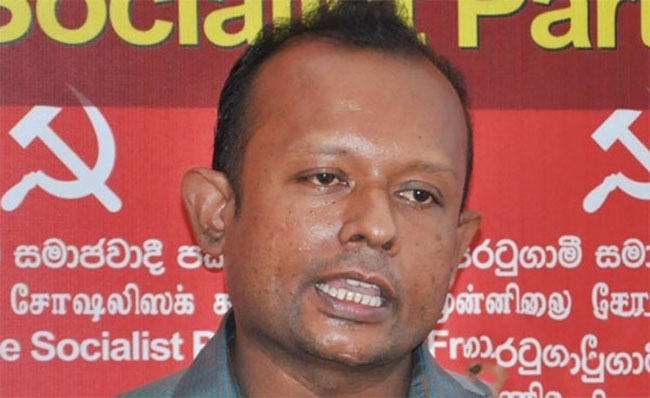
The Frontline Socialist Party says that the Central Bank of Sri Lanka Bill, if passed, would enable President Ranil Wickremesinghe to come to Parliament one day and state that there had been no Central Bank robbery for there had been no Central Bank to be robbed.
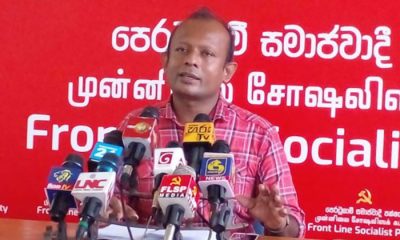
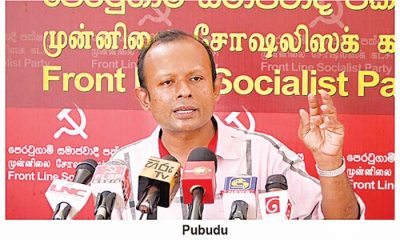
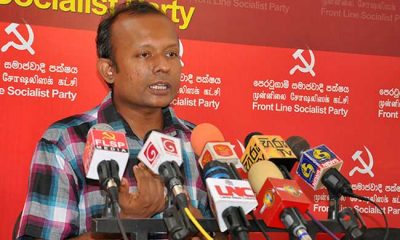
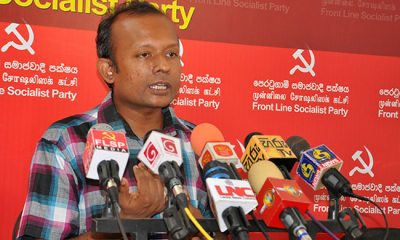
Addressing the media at the party headquarters, in Nuegegoda, FSP Educational Secretary, Pubudu Jagoda, said that the new legislation would deprive Parliament of power over the Central Bank. “This Bill contains provisions to do away with the Parliament’s powers of controlling the Central Bank. Parliament has the supreme control over public finance. It will hand the Central Bank’s autonomy to a few officials,” Jagoda said. “This Bill contains nothing but realisation of the general concept of an Independent Central Bank (ICB) promoted across the world by neo-classical economists and institutions such as the IMF. ICBs are fundamentally antithetical to democracy. The Parliament of elected representatives will lose their power to stop if an ICB oversteps its regulations. Parliament cannot make an ICB accountable. This has been tried and failed in many parts of the world. What happened in Latvia recently exemplifies ICB well. The Latvian Central Bank Governor was accused of bribery and money laundering. The Latvian Parliament voted 55 to 0 against him. However, when he was barred, the European Union stated that it was against the EU law because the Latvian Central Bank was an ‘independent’ institution.
Jagoda said that the US Parliament had been able to nothing when the Federal Reserve bank took away 4.7 trillion dollars from public funds meant for people’s welfare and deposited them in bank accounts of the super-rich.
“Years ago, all the countries had national central banks. It was noticed that there were a hindrance to the global money circulation because the banks were guided by the interests of their countries. Then came a concept proposing to make these banks independent. This independence is given by removing all the rights of the electives of people to intervene in the central bank. The new law will rescind Parliament’s power to appoint top officials of the Central Bank. As of now, Parliament can summon Central Bank officials and question them. This would not be possible if the Central Bank of Sri Lanka Bill is passed. This would surely end the Central Bank’s national role. After the bank is done away with, President Ranil Wickremesinghe could come to Parliament and state that he did not rob the Central bank as there was no Central Bank to be robbed,” Jagoda said.








Association of Former Members of Parliament of Sri Lanka has requested the Inter-Parliamentary Union to inquire into, what the group calls, institutional irregularities in Parliament.
The Association cited the decision taken by the Attorney General not to appear for Speaker Dr. Jagath Wickremeratne, in a case filed in the Court of Appeal by sacked Deputy Secretary General of Parliament Chaminda Kularatne, to underscore the need for IPU’s intervention.
The following is the text of the letter signed by former JVP MP Premasiri Manage, on behalf of the Association: We write to Your Excellency on behalf of the Association of Former Members of Parliament of Sri Lanka, an independent body representing former legislators who have served the Parliament of Sri Lanka across successive administrations. The Association is committed to upholding democratic values, parliamentary traditions, institutional integrity, and the rule of law within Sri Lanka’s governance framework. It is with grave concern that we bring to your attention a series of developments that, in our respectful view, seriously undermine parliamentary democracy, administrative fairness, and institutional independence in Sri Lanka.
1. Unlawful Cancellation of Parliamentary Pensions
The present Government of Sri Lanka has, through actions that we consider both unlawful and unethical, cancelled the pension entitlements of former Members of Parliament. This decision appears to have been taken arbitrarily, without adherence to established legal principles, legitimate expectations, or due process, thereby undermining the dignity and security of those who have served in the national legislature.
2. Illegal and Malicious Interdiction of the Deputy Secretary General of Parliament
We wish to draw urgent attention to the interdiction of the Chief of Staff and Deputy Secretary General of Parliament, which raises serious concerns regarding abuse of authority and interference in administrative due process. According to material presently before the Court of Appeal of Sri Lanka (CA/Writ Application No. 109/2026), the interdiction:
• Was imposed through the Parliamentary Staff Advisory Committee (PSAC), which lacks lawful authority to exercise such disciplinary powers, rendering the action ultra vires;
• Was based on a preliminary inquiry conducted without proper legal mandate, thereby invalidating the process from its inception;
• Was not the result of an independent administrative determination, but was carried out following the direct personal intervention and influence of Speaker, Dr. Jagath Wickramaratne;
• Appears to have been driven by personal and retaliatory considerations, amounting to a malicious exercise of authority rather than a lawful disciplinary process.
Importantly, it is also noted that the Attorney General of Sri Lanka has withdrawn from appearing on behalf of the Hon. Speaker in the related proceedings, reportedly in view of serious procedural irregularities associated with the interdiction process. The Speaker has consequently retained private legal counsel. This development strongly indicates that serious legal and procedural defects exist in the interdiction process, further reinforcing concerns regarding its legality and propriety. It is therefore evident that the lawful disciplinary framework vested in the Secretary General of Parliament was bypassed, resulting in a serious violation of the principles of natural justice, institutional independence, and the rule of law.
3. Discrimination and Harassment within Parliamentary Administration
We are also deeply concerned by credible allegations of discrimination and harassment within the parliamentary administrative structure, which, in our respectful view, have arisen as a result of the interference of the present Speaker in the administrative affairs of Parliament, thereby undermining the independence of the parliamentary administration. These concerns include:
• Discriminatory conduct affecting senior officials, including the Deputy Secretary General;
• Harassment and discriminatory treatment of female staff members within Parliament;
• The resignation of one female officer due to such circumstances;
• Confirmed findings of harassment in respect of another female officer attached to the Information Technology Division, as established by a report submitted by a former High Court Judge.
These incidents indicate a disturbing pattern of administrative misconduct and a failure to ensure a safe, independent, and professional working environment within Parliament.
3. Broader Institutional Concerns
The above matters collectively raise serious concerns regarding:
• The erosion of the independence of parliamentary administration;
• Abuse of authority and concentration of power;
• Undermining of due process and established legal frameworks;
• A broader decline in adherence to democratic governance standards.
Request for Engagement
In light of the foregoing, we respectfully request that the Inter-Parliamentary Union:
1. Intervene and monitor the situation;
2. Call for reports and clarifications from the Speaker and senior parliamentary administration;
3. Facilitate independent review and observation of relevant judicial proceedings;
4. Promote accountability and restoration of institutional integrity within Parliament.
Given the IPU’s distinguished role in safeguarding parliamentary democracy and promoting good governance worldwide, we firmly believe that your timely engagement will contribute significantly to restoring institutional integrity and public confidence in Sri Lanka’s Parliament.

Power and Energy Minister Kumara Jayakody and Ministry Secretary Prof. Udayanga Hemapala have resigned from their posts.According to the President’s Media Division (PMD), the two officials submitted their letters of resignation to President Anura Kumara Dissanayake this afternoon.
The resignations come in the wake of a Special Presidential Commission of Inquiry appointed to probe possible unlawful activity and financial irregularities in coal procurement and power generation.
The PMD said the decision was taken to ensure that the Commission’s work proceeds without interference or perceived influence from individuals holding office.
Minister Jayakody, in his resignation letter, noted that following the appointment of the Commission, he had requested that investigations into coal imports, since 2009, be referred to the Criminal Investigation Department (CID), describing it as part of the government’s anti-corruption mandate.
He added that the inquiry should be conducted independently and without bias, and said his continued presence in office could be perceived as an obstacle to the process.
Prof. Hemapala, in his resignation letter, said his decision was intended to facilitate the commencement of investigations and ensure a transparent and independent process, the PMD said.
The Special Presidential Commission was recently appointed to examine allegations of irregularities in coal imports and electricity generation over a prolonged period and to recommend corrective measures.
News
President appoints Commission to probe irregularities in coal imports from inception of Norochcholai

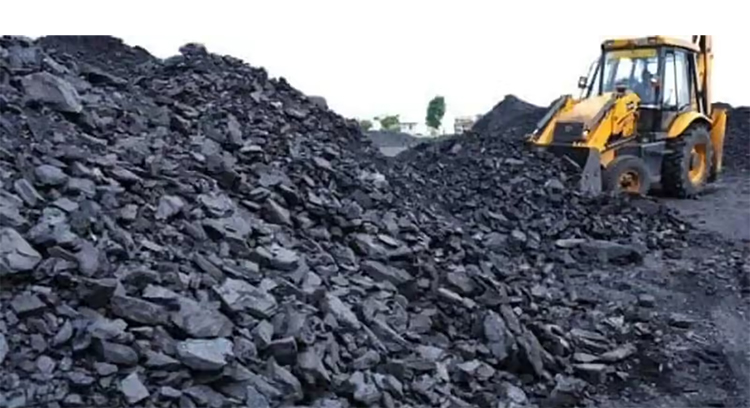
President Anura Kumara Dissanayake yesterday appointed a Presidential Commission of Inquiry to investigate alleged irregularities in coal imports and electricity generation, amid concerns over possible financial losses to the State.
The President’s Office said the Commission would examine transactions from the inception of coal-based power generation in Sri Lanka up to April 16, 2026, focusing on operations linked to the CEB-affiliated Lanka Coal Company (Pvt) Ltd., its successors, and private suppliers.
The three-member body is chaired by Supreme Court Justice Gihan Kulatunga, with Court of Appeal Justice Adithya Patabendige and High Court Judge Sanjeewa Somaratne as members. Former Ministry Secretary P.V. Bandulasena has been appointed Secretary to the Commission.
Appointed under the Special Presidential Commissions of Inquiry Act No. 07 of 1978, as amended, the Commission has been mandated to scrutinise procurement procedures, supply chains, quality testing, and operational processes connected to coal imports and utilisation.
The Commission has been tasked with the following mandates:
• To determine whether irregularities or illegal acts occurred in the procurement process for coal imports and to assess any resulting financial loss to the government.
• To investigate whether substandard coal was imported during the relevant period and to examine the entire associated workflow, including procurement, supply, quality testing, operational, and utility processes.
• To ascertain whether electricity generation using imported coal reached the expected levels of efficiency and productivity.
• To investigate whether legal or financial irregularities or illegal acts occurred during the power generation process if substandard coal was indeed utilized.
• To examine whether there were any breaches of expressed terms or conditions in these processes and, if so, whether measures such as withholding payments or other compensatory actions were taken.
• To identify the political authorities, government officials, officers of Lanka Coal Company (Pvt) Ltd, suppliers, or their agents responsible for any such incidents and to recommend future action to be taken against them.
• To propose measures to prevent the recurrence of such alleged malpractices or illegal acts in the future and to ensure proper governance and integrity.
In addition to the above, the Commission will also report on any other alleged malpractices or illegal acts related to coal importation and electricity generation, and recommend preventive measures to address such issues.

Showers expected in the Western, Sabaragamuwa and Southern provinces and in Nuwara-Eliya district after 1.00 pm.

Ex-lawmakers group calls for IPU’s intervention to check “irregularities” in Parliament

Power and Energy Minister, Ministry Secy resign over coal probe

President appoints Commission to probe irregularities in coal imports from inception of Norochcholai

Heroin haul transported on 50-million-rupee contract

Kongahage and another released on bail

‘Dates have the highest sugar content to fight Coronavirus’

Sunday Island 27 December – Headlines

#SundayIsland 17th December – Headlines

Sunday Island – 28th March

Sunday Island Headlines – 21 March

Sunday Island – 21st February – Headlines
-

 News6 days ago
CEB orders temporary shutdown of large rooftop solar systems
-
 Features6 days ago
From Royal College Platoon to National Cadet Corps: 145 years of discipline, leadership, and modern challenges
-

 Latest News5 days ago
PNS TAIMUR & ASLAT arrive in Colombo
-

 Features6 days ago
CIA’s hidden weapon in Iran
-
 Latest News5 days ago
Prasidh, Buttler set up comfortable win for Gujarat Titans
-

 News3 days ago
PNS TAIMUR & ASLAT set sail from Colombo
-

 Features6 days ago
A Fragile Ceasefire: Pakistan’s Glory and Israel’s Sabotage
-

 Latest News6 days ago
Heat index likely to increase up to ‘Caution level’ at some places in the Northern, North-central, North-western, Western, Sabaragamuwa, Southern and Eastern provinces and Monaragala district