
News
FSP calls on people to oust govt.


By Saman Indrajith
The Frontline Socialist Party, on Tuesday, said that people had no option but to take to the streets to chase out the incumbent government. “The government has not learnt that people engage in protests because they no longer can put up with hardships. We have no other option but to beat off this government. Ranil Wickremesinghe says that he has no home to go. He should not go home, he should be sent to a prison for the crimes he had committed,” FSP Education Secretary, Pubudu Jayagoda, told a press conference held in Colombo.
Jayagoda said that farmers, fishers, workers, students, women and peasants are rising up against taxes and suppression by the government and his party would support their struggle to drive out this government. Those engaged in the fisheries industry find it hard to survive because of the fuel price hike. Crisis in the fishing industry started with the price increase on a litre of kerosene from Rs 87 to Rs 340. During the time of Mahinda Rajapaksa kerosene price was increased by Rs 140 and the fishers took to the street, protesting, and Anthony Fernando, of Chilaw, was shot during such a protest and the government had to bring down the price.
“A boat with a 50 litre capacity has to spend around Rs 29,000 before it is put to sea. The kerosene cost comes around Rs 17,000, lubricants Rs 5,000, baits and lures Rs 5,000 and food for at least three fishermen at Rs 2,000. A boat with 20 litre capacity has to spend around Rs 10,000 a day. This is without the cost for ice. The price of ice that had been at Rs 250 now went up to Rs 600. There are boats with 9.9 to 15 horsepower that need at least 15 litres of kerosene and such boats do not go to deep sea. The ones that go far have 25 horsepower and they need 30 liters while only the vessels of 30-40 horsepower can go into deep seas and they need 50 to 60 litres of fuel.
Fisheries industry is on its death throes. “The situation is worse when it comes to multiday fishing trawlers. There are around 6,000 such vessels. They use diesel. A vessel that spends around 45 days in the deep sea cannot be put to sea without spending around Rs 10 million. People can no longer afford to eat fish. The government has to take immediate action to allocate fuel to the fishing industry, immediately save the jobs of 100,000 engaged in the industry and to fight against malnutrition. In that context, the government has increased the fuel quota of MPs from Rs 100,000 to Rs 200,000 and added many ministers. Every minister gets six vehicles. Each gets 750 litres of petrol. If he has three petrol vehicles he gets 2,250 petrol liters a month. More than Rs one million government money is spent for that. Each minister gets 600 litres of diesel per one vehicle and with three vehicles he gets 1,800 litres per month and the government pays around Rs 700,000 per month. Instead of saving the dying fishing industry this is what the incumbent government does,” Jayagoda said.
Jude Namal from the Fisher Organisations Collective, M Wijendran of the Independent Fisher Activists Committee and W Maximan for the Fisher Workers Association also addressed the press conference.


First comprehensive review of EPF, ETF launched, says Deputy Minister
The Government has launched the first comprehensive review of the Employees’ Provident Fund (EPF) and Employees’ Trust Fund (ETF) since their establishment, Deputy Minister of Labour Mahinda Jayasinghe told Parliament on Friday.
He said the review was aimed at improving the efficiency of the two retirement benefit schemes and enhancing services provided to millions of members.
Addressing Parliament, Jayasinghe said the Labour Department had already introduced several measures to modernise the administration of the funds, including digitalisation initiatives and improved mechanisms to recover outstanding contributions from defaulting employers.
According to the latest figures, the EPF has 22.9 million registered members and beneficiaries, of whom 3.1 million active accounts receive monthly contributions. The ETF has around three million registered members.
The Deputy Minister said the EPF’s total assets had reached Rs. 4.9 trillion by the end of 2025, while the ETF’s assets stood at Rs. 637.5 billion. He added that there were 101,000 active employers in 2025, including 376 semi-government institutions.
Jayasinghe said no government had undertaken such a systematic review of the two funds since their establishment, with the EPF being introduced in 1958 and the ETF in 1980.
He said the Labour Department had accelerated the recovery of unpaid EPF contributions from private and semi-government institutions, with Rs. 3.4 billion allocated through the 2026 Budget to settle outstanding contributions of semi-government institutions.
He added that steps had also been taken to reactivate stalled court cases and execute pending warrants related to contribution defaults.
The Deputy Minister said a new software system was being developed by integrating the data systems of the Labour Department and the Central Bank of Sri Lanka (CBSL) to create a unified platform.
He further noted that the Digital EPF facility, launched last December, enables employees to register and access a range of EPF-related services online. These reforms, he said, would eventually allow members to obtain EPF and ETF services through a single-window system.
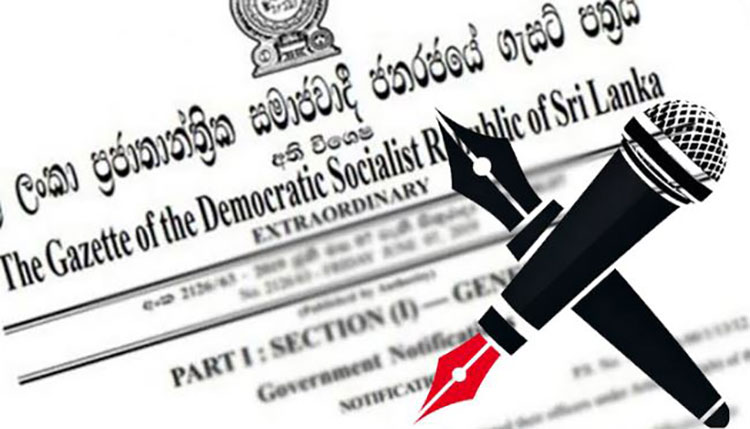
The Sri Lanka Press Institute (SLPI), and its constituent partners, the Newspaper Society of Sri Lanka (NSSL), The Editors’Guild of Sri Lanka (TEGOSL), the Free Media Movement (FMM), the Sri Lanka Working Journalists Association (SLWJA) together with its affiliated organizations, the Muslim Media Forum (MMF), the Tamil Media Alliance (TMA), The Federation of Media Employees Trade Union (FMETU), the South Asia Free Media Association – SL Chapter (SAFMA) object the proposed Chartered Institute of Media Professionals of Sri Lanka (CIMP) Bill.
“Our primary objection stems from the government-led nature of this initiative. History shows that robust professional bodies, such as the Institute of Engineers and the Sri Lanka Institute of Architects, were founded and drafted by the professionals themselves before being incorporated by Parliament. In contrast, the CIMP is a state-driven project ordered to be published by the Minister of Health and Mass Media despite objections raised by media’s professional bodies.
We view this as an attempt to impose a state-managed regulatory framework upon a profession that must remain independent of government inteference to function effectively,” an SLPI news release said.
“The SLPI, its constituents and affiliated organizations maintain that professional media standards must be self-regulated in principle and led by the media community, not mandated by law under ministerial oversight. The SLPI has presented an alternative mechanism, viz., the Sri Lanka Media Commission (SLMC), based on co-regulatory and self-regulatory principles, which improves professionalism. In addition, the Sri Lanka College of Journalism, which is recognised by the media industry for training journalists for more than two decades, could also be an alternative way of building relevant journalism standards with government financial support if it intends to genuinely promote media professionalism. We call upon the government to withdraw this Bill and engage in a genuine dialogue with stakeholders that respects the autonomy and freedom of the media in a democracy.”
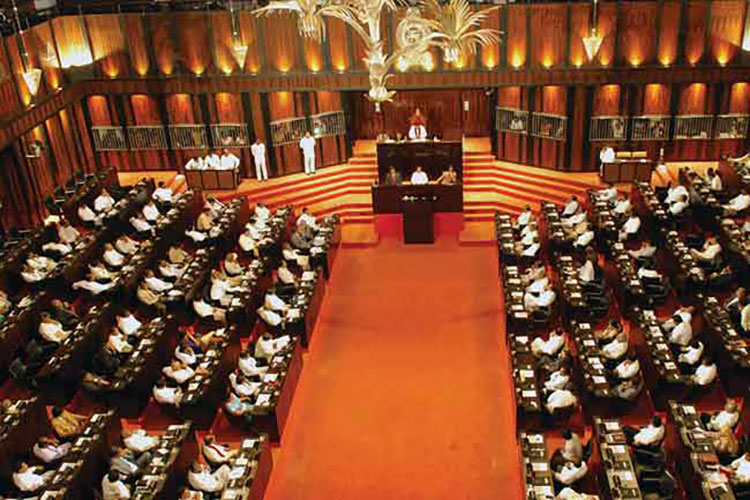
More than Rs. 332 million in public funds has been spent on maintaining Provincial Council chairpersons and their staff despite the dissolution of Provincial Councils, Deputy Minister of Provincial Councils and Local Government Ruwan Senarath told Parliament on Friday.
The Deputy Minister disclosed this in response to a question raised by NPP Gampaha District MP Ruwan Nishantha Mapalagama.
According to Senarath, a total of Rs. 332.9 million had been incurred during the relevant period for the upkeep of Provincial Council chairpersons and their administrative staff, although the respective councils had ceased functioning after completing their terms.
He explained that the expenditure had continued due to provisions in the Constitution and existing legal framework, under which the positions of Provincial Council chairpersons remain valid even after the expiry of the councils’ official terms.
Senarath said the legal provisions governing Provincial Councils had resulted in chairpersons and their staff continuing to receive related facilities despite the councils themselves no longer being operational.
The disclosure came amid concerns over public expenditure incurred on maintaining institutions that remain inactive due to the absence of Provincial Council elections.

Typhoon Noul makes landfall in China, with hundreds of thousands evacuated

Colombo Kaps down Dambulla Sixers by 21 runs

Kandy Royals win by 11 runs
Showers will occur in the Western, Sabaragamuwa and North-western provinces and in Galle, Matara, Kandy and Nuwara-Eliya districts

Govt. launches EPF, ETF shake-up

SLPI concerned over the proposed Chartered Institute of Media Professionals of Sri Lanka

‘Dates have the highest sugar content to fight Coronavirus’

Sunday Island 27 December – Headlines

#SundayIsland 17th December – Headlines

Sunday Island – 28th March

Sunday Island Headlines – 21 March

Sunday Island – 21st February – Headlines
-

 Features20 hours ago
MBS: The Man of the Last Laugh
-
 Midweek Review5 days ago
Three high-profile alleged suicides shaping key investigations
-
 Features20 hours ago
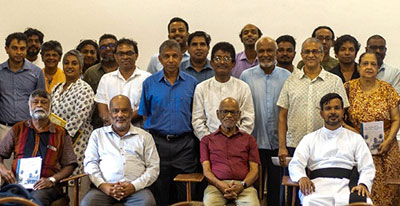
A Landmark Gathering of Minds: The Ceylon Journal Roundtable Revives the Spirit of Intellectual Dialogue
-

 News2 days ago
Fort Magistrate orders arrest of MP Archchuna
-

 Editorial2 days ago
An indictment of all parties
-

 News5 days ago
Customs asked to resume probe or face legal action
-

 Life style20 hours ago
A proud Sri Lankan voice in Australian Parliament
-
 Latest News1 day ago
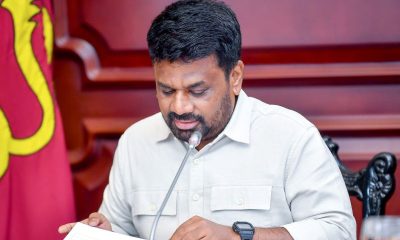
Develop a programme to allocate underutilised state land for investment by returning migrant workers – President