
Features
From Jungle To International Five-Star

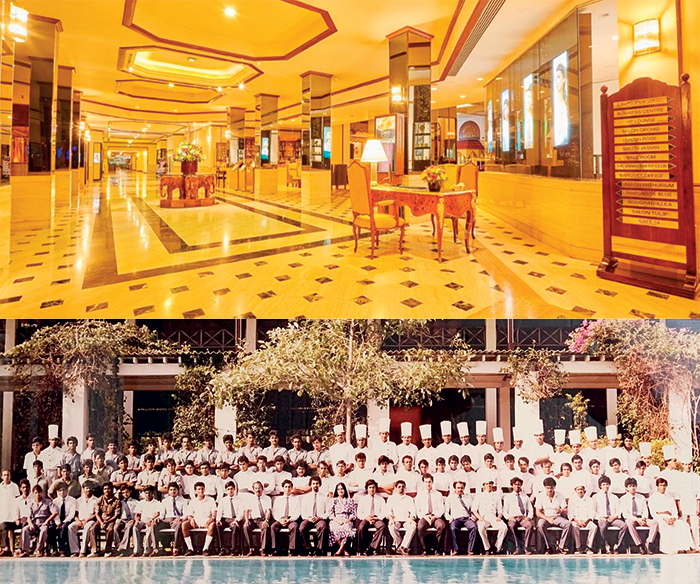
CONFESSIONS OF A GLOBAL GYPSY
Dr. Chandana (Chandi) Jayawardena DPhil
President – Chandi J. Associates Inc. Consulting, Canada
Founder & Administrator – Global Hospitality Forum
chandij@sympatico.ca
Prime Minister’s Village Re-awakening
I first met Ranasinghe Premadasa, the ninth prime minister of Sri Lanka, in 1981. He was a unique man loved by many supporters and hated by many critics. At that time, I was at the John Keells head office as the Manager – Operations of their hotel management and marketing services company. We also managed Temple Trees, the official residence of the Prime Minister and his family. Managing Temple Trees was a demanding contract.
I visited Temple Trees occasionally to support Fazal Izzadeen, a manager whom I transferred from Hotel Swanee to be in charge of the Temple Trees operation. Given the personal friendship my boss, Bobby Adams had with the Prime Minister, the Director – Operation had to be personally involved in managing this prestigious property. A perfectionist, Mr. Premadasa did not tolerate any sub-standard quality in maintenance, upkeep and cleanliness. Fazal did a great job in keeping the second family of Sri Lanka content with the services we provided, and more importantly, off our backs.
Unlike any of his predecessors, Ranasinghe Premadasa came from a family of modest means. Politically a self-made man, he was the first ‘commoner’ to become Prime Minister of Sri Lanka, breaking a 30-year tradition of the top leadership of the country being controlled by the high caste aristocracy coming from affluent families. Educated in a Christian missionary college in Colombo, Mr. Premadasa initially opted for a career as a journalist. He was a prolific writer and an electrifying orator in Sinhala. He had been keenly interested in neighbourhood welfare affairs since his youth. He became increasingly involved in municipal politics, initially as a member of the leftist, Ceylon Labour Party which led to his election to the Colombo Municipal Council at a young age of 26.
One day in early 1986, Bobby Adams entrusted a special duty to me. He called to say, “the Honourable Prime Minister will be staying at the Village, Habarana for five days, while he is busy with the 1986 Gam Udawa (Village Re-awakening) project in nearby Hingurakgoda. As I cannot be there this time, please look after him and his team of 50, including the security detail.”
Between 1979 and until his gruesome assassination by a suicide bomber while organizing a May Day demonstration in 1993, when he was the President of Sri Lanka, Mr. Premadasa led 15 annual Gam Udawa projects in different districts in rural Sri Lanka. The festivals were part of a massive, public housing and development program envisioned by him. The festivals were implemented with great efficiency, for the benefit of poor villagers, and predominantly in Sinhala Buddhist areas. Gam Udawa helped consolidate state ideologies at a time when its political and moral authority was being challenged by insurrectionary and separatist groups.
As the General Manager of the Lodge and the Village, hosting the Prime Minister for five-days was an interesting assignment. It enabled me to see the different facets of a unique personality of our times. Our team did the outdoor catering whenever the Prime Minister went to Hingurakgoda to see the progress of the project. At times, he was ruthless in dealing with the government engineers, project managers and private contractors.
He had no patience for project delays and inefficiencies. Nor did he hesitate to take senior bureaucrats to task, in public, in the presence of their subordinates. Quoting one of his idols, Jawaharlal Nehru (the first Prime Minister of India, whose autobiography was translated into Sinhala by Premadasa), he emphasised that, “I am only interested in work done and not in excuses!”
During the evening at the Village, the Prime Minister was in a more relaxed mood, and I saw a different side of his personality. At times he played football with the resort staff. He was athletic and fit. He had his dinner around 6:00 pm and then walked with our management team on the bund of the Habarana tank. His loyal and influential valet, Mohideen walked behind him with a radio playing Buddhist pirith chanting.
One early evening, during our walk, the Prime Minister looked at my wife who was pregnant, and asked her, “Did you have your dinner?” When she replied that we eat around 9:00 pm, the Prime Minister was unhappy. “In your condition, you should ideally be eating five hours before bed time.” he lectured her.Mr. Premadasa was a hard-working man who commenced his day around 4:00 am. After his early breakfast (usually string hoppers made with healthy, kurakkan (millet) and red rice flour, he would call the cabinet ministers and senior officials. They all knew his early routine and had gotten used to getting up very early to respond to the boss’s calls.

Mr. Premadasa was a big fan of the Singaporean Prime Minister, Lee Kuan Yew and his tough leadership style. He often spoke fondly about how effectively Lee Kuan Yew had developed Singapore to an unprecedented advanced level from a previously poor country which only obtained independence 14 years after Ceylon.On the last day of his visit, we were all waiting by the helipad of the Village Habarana to bid farewell to the Prime Minister. At 8:00 am sharp, he left his suite and said his goodbyes to managers and staff waiting in a long greeting line, before getting into an Air Force helicopter piloted by a squadron leader.
Mr. Premadasa was very observant. He paused for a moment and looking unhappy, picked a small, dry leaf from the floor of the helicopter. He then placed that leaf in the palm of the pilot without uttering a word. There was pin drop silence until the helicopter took off. “That’s something Lee Kuan Yew would have done too!” one of our managers told me.
My New Best Friend
From February 1, 1986, with the birth of our son, Marlon, my life changed. Our apartment in Habarana was Marlon’s first home. After my daily, lunch management meeting at the Village, I dropped in at our apartment to spend time with him. After playing a little, we both usually fell asleep for a short nap. When he started talking, Marlon commenced calling me his best friend.
In the later years, Marlon travelled to many countries with us and lived and studied in Iraq, United Kingdom, Sri Lanka, Guyana, Jamaica and Canada. He also lived in Vietnam for five years as a corporate executive of a large company. When he was in his mid-teens, I prompted him to pursue a career in hospitality, but he declined, saying that, “Thaththi, I never want to work as hard as you do in hotels!” Marlon was correct – hoteliering is certainly a demanding career, which often requires long hours of work, while sacrificing family life.
Leadership Change
I was saddened to hear that the Chairman of the John Keells Group, Mark Bostock had decided to retire. He had led the company for over 17 years, since 1969. Under his remarkable leadership, the John Keells Group evolved from a traditional company focusing on commodity and share broking to become the largest and most diverse group of companies in Sri Lanka. Today, John Keells Holdings, PLC (JKH) is Sri Lanka’s largest, listed conglomerate on the Colombo Stock Exchange. It is also the undisputed leader of the tourism and hospitality industries in the country.
Having been associated with the group’s chairman since 1972, initially through rugby football and then as a hotel manager, I was an admirer of Mark Bostock. I was extremely grateful to him for fully sponsoring my first overseas trip and training in London in 1979. In 1980 when I got married, Mark Bostock was an attesting witness. My personal friendship with him continued in 1984 when my family was invited to visit his family in their home in Royal Tunbridge Wells, Kent, for an overnight stay. Later in 1985, he supported re-hiring me to John Keells to manage their two largest hotels (The Lodge and The Village) as the General Manager.
An emotional farewell to a visionary leader
During his last visit to Habarana as the Chairman, he kindly accepted my invitation for Mrs. Bostock and him to plant a tree and address the employees. He shared his vision for the future, and said that, “My Deputy Chairman, David Blackler will certainly continue our good work, as the new Chairman. We have developed a strong team of Sri Lankan directors, who will take the company to a new level,” he assured.
Unfortunately, my first meeting with the new Chairman did not go well. David Blackler, who was also a Britisher like Mark Bostock, wanted some changes done immediately. He also told me that spending time as the President of two trade associations was a waste of time in my busy schedule. I was unhappy, but did not comment as I realized that with leadership change, emphasis may change. Managers need to go with the flow.
Being the General Manager of the Habarana Resort Complex was a rewarding job, but it was not overly challenging. I enjoyed the opportunity to do new things, develop an amazing team and the free rein that I had been given, up to that point. Yet, it was not fully aligned with my mid-term career plan, which was to gain five-star international management experience. I decided to keep my options as well as, my eyes open. The last memo/letter Mark Bostock sent me was motivating and I was very touched with his kind words.
Last memo/letter to me from Mark Bostock
Five-Star Offer
Mr. Steffan Pfeiffer, the General Manager of the 500-room five-star hotel, Galadari Meridien called me with another offer. It was the third time he was offering me a job in this hotel managed by the hotel company owned by Air France. “Chandana, after working here for three years, Meridien is transferring me as the General Manager of their hotel in Hong Kong. All other senior managers will continue, except four managers from one division – Food and Beverage, are leaving. I have identified you as the new lead for this division.” Steffan was trying to motivate me to make a career move.
Due to the popularity of nine food and beverage outlets and large banqueting facilities, the Food and Beverage Division of Galadari Meridian was generating over half the total revenue of the hotel. The offer was for me to be accountable for 230 employees including three expatriate managers, working in 13 departments, including kitchens.
The Food and Beverage Division of a large five-star hotel usually has four senior managers – Food & Beverage Manager, Executive Chef, Assistant Food & Beverage Manager, and the Banquet Manager. Two Frenchmen, who were the Food & Beverage Manager/Executive Assistant Manager and Executive Chef in the hotel opening team had left as well as the other two, who were senior Lankan hoteliers were about to leave Sri Lanka.
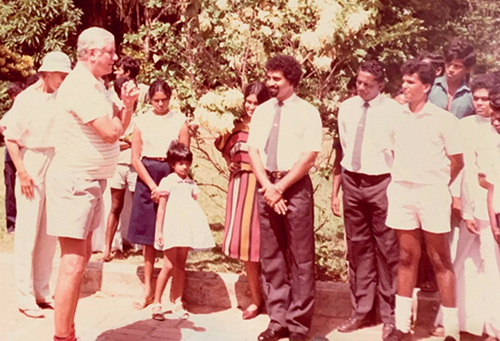
Steffan Pfeiffer offered me the opportunity to take over, and to re-organize the Food and Beverage Division. “I have recruited an excellent French Executive Chef to report to you. That is Chef Emile Castillo, who worked with me at Hotel Lanka Oberoi. You have a full control to fill the other two senior vacancies,” he explained. “I need you to meet the new Acting General Manager coming from the Meridien head office in Paris – Mr. Jean-Michel Varichon.”
“We will take you as the Acting Food & Beverage Manager and be confirmed in the position after six months, or once you have impressed the new General Manager, which I am sure that you will.” I agreed to join the Galadari Meridian on the day when Jean-Michel Varichon and Chef Emile Castillo were arriving – June 16, 1986. Steffan Pfeiffer said that he would work with me for two weeks prior to leaving for Hong Kong. I decided to leave John Keells to pursue a career with an international five-star hotel business.
Grading Time
On my last day at the Lodge and the Village, I decided to do something different. I had initiated many new things, but was not sure how the 18 managers in my teams viewed those. I developed a one-page questionnaire listing 12 general aspects of leadership and 18 other aspects we had initiated in 1985 and 1986. I requested the managers not to write their names on the questionnaires.
When I tabulated the results, I was happy to note that my team gave full marks for five elements – Planning, Delegation, Sales Promotion, Leadership Training and Statistical Analysis. The other side of the coin was that I was given poor marks for initiatives such as: Job Descriptions, Best Worker Awards, and surprisingly, the Management Trainee Program. Since 1986, every time I changed my job, I requested written feedback from the teams I managed.
Good Bye from the Lodge Team
David Blackler was surprised that I would leave the position of the General Manager of two of the best local hotels in the country to join a five-star hotel as an Acting Divisional Manager. Some of my friends were also surprised that I would leave the largest group of companies in the country, which was considered a great employer. At times, one has to follow the heart for career progress.
Over the next three years, until his retirement from John Keells in 1989, as a regular lunch customer of Colombo Club (one of the nine food and beverage outlets of Galadari Meridien), Mr David Blackler became very friendly with me. He often discussed my innovative initiatives at Galadari Meridien, especially when I mastered the art of show biz productions to increase hotel profits.
Progress with Le Meridien
Exciting new challenges awaiting me in Colombo…
Within six months of joining, I was confirmed as the Food & Beverage Manager of Galadari Meridien (from 1987, Le Meridien), and another six months later I was promoted Director of Food & Beverage, a job title unique at that time for any Lankan hotelier.
Le Meridien was very generous in developing my international hotel management career. During my two stints with them in 1980s and in 1990s, Le Meridien invested time and funds to send me as a Management Observer to their five-star hotels in Singapore, Changi Airport, Paris, Tours, London, Guadalupe, New Orleans, Toronto, and Dubai (the last two, on quality assurance mystery shopper assignments). They also sponsored my business management education with Institut International Meridien in France, where they developed promising divisional heads to become expatriate General Managers of five-star Le Meridien hotels.
In 1997, after gaining years of experience in managing seven hotels for different companies, I was chosen to convert the largest and the best hotel in the capital city of Jamaica, as Le Meridien Jamaica Pegasus Hotel. My team worked hard with the union to make this hotel become the first hotel in Americas to earn the ISO 9002 certification. In that rewarding assignment, on my request, the company sent two of Le Meridien experts to assist me with the opening – Jean-Michel Varichon from Paris and Chef Emile Castillo from New York. Small world!
In 1997, at the soft opening of Le Meridien Jamaica Pegasus Hotel. (L to R) Paddy Mitchell – MD of Le Meridien North America, John Issa – Chairman of Jamaica Pegasus Limited & SuperClubs, and P. J. Patterson – Prime Minister of Jamaica, listening to my welcome remarks.I will briefly narrate some related ‘fun’ stories in the future episodes of this column.
Dr. Chandana (Chandi) Jayawardena
has been an Executive Chef, Food & Beverage Director, Hotel GM, MD, VP, President, Chairman, Professor, Dean, Leadership Coach and Consultant. He has published 22 text books. This weekly column narrates ‘fun’ stories from his 50-year career in South Asia, the Middle East, Europe, South America, the Caribbean and North America, and his travels to 98 countries and assignments in 44 countries.


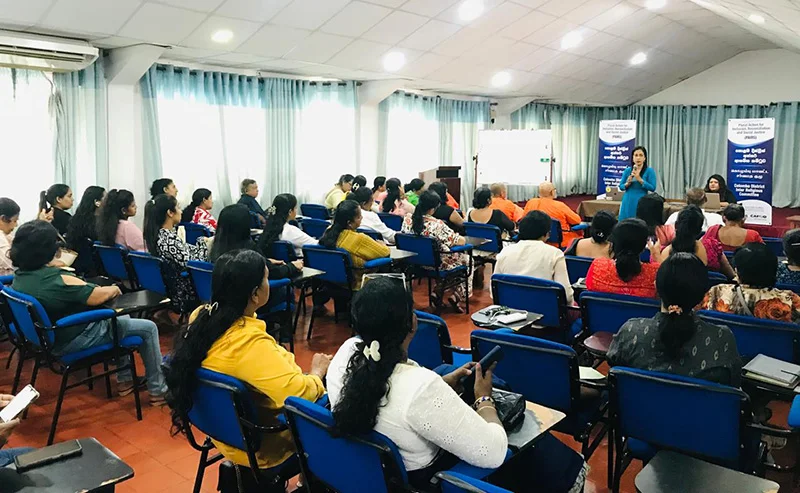
Problems and solutions in plural societies like Sri Lanka’s which have deep rooted ethnic, religious and linguistic cleavages require a consciously inclusive approach. A major challenge for any government in Sri Lanka is to correctly identify the problems faced by different groups with strong identities and find solutions to them. The durability of democratic systems in divided societies depends less on electoral victories than on institutionalised inclusion, consultation, and negotiated compromise. When problems are defined only through the lens of a single political formation, even one that enjoys a large electoral mandate, such as obtained by the NPP government, the policy prescriptions derived from that diagnosis will likely overlook the experiences of communities that may remain outside the ruling party. The result could end up being resistance to those policies, uneven implementation and eventual political backlash.
A recent survey done by the National Peace Council (NPC), in Jaffna, in the North, at a focus group discussion for young people on citizen perception in the electoral process, revealed interesting developments. The results of the NPC micro survey support the findings of the national survey by Verite Research that found that government approval rating stood at 65 percent in early February 2026. A majority of the respondents in Jaffna affirm that they feel safer and more fairly treated than in the past. There is a clear improving trend to be seen in some areas, but not in all. This survey of predominantly young and educated respondents shows 78 percent saying livelihood has improved and an equal percentage feeling safe in daily life. 75 percent express satisfaction with the new government and 64 percent believe the state treats their language and culture fairly. These are not insignificant gains in a region that bore the brunt of three decades of war.
Yet the same survey reveals deep reservations that temper this optimism. Only 25 percent are satisfied with the handling of past issues. An equal percentage see no change in land and military related concerns. Most strikingly, almost 90 percent are worried about land being taken without consent for religious purposes. A significant number are uncertain whether the future will be better. These negative sentiments cannot be brushed aside as marginal. They point to unresolved structural questions relating to land rights, demilitarisation, accountability and the locus of political power. If these issues are not addressed sooner rather than later, the current stability may prove fragile. This suggests the need to build consensus with other parties to ensure long-term stability and legitimacy, and the need for partnership to address national issues.
NPP Absence
National or local level problems solving is unlikely to be successful in the longer term if it only proceeds from the thinking of one group of people even if they are the most enlightened. Problem solving requires the engagement of those from different ethno-religious, caste and political backgrounds to get a diversity of ideas and possible solutions. It does not mean getting corrupted or having to give up the good for the worse. It means testing ideas in the public sphere. Legitimacy flows not merely from winning elections but from the quality of public reasoning that precedes decision-making. The experience of successful post-conflict societies shows that long term peace and development are built through dialogue platforms where civil society organisations, political actors, business communities, and local representatives jointly define problems before negotiating policy responses.
As a civil society organisation, the National Peace Council engages in a variety of public activities that focus on awareness and relationship building across communities. Participants in those activities include community leaders, religious clergy, local level government officials and grassroots political party representatives. However, along with other civil society organisations, NPC has been finding it difficult to get the participation of members of the NPP at those events. The excuse given for the absence of ruling party members is that they are too busy as they are involved in a plenitude of activities. The question is whether the ruling party members have too much on their plate or whether it is due to a reluctance to work with others.
The general belief is that those from the ruling party need to get special permission from the party hierarchy for activities organised by groups not under their control. The reluctance of the ruling party to permit its members to join the activities of other organisations may be the concern that they will get ideas that are different from those held by the party leadership. The concern may be that these different ideas will either corrupt the ruling party members or cause dissent within the ranks of the ruling party. But lasting reform in a plural society requires precisely this exposure. If 90 percent of surveyed youth in Jaffna are worried about land issues, then engaging them, rather than shielding party representatives from uncomfortable conversations, is essential for accurate problem identification.
North Star
The Leader of the Lanka Sama Samaja Party (LSSP), Prof Tissa Vitarana, who passed away last week, gave the example for national level problem solving. As a government minister he took on the challenge the protracted ethnic conflict that led to three decades of war. He set his mind on the solution and engaged with all but never veered from his conviction about what the solution would be. This was the North Star to him, said his son to me at his funeral, the direction to which the Compass (Malimawa) pointed at all times. Prof Vitarana held the view that in a diverse and plural society there was a need to devolve power and share power in a structured way between the majority community and minority communities. His example illustrates that engagement does not require ideological capitulation. It requires clarity of purpose combined with openness to dialogue.
The ethnic and religious peace that prevails today owes much to the efforts of people like Prof Vitarana and other like-minded persons and groups which, for many years, engaged as underdogs with those who were more powerful. The commitment to equality of citizenship, non-racism, non-extremism and non-discrimination, upheld by the present government, comes from this foundation. But the NPC survey suggests that symbolic recognition and improved daily safety are not enough. Respondents prioritise personal safety, truth regarding missing persons, return of land, language use and reduction of military involvement. They are also asking for jobs after graduation, local economic opportunity, protection of property rights, and tangible improvements that allow them to remain in Jaffna rather than migrate.
If solutions are to be lasting they cannot be unilaterally imposed by one party on the others. Lasting solutions cannot be unilateral solutions. They must emerge from a shared diagnosis of the country’s deepest problems and from a willingness to address the negative sentiments that persist beneath the surface of cautious optimism. Only then can progress be secured against reversal and anchored in the consent of the wider polity. Engaging with the opposition can help mitigate the hyper-confrontational and divisive political culture of the past. This means that the ruling party needs to consider not only how to protect its existing members by cloistering them from those who think differently but also expand its vision and membership by convincing others to join them in problem solving at multiple levels. This requires engagement and not avoidance or withdrawal.
by Jehan Perera
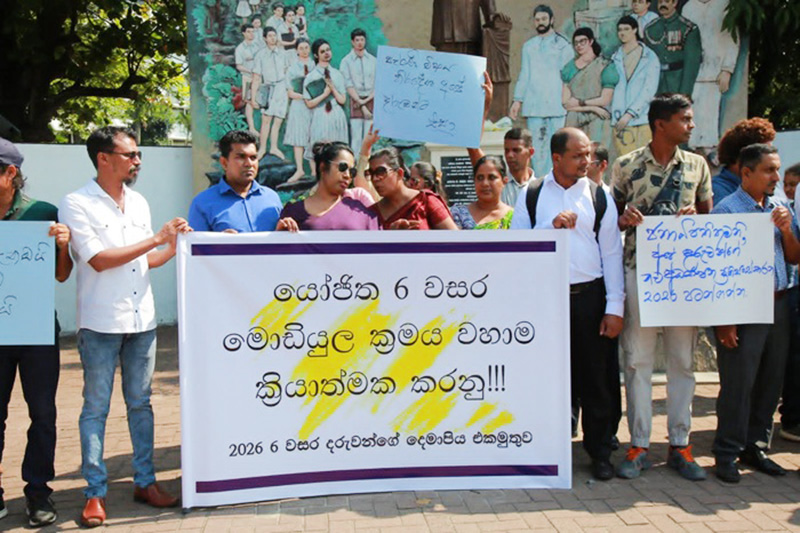
 As the debate on educational reforms rages, I find it useful to pay as much attention to the reactions they have excited as we do to the content of the reforms. Such reactions are a reflection of how education is understood in our society, and this understanding – along with the priorities it gives rise to – must necessarily be taken into account in education policy, including and especially reform. My aim in this piece, however, is to couple this public engagement with critical reflection on the historical-structural realities that structure our possibilities in the global market, and briefly discuss the role of academics in this endeavour.
Two broad reactions
The reactions to the proposed reforms can be broadly categorised into ‘pro’ and ‘anti’. I will discuss the latter first. Most of the backlash against the reforms seems to be directed at the issue of a gay dating site, accidentally being linked to the Grade 6 English module. While the importance of rigour cannot be overstated in such a process, the sheer volume of the energies concentrated on this is also indicative of how hopelessly homophobic our society is, especially its educators, including those in trade unions. These dispositions are a crucial part of the reason why educational reforms are needed in the first place. If only there was a fraction of the interest in ‘keeping up with the rest of the world’ in terms of IT, skills, and so on, in this area as well!
Then there is the opposition mounted by teachers’ trade unions and others about the process of the reforms not being very democratic, which I (and many others in higher education, as evidenced by a recent statement, available at https://island.lk/general-educational-reforms-to-what-purpose-a-statement-by-state-university-teachers/ ) fully agree with. But I earnestly hope the conversation is not usurped by those wanting to promote heteronormativity, further entrenching bigotry only education itself can save us from. With this important qualification, I, too, believe the government should open up the reform process to the public, rather than just ‘informing’ them of it.
It is unclear both as to why the process had to be behind closed doors, as well as why the government seems to be in a hurry to push the reforms through. Considering other recent developments, like the continued extension of emergency rule, tabling of the Protection of the State from Terrorism Act (PSTA), and proposing a new Authority for the protection of the Central Highlands (as is famously known, Authorities directly come under the Executive, and, therefore, further strengthen the Presidency; a reasonable question would be as to why the existing apparatus cannot be strengthened for this purpose), this appears especially suspect.
Further, according to the Secretary to the MOE Nalaka Kaluwewa: “The full framework for the [education] reforms was already in place [when the Dissanayake government took office]” (https://www.wsws.org/en/articles/2025/08/12/wxua-a12.html, citing The Morning, July 29). Given the ideological inclinations of the former Wickremesinghe government and the IMF negotiations taking place at the time, the continuation of education reforms, initiated in such a context with very little modification, leaves little doubt as to their intent: to facilitate the churning out of cheap labour for the global market (with very little cushioning from external shocks and reproducing global inequalities), while raising enough revenue in the process to service debt.
This process privileges STEM subjects, which are “considered to contribute to higher levels of ‘employability’ among their graduates … With their emphasis on transferable skills and demonstrable competency levels, STEM subjects provide tools that are well suited for the abstraction of labour required by capitalism, particularly at the global level where comparability across a wide array of labour markets matters more than ever before” (my own previous piece in this column on 29 October 2024). Humanities and Social Sciences (HSS) subjects are deprioritised as a result. However, the wisdom of an education policy that is solely focused on responding to the global market has been questioned in this column and elsewhere, both because the global market has no reason to prioritise our needs as well as because such an orientation comes at the cost of a strategy for improving the conditions within Sri Lanka, in all sectors. This is why we need a more emancipatory vision for education geared towards building a fairer society domestically where the fruits of prosperity are enjoyed by all.
The second broad reaction to the reforms is to earnestly embrace them. The reasons behind this need to be taken seriously, although it echoes the mantra of the global market. According to one parent participating in a protest against the halting of the reform process: “The world is moving forward with new inventions and technology, but here in Sri Lanka, our children are still burdened with outdated methods. Opposition politicians send their children to international schools or abroad, while ours depend on free education. Stopping these reforms is the lowest act I’ve seen as a mother” (https://www.newsfirst.lk/2026/01/17/pro-educational-reforms-protests-spread-across-sri-lanka). While it is worth mentioning that it is not only the opposition, nor in fact only politicians, who send their children to international schools and abroad, the point holds. Updating the curriculum to reflect the changing needs of a society will invariably strengthen the case for free education. However, as mentioned before, if not combined with a vision for harnessing education’s emancipatory potential for the country, such a move would simply translate into one of integrating Sri Lanka to the world market to produce cheap labour for the colonial and neocolonial masters.
According to another parent in a similar protest: “Our children were excited about lighter schoolbags and a better future. Now they are left in despair” (https://www.newsfirst.lk/2026/01/17/pro-educational-reforms-protests-spread-across-sri-lanka). Again, a valid concern, but one that seems to be completely buying into the rhetoric of the government. As many pieces in this column have already shown, even though the structure of assessments will shift from exam-heavy to more interim forms of assessment (which is very welcome), the number of modules/subjects will actually increase, pushing a greater, not lesser, workload on students.
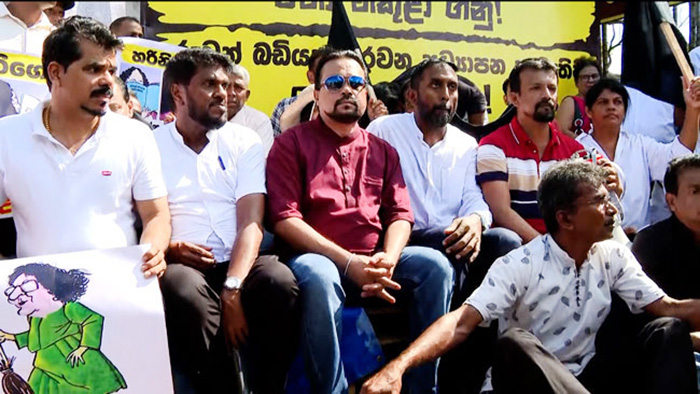
A file photo of a satyagraha against education reforms
What kind of education?
The ‘pro’ reactions outlined above stem from valid concerns, and, therefore, need to be taken seriously. Relatedly, we have to keep in mind that opening the process up to public engagement will not necessarily result in some of the outcomes, those particularly in the HSS academic community, would like to see, such as increasing the HSS component in the syllabus, changing weightages assigned to such subjects, reintroducing them to the basket of mandatory subjects, etc., because of the increasing traction of STEM subjects as a surer way to lock in a good future income.
Academics do have a role to play here, though: 1) actively engage with various groups of people to understand their rationales behind supporting or opposing the reforms; 2) reflect on how such preferences are constituted, and what they in turn contribute towards constituting (including the global and local patterns of accumulation and structures of oppression they perpetuate); 3) bring these reflections back into further conversations, enabling a mutually conditioning exchange; 4) collectively work out a plan for reforming education based on the above, preferably in an arrangement that directly informs policy. A reform process informed by such a dialectical exchange, and a system of education based on the results of these reflections, will have greater substantive value while also responding to the changing times.
Two important prerequisites for this kind of endeavour to succeed are that first, academics participate, irrespective of whether they publicly endorsed this government or not, and second, that the government responds with humility and accountability, without denial and shifting the blame on to individuals. While we cannot help the second, we can start with the first.
Conclusion
For a government that came into power riding the wave of ‘system change’, it is perhaps more important than for any other government that these reforms are done for the right reasons, not to mention following the right methods (of consultation and deliberation). For instance, developing soft skills or incorporating vocational education to the curriculum could be done either in a way that reproduces Sri Lanka’s marginality in the global economic order (which is ‘system preservation’), or lays the groundwork to develop a workforce first and foremost for the country, limited as this approach may be. An inextricable concern is what is denoted by ‘the country’ here: a few affluent groups, a majority ethno-religious category, or everyone living here? How we define ‘the country’ will centrally influence how education policy (among others) will be formulated, just as much as the quality of education influences how we – students, teachers, parents, policymakers, bureaucrats, ‘experts’ – think about such categories. That is precisely why more thought should go to education policymaking than perhaps any other sector.
(Hasini Lecamwasam is attached to the Department of Political Science, University of Peradeniya).
Kuppi is a politics and pedagogy happening on the margins of the lecture hall that parodies, subverts, and simultaneously reaffirms social hierarchies.

 Don Sherman was quite a popular figure in the entertainment scene but now he is better known as the Singing Chef and that’s because he turns out some yummy dishes at his restaurant, in Rajagiriya.
However, now the spotlight is gradually focusing on his daughter Emma Shanaya who has turned out to be a very talented singer.
In fact, we have spotlighted her in The Island a couple of times and she is in the limelight, once gain.
When Emma released her debut music video, titled ‘You Made Me Feel,’ the feedback was very encouraging and at that point in time she said “I only want to keep doing bigger and greater things and ‘You Made Me Feel’ is the very first step to a long journey.”
Emma, who resides in Melbourne, Australia, is in Sri Lanka, at the moment, and has released her very first Sinhala single.
“I’m back in Sri Lanka with a brand new single and this time it’s a Sinhalese song … yes, my debut Sinhala song ‘Sanasum Mawana’ (Bloom like a Flower).
“This song is very special to me as I wrote the lyrics in English and then got it translated and re-written by my mother, and my amazing and very talented producer Thilina Boralessa. Thilina also composed the music, and mix and master of the track.”
Emma went on to say that instead of a love song, or a young romance, she wanted to give the Sri Lankan audience a debut song with some meaning and substance that will portray her, not only as an artiste, but as the person she is.
Says Emma: “‘Sanasum Mawana’ is about life, love and the essence of a woman. This song is for the special woman in your life, whether it be your mother, sister, friend, daughter or partner. I personally dedicate this song to my mother. I wouldn’t be where I am right now if it weren’t for her.”
On Friday, 30th January, ‘Sanasum Mawana’ went live on YouTube and all streaming platforms, and just before it went live, she went on to say, they had a wonderful and intimate launch event at her father’s institute/ restaurant, the ‘Don Sherman Institute’ in Rajagiriya.
It was an evening of celebration, good food and great vibes and the event was also an introduction to Emma Shanaya the person and artiste.
Emma also mentioned that she is Sri Lanka for an extended period – a “work holiday”.
“I would like to expand my creativity in Sri Lanka and see the opportunities the island has in store for me. I look forward to singing, modelling, and acting opportunities, and to work with some wonderful people.
“Thank you to everyone that is by my side, supporting me on this new and exciting journey. I can’t wait to bring you more and continue to bloom like a flower.”

BASL protest march

IMF MD here

Navy earns USD 598,250 in 4 months from independent maritime security operations

India pass RPS Litmus Test with commanding win

How middle powers cooperate to achieve shared goals

The unconscionable fuel blockade of Cuba

‘Dates have the highest sugar content to fight Coronavirus’

Sunday Island 27 December – Headlines

#SundayIsland 17th December – Headlines

Sunday Island – 28th March

Sunday Island Headlines – 21 March

Sunday Island – 21st February – Headlines
-
 Life style2 days ago
Marriot new GM Suranga
-

 Business1 day ago
Ministry of Brands to launch Sri Lanka’s first off-price retail destination
-
 Features2 days ago
Monks’ march, in America and Sri Lanka
-
 Midweek Review6 days ago
A question of national pride
-

 Business6 days ago
Autodoc 360 relocates to reinforce commitment to premium auto care
-
 Opinion5 days ago
Will computers ever be intelligent?
-
 Features2 days ago
The Rise of Takaichi
-
 Features2 days ago
Wetlands of Sri Lanka: