
Business
Four Asiri Group Hospitals awarded Australian Healthcare Accreditation

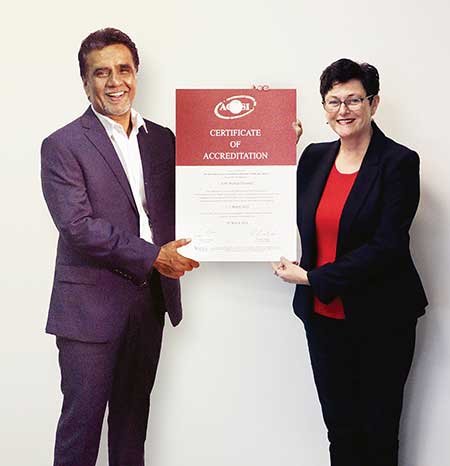
At Asiri Group of Hospitals, a patient’s safety has always been a top priority, based on a framework built within foundations of knowledge, advanced technology and compassion. In recognition of the Group’s continuous pursuit of safe and high quality healthcare, Asiri Surgical and Medical Hospitals in Colombo and Asiri Hospitals Galle, and Matara, were recently awarded accreditation by the Australian Council on Healthcare Standards International (ACHSI).
As the Covid-19 pandemic continues to impact lives many are the challenges health care organisations and front-line workers face. The need for responsibly delivering high-quality care to patients and the wider community is very high. The achievement of gaining an accreditation during a national crisis reaffirms the Group’s commitment in upholding high standards in patient care, safety and risk management.
ACHSI, a globally-recognised organisation driven with an aim to ensure quality and safety standards in patient care awarded the accreditation based on results of its robust Evaluation and Quality Improvement Programme. The programme contains stringent requirements covering all clinical, operational and corporate parameters, across a broad range of key service criteria.
Valid for a period of four years, the comprehensive, week-long accreditation survey was conducted in March at the four Asiri Hospitals. During the rigorous evaluation, Corporate and Clinical Management teams were interviewed, physical visits and walk rounds conducted, medical records were evaluated and detailed sessions were held with operational and ground level staff on healthcare delivery.
Elaborating on the accreditation, Dr. Manjula Karunaratne Chief Executive Officer said “As a pioneer in health care services we are delighted that the accreditation serves as an independent external assessment of our continuous commitment to ensure high quality patient care. Receiving international recognition on standards of care provided to our consumers is a milestone achievement and reflective of our unceasing enthusiasm and belief to continue the important journey towards maintaining high quality care and services to the community.”
The awarded accreditation encompassed a wide range of services and activities centering around patient safety, service improvement and provision of a safe environment for both patients and staff. These included providing standardized, evidence based, uniform, and holistic healthcare in line with a patient’s religious and cultural beliefs, and respecting patient rights.
The ACHS International accreditation for Asiri surgical, Asiri Medical and Asiri Galle and Asiri Matara hospitals follows the Joint Commission International (JCI) Gold Seal of Approval® for Asiri Central Hospital Re-accreditation in February 2020 for demonstrating its commitment to providing safe and effective patient care.



The Cabinet of Ministers has approved the appointment of a Committee, chaired by Senior Presidential Advisor on Digital Economy Dr. Hans Wijayasuriya, to conduct a strategic review and restructuring of SriLankan Airlines.
The other members of the committee are as follows:
• Senior Presidential Economic Advisor Duminda Hulangamuwa
• Financial and corporate strategy expert Deshal De Mel
• Transaction and investment banking, mergers and acquisitions expert Dumith Fernando
• The Secretary to the Ministry of Finance or his Representative
• The Secretary to the Ministry of Transport, Highways and Urban Development / a representative of the Civil Aviation Authority
• The Chairman of SriLankan Airlines
• Legal experts with specialised knowledge in corporate, aviation and public law
• Aviation industry experts to be appointed
The Government has recognised the urgent priority of undertaking a comprehensive strategic review of SriLankan Airlines, taking into account the broader macroeconomic context.
The main objective of this exercise is to establish a financially sustainable and commercially efficient national carrier, while reducing the long-term fiscal burden on the Government.
Accordingly, it has been deemed appropriate to establish a dedicated committee to carry out the strategic review and restructuring process in collaboration with the International Finance Corporation (IFC), which is serving as the Transaction Advisor.
The committee will be responsible for:
• Conducting an independent review and assessment of the airline’s strategic direction and future course of action
• Recommending restructuring requirements and possible restructuring models
• Evaluating specific strategic options and identifying the most suitable course of action aligned with the Government’s overall objectives
• Providing oversight, guidance and support for the implementation of the selected strategy and execution framework determined by the Government
The committee will function for the duration of the strategic review and restructuring process, or until it is formally dissolved by the Government of Sri Lanka.
(PMD)
Business
CMTA warns of further Rs. 40 billion revenue leakage in 2026, calls for urgent removal of 15% depreciation

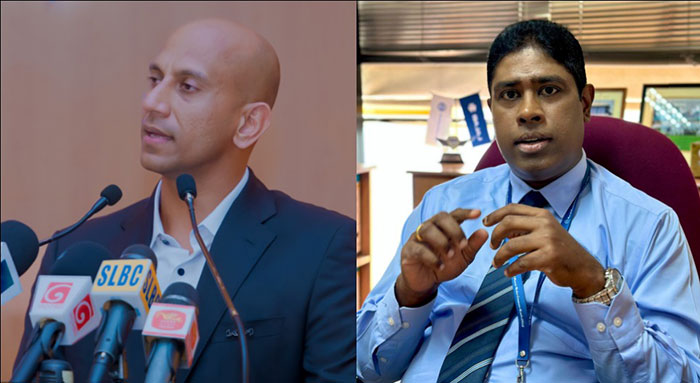
The Ceylon Motor Traders’ Association (CMTA), the senior-most automotive association in Sri Lanka affiliated with the Ceylon Chamber of Commerce, has issued an urgent appeal to the government to abolish the 15% depreciation currently granted on used vehicle imports, warning that the concession is causing massive revenue leakages at a time when the country can least afford them.
The Association estimates that the existing depreciation mechanism resulted in approximately Rs. 40 billion in lost government revenue in 2025 alone. If corrective action is not taken immediately, a similar level of revenue leakage could occur in 2026, further impacting the government’s fiscal position and depriving the country of much-needed funds for national development and public services.
The Association notes that loopholes within the existing system have created opportunities for misuse, resulting not only in unfair advantages for certain importers but also in substantial losses to government revenue. Addressing these abuses, alongside the removal of the 15% depreciation concession, is essential to ensuring greater transparency, strengthening regulatory oversight, and protecting the integrity of Sri Lanka’s vehicle import sector.
While no official announcement has yet been made regarding the removal of the 15% depreciation, the CMTA has consistently highlighted the issue through multiple budget proposals submitted via the Ceylon Chamber of Commerce. The Association has repeatedly maintained that there is no viable justification for the continued application of this concession on used vehicle imports.
Currently, used vehicles receive a 15% depreciation on their Cost, Insurance and Freight (CIF) value for duty calculation purposes. However, the vast majority of vehicles entering the country through the used vehicle market are virtually zero-mileage units, with CIF values that are often comparable to those of brand-new vehicles. In such circumstances, the CMTA argues that granting a blanket 15% depreciation creates an unfair and unjustifiable tax advantage while significantly reducing government revenue collections.
The Association acknowledges that if the objective through this concession is making vehicles more affordable for consumers, then the CMTA stresses that affordability cannot be achieved through arbitrary concessions that create market distortions and substantial losses to the Treasury. If the intention is to reduce vehicle prices, similar policy considerations could be extended to brand-new vehicles rather than selectively benefiting one segment of the market.
Consumers who purchase brand-new vehicles benefit from manufacturer warranties, which help mitigate maintenance and repair costs during the warranty period. As a result, vehicle owners are less likely to incur additional expenses associated with importing replacement parts, providing greater long-term value, reliability, and peace of mind.
The CMTA further notes that as far back as 2013, a structured depreciation framework was implemented based on the age of a vehicle, rather than a flat-rate concession. Under this proposal, depreciation would be calculated according to a defined scale and capped at a maximum of 10%, ensuring greater fairness, transparency and alignment with the actual value of the vehicle.
The Association stated that the continued application of a blanket 15% depreciation is resulting in significant and unnecessary revenue leakages for the government. At a time when every rupee of revenue is critical to the country’s economic progress, this issue requires immediate attention and decisive action.
The CMTA therefore strongly urges the relevant authorities to take swift action to abolish the current 15% depreciation concession and close this avenue of revenue leakage without delay. The Association emphasises that every month of inaction increases the risk of further losses to the state and undermines efforts to strengthen public finances.
Should the government determine that some form of concession should continue to be extended to the used vehicle market, the CMTA maintains that it must be implemented through a structured and transparent framework based on vehicle age and capped at a reasonable level. Such an approach would ensure fairness while safeguarding government revenue and maintaining a level playing field across the automotive industry.

Businesses in Sri Lanka risk severe financial and operational disruption unless they urgently invest in climate adaptation and resilience measures, leading climate experts warned at a high-level dialogue on “Climate-Proofing Business Sri Lanka” held on Wednesday at Genesis – The Dilmah Centre for a Sustainable Future.
The event, jointly organized by Genesis and the Ceylon Chamber of Commerce, brought together corporate leaders, sustainability professionals, policymakers and climate specialists to discuss how climate change is rapidly emerging as one of the biggest risks facing Sri Lanka’s economy.
Climate Change and Disaster Risk Management Specialist Rohan Cooray said climate-related disasters were already exacting a heavy economic toll globally and locally.
He noted that climate-induced losses divert resources that could otherwise be invested in economic development and business growth and stressed the need for stronger adaptation measures to protect investments and livelihoods.
Delivering the keynote address, internationally renowned climate lawyer and governance specialist Dr. Lalanath de Silva said climate change was no longer a future threat but a present-day economic reality that businesses could not afford to ignore.
“The impacts are coming whether we like it or not,” he said. “The question is whether we prepare now or pay a much higher price later.”
Dr. de Silva explained that while global efforts have largely focused on mitigation—reducing greenhouse gas emissions—adaptation has become equally important, particularly for vulnerable countries such as Sri Lanka.
“Sri Lanka contributes less than one percent of global greenhouse gas emissions, yet we are among the countries most vulnerable to climate impacts,” he said.
He warned that climate change would alter rainfall patterns, intensify floods and droughts, increase the frequency of extreme weather events and place growing pressure on infrastructure, agriculture, water resources and businesses.
“We are very good at producing plans in Sri Lanka. What we have not been good at is implementing them.”
Calling for stronger institutional coordination, Dr. de Silva proposed the establishment of a high-level climate coordination mechanism operating at the highest level of government to ensure coherent action across ministries and agencies.
Providing scientific context to the discussion, Cooray presented projections based on global and regional climate models adopted by Sri Lanka’s Department of Meteorology.
According to Cooray, rainfall patterns across Sri Lanka are expected to become increasingly erratic.
The wet zone is projected to receive more intense rainfall events while many dry-zone regions could experience prolonged drought conditions interspersed with extreme rainfall episodes.
“The danger is not simply that some places become wetter and others become drier. The danger is the increasing variability and unpredictability of rainfall,” he said.
While mitigation projects often generate measurable returns, adaptation investments require innovative financing mechanisms and stronger public-private partnerships, speakers noted.
The event also featured contributions from Dilhan C. Fernando, chairman of Dilmah Ceylon Tea Company PLC; Shiran Fernando, Secretary General and CEO of the Ceylon Chamber of Commerce; and Yasangi Randeni, Chief Sustainability Officer of Aitken Spence PLC.
Speakers agreed that climate-proofing businesses is no longer simply about environmental responsibility but about safeguarding assets, maintaining competitiveness, protecting supply chains and ensuring long-term economic sustainability.
The consensus emerging from the forum was clear: while mitigation remains important, Sri Lanka’s immediate priority must be preparing businesses, communities and institutions for climate impacts that are already unavoidable.
By Ifham Nizam

USS Canberra makes port call in Colombo

Complete the Proposed Education Reform Policy Framework Within One Month – President

Committee appointed for restructuring SriLankan Airlines

Kane Williamson retires from international cricket

Jailed South Korea ex-president gets 30 more years for sending drones into North

Holder, Joseph set up victory as West Indies go 1-0 up against Sri Lanka

‘Dates have the highest sugar content to fight Coronavirus’

Sunday Island 27 December – Headlines

#SundayIsland 17th December – Headlines

Sunday Island – 28th March

Sunday Island Headlines – 21 March

Sunday Island – 21st February – Headlines
-

 News6 days ago
Women’s T20 World Cup 2026 warm-up: Chamari Athapaththu’s 94 helps Sri Lanka beat Pakistan
-

 News6 days ago
Lankan-Canadian inducted to Toronto Sports Hall of Fame
-

 News7 days ago
Asst. Manager, security officer arrested over Rs 30 mn snatch at Horana PB branch
-

 Editorial5 days ago
Probe Sallay’s complaint
-
 News3 days ago
Local firms move millions of dollars overseas for phantom imports: Govt.
-

 Editorial6 days ago
Prez in the dock
-

 Features6 days ago
Entering MIT for my Ph.D program, coping with harsh Boston winter and breasting the tape
-

 News7 days ago
No blanket ban on musical performances; only those promoting LTTE