
Latest News
First results announced from South Africa election

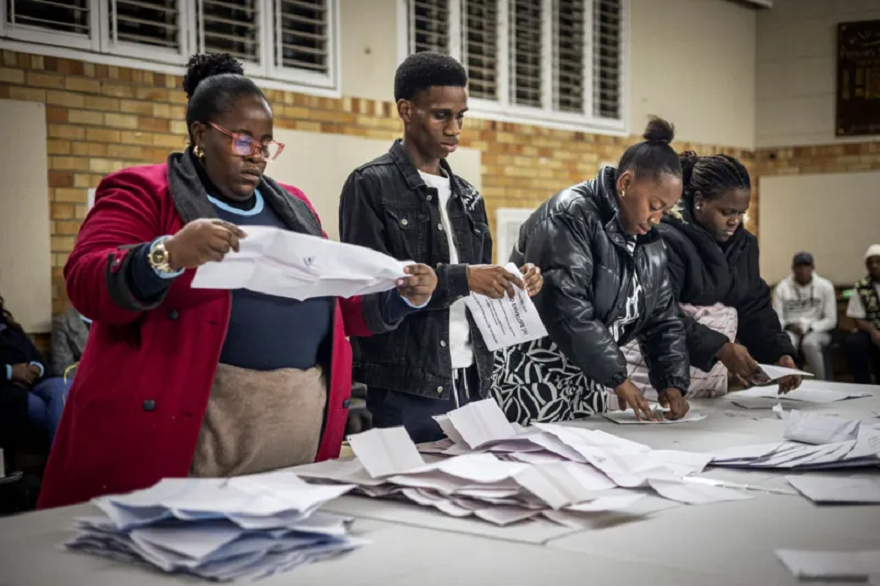
The first results have been announced from what is seen as South Africa’s most closely fought elections since the African National Congress (ANC) came to power 30 years ago.
With results from around 14% voting districts counted so far, the ANC is leading with 43%, followed by the Democratic Alliance (DA) with 26%.
The radical EFF and the uMkhonto weSizwe Party (MK Party) of former President Jacob Zuma are both on around 8%.
Final results are expected over the weekend.
Opinion polls suggest the ANC could lose its majority in parliament for the first time in 30 years, forcing it into a coalition.
The ANC has lost support due to anger over high levels of corruption, crime and unemployment.
But it is too early to predict the final outcome.
Wednesday’s election saw long lines of voters outside polling stations late into the night across the country.
One electoral official in Johannesburg told the BBC the queues were reminiscent of the historic 1994 election, when black people could vote for the first time, and which saw Nelson Mandela become president.
Many thousands of people were still waiting to vote when polls officially closed at 21:00 local time (19:00 GMT) but the electoral commission said they would all be allowed to cast their ballots.
Sifiso Buthelezi, who voted in Johannesburg’s Joubert Park – the biggest polling station in South Africa – told the BBC: “Freedom is great but we need to tackle corruption.”
Change has been a recurring sentiment, especially among young voters.
Ayanda Hlekwane, one of South Africa’s “born-free” generation, meaning he was born after 1994, said despite having three degrees he still doesn’t have a job.
“I’m working on my PhD proposal so that I go back to study in case I don’t get a job,” he tells the BBC in Durban.
But Mr Hlekwane said he was optimistic that things would change.

A record 70 parties and 11 independents were running, with South Africans voting for a new parliament and nine provincial legislatures.
Analysts say this shows that many people are disillusioned with the ANC.
“We are entering the next phase of our democracy, and it is going to be a big transition,” political analyst Richard Calland told the BBC. “We will either become a more competitive and mature democracy, or our politics will become more fractured.”
The main opposition party, the Democratic Alliance (DA), has signed a pact with 10 other parties, agreeing to form a coalition government if they get enough votes to dislodge the ANC from power.
But this is highly unlikely, with the ANC expected to remain the biggest party, putting it in pole position to lead a coalition if its support does drop below 50%.
It got 57.5% of the vote in the last election compared to the DA’s 21%.
South Africans do not directly vote for a president. Instead they vote for members of parliament who will then go on to elect the president.
So current President Cyril Ramaphosa is likely to remain in power.
Former President Jacob Zuma caused a major shock when he announced in December that he was abandoning the ANC to campaign for the new uMkhonto weSizwe (MK), which translates as Spear of the Nation.
Although he has been barred from running for parliament because of a conviction for contempt of court, his name still appeared on the ballot paper as MK leader.
The MK is expected to do especially well in Mr Zuma’s home province of KwaZulu-Natal, where tensions have been high, with some incidents of violence reported during the campaign.
Police and the army have been deployed to polling stations across the country to ensure that voting takes place peacefully, and that ballot papers are not stolen.
More than 27 million people were registered to cast their ballots, including a high percentage of young voters, who could prove decisive.
Artist Njabulo Hlophe, 28, said young people in South Africa tend to get marginalised but, “this is as much our country as our parents… they’re leaving it to us, so someone that really cares about the young people is someone I’m really looking at”.
Support for the ANC is expected to be higher among the older generation.
One 89-year-old woman, Elayne Dykman, told the BBC in Durban she hoped that young people in South Africa did not take their vote for granted.
(BBC)










The Asian Youth Games gold medallist who has run sub four minutes previously returned a time of 3:55.97 seconds to become the first athlete in his age category at these championships to run the distance under four minutes.
Achintha who has a personal best of 3:53.05 from last year was representing Prince College Ratnapura today.
In another impressive 1,500 m feat Tharushi Abhisheka of Lyceum International School, Wattala established a new meet record in the Under-20 Girls’ 1,500m as she returned a time of 4:34.59 seconds to win.
By the end of the second day of the meet seven new meet records had been established.
D. V. C. de Soysa (of Galewela Central College) Under-16 Boys’ Discus Throw – 55.83m.
D. G. Lahiru Achintha (of Ratnapura Kumara Vidyalaya) Under-18 Boys’ 1,500m – 3:55.97 secs.
W. P. Nethula Induwara (Rahula College, Matara) Under-14 Boys’ 100m – 11.70 seconds
K. V. R. Gayesha (Ira Handa Kotuwa Wewa Maha Vidyalaya, Polonnaruwa) Under-16 Girls’ High Jump – 1.70m
H. M. D. S. Herath (Maris Stella College, Thimbirigaskatuwa) Under-20 Boys’ Long Jump – 7.65m
P. M. Amaya Semindi (Vijitha Central College, Dikwella) Under-14 Girls’ High Jump – 1.58m
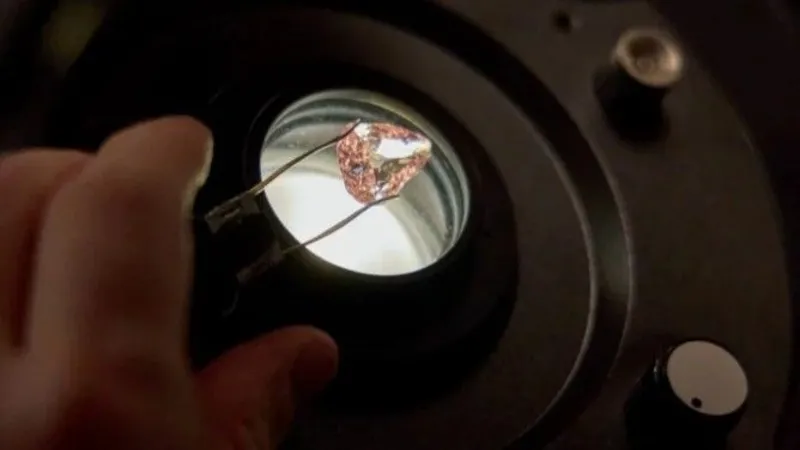
A rare pink diamond is going on display in France for the first time since it was stolen almost 100 years ago to the day – the last time it was shown to the public.
The nine-carat, pear-shaped gemstone known as the “Grand Condé” was pilfered in an overnight raid on the Château de Chantilly in October 1926 and concealed in a hollowed-out apple.
The diamond – one of few royal jewels to survive the French Revolution – was recovered a few weeks later when a hungry maid at the hotel in which the thieves were staying took a bite of the apple.
It will once again be on display in the Condé Museum at the Château de Chantilly until 3 January.
The museum’s director Mathieu Deldicque said that while the apple story may sounds far-fetched, it was widely covered by newspapers at the time.
Deldicque has faced questions about whether the exhibition may be tempting fate, especially given the string of heists on European cultural institutions in the past 12 months, including the daring daylight robbery of jewellery from the Louvre museum in Paris.
While he declined to reveal to CNN how much the diamond was insured for, he noted that extensive academic study into the properties of the diamond had taken place to make it uniquely identifiable.
The results of this analysis, as well as previously unseen archive material about the gem’s history and theft, form part of the exhibition, according to the museum.
Naturally occurring pink diamonds are exceptionally rare and often sell for tens of millions of dollars. The highest price ever fetched for one at auction was $71.2m (£53.6m) in 2017, according to Sotheby’s.
The exact origins of the Grand Condé remain a mystery.
It was first mentioned in 1740 in an inventory of Louis Henri de Bourbon, Prince of Condé, drawn up following his death, the Château de Chantilly said.
It then became part of the collection of Queen Marie-Amélie of Bourbon-Sicily, the wife of French King Louis Philippe I, and then her son, Prince Henri of Orléans, the Duke of Aumale.
He bequeathed it to the Institut de France, which now owns the Château de Chantilly, 50km (31 miles) north of Paris, along with thousands of artworks and manuscripts which became the Musée Condé collection.
(BBC)
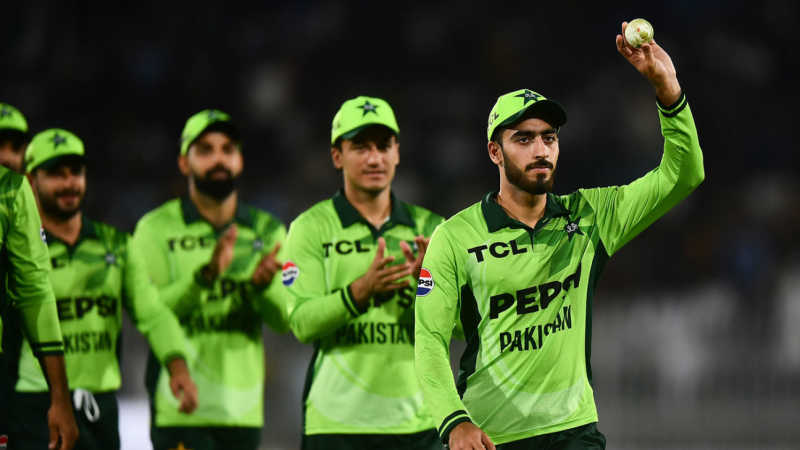
Sri Lanka’s men begin this match having won an international in the past week. This is more significant than it sounds. Their 2026 has been abysmal, with the team losing 22 matches to the 10 they have won. New captain Kusal Mendis had carried his team to that victory with his 87 not out off 48 balls, after Sri Lanka’s seamers had also had an encouraging outing.
But the game was only a dead rubber, Pakistan having sewn up the T20I series already. Pakistan have hardly been lighting up 2026 either, but they have had substantially more success than Sri Lanka. They had won their most recent ODI series, against Australia, 2-1. In that series, Pakistan may even have discovered a bright young all-round talent, left-arm spinner and lower-order batter Arafat Minhas, who claimed the Player of the Series award for his seven wickets at an average of 12.28. He has been in penetrative form in the past 10 days as well, having claimed five wickets across the three T20Is against Sri Lanka. Against Australia, Pakistan had also had excellent performances from Shaheen Afridi and legspinner Abrar Ahmed. It had, in fact, been Pakistan’s bowlers who dominated in a low-scoring series.
The tri-series is important for all three sides because there is now officially less than 12 months before the World Cup, which is set to begin on October 2 next year. Sri Lanka still have plenty to figure out – their white-ball squads having been in serious flux this year, as a new set of selectors searches (often fruitlessly) for a winning combination. Pakistan have players and stratetgies to trial as well.
In the series against Australia, Babar Azam had top-scored for Pakistan, hitting 40, 16, and 69 to average 41.66 across the matches. No one will call it a return to his heyday, but it was an encouraging sign following a modest run in 2025, in which he averaged 34 across 17 innings. Sri Lanka has been one of his favoured opponents over the years, Babar having struck four of his 20 centuries against them, averaging 58.33. The tracks in Rawalpindi at least are expected to be good for batting. Can he build up some form in the one format he now plays?
Lahiru Udara has reason to feel miffed at the selectors, many think. Having hit 188 against West Indies three Tests ago, he was left out of the squad entirely for the forthcoming Test series. But with Pathum Nissanka having been ruled out of the ODIs through an ongoing hamstring problem, Udara has surged into ODI contention on the back of a good T20I innings last week. At age 32, he knows his chances at this level are numbered. With the World Cup on the horizon, there is perhaps no better format to impress in right now than ODIs.
With neither Sahibzada Farhan nor Maaz Sadaqat in the ODI squad, Saim Ayub and Fakhar Zaman may open.
Pakistan (possible): Saim Ayub, Fakhar Zaman, Hasan Nawaz, Babar Azam, Salman Ali Agha, Shadab Khan, Ghazi Ghouri (wk), Minhas Arafat, Shaheen Afridi (capt.), Haris Rauf, Naseem Shah
Sri Lanka may bring Avishka Fernando straight into the XI, with Kamil Mishara having had a run of modest scores. Sri Lanka also have some decisions to make on the spin-bowling front, although they are likely to favour Maheesh Theekshana over legspinner Sachindu Colombage.
Sri Lanka (possible): Lahiru Udara, Avishka Fernando, Kusal Mendis (capt, wk), Kamindu Mendis, Sahan Arachchige/Pavan Rathnayake, Janith Liyanage, Dasun Shanaka, Dunith Wellalage, Dushmantha Chameera, Eshan Malinga, Maheesh Theekshana, Asitha Fernando
(Cricinfo)

Namal, Janaki further remanded

Achintha smashes 1,500 metres record at All Island Schools Games

Rare pink diamond goes on display in France 100 years after amateur heist

Nursery owner in China jailed for life after hundreds of children poisoned

Pakistan, Sri Lanka look to find the right mix as World Cup countdown begins

Mumbai Indians and head coach Mahela Jayawardene part ways

‘Dates have the highest sugar content to fight Coronavirus’

Sunday Island 27 December – Headlines

#SundayIsland 17th December – Headlines

Sunday Island – 28th March

Sunday Island Headlines – 21 March

Sunday Island – 21st February – Headlines
-

 News7 days ago
Sri Lanka escalates anti-graft drive with Shiranthi’s jailing
-

 News7 days ago
Iranian ships stranded, Lanka fears US sanctions
-

 Latest News6 days ago
Farhan and Sadaqat help Pakistan seal series in style
-

 Latest News4 days ago
Nissanka’s return headlines Sri Lanka’s Test squad against Pakistan
-

 Features6 days ago
Intake 16: 45 years of duty and honour
-

 News6 days ago
Malwathu Chapter issues statement on talks with President over Gnanasara Thera’s robes
-

 News7 days ago
Navi Pillay’s Lankan affairs in focus as she wins 2026 Nobel Peace Prize
-

 News6 days ago
CP alleges NPP has taken the blame for illegal US sanctions on Iranian vessels