
News
First Private Land donation to WNPS PLANT for conservation, by a visionary nature lover


20 Acres of extremely valuable Bolgoda waterfront land gifted
The pioneer in scalable private sector led ecosystem conservation, WNPS PLANT, marked another major milestone on its conservation journey when a 20-acre private land located fronting the Southern Bolgoda Lake was donated to it for ecosystem preservation and restoration under its Emerald Trails initiative. Through this generous donation made on the World Wetland Day, Chanake Seneviratne–the owner of the property, emphasized the importance of preserving natural ecosystems for future generations.
Bolgoda Lake, the largest freshwater lake in Sri Lanka, is a lifeline for many communities and home to diverse flora and fauna. It has been an Environmental Protection Area (EPA) since 2009. However, urbanization, recreational activities, illegal encroachment, garbage disposal and invasive species threaten this ecosystem. To help preserve these ecosystems, Mr. Seneviratne donated 20 acres of land facing the Southern lake in Bandaragama, to the Preserving Land and Nature (PLANT) initiative of the Wildlife and Nature Protection Society (WNPS). As the first private land donation made towards PLANT, this is a shining example of individual commitment to conservation and the welfare of future generations.
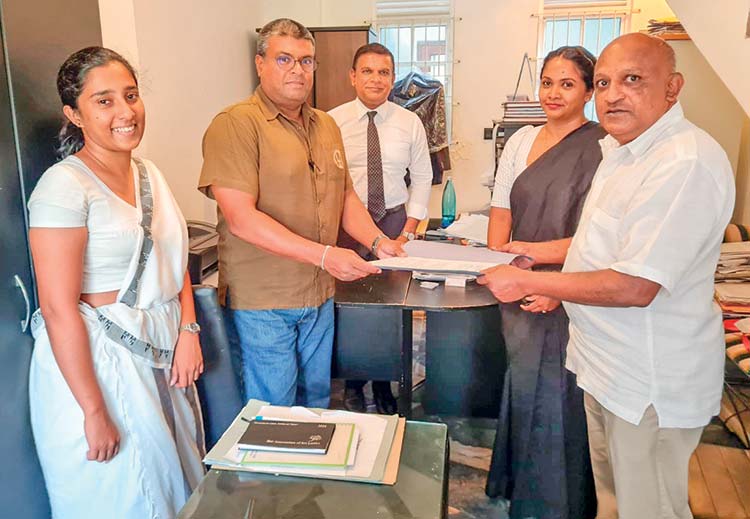
The deed of gift being handed over in the presence of the lawyers, by Chanake Seneviratne to WNPS PLANT Directors, Dilshan Hettiaratchi & Shevon Gooneratne
Established just three years ago, PLANT already has a preservation footprint of over 2,500 acres of land in over 20 locations, where it either protects forests or helps restore degraded ecosystems to their original glory, while also providing valuable ecosystem services to nearby communities through strategic partnerships with many private sector partners and individuals (see www.plantsl.org ).
By securing habitats, PLANT actively helps mitigate human-wildlife conflicts, prevent species loss, serves as a wildlife refuge, and address the issue of climate change. PLANT’s long-term goal is to create an ‘Emerald Trail,’ which is a network of natural corridors that connect fragmented forest patches and facilitate the safe migration of flora and fauna. Although conservation efforts on the island are challenging, PLANT’s tangible achievements serve as a beacon of hope and assurance, demonstrating that conservation remains an essential cause. PLANT properties currently protect many Critically endangered species in several different locations.
Inspired by the efforts of PLANT and its team, Mr. Seneviratne decided to donate this land, even though it has tremendous economic value. His action showcases the core values he holds as a responsible individual and his thoughtfulness speaks volumes and serves as a clear demonstration of his unwavering dedication to ensuring a sustainable environment for future generations.
Mr. Seneviratne stated: “My late father and I both enjoyed lots of time alongside these waters, with the many fish, birds, and other creatures, and his desire and mine were always to see these areas better protected. Neither of us want to exploit these beautiful areas for economic gain, and we would rather sacrifice that opportunity and give our future generations a chance to enjoy and appreciate the beauty of nature. We must preserve these intricate ecosystems for them, and that social responsibility outweighs any monetary benefit I could reap from this location. Donating this gives me immense joy and I hope this donation will support the fantastic conservation work being carried out by WNPS PLANT, and inspire others to come forward, make more land donations, and join forces with them to restore the biodiversity of this beautiful island.”
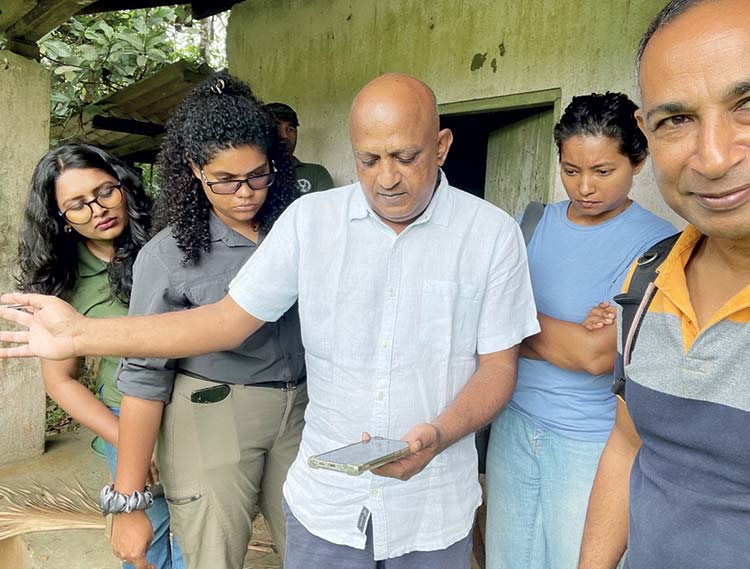
Site visit by Chanaka along with WNPS PLANT Chairman Sriyan Director Dilshan and WNPS PLANT team members
Overjoyed at this monumental donation, Chairman of WNPS PLANT, Sriyan de Silva Wijeyeratne said that “WNPS PLANT was established with a leap of faith in humanity. We wanted to build over a 100 kilometers of forest corridors, and preserve thousands of acres, but we began with only a vision, our passion, and no money nor lands available to us. The response from many partners has been incredible, but this donation is truly the icing on the cake. To have our first major private land donor gift us a large extent of such valuable land is phenomenal. Chanake’s gesture inspires us to reach even higher and dream bigger, and we are deeply indebted to him beyond all measure. Many Sri Lankan’s inherit large blocks of forested lands and I hope we will see more of them step forward to make a meaningful difference to conservation and to the future of Sri Lanka and all her species”.
Mangrove ecosystem restoration is crucial in addressing issues such as degradation, pollution, and invasion of non-native species. Mangroves play an important role in carbon sequestration, and they also serve as breeding and feeding grounds for various species that thrive in these ecosystems. Therefore, it is essential to create safe pathways for species to migrate between inland and littoral zones, and to preserve and protect these valuable wetland ecosystems and their inhabitants.
WNPS also played a lead role in the recent UN award winning Mangrove restoration work which is ongoing in Anivilundawa and elsewhere. The PLANT team hopes to do a rapid biodiversity assessment as a baseline and will then undertake different ecosystem restoration measures under scientific guidance in the coming years at this location. They will also engage community in their work which is a routine part of their approach. The PLANT team, along with Mr. Seneviratne, explored the location recently to kick off their field work and onsite engagement.
Established over 125 years ago, the WNPS, as Sri Lanka’s largest and most active conservation entity, continues to lead the charge to protect the wild and the free in Sri Lanka through its’ dedicated band of volunteers and staff contingent.








‘Companies may face US sanctions’: Lanka to put ‘national interest’ first as 19 Iranian vessels seek help
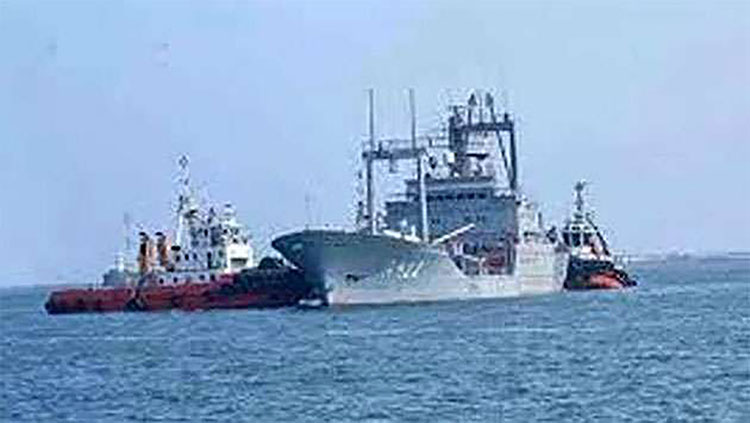
(ToI) Sri Lanka said on Friday it would “prioritise our national interests” before providing assistance to the crews of 19 Iranian ships anchored in international waters near the island nation.The crews are facing shortages of food, water and fuel. A foreign ministry spokesperson cited the risk of US sanctions against Sri Lankan companies supplying the vessels as a key concern.
The United States and Iran have been at war since February 28, when the US and Israel launched joint strikes against the Islamic Republic.
“Sri Lanka will put its national interest first before considering any help, and the companies that supply ships are aware of possible secondary sanctions from the United States,” spokesperson Thushara Rodrigo told reporters, ruling out any immediate assistance to the vessels.
Rodrigo clarified, however, that Sri Lanka had received no communication from the United States warning of repercussions if it decided to assist the vessels.According to Rodrigo, the ships are stationed 24 nautical miles off Sri Lanka’s coast.The Iranian Embassy said it had no information on the matter.
In March, a US torpedo attack sank the Iranian naval vessel IRIS Dena in Sri Lankan waters, killing 87 sailors.
The ship was returning to Iran after participating in a naval exercise at India’s invitation. A second Iranian vessel was brought to a Sri Lankan port after its crew reported technical problems.
Wounded sailors were treated at Sri Lankan hospitals, while those rescued from the second vessel were safely repatriated to Iran.
Sri Lanka is still recovering from an economic crisis, with both the United States and Iran serving as important trading partners. Washington played a key role in securing an International Monetary Fund bailout and supporting Sri Lanka’s agricultural sector to help avert a food crisis.

Sri Lanka CERT has warned the public of fraudulent social media advertisements offering admission to foreign universities after receiving complaints from parents and students who have lost hundreds of thousands of rupees to scammers.
The fraudsters reportedly pose as representatives of reputed foreign universities, promising admission, student visas, work permits and even eventual citizenship in return for registration fees and initial tuition payments.
They use convincing videos, photographs and documents circulated via email and WhatsApp to gain the confidence of unsuspecting victims before asking them to transfer money to foreign bank accounts. The scammers then disappear after receiving the payments, Sri Lanka CERT said.
The agency has urged prospective students and their parents to verify the authenticity of university representatives, documents and bank account details before making payments, and to seek overseas education opportunities only through legitimate and recognised channels.
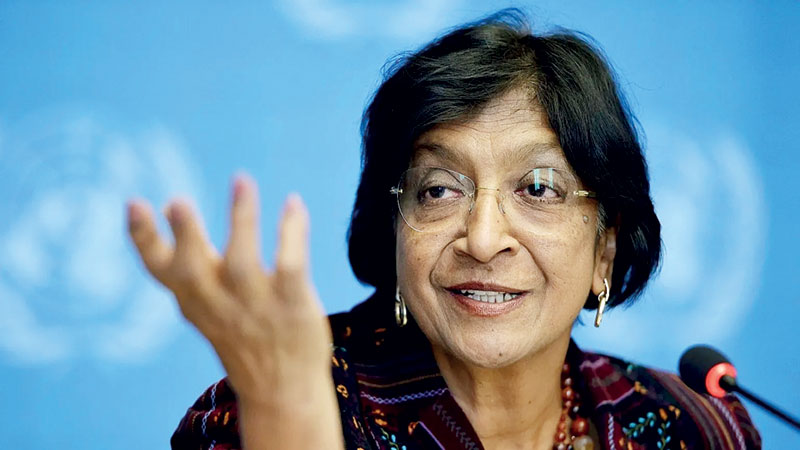
Former UN High Commissioner for Human Rights and International Court of Justice judge Navanethem “Navi” Pillay has won the 2026 Nobel Peace Prize for her contribution to international law and efforts to promote peace, the Norwegian Nobel Committee announced in Oslo on Friday.
Announcing the award, committee chairman Jørgen Watne Frydnes said Pillay had “significantly enlarged the scope and impact of international law” and helped advance “a more comprehensive global legal order” with exceptional courage. He also praised her long career, which began as a lawyer confronting deep-rooted discrimination in South Africa, and described her as a person with a “firm moral compass”.
Pillay, 85, served as the UN High Commissioner for Human Rights from 2008 to 2014. Her tenure brought her into sharp focus in Sri Lanka, particularly over her assessment of the country’s human rights situation in the aftermath of the decades-long civil war.
During an official fact-finding visit to Sri Lanka from August 25 to 31, 2013, Pillay travelled to areas including Jaffna, Kilinochchi and Trincomalee, where she met civil war survivors, families of the disappeared and local communities.
Following the visit, she warned that Sri Lanka was moving towards authoritarianism and highlighted what she described as a persistent climate of fear.
She also reported intimidation and harassment of people who had sought to meet her during the mission.
Pillay urged the UN Human Rights Council to establish an international inquiry mechanism to investigate alleged war crimes and crimes against humanity committed by both government forces and the LTTE during the final stages of the 26-year civil war.
Her observations and recommendations became a significant part of international scrutiny of Sri Lanka’s post-war human rights record.
The Norwegian Nobel Committee received 287 nominations for this year’s Peace Prize, slightly more than a quarter of them being organisations. The committee traditionally considers efforts to promote peace, international fraternity and institutions that contribute to lasting stability.
Last year, Venezuelan opposition leader Maria Corina Machado won the prize for her campaign for a democratic transition in Venezuela. She was praised as a woman who kept the flame of democracy burning amid growing darkness.
The 2026 award marks the 125th anniversary of the Nobel Peace Prize, first presented in 1901. Over its history, the prize has recognised prominent figures and organisations involved in advancing peace, human rights and international cooperation.

Rahmat, Malik fifties lead Afghanistan’s strong reply

Showers above 75 mm are likely at some places in the Western, Sabaragamuwa, Central, Uva and North-Western provinces and in Galle, Matara, Anuradhapura and Mannar districts.

Iranian ships stranded, Lanka fears US sanctions

Sri Lanka CERT warns of overseas university admission scams

Navi Pillay’s Lankan affairs in focus as she wins 2026 Nobel Peace Prize

Lanka welcomes Indian SC remarks on Katchatheevu dispute

‘Dates have the highest sugar content to fight Coronavirus’

Sunday Island 27 December – Headlines

#SundayIsland 17th December – Headlines

Sunday Island – 28th March

Sunday Island Headlines – 21 March

Sunday Island – 21st February – Headlines
-

 News7 days ago
Geneva takes up Sallay’s case and govt. ignores opportunity to answer accusations
-

 Features6 days ago
Preventing grievances from becoming communal
-

 Features4 days ago
The Sri Lankan who made Scottish history
-

 Sports4 days ago
Nissanka absence opens door for Sri Lanka’s young guns
-

 News5 days ago
Gnansara Thera to be assigned to prison printing section: Officials
-

 News3 days ago
NDB fraud Rs 60mn more than reported
-

 Features7 days ago
Sri Lanka Cricket Bill: Governance reform is not yet a cricket strategy
-

 News3 days ago
Removing monk’s robes matter for Sangha to decide: Mahanayake Theras