
News
First Chennai-Sri Lanka cruise vessel MV Empress flagged off


Chennai (NDTV): The maiden voyage of the international cruise vessel, sailing between Chennai and Sri Lanka, “MV Empress” was formally flagged off by the Union Minister of Ports, Shipping and Waterways Sarbananda Sonowal here on Monday.
The occasion also marked the inauguration of an international cruise tourism terminal, set up at a cost of ₹ 17.21 crore at the Chennai Port. The facility spread across 2,880 square metres would be able to host 3,000 passengers.
The launch of the cruise service comes in the backdrop of the memorandum of understanding signed between Chennai Port and Waterways Leisure Tourism for domestic and international cruise service at the Incredible India International Cruise Conference in 2022.
“With our rich heritage and culture around our coastal region, the potential of cruise tourism in India is immense. Today, as we launch the maiden cruise service between Chennai and Sri Lanka, it has ushered a new chapter in the cruise tourism sector in the country,” Sonowal was quoted as saying in a PIB release.
As the affordability and access to world-class cruise services become a reality, people can enjoy and relish luxurious amenities, entertainment and breathtaking views, he said.
The newly-launched cruise service would sail to three ports – Hambantota, Trincomalee and Kankesanturai in Sri Lanka. Sonowal said three new international cruise terminals were expected to become operational by 2024.
As more and more people are likely to experience cruise tourism in the near future, the government remains deeply committed to developing world-class infrastructure to support and enable the growth of cruise tourism and maritime trade, he said.
“I am happy to share that three new international cruise terminals are likely to be completed and become operational by 2024. We expect that the volume of cruise ships will increase from 208 in 2023 to 500 in 2030 and up to 1,100 by 2047,” he said.
Following this, the number of passengers availing cruise services was also expected to rise from 9.50 lakh in 2030 to 45 lakh in 2047, he said.
“Plans are afoot to develop new cruise tourism terminals in Andamans, Puducherry and Lakshadweep circuits. We are also studying the feasibility of developing ferry circuits across India, Sri Lanka, Thailand and Myanmar,” he said.
The Ministry was also working on rolling out pilgrimage tours in Gujarat, cultural and scenic tours and ayurveda wellness tourism and heritage tourism to boost demand for cruise services in the western, southern and eastern coasts of the country, he said.

News
Financial allocations for the development of infrastructure in provincial schools have been provided to all provinces – PM

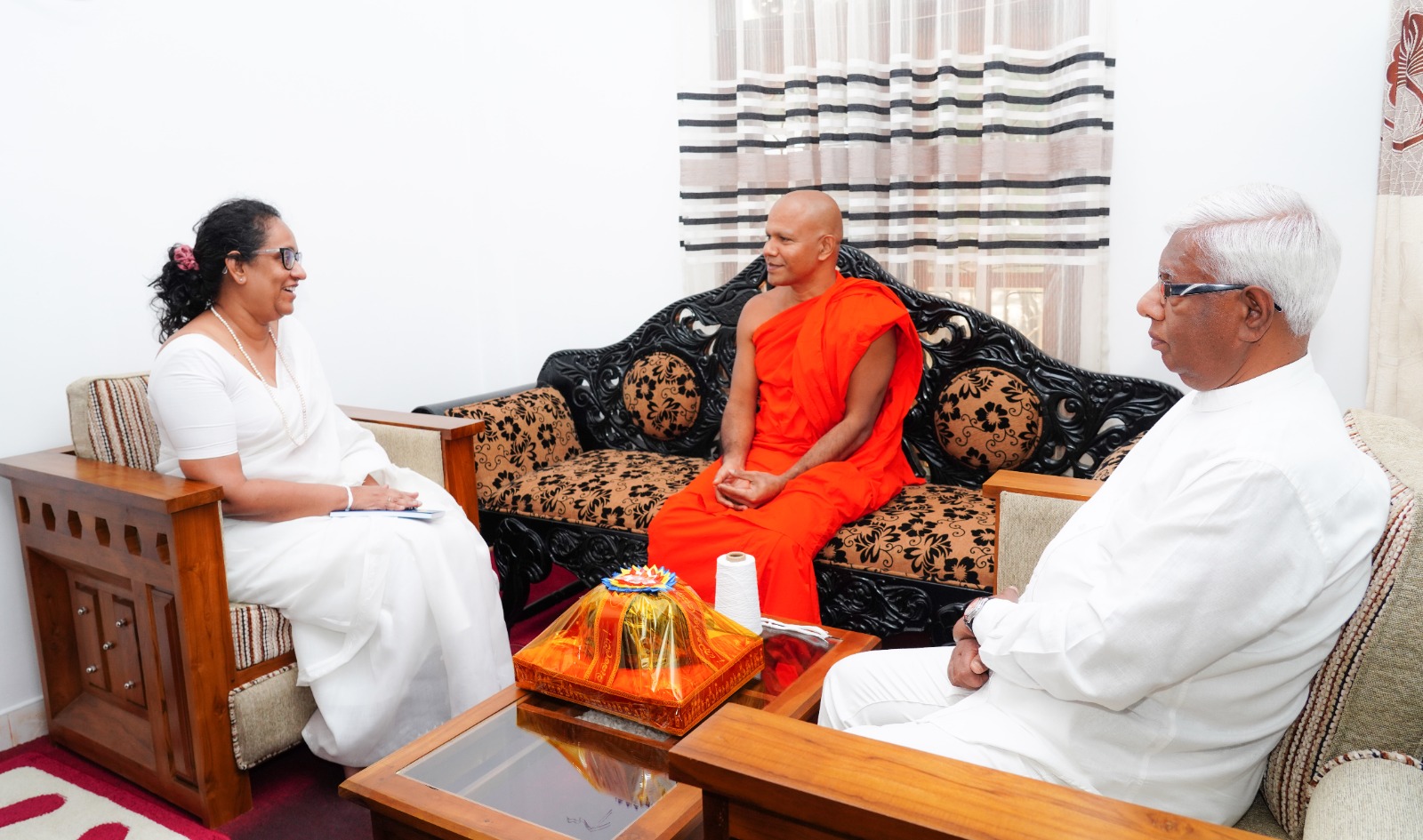
Prime Minister Dr Harini Amarasuriya stated that the necessary financial allocations for the development of infrastructure in provincial schools have been provided to all provinces. She emphasized that these funds must be utilized effectively for school development and requested that relevant authorities submit proposals to address existing shortcomings in school infrastructure.
The Prime Minister made these remarks during a cordial meeting with Muslim women in the Wellawaya area on 1st of March.
Subsequently, the Prime Minister met with the Chief Sanghanayake of the Uva Wellassa region and the Chief Incumbent of Yudaganawa Rajamaha Viharaya, Venerable Rajakeeya Panditha Most Venerable Galtemwatte Nandarathana Nayaka Thero, and briefed him on the current progress of the new education reforms.
She further stated that, while ensuring due recognition for vocational education, steps are being taken to develop 50 vocational training centers equipped with modern courses, covering all 25 districts of the country. She also noted that new education reforms will be introduced for Grade 6 starting in 2027, and that the printing of new textbooks will be entrusted to the Educational Publications Department of the Ministry of Education.
The occasion was attended by Uva Province Governor Attorney-at-Law Kapila Jayasekara, Deputy Minister of Trade, Commerce and Food Security R.M. Jayawardhana, Member of Parliament Ruwan Wijewardene, local government representatives, the Buttala Divisional Secretary and the District Secretary.
[Prime Minister’s Media Division]

The Department of Immigration and Emmigration has decided effective from 28th February 2026, to grant a free fourteen (14) day visa extension to all tourists who are unable to leave Sri Lanka due to flight cancellations. 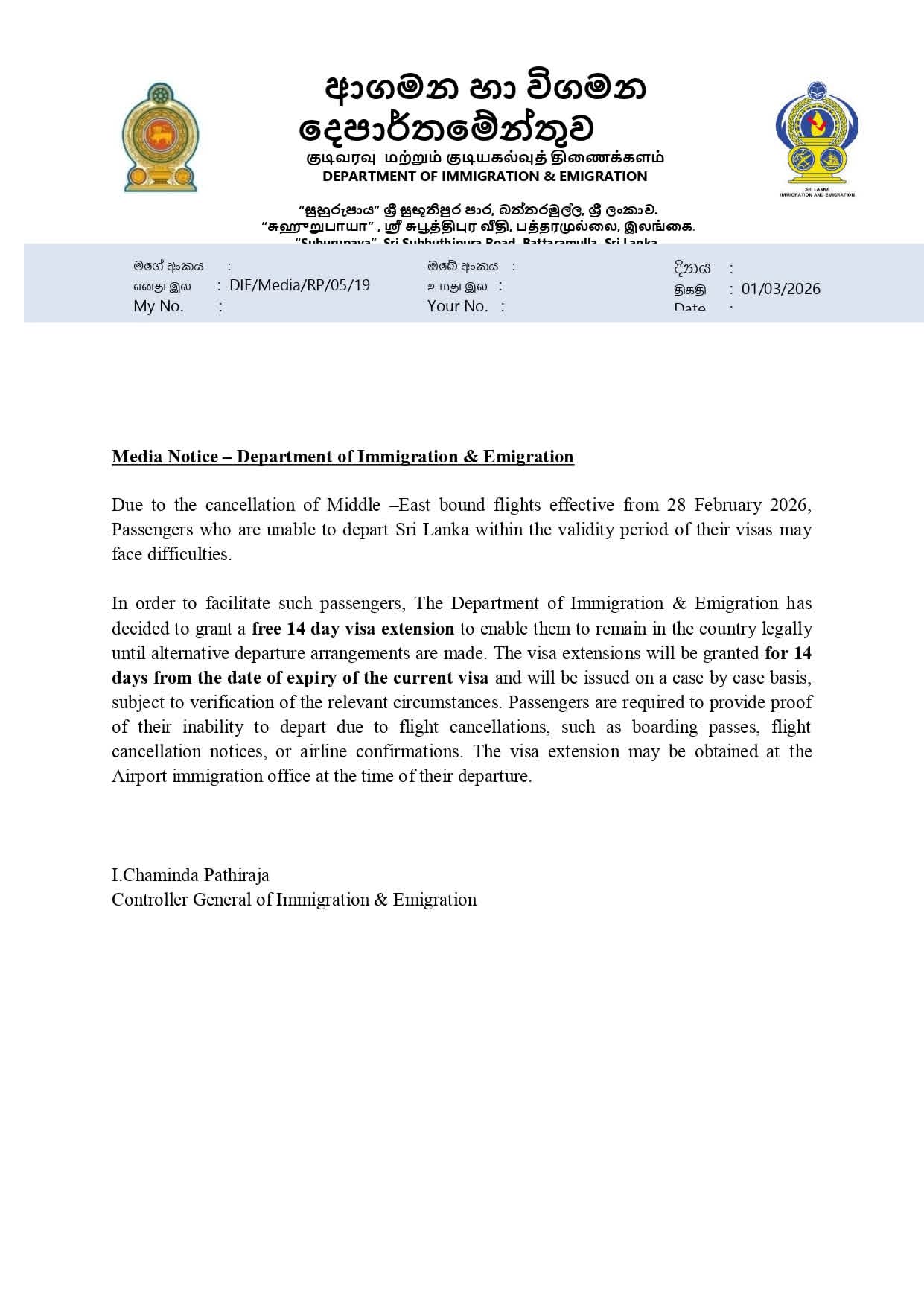
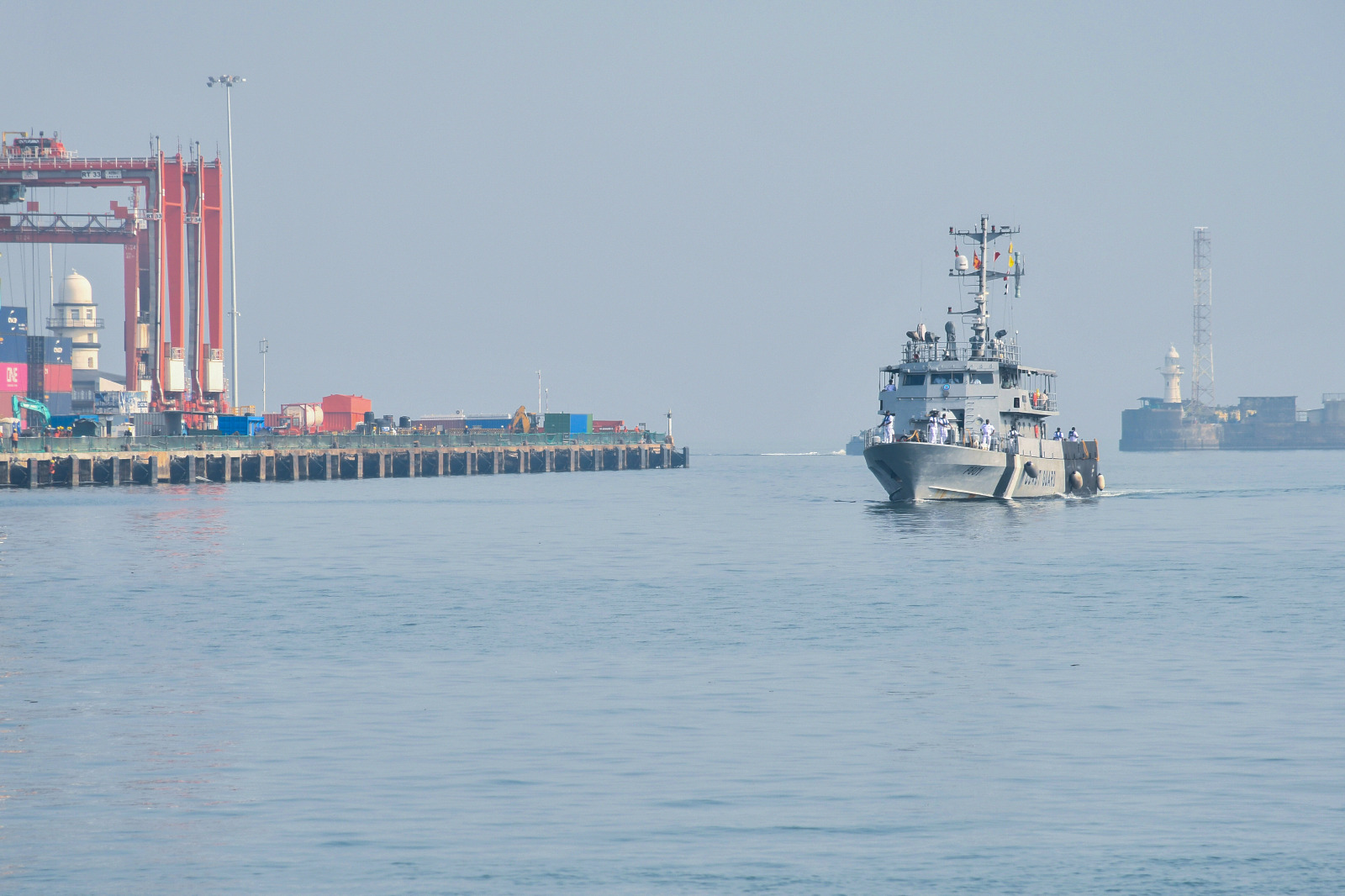
The Maldives Coast Guard Ship Huravee arrived at the Port of Colombo for replenishment purposes on 02 Mar 26. The visiting ship was welcomed by the Sri Lanka Navy (SLN) in compliance with time-honoured naval traditions.
The ship is a 48.9m long Offshore Patrol Vessel which is commanded by Lieutenant Colonel Ahmed Nafiu Mohamed.
Meanwhile, the ship’s crew is scheduled to visit several tourist attractions in the city of Colombo, during their stay in the island.

Australian girl, 8, killed in snowmobile accident in Japan

Russia, China raise diplomatic voices against US-Israeli attacks on Iran

Financial allocations for the development of infrastructure in provincial schools have been provided to all provinces – PM

Free 14 day visa extension for visitors unable to depart Sri Lanka

US embassy in Dubai hit; Israel pounds Tehran, Beirut

Perera, Sugandika, Ranaweera take Sri Lanka to T20I series win over West Indies

‘Dates have the highest sugar content to fight Coronavirus’

Sunday Island 27 December – Headlines

#SundayIsland 17th December – Headlines

Sunday Island – 28th March

Sunday Island Headlines – 21 March

Sunday Island – 21st February – Headlines
-

 Opinion5 days ago
Jamming and re-setting the world: What is the role of Donald Trump?
-
 Features2 days ago
Brilliant Navy officer no more
-
 Features5 days ago
An innocent bystander or a passive onlooker?
-
 Features6 days ago
Ratmalana Airport: The Truth, The Whole Truth, And Nothing But The Truth
-
 Opinion2 days ago
Sri Lanka – world’s worst facilities for cricket fans
-
 Business6 days ago
IRCSL transforms Sri Lanka’s insurance industry with first-ever Centralized Insurance Data Repository
-

 Business5 days ago
An efficacious strategy to boost exports of Sri Lanka in medium term
-

 Features3 days ago
Overseas visits to drum up foreign assistance for Sri Lanka