
Latest News
Fifties from Conway, Hay extend New Zealand’s advantage

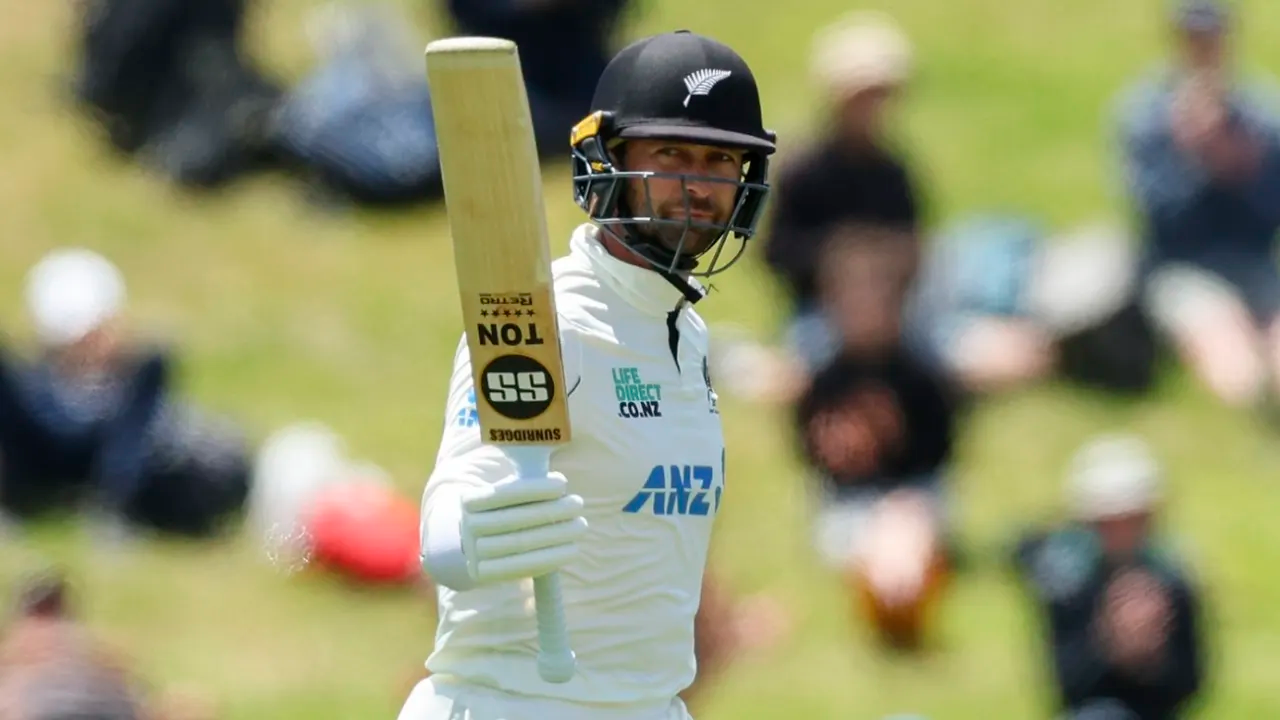
Despite a bright bowling performance from the West Indies seamers, half-centuries from New Zealand’s Devon Conway and Mitchell hay extended the hosts’ advantage after an absorbing second day of the Wellington Test. New Zealand secured a 73-run first-innings lead before a double-wicket burst from their quicks left West Indies still 41 behind with eight wickets in hand.
West Indies produced bursts of quality with the ball to keep pegging New Zealand back, and several home batters contributed to their own dismissals with loose shots. But the visitors also offered enough scoring opportunities for Conway and Hay to make valuable inroads.
Conway’s 60 – his first fifty against West Indies and 13th overall – anchored one end, while debutant Hay struck an enterprising 61 from No. 6. Their efforts allowed New Zealand to declare at 278 for 9, with the injured Blair Tickner not batting.
With the relatively new ball, Kemar Roach, Jayden Seales, Ojay Shields and Anderson Phillip consistently challenged the batters as the ball swung both ways and occasionally jagged off the surface. Conway, however, punished the loose deliveries, hitting eight fours – mostly cuts and flicks – to keep New Zealand moving.
From the non-striker’s end, he saw Tom Latham (11) lose his off stump to a nip-backer from Roach from around the wicket, before watching Kane Williamson (37) have his off stump pegged back by an Anderson Phillip delivery that squared him up. After lunch, Rachin Ravindra – who made 176 in Christchurch – was caught behind off Roach while chasing a wide one. Conway himself was then caught down the leg side off a poor Justin Greaves delivery, thanks to a superb diving take from Tevin Imlach. At that stage, New Zealand seemed to be wobbling at 117 for 4.
A fifth-wicket stand of 73 between Daryl Mitchell (25) and Hay – the latter playing in place of the injured Tom Blundell – brought New Zealand closer to West Indies’ first-innings score of 205. Mitchell was conservative, while Hay leaned on his white-ball instincts to score his runs, producing strong cuts through the off side and, when tested with short balls, pulling confidently over the leg side.
Mitchell, like Conway, was eventually strangled down the leg side off Phillip. Hay later fell to the short-ball tactic: after striking back-to-back fours behind square leg, he miscued a pull off Shields straight to Roach at deep-backward square and walked back bitterly disappointed. At 213 for 6, New Zealand then leaned on Glenn Phillips (18) and the lower order to extend their lead.
West Indies continued to pepper Phillips with short balls in a cat-and-mouse exchange that brought body blows and top-edges over the keeper. Seeking a change, captain Roston Chase turned to spin for the first time in the innings, and needed only four deliveries to tempt Phillips into a slog that failed to clear deep midwicket.
Zak Foulkes then batted 43 balls and frustrated West Indies with deflections off the seamers’ through the gully region on his way to an unbeaten 23. Jacob Duffy added further runs with boundaries to long-off and long-on, and No. 10 Michael Rae joined a rare group of batters to begin their Test careers with five runs off an overthrow boundary. Rae reached 13 before the expensive Seales finally claimed his first wicket of the match, knocking back the debutant’s leg stump.
New Zealand’s batting may have been patchy, but their bowlers restored control with a sharp ten-over burst late in the day. John Campbell fell in the seventh over, beaten by a Rae delivery that zipped in to hit off stump. Next over, nightwatcher Phillip initially survived a DRS review for caught behind off Duffy, but a second look confirmed he was lbw instead. Brandon King (15*) and Kavem Hodge (3*) saw out the final few minutes, but West Indies still face a steep challenge when play resumes on Friday.
Brief scores:
West Indies 205 and 32 for 2 (Brandon King 15*; Michael Rae 1-4, Jacob Duffy 1-8) trail New Zealand 278 for 9 dec (Mitchell Hay 61, Devon Conway 60; Andeson Phillip 3-70) by 41 runs
[Cricinfo]


Five members of the Iranian women’s football team have been granted humanitarian visas in Australia after their elimination in the Asian Cup, the government in Canberra says.
Immigration Minister Tony Burke said the women “were moved to a safe location” by Australian police. He said other squad members had been told they are welcome to stay in the country.
The women had been due to fly home, but supporters had raised fears for their safety after the team declined to sing the national anthem ahead of their match against South Korea last week.
This prompted criticism in Iran, with one conservative commentator accusing the team of being “wartime traitors” and pushing for harsh punishment.
Australia’s humanitarian visa programme grants permanent protection to refugees and people in humanitarian need. Visa holders can live, work and study in the country.
Speaking early on Tuesday, Burke said the five players were happy for their names to be confirmed as Fatemeh Pasandideh, Zahra Ghanbari, Zahra Sarbali, Atefeh Ramazanzadeh, and Mona Hamoudi.
“They want to be clear they are not political activists. They are athletes who want to be safe,” he said, adding that talks had been going on over several days.
He said that on Monday “it was made clear that there were five women who wanted to be able to stay in Australia”.
The group left their hotel the same day and were moved to a safe location by police.
Burke said he met the women at that location and then signed off for their applications to go onto humanitarian visas – a process completed at about 01:30 local time on Tuesday (15:30 GMT Monday).
“I say to the other members of the team, the same opportunity is there. Australia has taken the Iranian women’s soccer team into our hearts. These women are tremendously popular in Australia.
“But we realise they are in a terribly difficult situation with the decisions that they’re making,” the Australian minister said.
Australian Prime Minister Anthony Albanese later confirmed that the five players had been given humanitarian visas.
On Sunday evening, hundreds of supporters surrounded the Iranian Lionesses’ coach as it left the stadium on the Gold Coast, with chants of “save our girls”.
On Monday, the BBC witnessed dramatic scenes inside the team’s five- star hotel when several players left the lobby in a group after speaking to activists.
Shortly after they departed, a second group – including a translator and the head coach – burst in looking panicked, and rushed through the hotel before returning to their rooms.
A family member of one of the women – speaking on condition of anonymity – told Australian news site ABC they were being protected by police, and intended to claim asylum.
“I want to kiss the hands of everyone who helped,” the unnamed relative told ABC.
On Monday, US President Donald Trump took to his Truth Social platform to demand action.
Australia should “give asylum” to the women, Trump said in his initial post. “The US will take them if you won’t,” he added.
Around an hour later, Trump posted again to say he had spoken to Australia’s Prime Minister Anthony Albanese and “five have already been taken care of, and the rest are on their way”.
Trump’s post appeared to also suggest some of the team feared for the safety of their families back in Iran and so felt they must “go back”.
“In any event, the Prime Minister is doing a very good job having to do with this rather delicate situation. God bless Australia!” Trump said.
The Trump administration put all asylum decisions on hold at the end of last year, and has stopped issuing immigrant visas for citizens from dozens of countries including Iran. It has said the administration wants to bring “an end to the abuse” of the system.
Last year, two groups of Iranians – including people whose asylum applications had been unsuccessful – were deported from the US back to Iran. The groups reportedly included members of the LGBT community,who face severe legal and social repercussions in Iran.
[BBC]
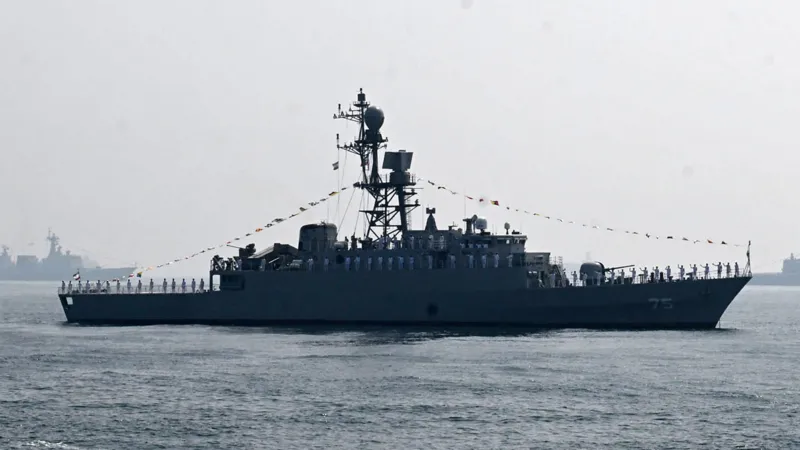
The Iranian warship Iris Dena was given permission by India to dock three days before it was torpedoed by a US submarine, India has said.
Foreign Minister S Jaishankar said Iran had sought permission for three of its ships to dock at Indian ports on 28 February – the day the US and Israel began a war on Iran – and permission was granted by India on 1 March.
The ships’ movements between 1 and 4 March are not clear and nor is why only one of them made it to India.
The sinking of the Iris Dena, with 130 sailors on board, in international waters off Sri Lanka’s southern coast on 4 March marked a dramatic widening of the war – and raised questions about India’s authority in its backyard.
It was the first military strike outside the Middle East since the US and Israel launched their war on Iran. President Donald Trump has said destroying Iran’s navy is one aim of the assault.
The three Iranian ships – Iris Dena, Iris Bushehr and Iris Lavan – had all participated in a military exercise hosted by India between 15 and 25 February in the coastal city of Visakhapatnam.
They left Indian waters on 25 February and were likely to have been in international waters on 28 February – when the US and Israel began attacking Iran.
“The Iranian side had requested permission on 28 February for three ships in the region to dock at our ports. This was accorded on 1 March,” Jaishankar told parliament on Monday. “Iris Lavan actually docked on 4 March in Kochi. The crew is currently in Indian naval facilities. We believe that this was the right thing to do.”
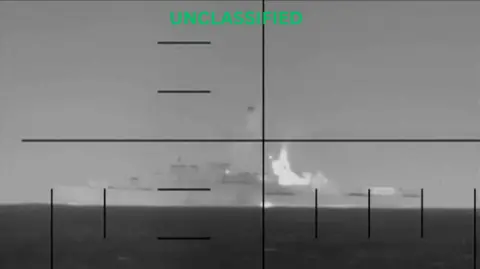
On 4 March, Iris Dena sank after being hit by a torpedo fired from a US submarine, killing at least 87 of its crew members.
According to the Indian Navy, the Iris Dena was operating about 20 nautical miles – roughly 23 miles (37km) – west of Galle in waters that fall under Sri Lanka’s designated search-and-rescue zone on the day it was struck.
The US tracks vessels across the world’s oceans, and a quarter of its submarine fleet of 65-70 is at sea at any given time, according to analysts.
Iran’s Foreign Minister Abbas Araghchi said last week the US had “perpetrated an atrocity at sea, 2,000 miles away from Iran’s shores” and that the warship was “struck in international waters without warning.”
Later, Sri Lanka said it had provided sanctuary for Iris Bushehr on 5 March, a day after it requested for docking following an engine malfunction.
Eventually, India also confirmed that Iris Lavan was docked in its southern city Kochi.
The BBC has written to the Iranian embassy in India and India’s external affairs ministry seeking clarification on the movements of the three Iranian naval vessels after Delhi granted them permission to dock.
US Defence Secretary Pete Hegseth has touted the attack on Iris Dena as an example of America’s military prowess, claiming it was “the first sinking of an enemy ship by a torpedo since World War Two”.
While it is the first time since 1945 that an American submarine has sunk an enemy ship this way, the UK and Pakistan have both sunk vessels using torpedoes since then.
The Iris Dena was one of about 20 Iranian navy vessels destroyed since Israel and the US launched co-ordinated strikes on Iran.
[BBC]

The white ball series between Afghanistan and Sri Lanka, scheduled to be held in the UAE from March 13 to 25, is likely to be postponed indefinitely due to the ongoing military conflict in West Asia.
While neither ACB nor SLC has issued an official statement, ESPNcricinfo has learned that both boards have agreed the series cannot take place in the UAE, keeping the ongoing crisis in mind. While both boards are still discussing alternatives, the bilateral series is unlikely to be shifted elsewhere due to logistical challenges.
The series comprising six white-ball matches was scheduled to start on March 13 starting with the three T20Is. The T20I leg was scheduled in Sharjah – on March 13, 15 and 17 – while the three ODIs were scheduled in Dubai on March 20, 22 and 25.
The series was set to be Afghanistan’s first under Ibrahim Zadran’s leadership, with the opener taking over the reins from Rashid Khan after a group-stage exit in the World Cup.
Last week, six matches of the ICC Men’s Cricket World Cup League 2 in Nepal involving Oman, UAE and the hosts were postponed because of the conflict.
The travel plans of several teams that were in India and Sri Lanka for the men’s T20 World Cup have also been disrupted owing to airspaces being closed or limited in West Asia.
Despite being knocked out over the last week, the contingents from West Indies and South Africa have been stuck in Kolkata, and received clarity only on Sunday, that they will be flying out on Tuesday.
[Cricinfo]

Prof. Dunusinghe warns Lanka at serious risk due to ME war

Power sector restructuring completed; new state-owned entities established: Govt.

Pilleyan held over Eastern Uni VC’s 2006 disappearance seeks SC intervention: Case to be taken up on 18 March

Lanka takes part in Thai Red Cross Charity Bazaar

India hammer New Zealand to retain T20 World Cup crown

Advocata Institute highlights regulatory barrier limiting women’s overtime earnings

‘Dates have the highest sugar content to fight Coronavirus’

Sunday Island 27 December – Headlines

#SundayIsland 17th December – Headlines

Sunday Island – 28th March

Sunday Island Headlines – 21 March

Sunday Island – 21st February – Headlines
-

 News4 days ago
University of Wolverhampton confirms Ranil was officially invited
-

 News5 days ago
Legal experts decry move to demolish STC dining hall
-

 News4 days ago
Female lawyer given 12 years RI for preparing forged deeds for Borella land
-

 News3 days ago
Peradeniya Uni issues alert over leopards in its premises
-

 Business6 days ago
Cabinet nod for the removal of Cess tax imposed on imported good
-
 News4 days ago
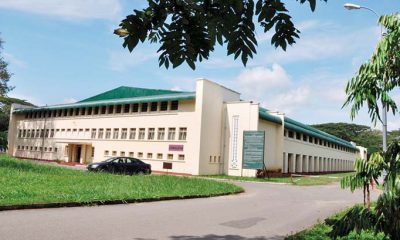
Library crisis hits Pera university
-

 News3 days ago
Wife raises alarm over Sallay’s detention under PTA
-

 Business6 days ago
War in Middle East sends shockwaves through Sri Lanka’s export sector