
Latest News
Ferguson’s incredible 4-4-0-3 helps NZ exit T20 World Cup on a high


New Zealand signed off a disappointing T20 World Cup 2024 campaign with a dominant win over Papua New Guinea, chasing down a paltry target of 79 with seven wickets and 46 balls to spare at the Brian Lara Stadium, in Tarouba.
The scale of the mismatch was characterised by Lockie Ferguson’s figures of 3 for 0 from his four overs. The New Zealand speedster became only the second bowler to bowl four maidens in a T20I fixture after Canada captain Saad Bin Zafar achieved the feat in 2021 when he returned 2 for 0 against Panama.
While Ferguson was sharp and accurate, the moisture in the pitch and what remained in the air from the morning showers that delayed the toss by an hour made it a tough ask for PNG’s batters. The weather was a primary reason Kane Williamson inserted the opposition upon winning the toss, who in turn were 16 for 2 after the powerplay.
Charles Amini’s 17, the highest score of the innings, came in the most productive stand – 27 for the third wicket with Sese Bau – before he was pinned lbw for Ferguson’s second of the innings.
Trent Boult, playing in his last T20 World Cup match, went on to pocket two wickets when he returned to bowl his final two overs at the death. Ish Sodhi, replacing Jimmy Neesham in the XI for his first match of the competition, also picked up a brace, taking the final PNG wickets in the 20th over as they were bowled out with two balls left in their innings.
But PNG were not about to bow out without a fight.Kabua Morea returning to the XI after playing the opener against West Indies, removed Finn Allen, caught behind, off the second delivery of New Zealand’s innings. He then pocketed Rachin Ravindra when the left-hander tried and failed to lift beyond deep midwicket at the start of the fifth over.
Further excitement on the field came when Semo Kamea trapped Devon Conway on the crease. His 35 – which included two fours and three sixes – had, however, taken the sting out of the chase. Conway and Williamson added 34 runs for the third wicket – New Zealand’s highest partnership of the tournament.
Williamson and Daryl Mitchell then completed the formalities, scoring the remaining 25 runs from 18 balls to earn New Zealand their second win, consigning PNG to a fourth defeat.
It began with a wicket: extra pace across Assad Vala that enticed a drive. There was even a bit of extra bounce which only served to make Mitchell’s catch at a wide first slip that little bit tougher. From that point on, Ferguson was locked in.
Did he know a place in the record books was in the offing? Probably not. But the movement through the air and off the deck, not to mention the high pace that was always going to ask unanswerable questions to a limited PNG batting line-up, meant Ferguson was likely to emerge with extraordinary figures.
The 33-year-old was primarily over the wicket to the left-handed Bau, who entered the fray upon Vala’s dismissal. Having switched to over the wicket midway through his second over (the seventh), Ferguson returned for the 12th from that angle and was immediately rewarded with a delivery into Amini’s pads that skidded on with the angle so sharply it was initially given not out on the field.
DRS corrected that error before Ferguson took matters into his own hands by hitting Chad Soper’s stumps for his third. Then came two leg byes down to deep third – which did not count against the bowler – and the final three deliveries, which were counted down by those in the commentary box, now fully invested in witnessing history. Kiplin Doriga’s mistimed pull almost broke the streak – though it also could have resulted in a catch at mid-off – before the right-hander charged Ferguson’s final delivery to no avail.
Ferguson looked a little sheepish as his team-mates filed over to congratulate him. Nevertheless, a forgettable T20 World Cup now has a memorable side note.
As valiant as PNG’s displays have been at their second T20 World Cup, there is good reason to look at their batting and wonder what might have been. Particularly when Allen and Ravindra were snared early.
Signing off with a score of 78, following totals of 95 against Afghanistan and 77 versus Uganda, highlights the limitations of their batters. Even the 136 for 8 against West Indies looked light at the halfway stage, having faced 55 dot balls when setting that evening in Guyana.
Even discounting the 23 scoreless deliveries off Ferguson, they failed to find a run from the 58 balls delivered by the rest of the New Zealand attack. Conditions were not kind to batters throughout, particularly those taking guard against the new ball duo of Boult and Tim Southee on a new track with variable bounce, but more intent could have been shown.
Particularly against Mitchell Santner. The left-arm spinner floated plenty up but conceded just one boundary. Perhaps spooked by Bau lifting Santner into the hands of long on, it took until Santner’s final delivery for someone to land one on him, as Doriga smeared a sweep shot to midwicket for four.
Of course, this match does not really qualify as a missed opportunity given New Zealand’s undoubted superiority. But it did serve as a reminder of the shortcomings that cost them victory against Uganda and allowed West Indies off the hook.
It was 15 days between appearances at this T20 World Cup for Morea. The left-arm seamer started against West Indies, arriving into the match with the expectation he would be a crutch for the attack over the coming fortnight. He ended up with figures of 0 for 30 from three overs, the last of which went for 13 as Roston Chase profited off a couple of full tosses to take the hosts over the line with an over to spare
Morea spent the next two matches on the sidelines as PNG opted for a more spin-heavy attack. Conditions dictated as much, but Morea would have every reason to consider himself an unfortunate casualty of this shift having been the side’s leading wicket-taker at the 2021 edition.
But here in Tarouba, he seized the opportunity to leave the World Cup on something of a high, returning home with figures of 2 for 4 from 2.2 overs. Allen’s hot-headed hack gave him a wicket with the second ball. And having tied Ravindra down for the rest of that first over, the Kiwi No.3 greeted his reintroduction for the fifth over with a desperate charge and swipe that nestled into the hands of Kamea in the deep.
It was at this point that the rain made a return. New Zealand were 20 for 2, level with the five-over par score, which they passed when Williamson punched a single off his first ball. It was the only run off the over, with Morea boasting figures of 2 for 2 from his first two overs. As it turned out the rain did not stop play, either. While not as headline-grabbing as Ferguson’s exploits, Morea’s 11 dots against an engaging and far more equipped New Zealand batting line-up were equally impressive.
Brief scores:
New Zealand 79 for 3 in 12.2 overs (Devon Conway 35, Daryl Mitchell 12*, Kane Williamson 18; Kabua Morea 2-04, Semo Kamea 1-23) beat Papua New Guinea 78 in 19.4 overs (Charles Amini 17; Lockie Ferguson 3-00, Tim Southee 2-11, Trent Boult 2-14, Ish Sodhi 2-29, Mitchell Sntner 1-17) by seven wickets
[Cricinfo]












Latest News
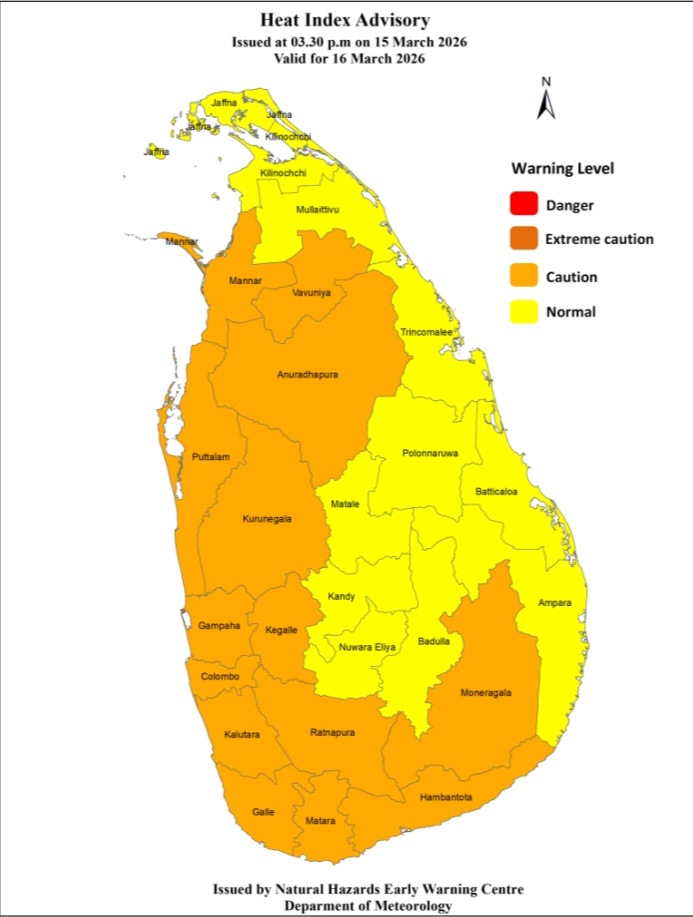
Heat Index at ‘Caution level’ at some places in the Western, Sabaragamuwa, Southern and North-western provinces and in Monaragala, Mannar, Anuradhapura and Vavuniya districts
Warm Weather Advisory
Issued by the Natural Hazards Early Warning Centre of the Department of Meteorology at 3.30 p.m. on 15 March 2026, valid for 16 March 2026.
The public is warned that the Heat index, the temperature felt on human body is likely to increase up to ‘Caution level’ at
some places in the Western, Sabaragamuwa, Southern and North-western provinces and in Monaragala, Mannar, Anuradhapura and Vavuniya districts.
The Heat Index Forecast is calculated by using relative humidity and maximum temperature and this is the condition that is felt on your body. This is not the forecast of maximum temperature. It is generated by the Department of Meteorology for the next day period and prepared by using global numerical weather prediction model data.
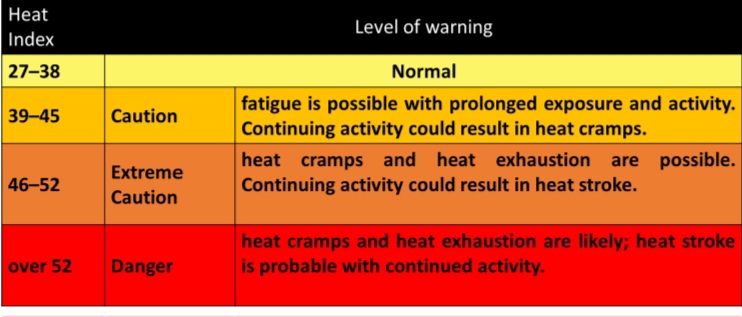
Effect of the heat index on human body is mentioned in the above table and it is prepared on the advice of the Ministry of Health and Indigenous Medical Services.
ACTION REQUIRED
Job sites: Stay hydrated and takes breaks in the shade as often as possible.
Indoors: Check up on the elderly and the sick.
Vehicles: Never leave children unattended.
Outdoors: Limit strenuous outdoor activities, find shade and stay hydrated.
Dress: Wear lightweight and white or light-colored clothing.
Note:
In addition, please refer to advisories issued by the Disaster Preparedness & Response Division, Ministry of Health in this regard as well. For further clarifications please contact 011-7446491
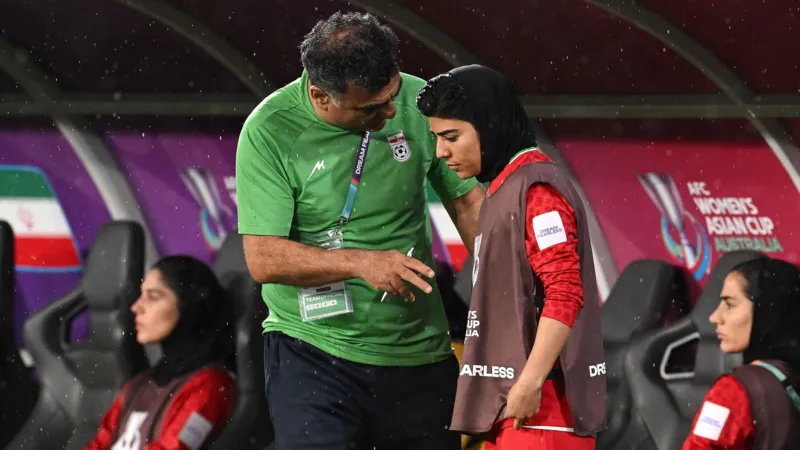
Three more members of the Iranian women’s football delegation – who were given humanitarian visas to stay in Australia – have changed their mind and will return home.
The trio have been named by human rights activists in the Iranian diaspora as Zahra Soltan Meshkehkar, Mona Hamoudi, and Zahra Sarbali.
Concerns grew for the Iranian team after they were silent for the country’s anthem in their opening Asian Cup match against South Korea on 2 March – which led to them being branded “war traitors” in Iran.
Confirming the decisions, Australia’s home affairs minister said his government had done everything it could to ensure the women were given the chance to have a safe future in the country.
“Australians should be proud that it was in our country that these women experienced a nation presenting them with genuine choices and interacted with authorities seeking to help them,” Tony Burke said in a statement.
“While the Australian government can ensure that opportunities are provided and communicated, we cannot remove the context in which the players are making these incredibly difficult decisions.”
Iran’s sports ministry also earlier confirmed the news, first reported by the Islamic Revolutionary Guard Corps-linked Tasnim News Agency, in a statement.
“The national spirit and patriotism of the Iranian women’s national football team defeated the enemy’s plans against this team,” the statement says, also accusing Australia’s government of “playing in Trump’s field”.
Tasnim said the three were on their way to Kuala Lumpur in Malaysia to join the rest of the squad and were “returning to the warm embrace of their families and homeland after withdrawing their asylum application in Australia”.
It said they had resisted “psychological warfare, extensive propaganda and seductive offers”.
It means that, of the seven who initially said they wanted to stay in Australia, only three now remain as defectors. One of the players made the same decision to return to Iran on Wednesday.
Hamoudi and Sarbali were among the original five who refused, after giving minders the slip at the team’s hotel on the Gold Coast, south of Brisbane, last Monday and being taken to a safe house by Australian Federal Police.
Zahra Soltan Meshkehkar, a member of the team’s technical staff, was one of two more women from the group to seek asylum the next day. The other – Mohaddeseh Zolfi – changed her mind hours after being given the right to stay. She is understood to have already rejoined the team.
There was concern in Australia that members of the team and their families might face repercussions in Iran after the players refused to sing the national anthem.
One conservative commentator on Iranian state media accused them of being “wartime traitors” and called for a harsh punishment.
The team did sing the anthem in their last two games before they were eliminated on Sunday, leading critics to believe they had been told to sing by government officials accompanying them during the tournament.
The remaining Iranian players left Australia on Tuesday night local time – two days after they were knocked out of the Asian Cup.
[BBC]
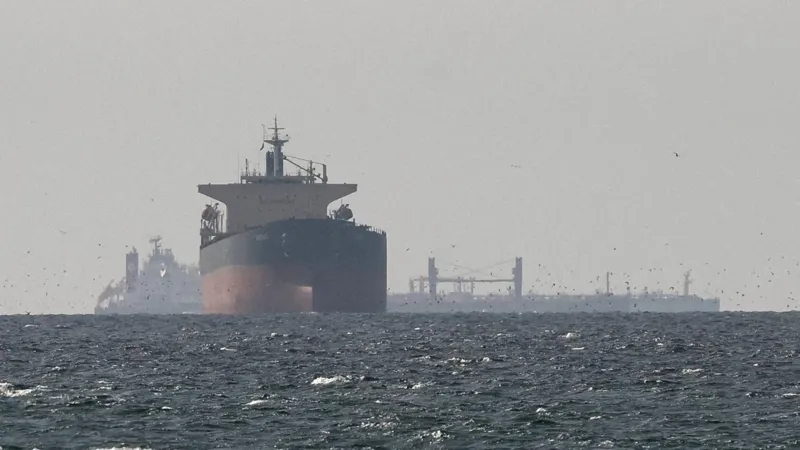
Donald Trump has urged the UK and other nations to send warships to the Strait of Hormuz to help secure the key shipping route out of the Middle East.
The US president said he hoped China, France, Japan and South Korea would also send ships to the passage, where a number of tankers are said to have been attacked since the US and Israel mounted their war against Iran a fortnight ago.
Responding to Trump’s comments, the UK Ministry of Defence said it was discussing “a range of options to ensure the security of shipping in the region” with allies.
Tehran has said it will keep blocking the strait – the world’s busiest oil shipping channel through which about 20% of world oil supplies usually pass.
Its effective closure, as well as strikes on shipping and energy infrastructure since the war started, has led to huge rise in global oil prices.
Trump wrote on his Truth Social platform on Saturday that “many countries” would be sending warships in conjunction with the US to help keep the strait “open and safe”.
He claimed “100% of Iran’s military capability” had already been destroyed, but that Tehran could still “send a drone or two, drop a mine, or deliver a close-range missile somewhere along, or in, this waterway”.
“Hopefully China, France, Japan, South Korea, the UK, and others, that are affected by this artificial constraint will send ships to the area so that the Hormuz Strait will no longer be a threat by a nation that has been totally decapitated.”
He added: “In the meantime, the United States will be bombing the hell out of the shoreline, and continually shooting Iranian Boats and Ships out of the water. One way or the other, we will soon get the Hormuz Strait OPEN, SAFE, and FREE!”
Trump repeated his appeal in a post later on Saturday – extending it to all “the Countries of the World that receive Oil through the Hormuz Strait” – and said the US would provide “a lot” of support to those who participated.
The president has separately threatened to target Iran’s vital oil infrastructure on Kharg Island if its leadership were to “interfere” with ships seeking to pass through the Strait of Hormuz.
He said the US had ‘obliterated” military targets on the small island off Iran’s coast on Friday, calling it “one of the most powerful bombing raids in the history of the Middle East”.
Iran’s military said oil and energy infrastructure belonging to firms working with the US would “immediately be destroyed” should the island’s oil infrastructure be attacked.
Tehran has been stepping up such attacks on energy targets in the Gulf, which have become a key element of its response to US and Israeli strikes. It warned on Thursday that any tanker bound for the US, Israel or its partners was a legitimate target.
The UK Maritime Trade Operations (UKMTO) said in its latest update on 12 March that 16 ships were reported to have been attacked in and around the strait since the war began on 28 February.
Currently, not even the US Navy is escorting tankers through the narrow shipping lane.

Trump’s message came a week after he said the US did not need the UK to send aircraft carriers to the region and accused Prime Minister Sir Keir Starmer of seeking to ‘join wars after we’ve already won”.
He also told the BBC’s US partner CBS that he “couldn’t care less” whether allies could do more to assist with the war, adding: “It’s a little bit late to be sending ships, right? A little bit late.”
He had already criticised Sir Keir for not joining the initial strikes on Iran and refusing at first to allow the US to use UK bases for its joint offensive with Israel – calling him ‘no Winston Churchill”.
The prime minister later approved “defensive” US action on Iranian missile sites from RAF Fairford in Gloucestershire and Diego Garcia in the Indian Ocean, saying Iran’s response had become a threat to Britain.
The UK’s first and only warship set to be present in the region – the Type 45 destroyer HMS Dragon – departed for Cyprus on Tuesday, where it will bolster RAF Akrotiri after it was hit by drone strikes.
The Royal Navy used to keep minesweepers based in Bahrain, but no longer has that capability after it withdrew HMS Middleton.
Ministers have insisted the UK built up an RAF presence in the region before the conflict, with the aim of protecting British military personnel.
[BBC]

Be mindful of the accuracy of information before sharing it on social media – PM

Heat Index at ‘Caution level’ at some places in the Western, Sabaragamuwa, Southern and North-western provinces and in Monaragala, Mannar, Anuradhapura and Vavuniya districts

Showers expected at several places in the Central, Sabaragamuwa, Southern, North-western, Eastern and Uva provinces after 2.00 pm.

Fuel rationing begins: Police deployed as queues return

GMOA warns fuel quota could disrupt health services

Work-from-home option among measures discussed to overcome energy

‘Dates have the highest sugar content to fight Coronavirus’

Sunday Island 27 December – Headlines

#SundayIsland 17th December – Headlines

Sunday Island – 28th March

Sunday Island Headlines – 21 March

Sunday Island – 21st February – Headlines
-

 News6 days ago
Prof. Dunusinghe warns Lanka at serious risk due to ME war
-

 News4 days ago
Historic address by BASL President at the Supreme Court of India
-

 Sports5 days ago
Royal start favourites in historic Battle of the Blues
-

 Sports4 days ago
The 147th Royal–Thomian and 175 Years of the School by the Sea
-

 Business5 days ago
BOI launches ‘Invest in Sri Lanka’ forum
-

 News5 days ago
CEBEU warns of operational disruptions amid uncertainty over CEB restructuring
-

 News4 days ago
Power sector reforms jolted by 40% pay hike demand
-
 Features5 days ago
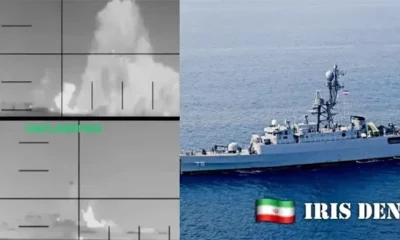
Indian Ocean zone of peace torpedoed!