
News
Extensive legal reforms completed to propel economic stability- Sagala Ratnayaka.

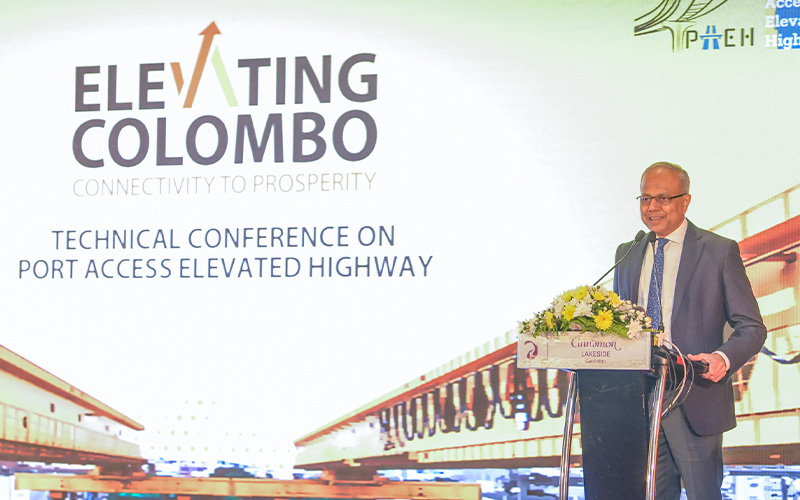
Sagala Ratnayaka, Chief of Presidential Staff and Senior Advisor to the President on National Security, highlighted that policy changes during government transitions pose a significant problem in Sri Lanka. To address this issue, several structural reforms have been implemented across the government, financial, and governance sectors. He emphasized that every effort has been made to establish a stable economic system in the country. Notably, the Central Bank Act, Public Finance Act, and Public Debt Management Act have already been submitted, along with the Economic Transformation Law, which is now before Parliament for adoption.
Ratnayaka shared these insights while delivering the keynote address at the technical conference on the Port Entrance Expressway, organized by the Ministry of Transport and Highways, held at the Cinnamon Lakeside Hotel in Colombo on Wednesday (24) He noted the successful progress of the Port Entrance Expressway project and expressed confidence that its completion would significantly bolster the country’s economy.
Expressing his views further Ratnayaka stated,
“Firstly, I would like to extend my gratitude for organizing this conference, which aims to contribute to the development of our country’s future generations. This project is particularly noteworthy for its technological advancements. However, it is important to acknowledge the numerous challenges encountered during its implementation.
The construction of this project had to be carried out within a very busy port premises, which posed significant logistical issues due to limited space. Despite these constraints, a comprehensive plan was developed to ensure the project proceeded without disrupting port operations. This included relocating the port headquarters to another location. Consequently, construction commenced in 2019.
The construction company demonstrated remarkable resilience, managing to continue work amidst the challenges posed by the COVID-19 pandemic in 2020. The subsequent economic crisis, particularly the foreign exchange shortage, presented even greater obstacles. Despite these difficulties, the project is now nearing completion with minimal delays.
Our highway system, planned nearly three decades ago, is progressing despite various challenges. Many sections are currently under construction, but the crucial component—the bypass system connecting all these highways—has yet to be completed. This bypass system will facilitate the smooth flow of vehicles in and out of the city without disrupting urban activities. The port entrance expressway, supported by elevated pillars, is a key part of this system. It will notably alleviate traffic congestion between the Colombo Port and Katunayake International Airport.
Traffic congestions result in delays, which translate to financial costs. To mitigate these delays, we are relocating our logistics centers outside the city, which incurs additional time and expense. Utilizing these highways can significantly reduce both time and financial waste. However, Colombo’s development has not adequately allocated space for future expansion.
Unlike countries such as Malaysia and Singapore, where road systems were constructed with future expansion in mind, Colombo, as an older city, lacks such planning. Furthermore, inconsistent policies during the city’s development have prevented the maintenance of necessary space. Consequently, Colombo faces significant traffic congestion today.
A highway system alone cannot resolve our transportation challenges. Relying solely on roads is insufficient; we must also consider developing a high-speed rail system. The options include upgrading the existing railway, constructing an elevated rail system, or building a subway system. Although a subway system is the most effective solution, it is also the most expensive. An elevated rail system is less costly, while upgrading the existing railway is the least expensive option. Experts need to evaluate and recommend the most suitable approach for long-term sustainability.
Moreover, we must consider the commercial viability of these projects and how to finance them. Ticket sales could cover some costs, but given the current income levels of our population, it is unrealistic to expect people to afford tickets that fully cover the expenses. Transitioning to such a state will take time, so we need innovative funding methods.
In Hong Kong, for instance, the government allocated land with railway stations to investors, who developed the subway system. They constructed underground railway stations and carried out mixed-use developments such as shopping malls, office complexes, and residential projects above ground. This approach helped cover costs and kept ticket prices affordable. We need to find a similarly suitable method for our country. Efforts are already underway, but more attention is needed.
Previously, we initiated a light rail project with Japanese aid, but it was halted due to policy changes following a government transition. This highlights a significant issue in our country: policy changes with new governments lead to project disruptions. To address this, we implemented several structural reforms during the recent economic crisis, focusing on financial and governance sectors. These reforms aim to enable independent functioning, minimizing government interference and policy shifts. Key reforms include the Central Bank Act, State Finance Act, and State Debt Management Act. Additionally, the Economic Transformation Law has been submitted to Parliament, incorporating several regulatory measures.
To facilitate the business activities of foreign investors and ensure transparency, we have implemented an efficient system for quick decision-making and approvals. This new law encompasses crucial elements to steer our economy in the desired direction, contributing to the gradual development of our country.
Currently, the country has achieved a certain level of stability. During the crisis, many people faced hardship and suffering. Some criticized our agreement with the International Monetary Fund, claiming we were following their directives without question. While we had to implement some measures reluctantly, it was all for the country’s benefit. We negotiated extensively with the IMF to adapt their recommendations to our unique circumstances. The economic reform bill we have introduced goes beyond these recommendations, aiming for rapid development of a stable economy.
At the time of the country’s economic collapse, we were heavily reliant on imports, which caused prices of essential goods and services to skyrocket due to the rupee’s depreciation, while incomes remained stagnant. Our goal is to make the cost of living more affordable through rapid economic growth, for which an integrated transportation network, including a robust highway system, is vital.
Our improving relationship with India is another positive development, poised to bolster our economy. The proposed construction of a bridge between Sri Lanka and India, spanning approximately 50 kilometers across the sea, is a key component of this connectivity corridor. The technology discussed today is essential for this project, which is planned along the historic route of Adam’s Bridge. This project will provide valuable knowledge and job opportunities for our future engineers, and significantly boost our economy by enhancing port and logistics operations.
With this bridge, we aim to facilitate trade and logistics activities for South India’s imports and exports through Sri Lankan ports, reducing their supply costs by 50%. This will also open up numerous opportunities for port-related services in Sri Lanka.
In conclusion, our country has a promising future, but it is crucial to adhere to stable policies. We must unite and work together to achieve this vision.”


More than 1,600 students sat this year’s Russian Classical Ballet Examination, the largest number ever to take part in the examination in Sri Lanka. Exams were held in Colombo from 5, to 18, October and in Galle on 10 October.
Students aged four and above came from across the island, including Colombo, Galle, Gampaha, Negombo, Matara, Kelaniya, Panadura, Wattala, Kiribathgoda, Ratnapura, Kandy, Kurunegala, Bandarawela and Badulla. They are taught by 15 dedicated teachers trained in the Vaganova method, the renowned Russian system of classical ballet training.
They were examined by Dr. Oxana Karnovich of the Moscow State Academy of Choreography, a distinguished academic and curator.
The Russian School of Ballet and Dancing was established in 2001 by Michael Ustinov, Buddhapriya Ramanayake and Mrs Chandi Aluvihare, with Mrs Galina Pleshakova as its founding instructor. Today the School is led by Director Madam Maria Popova, Counsellor of the Embassy of the Russian Federation in Sri Lanka.


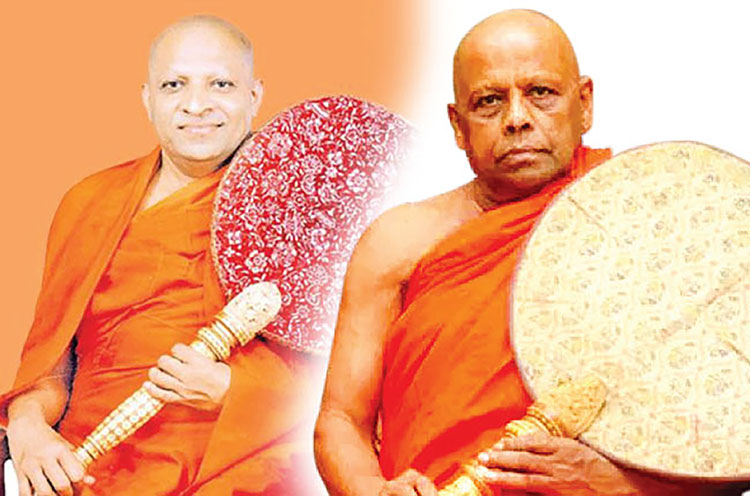
MONETABRIEF– Sri Lanka’s two most senior Buddhist chapters, Malwatte and Asgiriya, demanded special concessions for monks serving prison sentences, following the disrobing of convicted monk Ven. Galagodaatte Gnanasara in line with established procedures.
The chief prelate of the Asgiriya chapter, Most Venerable Warakagoda Sri Gnanarathana, told Prisons Commissioner Senaka Palletenna that Ven. Gnanasara, who is serving a six-year sentence for contempt of court, must be released immediately.
Prison authorities have no power to release or pardon convicts, but Palletenna told the monk in Kandy on Friday that he would convey his request to the relevant government authorities.
“There is no point in talking about this and that… The entire country has been shaken (??????? ) . He must be released,” the Asgiriya chief prelate said.
The Malwatte chief prelate, Most Venerable Thibbatuwawe Sri Siddhartha Sumangala, appeared to accept the court verdict against Ven. Gnanasara, but asked the prisons chief whether a separate section could be established for convicted monks.
Palletenna noted that a special ward for the clergy already existed at Welikada Prison.
At least 63 convicted Buddhist monks are currently incarcerated within Sri Lanka’s criminal justice system.
Meanwhile, a group of 34 Buddhist monks named in a Colombo Fort Magistrate’s Court order to vacate the vicinity of the Presidential Secretariat ended their protest and dispersed after lunch on Friday.The monks are demanding an unconditional pardon for Ven. Gnanasara, who has previously been imprisoned, making him a reconvicted prisoner.
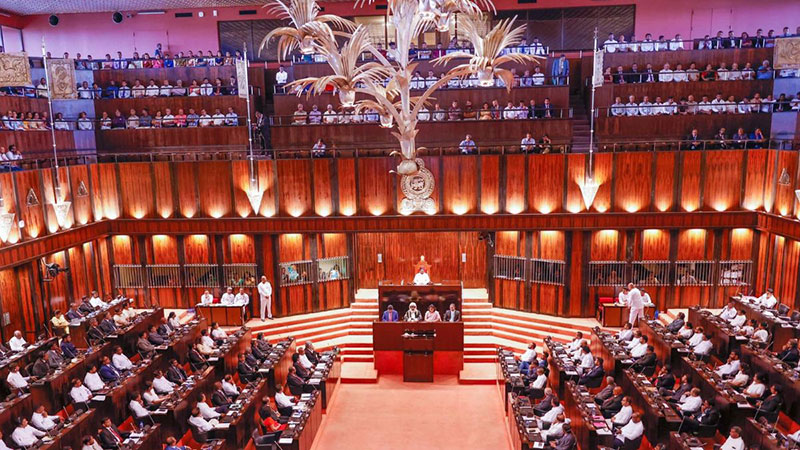
The debate on the no-confidence motion against Speaker Dr. Jagath Wickramaratne, submitted by the Samagi Jana Balawegaya (SJB), has been postponed indefinitely pending the Attorney General’s opinion on certain technical issues in the motion.
Government representatives raised the matter at a meeting of the Committee on Parliamentary Business, pointing out that several provisions of the motion required clarification and that the Attorney General’s advice should be obtained.
As obtaining the opinion would take time, the debate could not be scheduled for the next parliamentary week, parliamentary sources said.
Chief Opposition Whip Gayantha Karunatilaka said a date for the debate would be decided after the Attorney General’s advice was received.
Meanwhile, Parliament is scheduled to meet from October 20 to 23, Secretary General of Parliament Kushani Rohanadeera announced.
The parliamentary business for the week was finalised at a meeting of the Committee on Parliamentary Business held on Friday (16) under the chairmanship of Deputy Speaker Dr. Rizvie Salih.
On each sitting day, the period from 9.30 a.m. to 10 a.m. will be allocated for parliamentary business under Items 1 to 6 of Standing Order 22. Questions for Oral Answers will be taken up from 10 a.m. to 11 a.m., followed by questions under Standing Order 27(2) from 11 a.m. to 11.30 a.m.
On Tuesday, October 20, an Opposition-sponsored Adjournment Motion will be debated from 11.30 a.m. to 5.30 p.m.
On Wednesday, October 21, a resolution under the Public Debt Management Act and a Supplementary Estimate will be taken up for debate and approval from 11.30 a.m. to 5 p.m. The annual reports of five statutory institutions will subsequently be presented for approval without debate, while questions at the Adjournment Time will be taken up from 5 p.m. to 5.30 p.m.
On Thursday, October 22, the Second Reading debates on two Bills to amend the Poisons, Opium and Dangerous Drugs Ordinance (Bills Nos. 79 and 80) will be held from 11.30 a.m. to 5 p.m.
The annual reports of five statutory institutions will then be taken up for approval without debate, followed by an Opposition-sponsored Adjournment Motion from 5 p.m. to 5.30 p.m.
On Friday, October 23, the Second Reading debate on the Elimination of Rabies and Registration of Dogs Bill will be held from 11.30 a.m. to 5 p.m. A Government-sponsored Adjournment Motion will be debated during the final half-hour of the sitting.

Record 1,600 students take Russian Classical Ballet examination in Sri Lanka

Half a million people join protests in France, but some turn violent

Deadly fire breaks out at Canada military base

Showers or thundershowers will occur in most parts of the island after 1.00 p.m.

Buddhist hierarchy demands prison perks for monk convicts

Debate on NCM against Speaker postponed indefinitely

‘Dates have the highest sugar content to fight Coronavirus’

Sunday Island 27 December – Headlines

#SundayIsland 17th December – Headlines

Sunday Island – 28th March

Sunday Island Headlines – 21 March

Sunday Island – 21st February – Headlines
-

 Latest News5 days ago
Nissanka’s return headlines Sri Lanka’s Test squad against Pakistan
-

 Latest News7 days ago
Farhan and Sadaqat help Pakistan seal series in style
-

 Features7 days ago
Intake 16: 45 years of duty and honour
-
 News7 days ago
Malwathu Chapter issues statement on talks with President over Gnanasara Thera’s robes
-
 News7 days ago
CP alleges NPP has taken the blame for illegal US sanctions on Iranian vessels
-

 News5 days ago
Sri Lanka, India caught in US-Iran ship crisis
-

 Opinion7 days ago
How long can Sri Lanka remain silent on its demographic crisis?
-
 Latest News5 days ago
Kusal Mendis’ unbeaten 87 hands Sri Lanka consolation win