
News
Extensive legal reforms completed to propel economic stability- Sagala Ratnayaka.

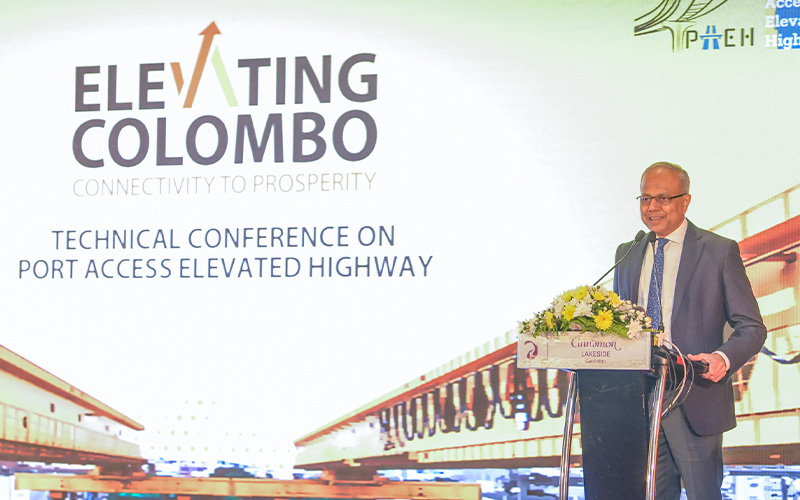
Sagala Ratnayaka, Chief of Presidential Staff and Senior Advisor to the President on National Security, highlighted that policy changes during government transitions pose a significant problem in Sri Lanka. To address this issue, several structural reforms have been implemented across the government, financial, and governance sectors. He emphasized that every effort has been made to establish a stable economic system in the country. Notably, the Central Bank Act, Public Finance Act, and Public Debt Management Act have already been submitted, along with the Economic Transformation Law, which is now before Parliament for adoption.
Ratnayaka shared these insights while delivering the keynote address at the technical conference on the Port Entrance Expressway, organized by the Ministry of Transport and Highways, held at the Cinnamon Lakeside Hotel in Colombo on Wednesday (24) He noted the successful progress of the Port Entrance Expressway project and expressed confidence that its completion would significantly bolster the country’s economy.
Expressing his views further Ratnayaka stated,
“Firstly, I would like to extend my gratitude for organizing this conference, which aims to contribute to the development of our country’s future generations. This project is particularly noteworthy for its technological advancements. However, it is important to acknowledge the numerous challenges encountered during its implementation.
The construction of this project had to be carried out within a very busy port premises, which posed significant logistical issues due to limited space. Despite these constraints, a comprehensive plan was developed to ensure the project proceeded without disrupting port operations. This included relocating the port headquarters to another location. Consequently, construction commenced in 2019.
The construction company demonstrated remarkable resilience, managing to continue work amidst the challenges posed by the COVID-19 pandemic in 2020. The subsequent economic crisis, particularly the foreign exchange shortage, presented even greater obstacles. Despite these difficulties, the project is now nearing completion with minimal delays.
Our highway system, planned nearly three decades ago, is progressing despite various challenges. Many sections are currently under construction, but the crucial component—the bypass system connecting all these highways—has yet to be completed. This bypass system will facilitate the smooth flow of vehicles in and out of the city without disrupting urban activities. The port entrance expressway, supported by elevated pillars, is a key part of this system. It will notably alleviate traffic congestion between the Colombo Port and Katunayake International Airport.
Traffic congestions result in delays, which translate to financial costs. To mitigate these delays, we are relocating our logistics centers outside the city, which incurs additional time and expense. Utilizing these highways can significantly reduce both time and financial waste. However, Colombo’s development has not adequately allocated space for future expansion.
Unlike countries such as Malaysia and Singapore, where road systems were constructed with future expansion in mind, Colombo, as an older city, lacks such planning. Furthermore, inconsistent policies during the city’s development have prevented the maintenance of necessary space. Consequently, Colombo faces significant traffic congestion today.
A highway system alone cannot resolve our transportation challenges. Relying solely on roads is insufficient; we must also consider developing a high-speed rail system. The options include upgrading the existing railway, constructing an elevated rail system, or building a subway system. Although a subway system is the most effective solution, it is also the most expensive. An elevated rail system is less costly, while upgrading the existing railway is the least expensive option. Experts need to evaluate and recommend the most suitable approach for long-term sustainability.
Moreover, we must consider the commercial viability of these projects and how to finance them. Ticket sales could cover some costs, but given the current income levels of our population, it is unrealistic to expect people to afford tickets that fully cover the expenses. Transitioning to such a state will take time, so we need innovative funding methods.
In Hong Kong, for instance, the government allocated land with railway stations to investors, who developed the subway system. They constructed underground railway stations and carried out mixed-use developments such as shopping malls, office complexes, and residential projects above ground. This approach helped cover costs and kept ticket prices affordable. We need to find a similarly suitable method for our country. Efforts are already underway, but more attention is needed.
Previously, we initiated a light rail project with Japanese aid, but it was halted due to policy changes following a government transition. This highlights a significant issue in our country: policy changes with new governments lead to project disruptions. To address this, we implemented several structural reforms during the recent economic crisis, focusing on financial and governance sectors. These reforms aim to enable independent functioning, minimizing government interference and policy shifts. Key reforms include the Central Bank Act, State Finance Act, and State Debt Management Act. Additionally, the Economic Transformation Law has been submitted to Parliament, incorporating several regulatory measures.
To facilitate the business activities of foreign investors and ensure transparency, we have implemented an efficient system for quick decision-making and approvals. This new law encompasses crucial elements to steer our economy in the desired direction, contributing to the gradual development of our country.
Currently, the country has achieved a certain level of stability. During the crisis, many people faced hardship and suffering. Some criticized our agreement with the International Monetary Fund, claiming we were following their directives without question. While we had to implement some measures reluctantly, it was all for the country’s benefit. We negotiated extensively with the IMF to adapt their recommendations to our unique circumstances. The economic reform bill we have introduced goes beyond these recommendations, aiming for rapid development of a stable economy.
At the time of the country’s economic collapse, we were heavily reliant on imports, which caused prices of essential goods and services to skyrocket due to the rupee’s depreciation, while incomes remained stagnant. Our goal is to make the cost of living more affordable through rapid economic growth, for which an integrated transportation network, including a robust highway system, is vital.
Our improving relationship with India is another positive development, poised to bolster our economy. The proposed construction of a bridge between Sri Lanka and India, spanning approximately 50 kilometers across the sea, is a key component of this connectivity corridor. The technology discussed today is essential for this project, which is planned along the historic route of Adam’s Bridge. This project will provide valuable knowledge and job opportunities for our future engineers, and significantly boost our economy by enhancing port and logistics operations.
With this bridge, we aim to facilitate trade and logistics activities for South India’s imports and exports through Sri Lankan ports, reducing their supply costs by 50%. This will also open up numerous opportunities for port-related services in Sri Lanka.
In conclusion, our country has a promising future, but it is crucial to adhere to stable policies. We must unite and work together to achieve this vision.”

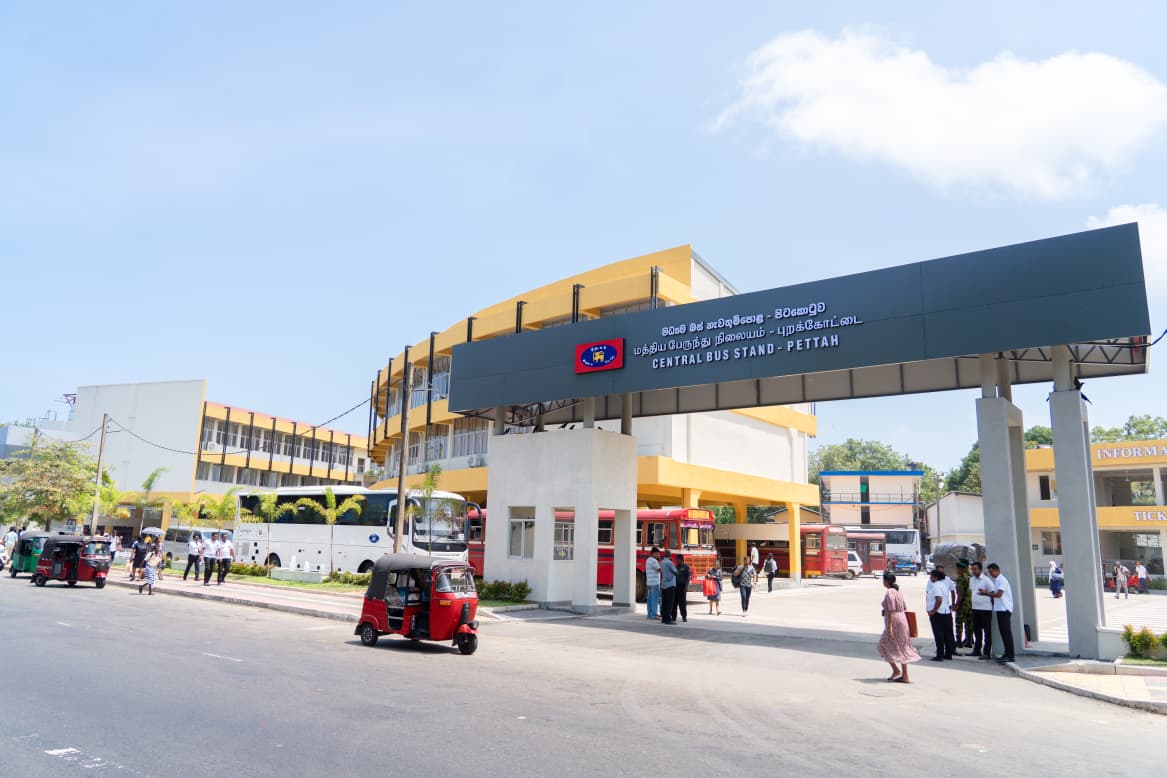
The Colombo Central Bus Stand, which has a history of over six decades and had remained without a proper maintenance for many years, has now been renovated under the current government’s development programme and vested to the public. Following that, the Prime Minister undertook an inspection tour of the newly renovated Colombo Central Bus Stand.
Originally constructed in 1964, the bus stand was refurbished with modern facilities to meet current needs and was officially reopened to the public on April 8. The primary objective of this initiative is to provide passengers with a higher-quality and more comfortable transportation service.
During the renovation process, special attention has been given to the comfort and safety of women, which was commended by the Prime Minister. In particular, a modern rest area designed to ensure privacy for nursing mothers travelling from distant areas received special praise.
The Prime Minister also reviewed the newly introduced passenger seat reservation system and information services established to assist commuters. In addition, the modern surveillance unit and other security measures installed within the premises to ensure passenger safety were also inspected.
During the visit, the Prime Minister engaged in conversations with passengers at the bus stand and inquired about their views on the newly renovated facilities and the quality of transport services.
It was emphasized that the government’s objective is to transform public transportation into a safe, technologically advanced service that can be used with convenience by all citizens.

(Prime Minister’s Media Division)
Latest News
Sun directly overhead Nagawilluwa, Galgamuwa, Sigiriya, Palugasdamana and Mankerni about 12:11 noon today (10)

On the apparent northward relative motion of the sun, it is going to be directly over the latitudes of Sri Lanka from the 05th to 15th of April in this year.
The nearest areas of Sri Lanka over which the sun is overhead today (10th) are Nagawilluwa, Galgamuwa, Sigiriya, Palugasdamana and Mankerni about 12:11 noon.

No-faith motion to be taken up today
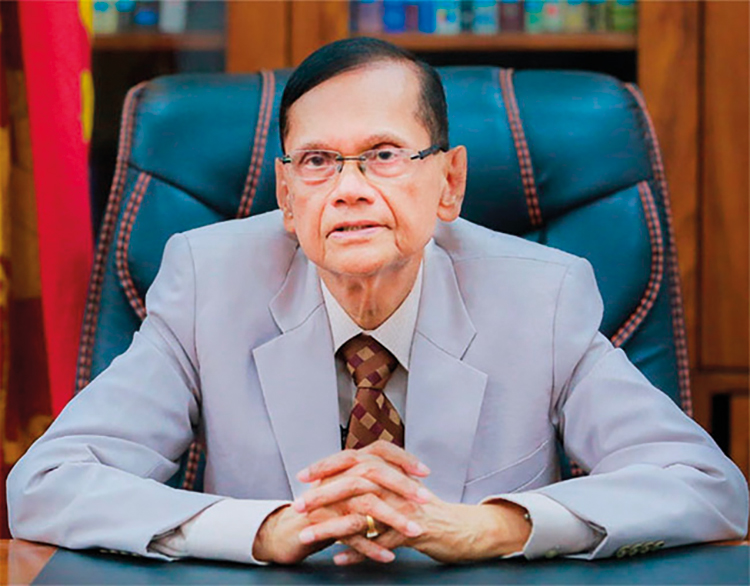
Former Foreign Minister Prof. G. L. Peiris yesterday (9) said that President Anura Kumara Dissanayake should remove Energy Minister Kumara Jayakody unless the minister stepped down on his own.Prof. Peiris, addressing a press conference called by the Opposition, said that Jayakody couldn’t under any circumstance continue to serve as a minister after the Commission to Investigate Allegations of Bribery or Corruption (CIABOC) moved the Colombo High Court against the government member over a previous financial scandal.
Pointing out that Minister Jayakody had been indicted of a corrupt deal struck during the yahapalana regime, Prof. Peiris said it was wrong for the NPP to retain him as a minister, claiming that the offence was not committed during his tenure as a Cabinet minister in the current government.
Prof. Peiris and several other Opposition members dealt with the No-Confidence Motion (NCM) against Jayakody that would be taken up today (10) with the academic calling the vote an acid test for the NPP. Having campaigned on an anti-corruption platform at presidential and parliamentary polls, the NPP couldn’t protect Jayakody though he was widely believed to be close to President Dissanayake.
As the Manager of the Procurement and Import Division of the Ceylon Fertilizer Company, Jayakody is alleged to have committed the offence of corruption, according to CIABOC.
Jayakody has been accused of causing a loss of Rs. 8,859,708 to the State by influencing and exploiting the procurement process.
Following the serving of indictments on 27 March, the judge ordered Jayakody’s release on two personal bail bonds of Rs. 1 million each. The court directed that the defendant’s fingerprints be obtained and a formal report be submitted. The case has been scheduled for a pre-trial conference on 6 May.
Prof. Peiris stressed that the CIABOC action against Jayakody is central to the NCM primarily moved over the irregularities ridden coal procurement process launched in 2025 that caused severe disruption to the power generation. Responding to The Island query after the media briefing, Prof Peiris expressed surprise that the JVP/NPP accommodated a person under investigation by the CIABOC. Having taken an utterly irresponsible decision, the JVP/NPP were now playing down the developing issue, prof. Peiris said.
The entire government parliamentary group faced the prospect of having its image tarnished by defending Jayakody, the former lawmaker said.
Prof. Peiris said that they intended to build a campaign around the issues involving the energy minister to expose the government. With yet another electricity tariff hike in the offing due to the growing demand for thermal generation as a result of coal-fired Lakvijaya power plant’s failure to meet the requirement[RA1] , the energy minister and ministry’s performances have to be examined, Prof. Peiris said.The timely release of the Auditor General’s report on controversial coal procurement should compel the government to decide on the energy minister’s fate or be prepared to face the fallout.
By Shamindra Ferdinando

Brazil bowler Laura Cardoso takes 9 Lesotho wickets in record-breaking T20 win

Zimbabwe Women set for maiden tour of Pakistan

Bangladesh advance match timings to save energy

PM on inspection tour of newly renovated Colombo Central Bus Stand

Israel to hold direct talks with Lebanon but no ceasefire, Netanyahu says

Sun directly overhead Nagawilluwa, Galgamuwa, Sigiriya, Palugasdamana and Mankerni about 12:11 noon today (10)

‘Dates have the highest sugar content to fight Coronavirus’

Sunday Island 27 December – Headlines

#SundayIsland 17th December – Headlines

Sunday Island – 28th March

Sunday Island Headlines – 21 March

Sunday Island – 21st February – Headlines
-

 Features6 days ago
Ranjith Siyambalapitiya turns custodian of a rare living collection
-

 News6 days ago
Global ‘Walk for Peace’ to be held in Lanka
-

 News4 days ago
Lankan-origin actress Subashini found dead in India
-

 Features6 days ago
Beyond the Blue Skies: A Tribute to Captain Elmo Jayawardena
-

 News2 days ago
AG: Coal procurement full of irregularities
-

 Features6 days ago
Aspects of Ceylon/Sri Lanka Foreign Relations – 1948 to 1976
-

 Business2 days ago
Hayleys Mobility introduces Premium OMODA C9 PHEV
-

 Sports2 days ago
DS to face St. Anthony’s in ‘Bridges of Brotherhood’ cricket encounter