
News
Expert: Mismanagement of CEB hydro resources increases costly oil-powered electricity generation


The Ceylon Electricity Board (CEB) is in one of the strongest hydro storage positions in recent memory, but it has mismanaged key hydropower complexes, causing an increase in oil-powered electricity generation and and costs.
Energy expert Dr. Vidura Ralapanawe has raised serious concerns over CEB’s operational decisions, particularly the skewed use of the Mahaweli and Laxapana hydropower complexes. “By mid-May, the system had ample storage — about 60% overall — which is actually a very good position to be in just before the South-West monsoon rains,” he said. “But within that headline figure is a huge imbalance. Mahaweli reservoirs are near 75%, while Laxapana is languishing at 30%.”
This lopsided storage has already caused direct operational problems. The Canyon power station, which is fed by the Maussakele Reservoir in the Laxapana complex, has been forced to reduce its output. The 60MW plant is now operating at just 40MW due to limited water availability. Downstream, the 100MW New Laxapana station is similarly constrained.
The Laxapana complex is not just another hydropower asset — it plays a vital role in Colombo’s drinking water supply. It is required to run continuously to maintain flows for water treatment plants. “That means the CEB must generate from Laxapana 24/7, no matter what,” Ralapanawe said. “So how did they allow it to reach such a critically low level, especially when Mahaweli reservoirs are full?”
Ralpanawe said: “Instead of making adjustments to maintain operational flexibility, the CEB appears to have run the Laxapana complex harder than necessary in previous months while underutilising Mahaweli, where Victoria and Randenigala are sitting comfortably. The consequence? More reliance on oil-based thermal generation, even as the country’s dams remain well-stocked.”
“This is not just a technical problem — it’s an economic one,” he stressed. “Oil is expensive. When you underutilise hydropower in a year like this, you’re actively choosing to drive up the cost of generation.”
The apparent lack of coordination between the Mahaweli and Laxapana systems is especially baffling given the CEB’s long-standing familiarity with both. “The CEB has operated these systems for over 40 years. They know the inflows, the rainfall patterns, the seasonal irrigation releases — none of this is new,” Ralapanawe said.
Moreover, the growing integration of AI and data-driven forecasting tools in the global energy sector makes such mismanagement increasingly indefensible. “If, in the age of AI, we’re still hearing that ‘it’s too complex’ to manage these reservoirs in tandem, then something is seriously wrong,” he added.
Dr. Ralapanawe urges the CEB to provide an explanation: “Why was Mahaweli underdispatched when it was full? Why was Laxapana overused to the point that we now can’t get full capacity from critical plants like Canyon and New Laxapana? What is the economic impact of burning more oil than necessary?”
The missteps are already costing the public. Higher generation costs will ultimately be passed on to consumers in the form of increased tariffs, a burden made heavier in an already strained economy,” says Dr. Ralapanawe.
Ironically, 2025 was shaping up to be a strong hydro year, offering a rare opportunity for cost savings and reduced fossil fuel use. Instead, mismanagement has left key reservoirs unbalanced and locked the system into a more expensive operating mode — one that benefits oil suppliers but punishes the average household and industry.
Dr. Ralapanawe’s message is blunt: “This is not just about water and electricity. This is about public accountability and economic responsibility. If the CEB cannot manage two hydro systems properly with decades of data at its fingertips, then it must rethink its leadership and planning structures — or risk repeating the same costly mistakes year after year.”
Our efforts to contact CEB officials for comment were in vain.
By Ifham Nizam









The shoreline of Dehiwala beach witnessed a stong display of unity and environmental responsibility as the British School in Colombo (BSC) came together for the school’s second beach clean-up this academic year, BSC said in a statement.
It said: What made this clean-up especially meaningful was the way it brought together the entire BSC family, irrespective of differences in age, class, or role. Junior School and Senior School students, parents, teachers and staff worked side by side with a shared purpose.
Thanks to the dedication and enthusiasm of all 100 participants, the clean-up achieved remarkable results.

Nagoya, Jan. 29 (Jiji Press)—Sri Lankan detainee Wishma Sandamali’s life could have been saved at three different times before she died at an immigration facility in Japan in 2021, a doctor said in a court hearing on Wednesday.
Wishma’s death at the facility in Nagoya, Aichi Prefecture, resulted from a combination of factors including dehydration and starvation, the doctor, Masamune Shimo, said in the Nagoya District Court hearing on a damages lawsuit filed by her bereaved family against the Japanese government over her death.
Dehydration and starvation had reduced Wishma’s blood circulation and led to a vitamin B1 deficiency, which caused her to develop beriberi heart disease, Shimo said, citing diet and nursing records as well as urine and blood test results. He said she fell into shock, ultimately leading to death from multiple organ failure.
Shimo said the first life-saving opportunity was when a urine test showed abnormal values indicating a state of starvation, roughly three weeks before Wishma’s death. “It is standard to perform a blood test and provide an intravenous drip” when such results appear, he said.
The doctor also pointed out that Wishma’s blood pressure had become unmeasurable and abnormal deep breathing was observed two days prior to and on the day of her death.
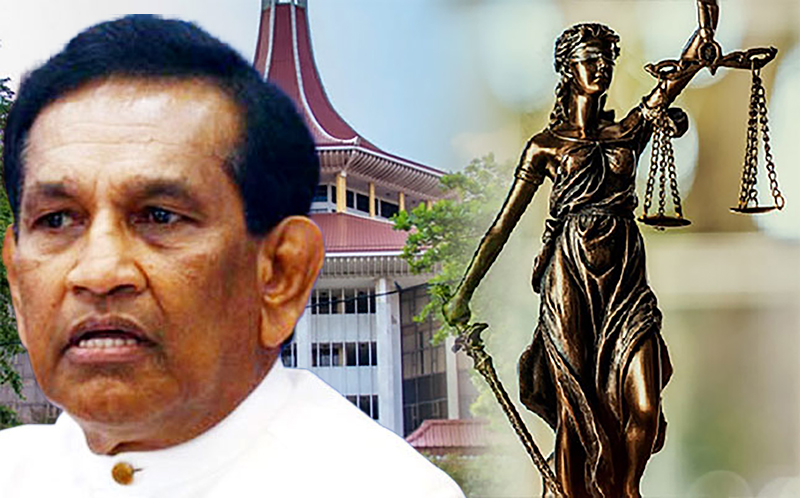
The Colombo High Court yesterday ordered that the case filed by the Commission to Investigate Allegations of Bribery or Corruption (CIABOC) against former Minister of Fisheries Rajitha Senaratne and two others for allegedly causing a loss to the government when the Mutwal Fishery Harbour was leased to a private company in 2014—be reconvened on April 29.
The case was called yesterday (29) before Colombo High Court Judge Mohamed Mihal.
During the proceedings, the judge asked whether the defence lawyers for the accused expected to raise objections regarding the amended charges.
The defense lawyers responded that they intend to raise any objections at the appropriate stage.
Following this, the High Court Judge directed that the case be reconvened for examination on April 29.
The case was filed by the Bribery Commission, alleging that between August 1 and November 1, 2014, the accused committed the offence of corruption by influencing the Board of Directors of the Fisheries Harbour Corporation to lease the Mutwal Fisheries Harbour to a private company for an amount lower than its proper value.

Listen to workers

BSC in beach clean up

Sri Lanka, the Stars,and statesmen

Lankan detainee’s death could have been prevented on 3 occasions: Doctor

Corruption case against Rajitha to be reconvened on April 29

Navam Maha Perahera traffic plan

‘Dates have the highest sugar content to fight Coronavirus’

Sunday Island 27 December – Headlines

#SundayIsland 17th December – Headlines

Sunday Island – 28th March

Sunday Island Headlines – 21 March

Sunday Island – 21st February – Headlines
-
 Business4 days ago
ComBank, UnionPay launch SplendorPlus Card for travelers to China
-

 Business5 days ago
ComBank advances ForwardTogether agenda with event on sustainable business transformation
-
 Opinion5 days ago
Conference “Microfinance and Credit Regulatory Authority Bill: Neither Here, Nor There”
-
 Business1 day ago
Climate risks, poverty, and recovery financing in focus at CEPA policy panel
-

 Opinion4 days ago
Luck knocks at your door every day
-

 Business6 days ago
Dialog Brings the ICC Men’s T20 Cricket World Cup 2026 Closer to Sri Lankans
-

 News5 days ago
Rising climate risks and poverty in focus at CEPA policy panel tomorrow at Open University
-

 Business1 day ago
Bourse positively impacted by CBSL policy rate stance