
Business
Exclusive Port City Colombo Investor Forum highlights Sri Lanka’s transformation


Sri Lanka presented a clear message of confidence, reform, and long-term opportunity at the Exclusive Port City Colombo Investor Forum held on 27th January 2026 at the Shangri-La Hotel, Singapore. Jointly organised by the High Commission of Sri Lanka in Singapore and Port City Colombo, the forum positioned Port City Colombo as the centrepiece of Sri Lanka’s next phase of economic transformation.
The Exclusive Investor Forum brought together close to 100 senior invitees from across real estate, financial services, investment and asset management, IT and digital services, professional services, and regional business leadership, reflecting broad-based interest in Port City Colombo’s services-led investment proposition.
Opening the forum, Senarath Dissanayake, High Commissioner of Sri Lanka to Singapore, underscored Sri Lanka’s commitment to strengthening economic engagement with Singapore and regional partners, noting that Port City Colombo reflects the country’s readiness to integrate more deeply with global markets under internationally aligned standards.
Delivering the keynote address, Hanif Yusoof, Presidential Special Envoy for Foreign Investment and Governor of the Western Province, stated that Sri Lanka today is “not a recovery story, but a transformation story”, with Port City Colombo serving as a platform for that transformation to become tangible. He highlighted Sri Lanka’s rapid economic turnaround following the most severe crisis in its history. He noted stabilised inflation, renewed growth, strengthened foreign reserves, and restored macroeconomic confidence, a recovery recognised by international institutions as among the fastest in recent times.
The Special Envoy emphasised Sri Lanka’s commitment to long-term reform, institutional independence, and economic discipline. He pointed to constitutional guarantees and legal reforms, including the establishment of an independent Central Bank, strengthened fiscal and debt management laws, and a transparent, rules-based economic framework that enhances predictability and investor confidence.
He further noted that Sri Lanka offers a clear and familiar investment environment, anchored in common law traditions, bilateral investment protection treaties, double taxation avoidance agreements, and full recognition of international arbitration, providing investors with the freedom to repatriate capital and access international dispute-resolution mechanisms.
Special Envoy Yusoof echoed these sentiments during a live discussion on Channel News Asia from Singapore, where he reaffirmed Sri Lanka’s transition from crisis management to long-term economic transformation. During the interview, he positioned Port City Colombo as an export-oriented, services-led economic platform anchored in private capital and governed by a clear, rules-based regulatory framework, designed to catalyse high-value sectors such as financial services, IT and digital exports, professional services, logistics, and regional headquarters operations.
Harsha Amarasekara, PC, Chairman of the Colombo Port City Economic Commission (CPCEC), elaborated on the governance framework of Port City Colombo, established under the Colombo Port City Economic Commission Act, No. 11 of 2021. He highlighted that Port City Colombo is Sri Lanka’s first multi-services Special Economic Zone, governed by an independent Commission and supported by a single-window facilitation mechanism, offering investment protection, predictable incentives, and strong legal safeguards.
The forum also featured insights from Singapore’s business community, with remarks by Neil Parekh, Deputy Chairman & CEO of GFTN Capital and Chairman of the Singapore Indian Chamber of Commerce and Industry (SICCI), and market perspectives from Mr. Anthony Chua, CEO of the Real Estate Developers’ Association of Singapore (REDAS), who highlighted the strategic relevance of Port City Colombo as a gateway for regional and global investors.
The discussions further highlighted Port City Colombo’s growing collaboration with leading regional and global corporates, including Keppel, a long-standing partner and collaborator in Sri Lanka that also provides advisory and consultancy support on EMC-related aspects of the development. Mr. Lam Siu Chang, Senior Manager, Real Estate Division at Keppel, shared perspectives on sustainable urban development, infrastructure-led growth, and the role of integrated, future-ready cities in attracting long-term institutional capital, reinforcing strategic alignment with global best practices and institutional interest in Port City Colombo as a long-term investment destination.
A detailed overview of investment opportunities and processes was delivered by Revan Wickramasuriya, Director General of CPCEC, who outlined the streamlined process, long-term fiscal incentives for Businesses of Strategic Importance, enhanced mobility of capital through exemptions under the Foreign Exchange Act, foreign currency transactions in 16 designated currencies, and visa facilitation through a Green Channel for investors and professionals.
Independent third-party perspectives were provided by KPMG Sri Lanka, with Suresh Perera and Ms. Rifka Ziyard presenting an objective assessment of Sri Lanka’s economic outlook and the tax and regulatory framework applicable to Port City Colombo.
Investor confidence was reinforced through testimonials from Ansell and Millennium IT ESP, sharing first-hand experiences of operating in Sri Lanka and the Port City Colombo ecosystem.
Concluding the Forum, Ms. Bai Xiaping, Assistant Managing Director of CHEC Port City Colombo (Pvt) Ltd., the project’s primary developer, delivered the vote of thanks and noted that the development represents a comprehensive ecosystem where businesses can establish regional headquarters, scale operations, access global talent, and connect seamlessly to South Asia and the wider Indian Ocean economy.
To learn more about the investment opportunities at Port City Colombo, please visit www.portcitycolombo.lk. For information on Single Window Investment Facilitation and regulatory matters, please visit www.portcitycolombo.gov.lk.


By Ifham Nizam
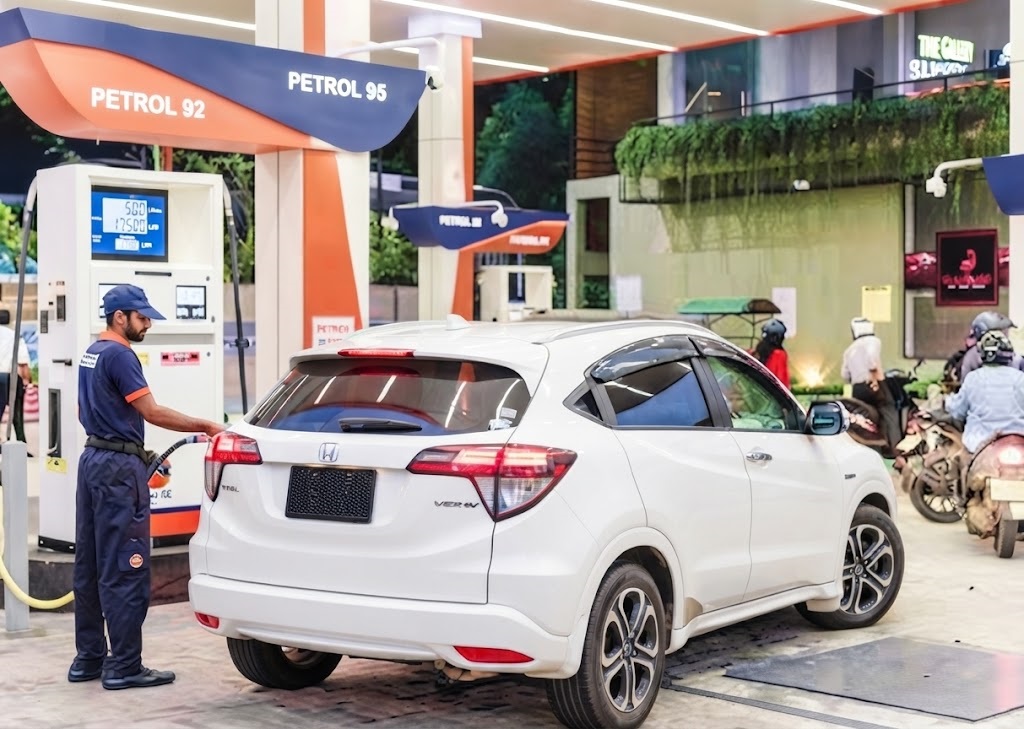
Sri Lanka’s fuel market is coming under renewed pressure as the escalating West Asian conflict and disruption to key oil-shipping routes push up international crude and refined-fuel prices, with a top Ceylon Petroleum Corporation (CPC) official saying the Corporation is closely monitoring developments and the potential impact on domestic fuel costs.
A top CPC official said the sharp rise in international oil prices was being driven by the conflict and disruptions to energy infrastructure and shipping routes in the region.
The official said Sri Lanka’s exposure to the international price shock would also depend on the timing of fuel purchases, as petroleum cargoes are ordered well before they arrive in the country and the final landed cost is determined when the cargo is delivered.
The CPC is also seeking to cushion consumers from the full impact of international price increases while maintaining uninterrupted supplies, the official said.
The latest developments come as Brent crude remains above USD 100 a barrel despite a recent retreat in prices following efforts by Saudi Arabia to maintain exports through alternative routes.
Brent crude futures fell to USD 104.74 a barrel yesterday, while West Texas Intermediate was trading at USD 101.60, according to Reuters. Saudi Arabia has been offering additional crude cargoes to Asian refiners through Oman to offset disruptions caused by attacks on its East-West pipeline.
The immediate concern for Sri Lanka is the potential impact on the country’s petroleum import bill, foreign-exchange requirements and inflation.
Higher international crude and refined-product prices mean that more dollars are required to finance fuel imports, while higher domestic energy costs can feed into transportation, manufacturing, agriculture, fisheries and logistics.
The pressure is already being felt elsewhere in Asia.
Pakistan has raised petrol prices by Pakistani Rs. 4.42 a litre and high-speed diesel by Rs. 6.10, taking the prices to Rs. 380.24 and Rs. 409.42 respectively. The latest increase is reported to be the sixth consecutive fuel price increase in the country.
The Philippines has also raised fuel prices, with petrol increasing by 5.68 Philippine pesos a litre, diesel by 4.31 pesos and kerosene by 4.62 pesos for the latest pricing period.
The developments provide an indication of how quickly international energy-market disruptions can feed into domestic fuel markets across fuel-importing Asian economies.
For Sri Lanka, the issue is particularly significant because petroleum remains a major component of the country’s import bill. The CPC’s current prices stand at Rs. 399 a litre for 92-octane petrol and Rs. 382 for auto diesel, according to the Corporation’s latest published prices.
The government is meanwhile facing pressure to balance consumer protection with the financial sustainability of fuel suppliers.
The Energy Minister has said several options are being considered, including fuel subsidies, price limits for private distributors and adjustments to retail prices. Private operators have reported substantial losses on diesel under prevailing prices, while the CPC has said it is currently absorbing losses on diesel through earnings from other petroleum operations.
A prolonged international oil-price shock could therefore have consequences extending well beyond the pump.
Higher fuel costs would raise operating expenses for transport-dependent businesses and could increase the cost of moving goods throughout the economy. For manufacturers and exporters, higher energy and logistics costs could also affect margins and competitiveness.
At the macroeconomic level, a sustained increase in petroleum prices could increase Sri Lanka’s foreign-exchange requirements and place additional pressure on the trade balance and inflation.
The international oil market, however, remains highly fluid. Saudi Arabia’s efforts to redirect crude exports through Oman have eased some immediate supply concerns, while expectations that its damaged East-West pipeline could return to operation within days have also helped push crude prices lower.
But shipping through the Strait of Hormuz remains severely disrupted and the wider conflict continues to pose risks to crude and refined-product supplies.
For Sri Lanka, the coming weeks will therefore be closely watched by fuel suppliers, importers and businesses as the country assesses whether the current international price shock proves temporary or develops into a more prolonged increase in the cost of energy.
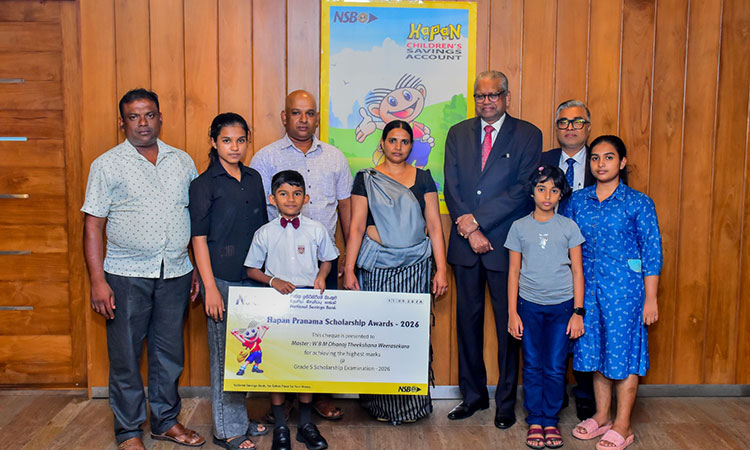
The student, who obtained the highest marks in the Sinhala medium, at the Grade 5 Scholarship Examination – 2026, was felicitated by the National Savings Bank (NSB), recently, at the NSB Head Office, under the Hapan Pranama Scholarship Program -2026, organized by the Bank.
The Chairman of the Bank, Dr. Harsha Cabral PC, the Actg. General Manager/CEO, Rohana Bandara Weerakoon and the Corporate Management were present at the occasion.
Danoj Theekshana Weerasekara, a student of Ahatuwewa Model Primary School in Kurunegala District, has won the first place in Sinhala Medium at Grade 5 Scholarship Examination this year, with 193 marks. His remarkable achievement reflects not only his personal talents, but also the commitment of his family members, guidance of his teachers and support of the entire school community, who came together to make his triumph a reality.
The National Savings Bank, while complimenting his achievement, wishes him good luck, strength and courage for his future academic endeavors.
Being always committed towards realizing the educational goals of the children of the country, NSB organizes a seminar series, well in advance of the Examination, every year, to support them in preparation for the exam. The Bank has been able to hold more than 100 seminars islandwide this year as well.
Through these seminars, it is expected to provide the students with knowledge, guidance and mental strength, required to be successful at the Examination and the Bank has joined hands with them at an important juncture of their lives, assuring support and strength to face the exam with confidence. (NSB)

The Colombo Stock Exchange (CSE) has received the ‘Great Place to Work’ Certification’ for the 5th consecutive year in a row. Since 2022 the bourse has been continually awarded the certification in recognition of its commitment to providing a welcome, inclusive and safe environment.
“At CSE, our people remain our greatest strength.” remarked Rajeeva Bandaranaike, CEO of the CSE “Receiving the Great Place to Work Certification for the fifth consecutive year is a meaningful recognition of our commitment to creating a workplace culture founded on trust, respect, and collaboration. It is an achievement shared by every member of the CSE team and reflects the passion, commitment, and teamwork that continue to drive our success.”
The certification was awarded by Great Place to Work®, a global organization that grants this recognition across more than 180 countries and regions and represents over 20 million employees and 22,000 companies worldwide. The certification was based on the results of an anonymous, company-wide survey that evaluated workplace culture across five key dimensions: credibility, respect, fairness, pride, and camaraderie.
The certification reaffirms CSE’s commitment to its foundational values of Professionalism, Integrity, Care, Teamwork, Passion and Agility. By championing equity and inclusion, the CSE has built a welcoming, discrimination-free culture where every individual can thrive. A cornerstone of this success is CSE’s leadership in workplace diversity as an equal opportunity employer and signatory to the UN Women’s Empowerment Principles, alongside its close collaboration with the UN Global Compact and Respectful Workplaces initiatives. Additionally, the exchange fosters dynamic young talent, with early-career professionals accounting for 57% of its workforce.

Athapaththu and Dilhari muscle Sri Lanka past Malaysia in mismatch

Abhishek Sharma hits record T20 ton as India beat Afghanistan by 127 runs

Trump administration approves sale of F-35 jets to Saudi Arabia

Banton steers England into unassailable 2-0 series lead

Showers expected in the Western, Norrh-western and Sabaragamuwa provinces and in Galle, Matara, Kandy and Nuwara-Eliya Districts.

Bid for Basil’s extradition nears final stage: Police

‘Dates have the highest sugar content to fight Coronavirus’

Sunday Island 27 December – Headlines

#SundayIsland 17th December – Headlines

Sunday Island – 28th March

Sunday Island Headlines – 21 March

Sunday Island – 21st February – Headlines
-

 Latest News6 days ago
Sri Lanka thwart Fatima Sana challenge to secure Asia Cup final spot
-

 News5 days ago
Gnanasara Thero absconding after SC ruling
-

 News6 days ago
Ammunition cache found in old Kandy bungalow
-

 News6 days ago
Green Climate Fund (GCF) Regional Dialogue for East and South Asia will be held from 14 to 17 September 2026 at Cinnamon Life at City of Dreams Hotel, Colombo
-

 News6 days ago
Prof. Pieris says Buddha Dhamma recognised as source of law under Constitution
-

 Opinion4 days ago
From Galkissa (Mount Lavinia) to Tambuttegama
-

 News7 days ago
Bambalapitiya Railway Station renovated under the “Dream Destination” project opened to the public
-

 Latest News6 days ago
ITS Giuseppe Garibaldi’ departs Colombo