
News
Excerpts from SJB’s National Green Initiative

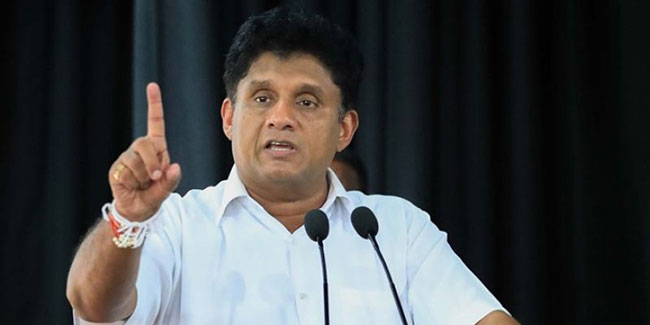
We acknowledge that human beings are only a part of the natural world, and we respect the specific values of all forms of life, including non-human species. We acknowledge the wisdom of the indigenous people of the world, as custodians of the land and its resources. We acknowledge that human society depends on the ecological resources of the planet, and must ensure the integrity of ecosystems and conserve biodiversity and the resilience of life supporting systems.
We recognize that there are limitations to material expansion of human society within the biosphere, and the need to conserve biodiversity through sustainable use of renewable resources and responsible use of non-renewable resources. We believe that to achieve ecological sustainability, and in order to provide for the needs of present and future generations within the finite resources of the earth, continuing growth in global consumption, population and material inequity must be halted and reversed.
We recognize that sustainability will not be possible as long as poverty persists. Political Leadership in Environmental Sustainability We recognise the significance of providing necessary political leadership and requisite political commitment. Through the National Green Initiative leadership will be provided for a new political culture in Sri Lanka to mainstream environmental sustainability into the National Development Agenda to boost the country’s ability to provide sustainable ecosystem services for its development.
Participatory Environmental Conservation: We strive for a democracy in which all citizens have the right to express their views, and are able to directly participate in the environmental, economic, social and political decisions which affect their lives; so that power and responsibility are devolved to local and regional communities, with ascent to higher tiers of government only where essential.
Preamble : We stand at a critical moment in Earth’s history, a time when humanity must choose its future. As the world becomes increasingly interdependent and fragile, the future holds great peril and great promise, at the same time. To move forward we must recognize that in the midst of a magnificent diversity of cultures and life forms we are one human family and one Earth community with a common destiny.
We must join to bring forth a sustainable global society founded on respect for nature, universal human rights, economic justice, and a culture of peace. Towards this end, it is imperative that we, the peoples of Earth, declare our responsibility to one another, to the greater community of life, and to future generations. The choice is ours: form a global partnership to care for Earth and one another or risk the destruction of ourselves and the diversity of life.
Fundamental changes are needed in our values, institutions, and ways of living. We must realize that when basic needs have been met, human development is primarily about being more, not having more. We have the knowledge and technology to provide for all, while reducing our impact on the environment. The emergence of a global civil society is creating new opportunities to build a democratic and humane world. Our environmental, economic, political, social, and spiritual challenges are interconnected, and together we can forge inclusive solutions.
People need Nature. Nature is essential for every aspect of human living. It enhances our lives, helps us feel better, has positive impacts on our social skills and therefore lays the launch pad for us to become environmentally responsible citizens. It gives us all food, air and water that we need to survive. But we are taking more from nature than it can provide, and we are putting our own lives on the line. Nature “needs” People. We live on a planet of finite resources. We can’t continue to consume our stocks of natural capital because there will be nothing left for our grandchildren. So while people need nature, increasingly, nature needs people. Nature has to be nurtured and protected so that the benefits we get from it continue to flow. For that people and nature must work as players in the same team.
Policy on Environment, Biodiversity Conservation and Climate Change: Not only do we live on an island with finite resources, but we live on a planet with finite resources. Therefore, we can’t continue to consume our stocks of natural assets in an unsustainable manner because there will be nothing left for our future generations. We have an expanding human population and a declining natural resource base within a finite land area. It is obvious that this model cannot be sustained in the long term.
The country is currently confronted with the serious degradation of its ecosystems and the biodiversity they host. This will no doubt have a detrimental effect on the provision of ecosystem services. It is well established that a reduction in ecosystem service provision will adversely impact economic development. Reversing the current trend of ecosystem degradation should be a priority for every Sri Lankan regardless of our political affiliations.
SJB as the first ever officially declared green political party will ensure that environmentally sustainable development will be the central goal of our future Government’s policy. We are fully committed to mainstreaming the principles of the UN’s Sustainable Development Goals throughout the decision making and operational processes so that development under a future SJB led Government will truly be sustainable.
Reversing the Trend of Biodiversity Loss: Despite decades of conservation efforts, deforestation, forest degradation and biodiversity loss continues. Considering that biodiversity influences the quality of ecosystems services, which in turn affects the country’s development and human well being, conservation of biodiversity including the ecological processes that sustain ecosystem services will be a priority under a future SJB led Government .
National Priority on Environment, Biodiversity Conservation and Climate Change Environment, biodiversity conservation and climate change were a national priority under the Environmental Charter placed before the public by me as the presidential Candidate in 2019. This was the first time in Sri Lanka that any presidential candidate had placed an Environmental Charter before the public. As the leader of the SJB, I have commenced a process of consultation with environmental experts to update the Environmental Charter to address the unprecedented threats posed to Sri Lanka’s natural resources from the misguided and short sighted decisions made over the last two years.
The Environmental Charter will be revised to take pragmatic action to address the current threats and to accommodate the “new normal” conditions resulting from the Coronavirus pandemic. Considering the crucial role Sri Lanka’s natural assets play in the country’s development, our future Government will consider proper management of the environment, biodiversity conservation and climate change as a national priority. With an outcome oriented program with tangible targets.
The first step will be to end the fragmentation of institutional mandates and eliminate conflicting responsibilities by introducing an effective institutional mechanism for inter-ministerial coordination to mainstream conservation into the development process. National priority programs on Environment, Biodiversity Conservation and Climate Change under our future government will have clearly defined outcomes and targeted goals to be achieved. An effective, new mechanism for timely follow-up and monitoring of implementation progress of the proposed national priority programs will be introduced to ensure the timely achievement of outcomes.
Our future Government will ensure that the country’s development pathway is economically, environmentally and socially sustainable. Sri Lanka joined all UN member states in 2015 to adopt the UN’s Sustainable Development Goals which are a universal call to action to end poverty, protect the planet and ensure that all people enjoy peace and prosperity by 2030. The SDGs will form the cornerstone of our national sustainable development program, but we will be taking a pragmatic approach to ensure that Sri Lanka’s development is sustainable.
National priority will be given for Wildlife and Ecosystem Conservation & Mitigation of the Human Elephant Conflict. Our Government is committed to the long term conservation of keystone (flagship) species. Special emphasis will be given to long term conservation of three keystone (flagship) species, the Sri Lankan elephant, Sri Lankan leopard and blue whale Focused conservation and management programs will be initiated.
The Government will give special focus to plastic waste management and waste management in urban areas. Measures will be taken to mitigate per capita plastic consumption to protect what mother nature has given us. Forest Conservation & Reforestation Forests are the lungs of our land. The national goal of Sri Lanka should be to have one third of the total land area of the country under forest and tree cover. Maintaining environmental stability through preservation and restoration of the ecological balance where needed, is a priority for the government. A comprehensive program for reforestation will be initiated, while taking all possible measures to mitigate deforestation.
The Government will initiate a special mechanism to investigate and resolve all problems related to unauthorized deforestation issues and ensure strict law enforcement. The Government will introduce a National Policy on Land Utilization which will rationalize the use of land. Emphasis will be given to protect critical ecosystems so that the country’s economic development will benefit from much needed ecosystem services. We hope that this platform will enable us to develop a sincere and fruitful partnership between the nongovernmental conservation organizations and our Government, to promote a genuine conservation agenda in Sri Lanka and ensure that the country’s development is truly sustainable.

Latest News
Heat Index at Caution Level in the Western, Sabaragamuwa, Southern, Eastern, North-western, Northern and North-central provinces and in Monaragala district


Warm Weather Advisory
Issued by the Natural Hazards Early Warning Centre
Issued at 3.30 p.m. on 31 March 2026, valid for 01 April 2026.
The Heat index, the temperature felt on human body is likely to increase up to ‘Caution level’ at some places in the Western, Sabaragamuwa, Southern, Eastern, North-western, Northern and North-central provinces and in Monaragala district.
The Heat Index Forecast is calculated by using relative humidity and maximum temperature and this is the condition that is felt on your body. This is not the forecast of maximum temperature. It is generated by the Department of Meteorology for the next day period and prepared by using global numerical weather prediction model data.

Effect of the heat index on human body is mentioned in the above table and it is prepared on the advice of the Ministry of Health and Indigenous Medical Services.
ACTION REQUIRED
Job sites: Stay hydrated and takes breaks in the shade as often as possible.
Indoors: Check up on the elderly and the sick.
Vehicles: Never leave children unattended.
Outdoors: Limit strenuous outdoor activities, find shade and stay hydrated.
Dress: Wear lightweight and white or light-colored clothing.
Note:
In addition, please refer to advisories issued by the Disaster Preparedness & Response Division, Ministry of Health in this regard as well. For further clarifications please contact 011-7446491.

Govt. rations stocks as imports falter
By Ifham Nizam
The government faces a looming fertiliser crisis ahead of the 2026 Yala season, with a sharp shortfall in urea threatening paddy yields and food security.
Experts have warned that the fertiliser shortage will take its toll on the yala harvest.
With just over 100,000 tonnes of fertiliser in stock by early March—barely enough for paddy cultivation alone—and more than half of expected imports either cancelled or delayed, the government has moved to ration supplies through Agrarian Service Centres, based on last year’s consumption.
Leading crop scientist Professor Buddhi Marambe has warned that while rationing is unavoidable, it will reduce productivity. “Even last season we applied below recommended levels. This year, the gap will be worse,” he said.
Authorities are prioritising paddy, followed by maize and tea, as limited stocks are stretched across crops.
However, experts estimate yields could fall by 15–20% if nutrient shortages persist—raising the risk of higher food prices in the months ahead.
The crisis has been worsened by global disruptions, including Gulf conflict affecting fertiliser shipments and precautionary export restrictions by key suppliers, such as China.
Although the Government is pursuing deals with countries like Russia, supplies remain uncertain.
With global urea prices surging and production costs rising, smallholder farmers are expected to be the hardest hit.
“This is a wake-up call,” Prof. Marambe said, urging urgent steps to build buffer stocks and strengthen Sri Lanka’s long-term food security strategy.
By Shamindra Ferdinando
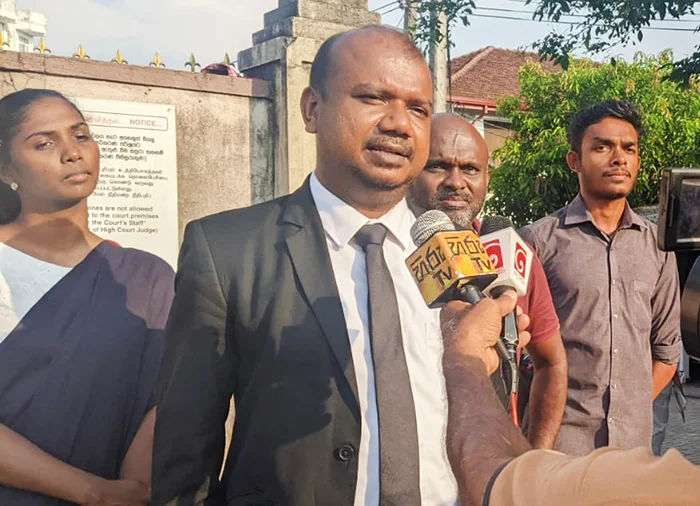
Frontline Socialist Party (FSP) spokesman Pubudu Jayagoda says the Gampaha Magistrate’s Court order that the ruling JVP hand back the FSP’s Kirindiwela office, grabbed by a group of JVP politicians on 02 September, 2025, has shown that the government cannot undermine the law.
Jayagoda said that the FSP had been compelled to move the court against the JVP as the Gampaha police refused to intervene due to political pressure. “They probably thought we were going to give up that office. Perhaps, the ruling party felt they could forcibly occupy other FSP offices,” Jayagoda said.
FSP’s Administrative Secretary Chamira Koswatta and trade unions, which operated from the Salmal Garden office, sought the court intervention to confirm the ownership of that building in the FSP. The court initially transferred the building to the police and issued a directive to law enforcement authorities to remove the JVP/NPP from that building.
Among the 20 respondents was Tilvin Silva, General Secretary of the JVP. Those now identified themselves as FSP quit the JVP in 2011 and later formed their own party.
Gampaha Additional Magistrate Shilani Perera on Monday ruled that the legitimate owner was the FSP. The Magistrate ruled that the FSPers had been forced out of that office, illegally.
Jayagoda said that the FSP considered the court ruling a victory for democracy and a devastating blow to the increasingly authoritarian JVP/NPP rule.

Amelia Kerr hits 139-ball 179* as New Zealand pull off record chase to level series

Punjab Kings fined for slow over-rate

Ice-cool Connolly leads nervy Punjab Kings home on IPL debut

Showers expected in the Western, Sabaragamuwa and Southern provinces in the evening or night

Heat Index at Caution Level in the Western, Sabaragamuwa, Southern, Eastern, North-western, Northern and North-central provinces and in Monaragala district

Urea shortage threatens Yala harvest: Experts

‘Dates have the highest sugar content to fight Coronavirus’

Sunday Island 27 December – Headlines

#SundayIsland 17th December – Headlines

Sunday Island – 28th March

Sunday Island Headlines – 21 March

Sunday Island – 21st February – Headlines
-

 Features5 days ago
A World Order in Crisis: War, Power, and Resistance
-

 News6 days ago
Energy Minister indicted on corruption charges ahead of no-faith motion against him
-

 News7 days ago
US dodges question on AKD’s claim SL denied permission for military aircraft to land
-

 Business7 days ago
Dialog Unveils Dialog Play Mini with Netflix and Apple TV
-

 Sports6 days ago
SLC to hold EGM in April
-

 Opinion6 days ago
When elephants fight, it is the grass that suffers
-
 Latest News6 days ago
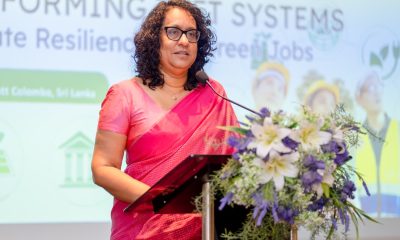
A strong Technical and Vocational Education and Training (TVET) system equips individuals with practical, relevant, and future-oriented skills helping to innovate responsibly towards a greener and sustainable future – PM
-

 Features6 days ago
Lest we forget