
News
EU: Presidential election competitive and offered voters genuine political alternatives

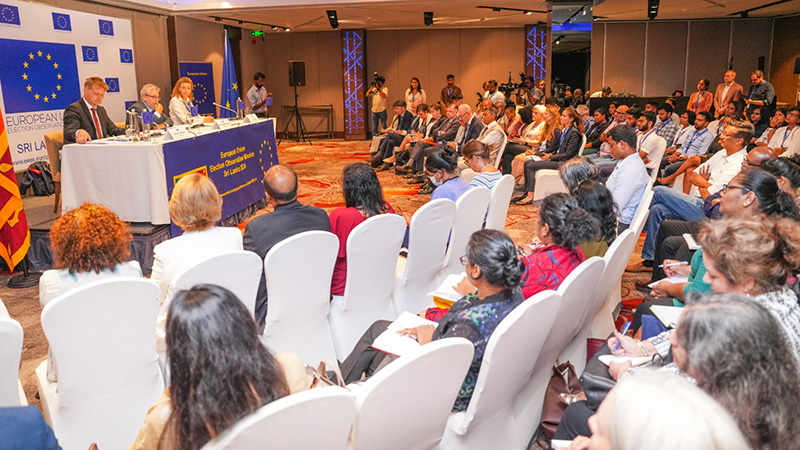
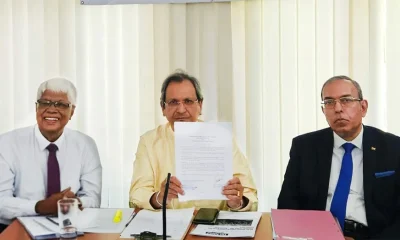
The 2024 presidential election was a pivotal step towards reinvigorating the democratic process in Sri Lanka through the ballot, the European Union Election Observation Mission Sri Lanka declared.
The text of its statement issued soon after the declaration of results”: The Election Commission of Sri Lanka (ECSL) conducted the process independently and with resolve, ensuring transparency at all key stages of the election. The contest itself was pluralistic, with fundamental freedoms broadly respected. The campaign was peaceful and energetic, yet the advantage of incumbency tilted the playing field and some manipulative digital campaigns aimed to confuse voters. Vote count and tabulation of results were rated positively by citizen and international observers and all lead candidates accepted the outcome of the polls.
The ECSL operated transparently and efficiently, enjoying broad stakeholder trust at national and district levels. The Commission held stakeholder meetings and closely collaborated with civil society to provide voter information and monitor the campaign. The Commission also took an active public stance against violations of campaign rules and the misuse of state resources, despite limited powers of and capacity for enforcement.
The ECSL made preparations for election day efficiently and on time, ensuring smooth and orderly voting, counting and tabulation of results. On election day, all polling stations observed by the EU EOM opened on time, election workers were knowledgeable and professional, while the presence of party agents and citizen observers enhanced the transparency and integrity of the process. Voting proceeded in a peaceful and festive atmosphere. Procedures were robustly followed during voting, as well as during the count of ballots. No major violations of election law were recorded, yet the political campaign on social media continued in full swing, also on election day.
Clarity and integrity of the process were ensured during the tabulation and the count of preferential votes. Tabulation took place in parallel to the vote count and proceeded without irregularities in all results’ centres observed. The ECSL released voting results by polling division as soon as they were verified, maintaining stakeholder confidence. The decision to proceed with the count of preference votes was communicated before all final results were published.
The legal framework is conducive to the conduct of a democratic election. Recent legal reforms addressed several previous EU EOM recommendations, advancing privacy rights, introducing regulations for campaign finance and ensuring that youth turning 18 in the months preceding an election are no longer disenfranchised. Yet, legislation with the potential for arbitrary and repressive application against political dissent, for example the Online Safety Act, is also in force, falling short of international standards.
Eligibility rules for presidential candidates protect the right of political participation, and the nomination process was conducted without legal incident. The ECSL registered a record total of 39 candidates, around half of whom did not campaign. Regrettably, there was no woman among the candidates. Overall, there has been little progress in advancing gender parity in public life due to many factors including limited political will to advance women within party structures.
The presidential election was competitive and offered voters genuine political alternatives. For the first time in recent political history, there was a three-way race for the presidential office. The leading candidates focused their campaigns on economic issues, attempting to attract voters from all social strata and crossing historical ethno-religious divisions.
The campaign was peaceful and energetic, allowing broadly for the freedom of assembly and expression. However, closer to the election, hostile, aggressive rhetoric, interpersonal mudslinging and manipulative digital campaigns gradually increased. All leading candidates held large-scale rallies, sought alliances with religious leaders and minority groups, mobilised grassroots support down to the village level, and deployed online campaign teams. A few politically motivated assaults occurred.
The advantage of incumbency distorted the playing field. Salary increments for public sector employees, social benefit schemes, an interest-free student loan plan and monetary support programmes for small businesses, all announced by the executive during the campaign and covered in a positive tone on state media, were aligned with the incumbent’s re-election bid. The line between governing and campaigning was further blurred by the participation of state and local officials in the incumbent’s rallies. This was aggravated by the absence of elected provincial and local councils.
To advance equity between candidates, limits on campaign finance were introduced for the first time. There were no caps on individual donations and no disclosure requirements until after the election. Transparency in candidate spending on traditional and social media was also poor. Reports on campaign funding and expenditure are to be submitted only after the declaration of results.
Broadcast media offered lively coverage of campaigning, yet it was rather uniform in style and content, focused on passing political messages and offering very limited non-partisan scrutiny and analysis, which would have helped voters to make an informed choice. TV stations reported on rallies and meetings, with candidates’ speeches filling up to two-thirds of their prime-time newscasts. Furthermore, leading candidates did not participate in the presidential media debate, depriving voters of the possibility to compare them directly. During the last two weeks of the campaign, alarmist and fear-mongering content about prospective violence became more visible.
Campaigning on social media was fierce, marked by increasingly hostile rhetoric closer to the election and manipulated content aiming to confuse voters. Leading candidates made accusatory statements against each other, while their digital teams inserted political messages in non-partisan entertainment and gossip groups on social media and created memes that ridiculed their rivals. False and misleading content spread online, and national fact-checkers swiftly debunked it, yet the reaction from social media platforms was not always consistent in limiting it. Campaign silence was not observed online.
Civil society was active and engaged with the ECSL, enhancing the transparency and inclusiveness of the election. Well-established citizen observer groups monitored election preparations, the campaign environment and election day proceedings. Civil society organisations (CSOs) were also agile in flagging disinformation, tracking violations of election rules and calling public attention to the misuse of state resources. A positive contribution was also made through their voter information efforts for persons with disabilities.
The ECSL received over 5,000 complaints prior to the election and 600 on election day, mostly of minor infringements of the law. Prior to the polls, the vast majority of violations were addressed directly by the ECSL, in collaboration with the police, taking action to halt the activities complained of. Equally, on election day, mitigation and prompt prevention were employed to maintain a peaceful atmosphere.”



by Norman Palihawadane
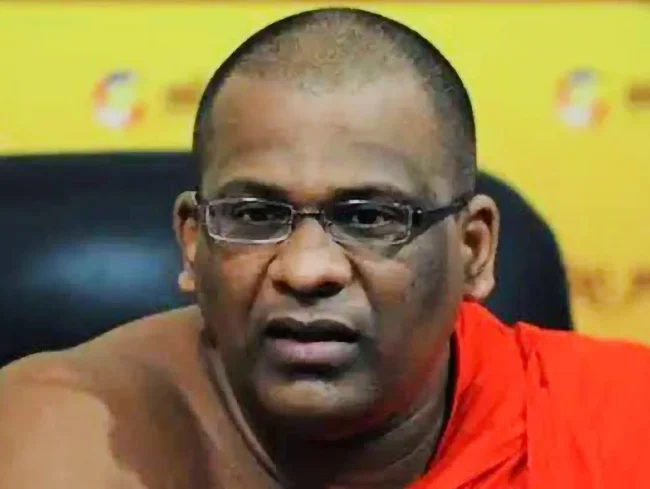
Bodu Bala Sena (BBS) General Secretary Ven. Galagoda Aththe Gnanasara Thera’s whereabouts have remained unknown since the Supreme Court, on Monday, annulled a presidential pardon granted to him in 2019.
Prison officers visited the Thera’s temple in Nawala, Rajagiriya, to take steps to return him to prison to serve the unexpired portion of his six-year sentence. However, monks at the temple had reportedly informed the officials that they were unaware of his whereabouts.
Police spokesman ASP F.U. Wootler said a separate court order was required for the police to trace the Thera, or assist in taking him into prison custody. No such order had been issued so far, he claimed.
Meanwhile, sources close to Gnanasara Thera said he was expected to attend a book launch in Colombo tomorrow (17),
The development follows the Supreme Court declaring the 2019 presidential pardon granted to Gnanasara Thera, by then President Maithripala Sirisena, null and void.
A three-member Supreme Court bench held that the pardon had been granted arbitrarily and violated public trust and principles of natural justice.
Gnanasara Thera had been serving a six-year prison sentence for contempt of court when the then President Sirisena granted him the pardon, in May, 2019. He had served only about nine months of the sentence at the time.
With the pardon annulled, the original sentence remains in force and the Thera is now required to serve the balance of his six-year term.
The Supreme Court ruling has raised questions over the procedure to be followed to return him to prison, with police and prison authorities yet to take custody of him.
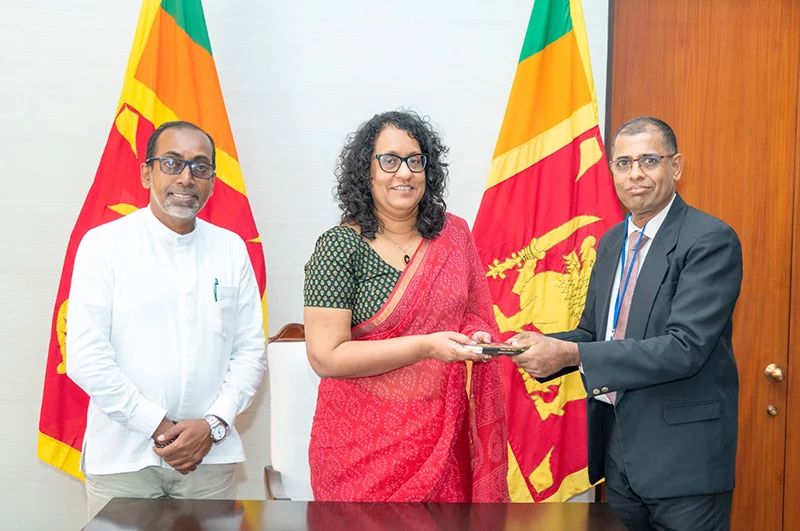
Russian citizens residing or temporarily visiting Sri Lanka will have the opportunity to cast their ballots in the elections to the State Duma of the Federal Assembly of the Russian Federation on September 20.
The Embassy of the Russian Federation in Sri Lanka said polling would be held at polling station No. 8338 at the Russian Embassy, 404, Bauddhaloka Mawatha, Colombo 07.
The polling station will be open from 8 a.m. to 8 p.m. on September 20, according to the Embassy.
Russian citizens aged 18 and above, including those permanently residing in Sri Lanka and those temporarily visiting the country, are eligible to vote, the Embassy said.
Voters are required to visit the polling station during its operating hours and produce documents certifying their Russian citizenship.
The Embassy said prior registration was not required to participate in the voting.
The election will be held to elect deputies to the ninth convocation of the State Duma, the lower house of Russia’s Federal Assembly.
Plastic waste is a growing challenge for Sri Lanka’s food sector, yet important gaps remain in understanding where and how single-use plastics are used, how they move through food value chains, and where interventions could have the greatest impact.
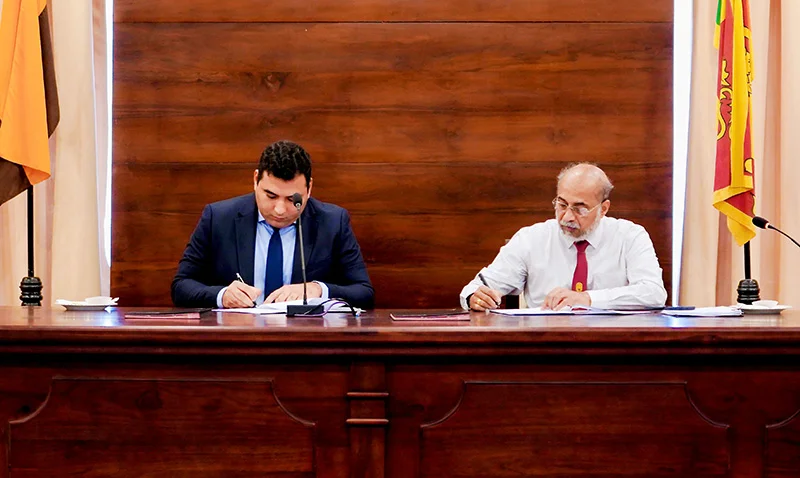
Through the European Union-funded CIRCULAR project, new research will help address these gaps by generating evidence to inform policy, business practices and more sustainable choices. Three research grants, totalling €Euro 110,000, will support university-led studies by research teams from the Faculty of Agriculture at the University of Ruhuna, and the Faculty of Medicine and Faculty of Computing at the University of Kelaniya.
Together, the studies will examine the use, flow and impacts of single-use plastics (SUPs) across selected food and beverage value chains in the Colombo and Galle Districts. The research will also seek to identify practical opportunities to reduce plastic use, promote more sustainable alternatives and strengthen circular economy practices.
At present, available data on plastic waste in Sri Lanka, particularly single-use plastics, do not provide sufficient detail on the sectors, sources and types of plastics involved. This limits the ability of policymakers, businesses and other stakeholders to pinpoint where plastic use can be reduced most effectively and to assess which interventions could deliver the greatest impact. The new research will help provide a more detailed understanding of these patterns, supporting more targeted and evidence-based action.
The three research teams will use a combination of data collection, waste-flow mapping, environmental and public health assessments, and life-cycle approaches to examine these challenges from different perspectives. The findings are expected to help identify opportunities to reduce plastic use, improve resource efficiency and promote more sustainable packaging and waste management practices.
The research grants are part of the CIRCULAR project’s broader efforts to support Sri Lanka’s transition towards more sustainable production and consumption in the food sector. Alongside research and evidence generation, the project works to raise awareness, encourage behaviour change and support approaches that move away from the traditional “take, make and dispose” model towards a more circular economy.
Circular Economy in the Food Sector (CIRCULAR) project is a three-year initiative focused on reducing food loss and food waste (FLW) and Single-use plastic (SUP) waste in the Food Sector in Sri Lanka. Funded by the European Union, and partially co-funded by the German Federal Ministry for Economic Cooperation and Development (BMZ), the project is jointly implemented by Expertise France (EF), the Food and Agriculture Organisation (FAO) and Deutsche Gesellschaft für Internationale Zusammenarbeit (GIZ) GmbH.
By strengthening the evidence base on single-use plastics, the research is expected to provide a stronger foundation for practical action, helping decision-makers, businesses and other stakeholders better understand where change is needed and how more sustainable solutions can be put into practice.

Showers about 75 mm are likely at some places in the Western, Sabaragamuwa, Central and Southern provinces

Brook, Buttler, Baker star as Sri Lanka slump to 119-run rout

Where is Gnanasara Thera?Police pass buck to court

Russian citizens in Lanka to vote in State Duma elections

Euro 110,000 research drive to tackle plastic waste in food sector

New SAU-RCSS pact to boost South Asian dialogue

‘Dates have the highest sugar content to fight Coronavirus’

Sunday Island 27 December – Headlines

#SundayIsland 17th December – Headlines

Sunday Island – 28th March

Sunday Island Headlines – 21 March

Sunday Island – 21st February – Headlines
-

 Sports5 days ago
DDS set to lose Test captaincy
-

 News5 days ago
Sri Lanka faces new grid challenge as rooftop solar surges: former CEB GM
-

 Latest News5 days ago
Shafali, Deepti power India into sixth T20 Asia Cup final
-

 Latest News4 days ago
Sri Lanka thwart Fatima Sana challenge to secure Asia Cup final spot
-

 News3 days ago
Gnanasara Thero absconding after SC ruling
-

 Features6 days ago
Lost for 90 years: Rare Goby resurfaces in Jaffna
-

 News4 days ago
Ammunition cache found in old Kandy bungalow
-

 Latest News6 days ago
Italian Naval Vessel ‘ITS Giuseppe Garibaldi’ arrives in Colombo