
Sports
Erwee and Bavuma hold Australia off to ensure a draw


South Africa defied Australia’s bold push for an improbable victory, and series sweep, as the third Test ended in a draw at the SCG.After following on, South Africa were 106 for 2 in their second innings when play ended five overs before the close. The surface played slowly and did not deteriorate as expected with South Africa mustering belated fight to end a disappointing series on a better note.
Australia would have booked a spot in the World Test Championship final in June with victory, but one drawn match in the upcoming four-Test series in India will prove enough.Given their batting frailties, South Africa will be relieved to have escaped with a draw – their first such result since 2017.
South Africa were nervous after skipper Dean Elgar fell before tea when he gloved a short Pat Cummins delivery to be caught behind. An under-pressure Elgar’s wretched series ended with just 56 runs at an average of 9.33 marked by struggles against short leg-side deliveries.
After tea, spinner Nathan Lyon was left frustrated after a review on an lbw decision on Heinrich Klaasen went against him. The not-out decision was upheld even though replays showed the ball hitting middle stump.
His mood soured further three balls later when Klaasen, playing his first Test match since 2019, stood his ground after edging a delivery to Steven Smith, who claimed a low catch at slip.But replays cast doubt over whether the ball touched the grass when it went into Smith’s fingers and it was enough for third umpire Richard Kettleborough to give not out.
Klaasen’s luck ran out when he was clean bowled by a cracking reverse swinging delivery from Josh Hazlewood to provide a glimmer of hope for Australia with 20 overs remaining.
South Africa were 82 for 2 with 15 overs left but Australia’s push continued with Cummins giving himself one last burst without reward.Cummins had also tried part-time spinners Smith, Marnus Labuschagne and Travis Head, who claimed the only wicket in the morning session, but to no avail.
Left-arm spinner Ashton Agar, who was wicketless in 14 overs in the first innings, was surprisingly backed to share the new ball alongside Hazlewood.In his first Test match since 2017, Agar again struggled with his accuracy in what has been a tough return in an audition ahead of Australia’s tour of India. He finished wicketless from 22 overs in the match.
South Africa started the day precariously placed at 149 for 6 after Cummins and Hazlewood bowled superbly late on day four in fading light.
But Harmer and Marco Jansen batted cautiously to thwart Australia’s attack. Jansen played a rearguard until being dislodged caught behind by Head with a delivery outside off stump that stayed low.But an 85-run partnership between Harmer and Keshav Maharaj pushed South Africa close to the follow-on target and likely safety from a series whitewash.
Maharaj reached his half-century on the first ball after lunch before falling to Hazlewood with South Africa 24 runs short of avoiding following on.Having been preferred over Scott Boland, Hazlewood repaid the faith of the selectors on his return with four wickets after suffering a side strain against West Indies in the opening Test of the home season.
Maharaj’s dismissal triggered an all too-familiar rush of wickets for South Africa to set up an intriguing finish although it proved an anti-climax.
Australia ran out of time in a truncated match, where four straight sessions across days three and four were washed out. Forty-nine overs were also lost to rain and bad light on the opening two days to continue a run of rain-affected matches at the traditional SCG New Year’s Test.But Australia thoroughly dominated South Africa throughout a one-sided series to complete an unbeaten home Test season after earlier thrashings over West Indies in Perth and Adelaide.
Australia’s massive first innings was built on an unbeaten 195 from opener Usman Khawaja and 104 from Smith, who passed Don Bradman with his 30th Test century.
Having won three straight Test series in Australia, South Africa were a shadow with their batting unable to muster much of a challenge.Apart from fiery quick Anrich Nortje, their attack also underwhelmed with spearhead Kagiso Rabada taking just three wickets at 87.66 in the last two matches after an eight-wicket haul on the bowler-friendly Gabba surface. South Africa’s disastrous series also ended their chances of qualifying for the WTC final.
(cricinfo)



As Sri Lanka marked the 30th anniversary of their Cricket World Cup triumph, the odds they overcame remain the stuff of cricketing folklore. Barely 15 years into their journey as a full member of the ICC, they didn’t just compete – they turned the game on its head, blindsiding the cricketing world with a brand of cricket that was as audacious as it was effective.
With field restrictions in place for the first 15 overs, Sri Lanka cashed in like seasoned pros at the top of their game. They went after bowlers with a nothing-to-lose attitude, throwing caution to the wind and runs on the board. By the time opponents tried to plug the gaps, the horse had well and truly bolted, the damage was already done.
Arjuna Ranatunga had long been tipped for greatness. Sir Garry Sobers, Sri Lanka’s first coach after gaining Test status, had earmarked him as one to watch. While Ranatunga’s contributions with the bat were invaluable, it was his leadership that truly set him apart, a skipper who knew how to marshal his troops and bring out the best in each of them.
A towering presence in Sri Lankan cricket, Ranatunga, much like Imran Khan in 1992 was handed the reins and the freedom to build a side in his own image. More than half a dozen players in that World Cup squad hailed from outstations, many of them taken under the captain’s wing and housed in his own home, a gesture that spoke volumes of the unity and trust within the camp.
“I was very lucky to have guys like Duleep Mendis, Roy Dias and Ranjan Madugalle working closely with the team. We had developed this side for about two years and our batting unit from number one to number seven had collectively played over 1000 ODIs. We knew no team could match that,” Ranatunga told Telecom Asia Sport.
For Ranatunga, success was about spotting raw talent and backing it to the hilt.
“It was clear to me there was a lot of hidden talent in the outstations. You had to identify them and give them confidence. Take Sanath Jayasuriya; in his early years he struggled. I think he had just one half-century in his first 50 games. But we knew what he was capable of. Once he got his confidence, he was unstoppable,” he said.
Sri Lanka’s triumph was not built on luck or favourable conditions, it was forged in the fire of big-match pressure. They beat India twice in their own backyard, a feat that underlined their dominance.
“Why our win is special is because we beat India twice in that tournament, in their own backyard. They had a very strong side, but we outplayed them. Aravinda’s knocks in the semi-final and final were sensational. At that point, he was the best player in the world and I was fortunate to have played alongside him,” Ranatunga recalled.

The ICC recently presented Sri Lankan players
with medallions to mark the World Cup win.
Until 1996, Sri Lanka had never made it past the first hurdle in a World Cup. But in that tournament, they were unstoppable, brushing aside England in the quarter-finals, overwhelming India in the semis and then outplaying a formidable Australian outfit in the final.
Ranatunga, never one to shy away from a verbal duel, believed that taking the fight to Australia was half the battle won.
“I always tried to get under the Australians’ skin. I knew that if you gave it back to them, they could crack under pressure,” he said.
There was much chatter ahead of the final about how Sri Lanka would handle Shane Warne. But Ranatunga had his cards in place.
“We had four left-handers in the top seven, so we knew we could counter him. Australia rely on building dot-ball pressure when wickets don’t come. But we handled it well. Asanka Gurusinha stepped out to Warne and hit a few boundaries and from there, we had the chase under control.”
Three decades on, that triumph still stands tall, not just as a victory, but as a turning point. It was the day Sri Lanka didn’t just win a World Cup, but rewrote the script of one-day cricket, proving that even the underdogs can have the last laugh if they are willing to play with courage, conviction and a touch of madness.

Richmond College Team
Seated (from left) Ravinu Randinu, Avindu Theekshana (Asistant Coach), Lahiru Maduwantha (Assistant Coach), P.A Dharmarathne (Assistant Principal), Bevin Jayawardena (Captain), Rusira Maddumahewage (Principal), Tenusha Nimsara (Vice Captain), Chamith Wickramasingha (MIC), Mahesh Sandaruwan (Head Coach), Sidath Priyankara (Assistant Coach), Nethuja Basitha.
Standing (from left) Hiruk Akalanka, Daham Sathsara, Ameesha Rasanjana, Chalindu Karunarathne, Punal Hansajith, Ranindu De Silva, Tenura Dias, Vihanga Indusara, Shevan De Soyza, Nethsara Akash, Minaga Ariyadasa, Risinu Rupasinghe, Senuk Dulmeth.
One of the most anticipated school cricket encounters in the south, the “Lovers’ Quarrel” between Richmond College and Mahinda College returns with high expectations as the 2026 edition gets underway at the iconic Galle International Stadium on Thursday.
Despite its rich legacy and passionate following, the series has been locked in draws, with no outright winner emerging over the past six years. While such streaks are not uncommon in Sri Lanka’s school cricket circuit, the nature of play both Richmond and Mahinda bring to the field has only intensified the calls for a decisive result. With two well-balanced sides, 2026 could well be the year that produce a result.
Richmond enter the contest with memories of their last victory still relatively fresh, having triumphed under Thaveesha Abishek in 2019. Mahinda, on the other hand, are eager to end a much longer drought, with their last win dating back to 2008 under the captaincy of Rajitha Priyan. Over the years, both teams have come close, producing thrilling contests, yet the elusive result has remained just out of reach.
This year, Richmond skipper Bevin Jayawardhana leads from the front with a consistent run tally exceeding 500 runs for the season. He is well supported by a formidable batting unit featuring Ameesha Rasanjana, who has amassed over 600 runs including a century and four half-centuries. Risinu Rupasinghe and Tenusha Nimsara, both with over 500 runs, add further depth, with Nimsara also contributing a century and three fifties—making Richmond a side capable of posting imposing totals.
Their strength extends into the bowling department, where spin is likely to play a decisive role. Off-spinner Minaga Ariyadasa, with 39 wickets, leads the attack, backed by left-arm spinners Nethuja Basitha and Tenusha Nimsara, who have claimed over 30 and 26 wickets respectively. Seam option Ranindu de Silva adds variety and could be a key factor with the new ball.
Mahinda, led by Arosha Udayanga, boast an equally dangerous lineup. Wicketkeeper-batsman Randula Mabarana has been in sublime form, accumulating 692 runs, including a century and four fifties, highlighted by a fine 115 against S. Thomas’ College. Thevindu Rashmika has also impressed with 680 runs and two centuries, including a commanding 151 against Nalanda College. Deputy skipper Dulsith Darshana (578 runs) and Dineth Pahasara, who struck a notable 175 against Nalanda, strengthen a batting order that can turn matches on its head.
Their bowling attack is spearheaded by off-spinner Manitha Rajapaksha, who has taken over 50 wickets this season, making him one of the most potent threats in the encounter. Leg spinners Sehas Ashinsa and skipper Udayanga add further depth with their all-round capabilities, giving Mahinda a well-rounded edge.
With both teams stacked with proven performers and match-winners, the stage is perfectly set for a gripping contest. The question remains whether either side will seize the initiative and push for victory, or if the Lovers’ Quarrel will once again end in a stalemate.
Cricket’s unpredictability has long defined this historic encounter—but as anticipation builds, fans in Galle and beyond will be hoping that 2026 finally delivers the result they have been waiting for.

Mahinda College Team
Seated (from left) G.H. Sachith Lakmal (Asst. Coach), Jagath Samarakoon (Master in Charge – Junior), M.W. Ajith (Prefect of Games), Arosha Udayanga (Captain), Janaka Peduruhewa (Principal), Dulsith Darshana (Vice Captain), L.P. Weeraman (Deputy Principal – Sports), Y. Nishantha Kumara (Master in Charge – Senior), T.D. Ajantha Kumara (Head Coach Standing (from left) Ruvinda Deshanjana, Kavindu Nimsara, Buddima Tharupathi, Naviru Nishitha, Kaveesha Githmal, Sehas Ashinsa, Thiyon Helika, Manitha Rajapaksha, Sadew Nethmina, Thevindu Rashmika, Randula Mabarana, Vishmitha Sathsara, Gesandu Bisas, Dineth Pahasara, Mandith Manodara.

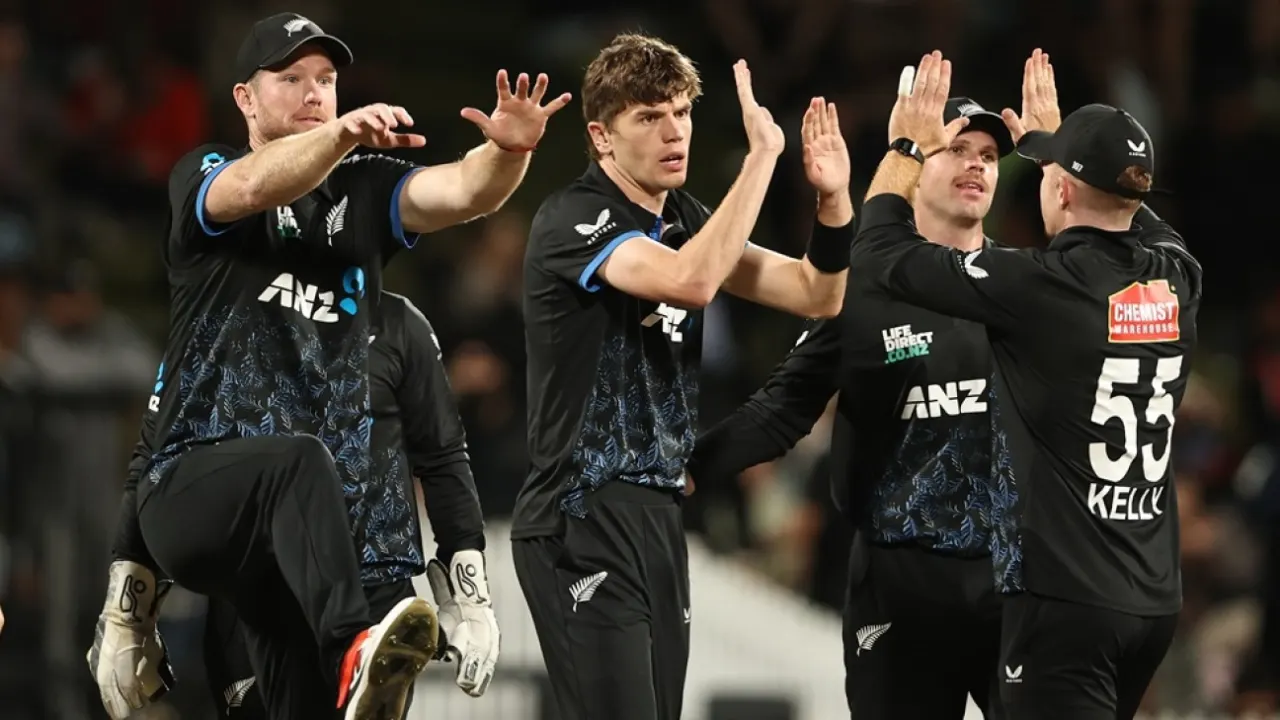
New Zealand levelled the five-match T20I series against South Africa with a dominant performance in Hamilton. After being put in to bat on a surface the women’s sides praised for its batter friendliness, New Zealand relied on Devon Conway’s experience to post a challenging target.
They may even have felt they left a few runs out there as few stayed with Conway with the 48-run opening stand their highest. South Africa’s spinners were particularly expensive as Keshav Maharaj and George Linde conceded 78 runs in the six overs they bowled.
In the end, New Zealand scored exactly the same number of runs as they posted just over a month ago against South Africa, in the group game of the T20 World Cup. Then, South Africa eased to the target with 17 balls to spare. This time, they were bowled out for their 10th lowest score in the format: an exact mirror of what New Zealand’s line-up did in the first match. Only Linde scored more than 30 as Ben Sears and Lockie Ferguson took six wickets between them in an incisive display of quick bowling.
With South Africa women winning earlier in the day, both the men’s and women’s series are locked at 1-1.
Conway collects his highest in two years
Conway didn’t get any games at the T20 World Cup but showed he still has plenty to offer with an innings that provided a solid foundation for New Zealand to build on. He was productive on the leg-side from the get-go, when he flicked the first ball of the match through mid-wicket for four and scored 80% of his runs in that half of the field. That included both his sixes: the slog-sweep off Keshav Maharaj in the over after the Powerplay and his launch over long-on off Wiaan Mulder which brought up his fifty off 39 balls. Conway has not scored this many runs in 20 T20I innings, since February 2024. He was ready to up the ante as New Zealand entered the last five overs and tried to pull Wiaan Mulder but was cramped for room and top-edged. New Zealand were 124 for 4 with 27 deliveries remaining.
South Africa’s death bowling misses a trick
With Conway dismissed, and New Zealand 126 for 5 after 16 overs, South Africa had the opportunity to keep the hosts under 160 but their death bowling plans faltered. Nqobani Mokeona, the 19-year old, bowled a good 17th over that cost only seven runs and finished with excellent figures of 0 for 22 in four overs. Gerald Coetzee’s final over went for eight runs and brought the wicket of Jimmy Neesham before Ottneil Baartman’s last over cost 10 runs.
Keshav Maharaj came on to bowl at the end, and it went awry. Cole McConchie advanced on him to hit the first ball for six and then Josh Clarkson plundered 16 runs off the four deliveries. Maharaj’s plan to go wide of the stumps didn’t work as Clarkson chased it and finished unbeaten on 26* off nine balls. What may irk Maharaj most is that he had another option. Wiaan Mulder, playing a T20I for the first time since September 2024, bowled two overs for 14 runs and could have had one towards the end of the innings. South Africa conceded 42 runs in the last three overs.
New Zealand’s hat-trick of early strikes
South Africa were off to a solid start on 24 without loss after the first three overs but then trouble struck. In the fifth over, Connor Esterhuizen thought he had carved Sears in front of backward point, but Tim Robinson timed his jump well to take a good catch. In the next over, Mulder, opening for the first time in T20Is, worked his way to 16 off 20 balls before he also tried to cut but was beaten by turn and bounce from Mitchell Santer and caught in the covers. With both openers dismissed early, South Africa would have been looking for a big performance from Tony de Zorzi, the No.3 who was originally part of the T20 World Cup squad. But the left-hander fell victim to the McConchie curse (remember he dismissed Quinton de Kock and Ryan Rickelton in the T20 World Cup semi-final?) and top-edged a sweep to short fine. South Africa were 31 for 3 in the seventh over.
Santner gets Smith again and Sears steals the show
It’s gone from tough to tougher for finisher Jason Smith, who has been dismissed by New Zealand’s captain in successive matches. Smith was stumped for 10 in the first T20I off Santner’s bowling, as he lunged forward, and this time was caught for 12 as he top-edged a sweep. Smith handed a simple catch to Sears at short fine and will be concerned with his lack of runs on the tour so far. Sensing an opportunity to finish things off quickly, Santner brought Sears back on to replace and kill the game. Sears responded to plan and used the short ball well. He had both Dian Forrester and Gerald Coetzee caught on the pull to leave South Africa 91 for 7 after 13 overs and the game all but over. South Africa were bowled out in the 16th over.
Brief scores:
New Zealand 175 for 6 in 20 overs (Devon Conway 60, Tom Latham 11, Nick Kelly 21, Mitchell Santner 20, Cole McConchie 18*, Josh Clarkson 26*; Gerald Coetzee 1-28, Otnell Baartman 1-31, Keshav Maharaj 1-45, George Linde 1-33, Wiaan Mulder 2-14) beat South Africa 107 in 15.3 overs (Wiaan Mulder 16, Rubin Hermann 19, Jason Smith 12, Dian Forester 10, George Linde 33; Ben Sears 3-14, Lockie Ferguson 3-16, Mitchell Santner 2-19, Cole McConchie 1-24, James Neesham 1-10) by 68 runs
[Cricinfo]

CIABOC questions Ex-President GR on house for CJ’s maid

Post-Ditwah Indian recovery assistance to SL: health experts from here visited India

Professor G L Peiris addresses seminar at national university of singapore

New Zealand HC meets Defence Secretary

US paying the price for disregarding military advice

Lawmakers complain of insufficient fuel allocation

‘Dates have the highest sugar content to fight Coronavirus’

Sunday Island 27 December – Headlines

#SundayIsland 17th December – Headlines

Sunday Island – 28th March

Sunday Island Headlines – 21 March

Sunday Island – 21st February – Headlines
-

 News6 days ago
Historic address by BASL President at the Supreme Court of India
-

 Sports6 days ago
The 147th Royal–Thomian and 175 Years of the School by the Sea
-

 Life style3 days ago
From culture to empowerment: Indonesia’s vision for Sri Lanka
-

 News6 days ago
Power sector reforms jolted by 40% pay hike demand
-

 Business2 days ago
Browns EV launches fast-charging BAW E7 Pro at Rs. 5.8 million
-

 News4 days ago
Crypto loopholes funnel Lankan funds abroad
-

 Latest News3 days ago
QR code system will be implemented for fuel with effect from 06.00 a.m. today (15th)
-

 Sports3 days ago
Kirsten brings pedigree, but Sri Lanka must fix the system