
News
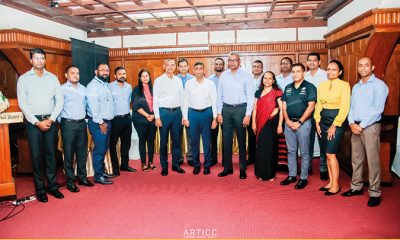
Enforcing Environmental Law: A Timely Partnership between the WNPS and the BASL


In an era where countless environmental offences and crimes are often overlooked or go unpunished, the Wildlife and Nature Protection Society (WNPS) has entered an MoU spanning a period of three years with the Bar Association of Sri Lanka (BASL), a WNPS news release said.
“The partnership’s primary purpose is to ensure greater levels of enforcement of environmental law in Sri Lanka, thereby supporting the conservation of natural resources for the generations to come,” it said.
The release explained that the agreement’s objectives are threefold and comprise joint and collaborative projects between the two parties aimed at 1) increasing awareness and education among lawyers with respect to environmental law in Sri Lanka, 2) increasing the interest in environmental law among lawyers in Sri Lanka and 3) increasing awareness among lawyers to environmental issues prevalent in the country.
Accordingly, the parties have shortlisted several projects to be conducted during the term of the agreement, including the establishment of a contact list of BASL environmental lawyers for WNPS District Representatives to liaise with in order to obtain the necessary legal expertise and guidance to initiate action in their respective areas. The BASL has further pledged to offer support to the WNPS with respect to any litigation on any critical national issues, as and when the need arises.
“Due to a low rate of expertise, knowledge and appreciation on environmental issues, the two parties will conduct an orientation programme with the support of senior environmentalists and resources from the Department of Wildlife Conservation (DWC). The programme will further be conducted on a district basis under the guidance of the BASL. These activities will further be reinforced by webinars conducted for BASL members on environmental issues, the release said.
“In the wake of numerous violations of the Flora and Fauna Protection Ordinance reported daily, we believe that this integral partnership between the WNPS and the BASL addresses a pressing need by supporting the enforcement of environmental law in the country, and upholding justice for the voiceless,” stated Isuru Balapatabendi, Secretary, BASL.
A regional training programme titled “Know your environmental rights”, for DWC staff, WNPS
District Representatives, and school environmental organizations will be conducted to disseminate essential knowledge and expertise among those serving on the frontlines of environmental conservation, WNPS said.
“We anticipate that by building knowledge, awareness and interest among key stakeholders, we will be able to safeguard and sustain these essential resources, and protect our nation’s valuable ecosystems in the years to come,” stated Jehan CanagaRetna, President – Wildlife and Nature Protection Society (WNPS)





The Cabinet of Ministers approved the resolution furnished by the Minister of Transport, Highways and Urban Development to accept 08 used low floorboard buses offered as a grant by the Government of Japan.
News
Payment of the financial subsidy for fertilizer to farmers cultivating paddy lands for the Yala season 2026.

While approval has been granted at the Cabinet meeting held on 18.08.2025 to pay the financial subsidy for fertilizer to farmers cultivating paddy lands for the Maha season 2025/26, the programme is planned to be continued for the Yala season 2026 as well.
Accordingly, the Cabinet of Ministers approved the resolution furnished by the Minister of Agriculture, Livestock, Lands and Irrigation to pay a financial subsidy of Rupees 25,000/- per hectare and for a maximum of 02 hectares per farmer for paddy cultivation and to pay Rupees 15,000/- per hectare for field crops cultivated in paddy lands[maximum of 02 hectares per farmer]
News
Ministerial Committee appointed to submit recommendations on proposed program to mitigate loss of crops to wild animals
The rural agricultural livelihood and food security have been severely impacted due to the damage caused by wild animals such as elephants, wild boars, monkeys, toque macaque, squirrels, and peacocks roaming around human habitats and cultivated lands.
Animal-human conflicts and property destruction have mostly been reported around these areas, and serious social and economic issues have also arisen.
Therefore, the Ministry of Agriculture, Livestock, Land, and Irrigation has prepared a comprehensive program based on the opinions of all stakeholders, including the public, university community, farmers’ organizations, environmentalists, non-governmental organizations which work for environmental issues, the Department of Agriculture, the Department of Agrarian Development, and other relevant organizations.
Taking into consideration the report submitted by the Minister of Agriculture, Livestock, Land, and Irrigation, the Cabinet of Ministers has decided to appoint a ministerial committee with the participation of other relevant ministers, chaired by the Minister of Agriculture, Livestock, Land, and Irrigation, to submit appropriate recommendations on how the aforementioned program should be implemented by further reviewing the proposals included in the said program and incorporating new proposals.

Cabinet nod to accept Japanese government grant of 08 used low floorboard buses

Payment of the financial subsidy for fertilizer to farmers cultivating paddy lands for the Yala season 2026.

Ministerial Committee appointed to submit recommendations on proposed program to mitigate loss of crops to wild animals

New Zealand elect to bowl first at Eden Gardens

Cabinet approves import of Maize to meet shortfall

Cabinet nod for the removal of Cess tax imposed on imported good

‘Dates have the highest sugar content to fight Coronavirus’

Sunday Island 27 December – Headlines

#SundayIsland 17th December – Headlines

Sunday Island – 28th March

Sunday Island Headlines – 21 March

Sunday Island – 21st February – Headlines
-
 Features3 days ago
Brilliant Navy officer no more
-

 Opinion6 days ago
Jamming and re-setting the world: What is the role of Donald Trump?
-

 Features6 days ago
An innocent bystander or a passive onlooker?
-

 Features7 days ago
Ratmalana Airport: The Truth, The Whole Truth, And Nothing But The Truth
-

 Opinion3 days ago
Sri Lanka – world’s worst facilities for cricket fans
-
 Business7 days ago
IRCSL transforms Sri Lanka’s insurance industry with first-ever Centralized Insurance Data Repository
-

 Business6 days ago
An efficacious strategy to boost exports of Sri Lanka in medium term
-

 Features4 days ago
Overseas visits to drum up foreign assistance for Sri Lanka