
News
Energy expert warns CEB taking country for a ride through creative accounting

By Rathindra Kuruwita
Ensuring control over the country’s energy supply requirements was vital for its energy security and for a country like Sri Lanka that could come only by increasing the use of renewable energy, Engineer Parakrama Jayasinghe, former president of Bioenergy Association of Sri Lanka, told The Island.
Jayasinghe said that depending on coal or petroleum was not feasible for the country in the face of fluctuating prices of those commodities and the continuous devaluation of the rupee to the dollar, he said.
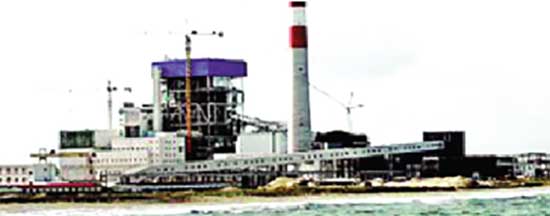
He said: “Unfortunately, the Ceylon Electricity Board (CEB) doesn’t take these factors into consideration when taking decisions on the energy mix. They are set on coal and use creative accounting to show that coal is a cheap source of energy. A number of CEB and Ministry officials had claimed that they could produce a unit of electricity for about Rs. 7 to 8. They had done so by keeping the exchange rate at a constant, sometimes at around Rs. 150 per USD and setting the coal prices at around USD 50 per ton, which was the price when coal hit an all-time low last year.”
Jayasinghe said that renewable power such as wind and solar were pegged to the rupee and the money generated in this sector remained within the country. It is estimated that around 380 grams of coal is needed to produce a unit of electricity. This gives the coal cost per generation at Rs 9.12. When we add the diesel cost, the fuel cost per unit alone comes to about Rs. 9.90 per unit. With other costs of the plant (except financing) the unit cost reaches about Rs. 14.50.
Jayasinghe said: “Independent energy experts claim that a unit of energy created by the proposed new coal plants will be around Rs. 20. Soar and wind power is much cheaper. So, the claim that coal is the cheapest source of energy is simply wrong.”
Recently, independent energy expert, Vidura Ralapanawe said that the recovery of coal prices in the world market coupled with the decline in the value of the rupee would result in the cost of electricity generation increasing rapidly in Sri Lanka, especially with Norochcholai coal fired power plants accounting for the bulk of power produced in the country. He added that the recovery of coal prices, as demand picked up meant that calculations made by a number of energy sector decision makers as regards the cost of electricity in the future would be incorrect. “Coal cost has risen to USD 90 + FOB. With freight, insurance, VAT and lightering, the total cost of coal received by the plant is USD 120 per ton,” Ralapanawe said.

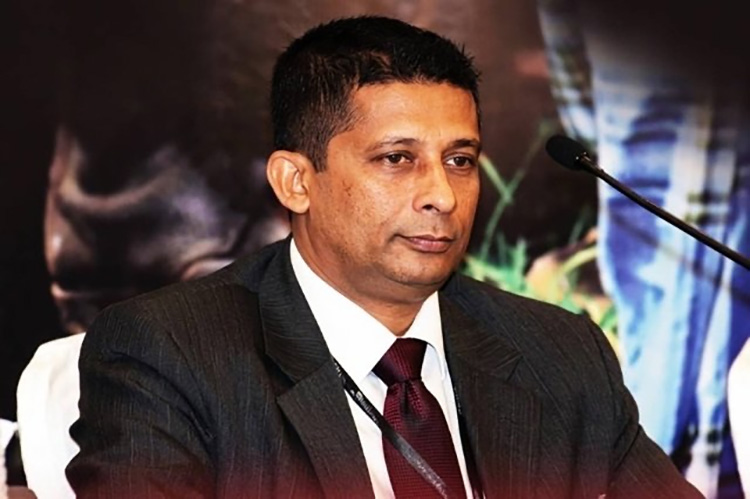
The government has chosen not to respond to questions raised by the United Nations Human Rights Council (UNHRC) regarding the detention of retired Maj. Gen. Suresh Sallay in connection with the ongoing investigations into the 2019 Easter Sunday attacks.
The Criminal Investigation Department (CID) arrested the ex-official in late February this year. The Special Rapporteur on the promotion and protection of human rights and fundamental freedoms while countering terrorism, the Working Group on Arbitrary Detention, the Special Rapporteur on the right of everyone to the enjoyment of the highest attainable standard of physical and mental health and the Special Rapporteur on the independence of judges and lawyers have jointly raised the issue on 20 July, 2026.
Drawing attention of President Anura Kumara Dissanayake to what they called alleged arbitrary detention of Sallay, former Director General of the State Intelligence Service (SIS) and former Director of Military Intelligence (DMI), under the Prevention of Terrorism Act (PTA), as well as allegations of torture and other cruel, inhuman or degrading treatment while in custody, resulting in the grave deterioration of his health, and imminent risks of retaliation through further torture and ill-treatment resulting in irreparable harm, should he be released from hospital and returned to custody, the UN sought the government explanation with a 60-day period.
The UN has stated: “This communication, and any response received from your Excellency’s Government, will be made public via the communications reporting website at the 60 days mark. Should your Excellency’s Government respond within 60 days, both the communication and the response, may be published before the 60 days mark. The communications and responses
will also be made available in the subsequent periodic report to be presented to the Human Rights Council.”
In the absence of the government’s response, the UN posted the letter, dated 20 July, 2026, addressed to President Dissanayake. The full letter can be accessed https://spcommreports.ohchr.org/TMResultsBase/DownLoadPublicCommunicationFile?gId=31125
News
Section of wartime KKS High Security Zone vacated to facilitate economic development in the area

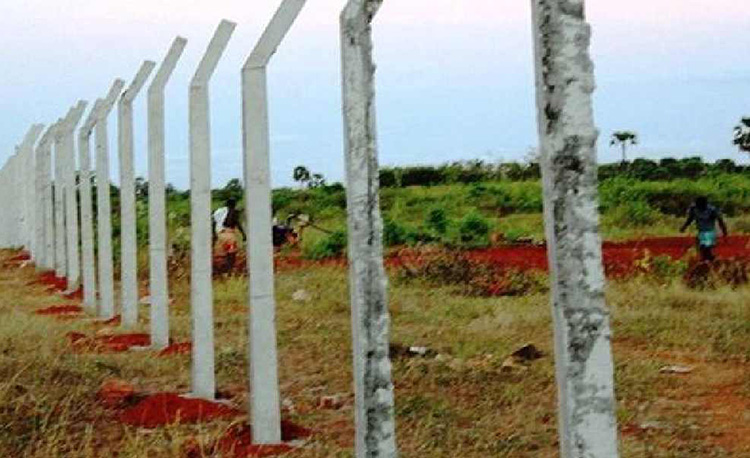
The Army, last week, vacated an area, within the wartime high security zone in the Jaffna peninsula. The Defence Ministry said that an extent of 187.56 acres of land, belonging to the Cement Corporation in Kankesanthurai, Jaffna, has been released by the military. The released land, located in Grama Niladhari Division J/233, Kankesanthurai West, within the Valikamam North (Tellippalai) Divisional Secretariat Division, had been utilised by the Sri Lanka Army since the middle of 1997.
The release of the 187.56-acre extent forms part of the initiative to make State land available for the proposed investment zone in Kankesanthurai, thereby facilitating future investment and economic development in the area.
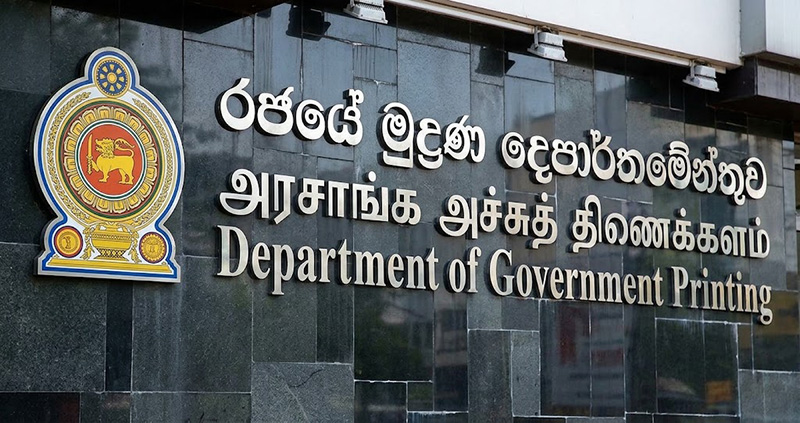
A complaint has been lodged with the Colombo Fraud Investigation Bureau against the Government Printer and the Secretary to the Ministry of Media regarding the online release of falsified documents bearing a forged Speaker’s certificate.
Attorney-at-Law Aruna Laksiri has lodged a complaint with the Colombo Fraud Investigation Bureau requesting legal action against the Government Printer of the Department of Government Printing (No. 118, Dr. Danister de Silva Mawatha, Colombo 08), Prasanna Jayaratne, and the Secretary to the Ministry of Mass Media (Asidisi Medura, 163, Kirulapone Mawatha, Polhengoda, Colombo 05), Dr. Anil Jasinghe.
The complaint alleges the commission of offences by forging and uploading falsified documents online using a forged Speaker’s certification, failure to perform statutory duties, and misappropriation of public property.
The complaint states that a copy of the English translation of the 22nd Amendment to the Constitution was downloaded and printed from the official website of the Government Printing Department (www.documents.gov.lk), which operates under the Ministry of Mass Media. On its outer cover and on page 1, the text “certified on 25th of September, 2026” is inscribed inside brackets.
The complaint pointed out that the Speaker has certified an English translation. Under Articles 23, 79, 83, and 80 of the Constitution, Parliament enacts laws and the Speaker certifies bills strictly in the Sinhala and Tamil languages; under the Constitution, therefore the Speaker cannot apply such certification to an English translation.

Showers or thundershowers will occur at several places in the most part of the island after 1.00 p.m

Geneva takes up Sallay’s case and govt. ignores opportunity to answer accusations

Section of wartime KKS High Security Zone vacated to facilitate economic development in the area

Lawyer lodges complaint against Govt. Printer, Media Ministry Secy.

Sri Lankan troops in joint anti-terrorist exercise in Russia

Nine Indian poachers brought to KKS with their boat

‘Dates have the highest sugar content to fight Coronavirus’

Sunday Island 27 December – Headlines

#SundayIsland 17th December – Headlines

Sunday Island – 28th March

Sunday Island Headlines – 21 March

Sunday Island – 21st February – Headlines
-

 Latest News5 days ago
Gold winner Tharanga gets brand-new Honda Vezel from SLAAJ
-

 Features5 days ago
Why Sri Lanka needs an Inclusive Civic Nationalism – urgently
-

 News4 days ago
US-assisted ‘Ice’ detection: NPC to examine IGP’s move to transfer drug-busting team
-

 Features6 days ago
Thailand’s biggest new global star …
-
 News6 days ago
First cases taken up by SC after enactment of 22A dismissed
-

 News5 days ago
Civil society activist accuses govt. of favouring Ven. Gnanasara
-

 Editorial3 days ago
Colombo Port drug bust: The plot thickens
-

 Editorial6 days ago
Aftershocks of 22A