
News
Ending gender-based violence in a world of 8 billion

How a new term, reproductive violence, helps confront an old problem
UNITED NATIONS, New York (UNFPA) – Whether to have children or not is one of the most life-altering decisions a person can make.But as UNFPA’s 2022 State of World Population report shows, people around the world – especially women and members of marginalized groups – are frequently denied any choice in the matter, with partners, relatives, health care providers and even governments making or strongly influencing these decisions.
“Men have greater decision-making power [regarding contraception]. Women may have to act secretly/discreetly to get contraception services,” a man in India told report authors.
“Men hold the ultimate decision-making power. It is common practice for providers to ask for the husband’s consent,” a woman in Sudan said.
Though women’s reproductive decisions have been subject to interference for centuries, it’s only in the last decade that researchers have begun to recognize and explore this concept. They call it reproductive violence.
What does reproductive violence look like?
Reproductive violence includes any form of abuse, coercion, discrimination, exploitation or violence that compromises a person’s reproductive autonomy.
This form of gender-based violence can be committed by individuals such as partners, relatives and health care providers, or by entire communities, as social norms influence societies’ ideas of who should or should not be a parent. Meanwhile governments often exert this form of violence through laws and institutions, by preventing access to contraceptives or even conducting forced sterilization campaigns, for instance.
At the interpersonal level, reproductive violence might look like a partner hiding, destroying or even forcefully removing their partner’s birth control, or involve “stealthing” – the practice of removing a condom during sex without consent.
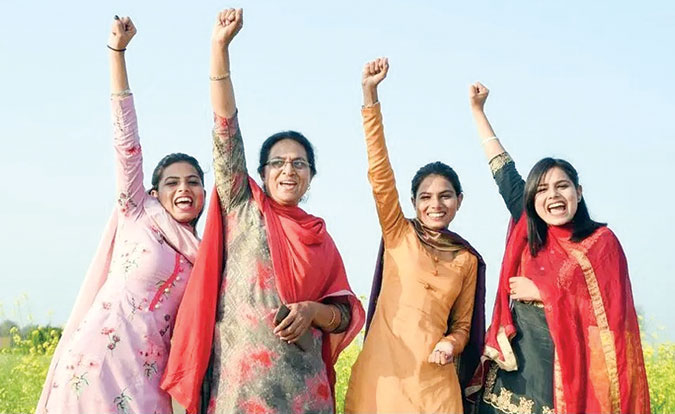
For others, reproductive violence follows the news of a pregnancy, with some women compelled against their will into motherhood and others, to terminate.It was the latter action that 58-year-old Jasbeer Kaur from Rajasthan, India, told UNFPA in 2020 that her husband’s family tried to force on her after learning Jasbeer was pregnant with triplets – all girls.
“No daughter had been born in my husband’s family in the last three generations. They told me, we won’t allow three daughters to be born in the house at the same time. They gave me an ultimatum: Get an abortion or leave,” Kaur said.
In demanding this of her, Kaur’s in-laws were perpetuating harmful social and gender norms that assign higher value to boys’ lives than those of girls. Members of Kaur’s community reinforced this discriminatory perspective, calling Kaur “poor thing” for not having any sons.
“Here, people still think … as a mother, you haven’t done your bit until you’ve given birth to a son,” one of Kaur’s neighbours told UNFPA.
But Kaur stood up to these norms and practices. She chose to leave her husband and his family and to keep her pregnancy. Today, her triplets Mandeep, Sandeep and Pardeep are all in their mid-twenties, building careers across the arts, business and health care.
“Today, people know us as Jasbeer Kaur’s daughters. We want to make something of our lives,” Sandeep said.
Seeing the problem to solve it
Although reproductive violence often involves partners and family members, as in Kaur’s case, they are not the only perpetrators. Governments and institutions also commit acts of reproductive violence through coercive laws and policies, some of which aim to control national-level fertility.
With the global population now eclipsing 8 billion people, countries’ population policies have entered the spotlight. And evidence has begun to emerge, especially, of countries seeking to boost fertility through problematic means, including by limiting access to abortion and cutting sex education from school.
UNFPA has warned that these efforts to engineer population size typically have little impact on fertility in the short term, and in the long term, risk causing major problems.
“Focusing on numbers alone treats people as commodities, stripping them of their rights and humanity,” UNFPA Executive Director Dr. Natalia Kanem said on 14 November in an op-ed for TIME. “We have too often seen leaders setting targets for population size or fertility rates, and the grievous human rights abuses that result.”
“Let’s be clear: When we talk about the ‘problem’ with fertility rates or an ‘ideal’ population size, we are really talking about controlling people’s bodies. We are talking about asserting power over their capacity for reproduction, whether by influence or by force, from policies where families are paid to have more children, to egregious violations like forced sterilization, often suffered by ethnic minorities, indigenous peoples, and people with disabilities.”
Today, many women are unable to exert control over their reproductive lives. UNFPA reports that across 64 countries, more than 8 per cent of women lack the power to decide on contraception, and nearly a quarter of women lack the power to say no to sex.
Specifically regarding reproductive violence, UNFPA is currently working on a technical paper and developing a measurement tool to help health care practitioners, researchers, institutions and governments identify where, when and how these violations occur. It’s a critical step towards helping societies address this issue and safeguard people’s rights and choices.
“A resilient world of 8 billion, a world that upholds individual rights and choices, offers infinite possibilities – possibilities for people, societies and our shared planet to thrive and prosper,” said Dr. Kanem.


A discussion on the restoration of religious, cultural and archaeological sites affected by Cyclone Ditwah was held on Thursday (18) afternoon at the Presidential Secretariat under the patronage of the Minister of Buddhasasana, Religious and Cultural Affairs, Dr. Hiniduma Sunil Senevi, with the participation of the Most Venerable Mahanayaka Theras of the three Chapters and other religious leaders.
Addressing the meeting, the Minister stated that more than one thousand religious, cultural and archaeological sites across the country had sustained damage due to the disaster. He assured that prompt measures would be taken to commence restoration work and reinstate these sites to their original condition without delay.
The Minister further stated that all restoration work is expected to be carried out while preserving the historical and cultural authenticity of the sites, under the guidance of the Most Venerable Maha Sangha and other religious leaders, with the active participation of all relevant stakeholders.
The Secretary to the Ministry of Buddhasasana, Religious and Cultural Affairs, Prince Senadheera, noted that arrangements are currently underway to mobilize the required human resources and financial assistance for the restoration process. He also stated that steps have been initiated to recruit the necessary technical officers on a contractual basis to conduct technical assessments of the affected sites. In addition, plans are in place to involve officials of the Ministry as well as officers of its affiliated institutions in carrying out these restoration activities.
The Secretary to the Ministry further stated that generous financial contributions from donors are currently being received to the fund established under the Ministry of Buddhasasana, Religious and Cultural Affairs for the reconstruction of damaged religious places of worship.
The meeting also considered continuing the gathering as an interfaith committee to oversee the restoration activities. Accordingly, it was agreed that the progress of construction work would be regularly reported to the committee and that the committee would be entrusted with mobilizing support for the fund in a transparent manner, including assistance from foreign donors, international organizations, Buddhist organizations and other religious institutions.
It was noted that the Central Cultural Fund has identified eight sites that were severely damaged by the disaster and are difficult to restore through conventional construction methods, requiring the specialized expertise of archaeologists, mural conservation specialists, and architects. The cost of restoring these sites has been estimated at over Rs. 500 million.
It was further decided that the committee would meet once a month to review and discuss the progress of these restoration activities.
Religious leaders commended the Government’s intervention in providing relief to those affected by the disaster and in restoring livelihoods, expressing appreciation for the effective management of the response. They also praised the Government’s prompt action in initiating restoration work at damaged religious sites.
The event was attended by several eminent religious leaders, including the Registrar of the Asgiri Maha Viharaya, Venerable Dr. Medagama Dhammananda Nayaka Thero; the Registrar General of the Amarapura Siri Saddhammawansa Maha Nikaya, Venerable Balapitiye Siri Seevali Nayaka Thero; the General Secretary of the Sri Lanka Ramanna Maha Nikaya, Venerable Attangane Sasanarathana Nayaka Thero; the Chief Secretary of the All-Ceylon Shasanarakshaka Board, Venerable Professor Mugunuwela Anuruddha Nayaka Thero; and the Tri-Nikaya Maha Sangha, led by the Chairman of the National Bhikkhu Front, Venerable Wakamulle Uditha Thero.
Also in attendance were Hindu religious leaders, including Venerable Swami Aksharatmananda, representatives of the Catholic Church and the National Christian Council, including Father Alec Roy Samantha Fernando, All-Ceylon Muslim religious leaders, including the General Secretary of the Jamiatul Ulama Organization, Ash-Sheikh Arkam Nooramith, Deputy Minister of Religious and Cultural Affairs, Mohamed Muneer , as well as senior officials of the Ministry of Buddhasasana, Religious and Cultural Affairs and relevant line institutions.
Latest News
Landslide early warnings issued to the Districts of Badulla, Kandy, Kurunegala, Matale and Nuwara Eliya extended

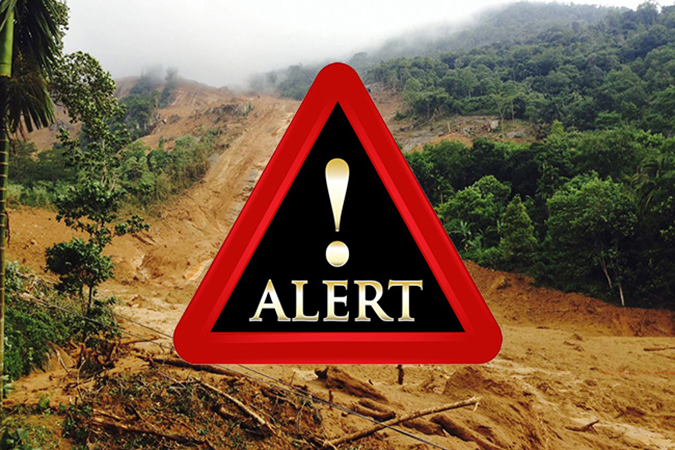
The landslide early warning center of the National Building Research Organisation [NBRO] has extended the landslide early warnings issued to the Districts of Badulla, Kandy, Kurunegala, Matale and Nuwara Eliya until 08:00 AM on Saturday [20th].
LEVEL III RED landslide early warnings have been issued to the Divisional Secretaries Divisions and surrounding areas of Minipe, Ududumbara, Doluwa and Medadumbara in the Kandy district, and Mathurata, Walapane, Hanguranketha and Nildandahinna in the Nuwara Eliya district.
LEVEL II AMBER landslide early warnings have been issued to the Divisional Secretaries Divisions and surrounding areas of Badulla, Lunugala, Passara and Hali_Ela in the Badulla district, Akurana, Pathadumbara, Udunuwara, Gangawata Korale, Pasbage Korale, Harispattuwa, Thumpane, Panvila, Ganga Ihala Korale, Udapalatha, Yatinuwara, Poojapitiya, Kundasale, Deltota, Pathahewaheta and Hatharaliyadda in the Kandy district, Rideegama in the Kurunegala district, Laggala Pallegama, Wilgamuwa, Yatawatta, Ambanganga Korale, Naula, Rattota, Pallepola, Ukuwela and Matale in the Matale district, and Nuwara Eliya in the Nuwara Eliya district.
LEVEL I YELLOW landslide early warnings have been issued to the Divisional Secretaries Divisions and surrounding areas of Bandarawela, Uva Paranagama, Haldummulla, Kandeketiya, Soranathota, Ella, Welimada, Haputhale and Meegahakivula in the Badulla district, Alawwa, Polgahawela, Mallawapitiya and Mawathagama in the Kurunegala district, and Thalawakele, Norwood, Ambagamuwa Korale, Kothmale West and Kothmale East in the Nuwara Eliya district.
Latest News
Financial contribution from Gift Sri Lanka Foundation and the Georgia Buddhist Vihara, USA, for disaster relief

In support of relief efforts for communities affected by the Ditwah cyclone, Gift Sri Lanka Foundation and the Georgia Buddhist Vihara (GBV), USA, have made a financial contribution of USD 16,000 to the Government’s ‘Rebuilding Sri Lanka’ Fund.
The relevant cheque was formally handed over on Thursday (18) afternoon at the Presidential Secretariat by the Chief Incumbent of the Georgia Buddhist Vihara, Most Venerable Panamwela Vajirabuddha Nayaka Thero, to the Secretary to the President, Dr. Nandika Sanath Kumanayake.

Swift restoration of Religious, Cultural and Archaeological sites damaged by the disaster

Maria Perez and Evan Dunfee confirmed winners of World Athletics Race Walking Tour

King and Campbell give West Indies century opening stand after New Zealand declare on 575

Head’s hometown century floors England after brief hopes of fightback

A Historic Hat-Trick: Home Lands Crowned Best Developer Sri Lanka for Third Consecutive Year, Also Wins Best Lifestyle Developer Asia

Landslide early warnings issued to the Districts of Badulla, Kandy, Kurunegala, Matale and Nuwara Eliya extended

‘Dates have the highest sugar content to fight Coronavirus’

Sunday Island 27 December – Headlines

#SundayIsland 17th December – Headlines

Sunday Island – 28th March

Sunday Island Headlines – 21 March

Sunday Island – 21st February – Headlines
-

 Features6 days ago
Why Sri Lanka Still Has No Doppler Radar – and Who Should Be Held Accountable
-

 Midweek Review3 days ago
How massive Akuregoda defence complex was built with proceeds from sale of Galle Face land to Shangri-La
-

 News2 days ago
Pakistan hands over 200 tonnes of humanitarian aid to Lanka
-
 News2 days ago
Pope fires broadside: ‘The Holy See won’t be a silent bystander to the grave disparities, injustices, and fundamental human rights violations’
-
 Latest News5 days ago
Landslide early warnings in force in the Districts of Badulla, Kandy, Kegalle, Kurunegala, Matale, Nuwara Eliya and Ratnapura
-
 News7 days ago
Govt. okays postgraduate medical training for Maldivian medical officers and dental surgeons
-
 News3 days ago
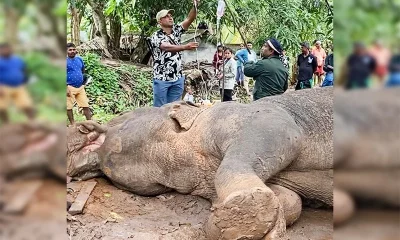
Burnt elephant dies after delayed rescue; activists demand arrests
-
 Features6 days ago
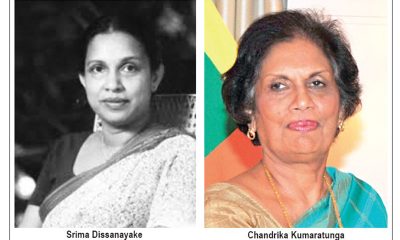
Srima Dissanayake runs for president and I get sidelined in the UNP