
News
Electronic ticketing system for public transport to be introduced by year’s end- Secretary to the Ministry of Transport and Highways

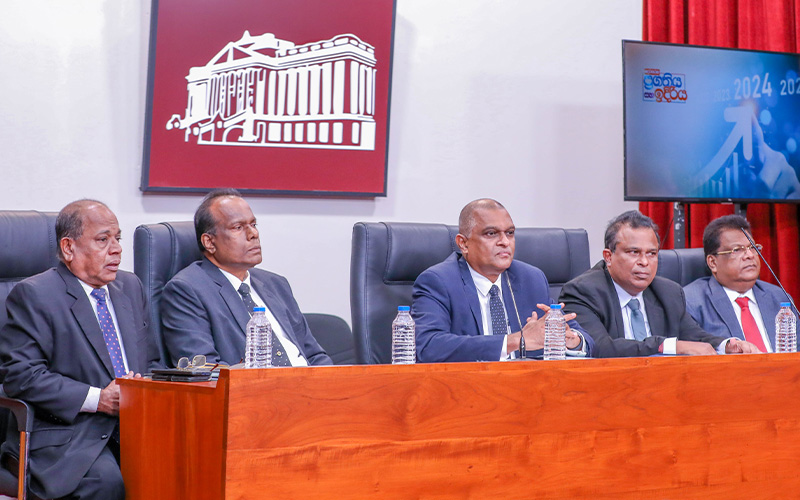
Secretary to the Ministry of Transport and Highways Eng. Ranjith Ganganath Rubasinghe announced that an electronic ticketing system for public transport services, including trains, will be introduced by the end of this year.
Addressing the press briefing titled “Two Years of Progress and Advancement” held at the Presidential Media Centre today (08),
Addressing the media personnel, Eng. Rubasinghe further elaborated;
Despite the economic crisis the country has faced, the government has allocated Rs.90 billion over the past two years solely for road development projects initiated before 2022. Of this amount, Rs.300 billion has been spent on contractors, and Rs.90 billion has been used for debt payments.
It is important to note that the success of the government’s debt restructuring program has been particularly satisfactory for the Ministry of Highways. This success will enable the restart of many projects that were halted during the last crisis. Discussions have already begun for the early commencement of Phase 1 of the Central Expressway. Additionally, Phases 2 and 3 of the Central Expressway and the Ruwanpura Expressway project are expected to begin soon, with bilateral discussions underway regarding the completion of the elevated highways project in Athurugiriya, through financial investments. Public-private partnership investments are anticipated for these projects.
Additionally, an electronic ticketing system for public transport services, including trains, is planned to be introduced before the end of this year. The entire highway toll payment system will also be made electronic within a few months.
Director General of the Road Development Authority (RDA), S.P.M. Suriya Bandara;
The construction of the second phase of the flyover over the railway line connecting Kompannavidiya, Justice Akbar Mawatha, and Uttarananda Mawatha will be completed and handed over to the public next week. The Kohuwala flyover is scheduled to be opened to the public next week as well.
Moreover, thousands of projects are being implemented across the country under the Road Development Authority. Among these, 320 km of rural roads have been completed under the 1,000 km of rural roads project, which began last February, with the remaining roads set to be completed in August.
General Manager (Acting), Railways, Sanjaya Mudalige;
We have provided the opportunity for people to lease the land owned by the Department of Railways, which totals around 12,000 acres. Residents currently occupying these lands, whether with or without permission, can now register to obtain a tax deed. Legal action will be taken against those who do not register, and they will be removed from the premises.
Additionally, the modernization of the Mahawa-Omanthai railway line will be completed in August, and the freight train service from Beliatta to Colombo will commence on the 15. This service will be available to farmers, businessmen, and others transporting goods to Colombo.
Plans are also underway to develop railway stations along the coastal line as multipurpose projects in collaboration with the private sector. Six railway stations, including Kollupitiya and Bambalapitiya, are currently being developed accordingly.
To meet the demand for train engines, the Government of India has agreed to donate 20 train engines, with the first batch expected to arrive within two months.
National Transport Commission Chairman, Shashi Welgama;
Under the National Transport Commission Act, we can currently regulate only buses. However, the Act has been amended to include the regulation of three-wheelers, school and office transport services, taxis, and more. Additionally, through the ‘Sisu Sariya’ program, we provide transport facilities for around 110,000 children across about 5,000 schools. This initiative also extends transportation services to government and private institutions, helping to reduce urban traffic congestion, fuel consumption, and environmental pollution.
Furthermore, by offering transportation facilities to people in remote rural areas through the ‘Gami Sariya’ program, we aim to improve their standard of living. We are also preparing and implementing schedules for inter-provincial buses. The public can contact the customer care unit at 0712555555 and 1955 for assistance. This service allows passengers to file complaints and obtain information related to passenger transportation services.
Chairman of Ceylon Transport Board, Lalith de Alwis;
Every day, our buses serve around 1.2 million passengers through 5,500 trips, playing a crucial role in public transportation. With a strategic focus on digitization, we aim to completely eliminate revenue losses.
Last year, we successfully refurbished 400 buses, with plans to refurbish an additional 400 this year. The Cabinet’s approval to import 1,000 new buses has prompted immediate procurement efforts to acquire 400 buses without delay.
In addition to regular services, we offer subsidized bus fares for school and technical college students, operating 811 buses for school routes and 890 for other services daily.
Our upcoming initiatives include the introduction of electric buses to enhance innovation in public transport, leveraging modern technology to streamline fleet operations and improve passenger information services. These efforts are part of our comprehensive strategy to address climate change.
Passengers already benefit from online seat reservations and access to long-distance service timetables via the internet. We are planning to roll out further digital services in the near future.

Latest News
Advisory for Heavy Rain issued for the Central, Uva, Sabaragamuwa, Eastern and North-central provinces and in Galle and Matara districts
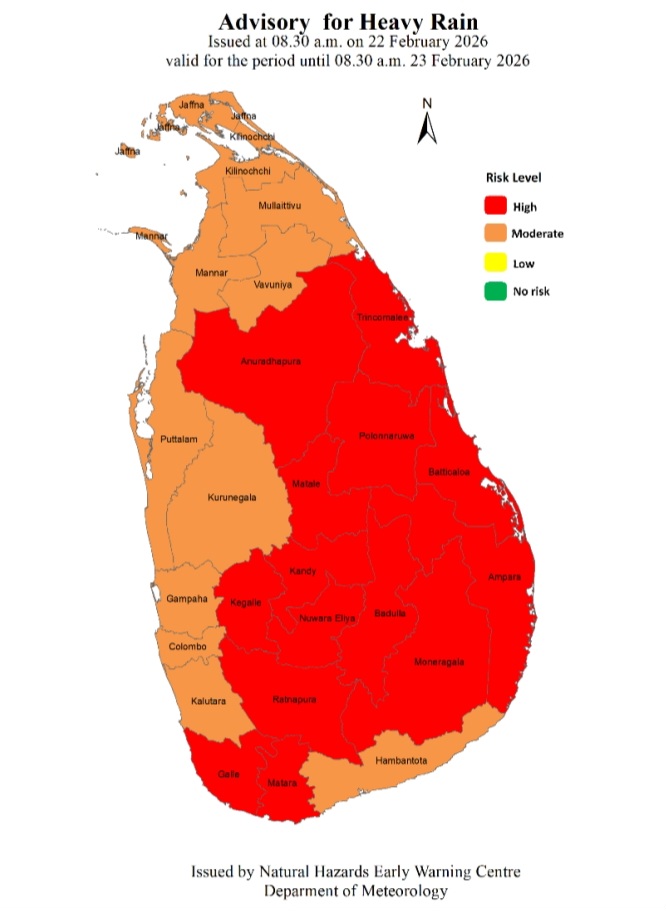
Advisory for Heavy Rain Issued by the Natural Hazards Early Warning Centre at 08.30 a.m. on 22 February 2026 valid for the period until 08.30 a.m. 23 February 2026
Due to the influence of the low level atmospheric disturbance in the vicinity of Sri Lanka, Heavy showers above 100 mm are likely at some places in Central, Uva, Sabaragamuwa, Eastern and North-central provinces and in Galle and Matara districts.
Therefore, general public is advised to take adequate precautions to minimize damages caused by heavy rain, strong winds and lightning during thundershowers
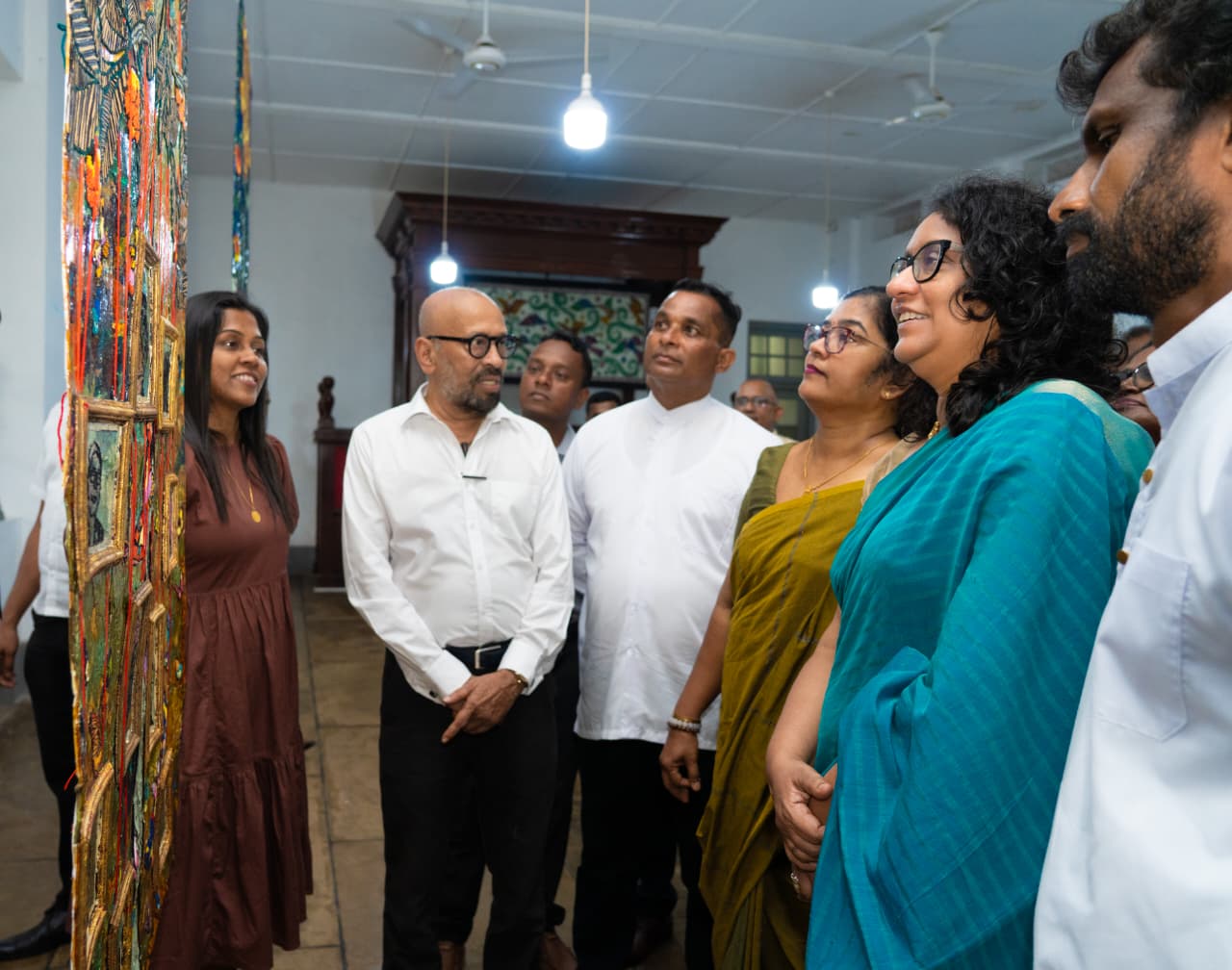
The inaugural ceremony of the Matara Festival for the Arts, featuring a wide range of creations by local and international artists, was held on February 19 at the Old High Court premises of the Matara Fort, under the patronage of Prime Minister Dr. Harini Amarasuriya.
The festival, centred around the Old High Court premises in Matara and the auditorium of the Matara District Secretariat, will be open to the public from 20 to 23 of February. The festival will be featured by visual art exhibitions, short film screenings, Kala Pola, and a series of workshops conducted by experts.
The inaugural event was attended by the Minister of Women and Child Affairs, Ms. Saroja Paulraj, along with artists, guests, and a large number of schoolchildren.
(Prime Minister’s Media Division)

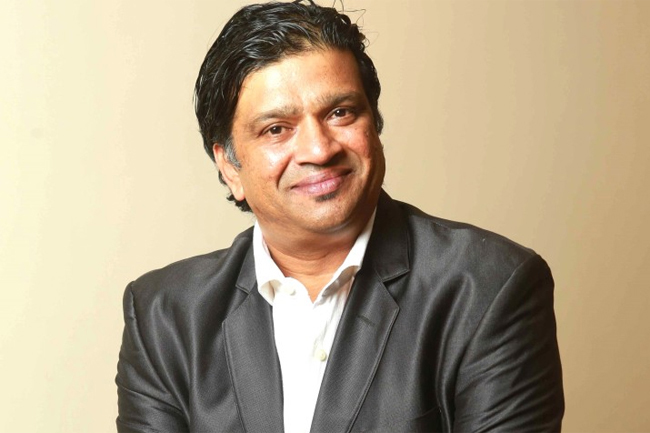
Only one Member of Parliament has chosen not to receive the salaries and allowances entitled to MPs, Prime Minister Dr. Harini Amarasuriya revealed in Parliament last Thursday, shedding light on the financial perks enjoyed by members of the Tenth Parliament.
Speaking on Thursday (Feb. 19) in response to a question from SJB Badulla District MP Chaminda Wijesiri, the Prime Minister outlined the full range of pay and allowances provided to parliamentarians.
According to Dr. Amarasuriya, MPs receive a monthly allowance of Rs. 54,285, an entertainment allowance of Rs. 1,000, and a driver’s allowance of Rs. 3,500—though MPs provided with a driver through the Ministry of Public Security and Parliamentary Affairs are not eligible for the driver’s allowance.
Additional benefits include a telephone allowance of Rs. 50,000, a transport allowance of Rs. 15,000, and an office allowance of Rs. 100,000. MPs are also paid a daily sitting allowance of Rs. 2,500 for attending parliamentary sessions, with an additional Rs. 2,500 per day for participation in parliamentary sittings and Rs. 2,500 per day as a committee allowance.
Committee meetings held on non-parliament sitting days also attract Rs. 2,500 per day.
Fuel allowances are provided based on the distance between an MP’s electoral district and Parliament. National List MPs are entitled to a monthly allocation equivalent to 419.76 litres of diesel at the market price on the first day of each month.
Despite the comprehensive benefits, only SJB Badulla District MP Nayana Wasalathilaka has opted not to draw a salary or allowances. Dr. Amarasuriya said that in accordance with a written notification submitted by MP Wasalathilaka on August 20, 2025, payments have been suspended since that date.
The Prime Minister also confirmed that she, along with the Speaker, Deputy Speaker, committee chairs, ministers, deputy ministers, the Opposition Leader, and senior opposition whips, have all informed the Secretary-General of Parliament in writing that they will not claim the fuel allowance.
Challenging the ruling party’s voluntary pledge to forgo salaries, MP Wijesiri pointed out that all MPs except Wasalathilaka continue to receive their salaries and allowances. “On one hand you speak about the people’s mandate, which is good. But the mandate also included people who said they would voluntarily serve in this Parliament without salaries. Today we have been able to prove, Hon. Speaker, that except for one SJB MP, the other 224 Members are drawing parliamentary salaries,” he said.
The Prime Minister responded by defending the political culture and practice of allocating portions of MPs’ salaries to party funds. Referring to previous practices by the JVP and NPP, she said: “It is no secret to the country that the JVP has for a long time not personally taken MPs’ salaries or any allowances. I think the entire country knows that these go to a party fund. That is not new, nor is it something special to mention. The NPP operates in the same way. That too is not new; it is the culture of our political movement.”
When MP Wijesiri posed a supplementary question asking whether diverting salaries to party funds was an indirect method of taking care of MPs, Dr. Amarasuriya said: “There is no issue there. No question was raised; the Member made a statement. What we have seen throughout this week is an inability to understand our political culture and practice, and a clash with decisions taken by political movements that misused public funds. What is coming out is a certain mindset. That is why there is such an effort to find fault with the 159. None of these facts are new to people. He did not ask a question, so I have nothing to answer.”
The disclosures come days after the Government moved to abolish the parliamentary pension, a measure that has sparked renewed debate over MP compensation and the transparency of funds allocation.

Will Jacks stars again as England dismantle Sri Lanka

England limp to 146-9 against Sri Lanka

Advisory for Heavy Rain issued for the Central, Uva, Sabaragamuwa, Eastern and North-central provinces and in Galle and Matara districts

Sri Lanka opt to chase against England in Pallekele

More than 1,500 Venezuelan political prisoners apply for amnesty

Six races, six golds – Klaebo’s historic Olympics

‘Dates have the highest sugar content to fight Coronavirus’

Sunday Island 27 December – Headlines

#SundayIsland 17th December – Headlines

Sunday Island – 28th March

Sunday Island Headlines – 21 March

Sunday Island – 21st February – Headlines
-

 Features22 hours ago
Why does the state threaten Its people with yet another anti-terror law?
-

 Business7 days ago
Ministry of Brands to launch Sri Lanka’s first off-price retail destination
-

 Features22 hours ago
Victor Melder turns 90: Railwayman and bibliophile extraordinary
-
 Features22 hours ago
Reconciliation, Mood of the Nation and the NPP Government
-
 Latest News2 days ago
New Zealand meet familiar opponents Pakistan at spin-friendly Premadasa
-
 Features22 hours ago
Victor, the Friend of the Foreign Press
-
 Latest News2 days ago
Tariffs ruling is major blow to Trump’s second-term agenda
-

 Latest News2 days ago
ECB push back at Pakistan ‘shadow-ban’ reports ahead of Hundred auction