
Features
Effective conflict resolution, prime challenge for UN

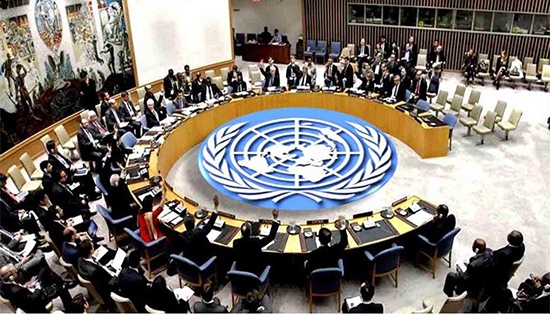
Seventy five years on, effective conflict resolution remains a prime challenge for the UN. Even a summary survey of the UN’s conflict resolution history would reveal one of the prime causes for this to reside in the inability of the major powers to work consensually towards international conflict resolution and peace.
The fact that UN Secretary General Antonio Gutteres’s call for a ‘global ceasefire’ on the 75th anniversary of the founding of the UN, which falls this year, has apparently fallen on deaf years speaks volumes for the general unpopularity of international peace among sections of the world community. There is a spirit of unwillingness on the part of particularly the big powers to be receptive to peace, understood as the avoidance of armed conflict, and this ought to be cause for some concern among humanists world wide.
There needs to be agreement among all international quarters who matter that the use of force or coercion in conflict situations is not the final and decisive answer to their resolution. The inability of the world to agree on this insight remains one of the principal reasons for the perpetuation of conflict and war.
To be sure, the UN has done its utmost to bring peace to war and conflict zones over the decades by entirely peaceful means but some major conflicts are continuing to rage without abatement. For example, there is the Middle East problem that has been a veritable thorn in the flesh of pro-peace sections over the years and the Kashmir conflict. The complexity of these problems is such that they elude easy resolution. However, it’s plain to see that the lack of a spirit of compromise among the main actors in these conflicts is playing a key role in their relentless continuation.
 A chief reason for the seeming ineffectiveness of the UN in the face of festering conflicts is the unwillingness, as observers point out, on the part of the big powers to work in accord towards peace in some major theatres of war. Syria, Libya and the Ukraine, for example, could do with some agreement and compromise among the foremost powers, particularly the US and Russia. What renders easy conflict-resolution in these trouble spots difficult to achieve is the fact that, most often than not, the warring parties are backed by conflicting big powers.
As is known, the key UN organ tasked with the responsibility of ensuring international peace and security is the Security Council. As revealed by UN conflict-resolution history, the main stumbling block to bringing peace expeditiously to some raging conflicts is the use of the veto by the foremost powers, mainly the US and Russia. Since the ascension to major power status by China, the latter too is a major factor in the establishment of world peace and security.
It stands to reason that if there is no agreement among these powers on ways of resolving outstanding conflicts, there cannot be an easy passage to peace. And there cannot be easy access to peace as long as there exist conflicting interests among the big powers in relation to the war zones in question. For example, in Syria, conflicting political and strategic interests among the US and Russia prevented the country from returning to a degree of normalcy. However, Syria is a prime, contemporary ‘killing field’ where civilian lives are snuffed out in alarming numbers.
Besides the unconscionable killing of civilians, what is most unfortunate about these endemic war situations is the apparent helplessness of the UN. The power to perpetuate war or foster peace resides mainly within the UN system with the Security Council and if the UNSC is itself an arena of conflict between hitherto formidable powers, there is no possibility of establishing and fostering global peace speedily.
However, there is the fast-changing global power balance to consider, particularly in the context of rendering the UN a more effective instrument in delivering peace. It need hardly be mentioned that the present composition of the Security Council was determined by the world power balance that existed at the close of World War Two. Hence, the permanent status accorded to the US, Britain, France, Russia and China. But in the current international political and economic order there are countries that could easily compete with the above powers for permanent status and in fact dwarf them. Some of these states are: India, Brazil, Indonesia and South Africa.
In the name fairness and equity some of the latter powers need to be inducted into the UNSC. The diffusion of the authority to establish peace and security among a greater number of powerful states could result in the gridlocks plaguing current peace-making being broken. The overwhelming power currently in the hands of the existing ‘big five’ could be more evenly distributed among those potential Security Council members who play a pivotal role in shaping the current global political and economic system. Thus, UN reform needs to be accelerated in the name of more expeditious peace-making.
It could be said that, as matters stand, economic power would prove as decisive in shaping the world system, as military and political clout. In fact, in the days ahead economic power could prove the foremost factor in this respect, considering its central importance in reviving the world economy, post COVID-19.
The emerging economies are those to watch most. In around 30 years time, they would be contributing nearly 60 percent or more to the world’s GDP. It stands to reason that countries would find it to be in their best interests to forge increasingly close ties with these emerging economies. Some of these are: India, Indonesia, South Korea, Brazil, Mexico, South Africa and Turkey.
However, minus a spirit of reconciliation and good will among those who matter most, international peace-making would prove arduous. ‘The spirit’ needs to be amply willing to foster peace and not war. This ‘spirit’ will be the icing on the cake of international peace. While economics would be a driving force of the world system, peace-building will prove the fundamental building blocks of a more stable world.

Features
Illegal solar push ravages Hambantota elephant habitat: Environmentalist warns of deepening crisis
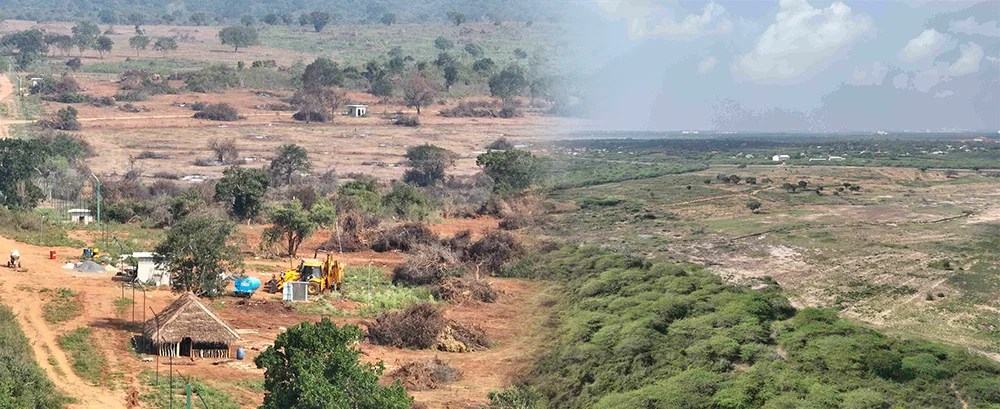
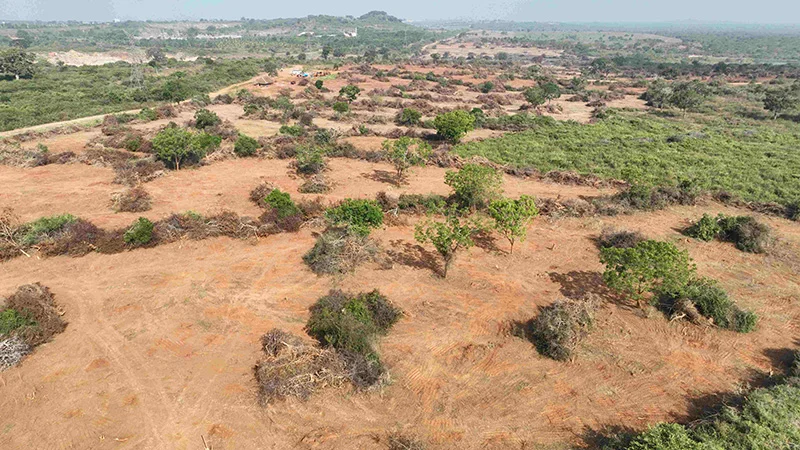
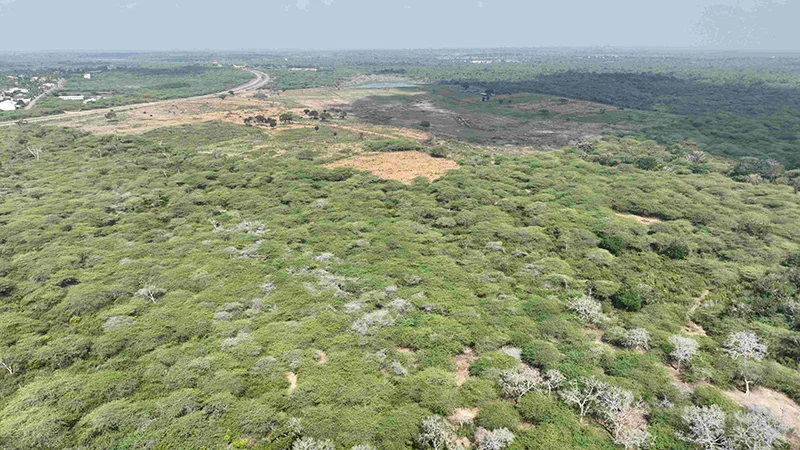
A large-scale move to establish solar power plants in Hambantota has triggered a major environmental and social crisis, with more than 1,000 acres of forest—identified as critical elephant habitat—cleared in violation of the law, environmental activist Sajeewa Chamikara said.
Chamikara, speaking on behalf of the Movement for Land and Agricultural Reform, said that 17 companies have already begun clearing forest land along the boundaries of the Hambantota Elephant Management Reserve. The affected areas include Sanakku Gala, Orukemgala and Kapapu Wewa, which are known to be key elephant habitats and long-used movement corridors.
He said that what is taking place cannot be described as development, but rather as a large-scale destruction of natural ecosystems carried out under the cover of renewable energy expansion.
According to Chamikara, the clearing of forests has been carried out using heavy machinery, while large sections have also been deliberately set on fire to prepare the land for solar installations. He said that electric fences have been erected across wide stretches of land, effectively blocking elephant movement and fragmenting their natural habitat.
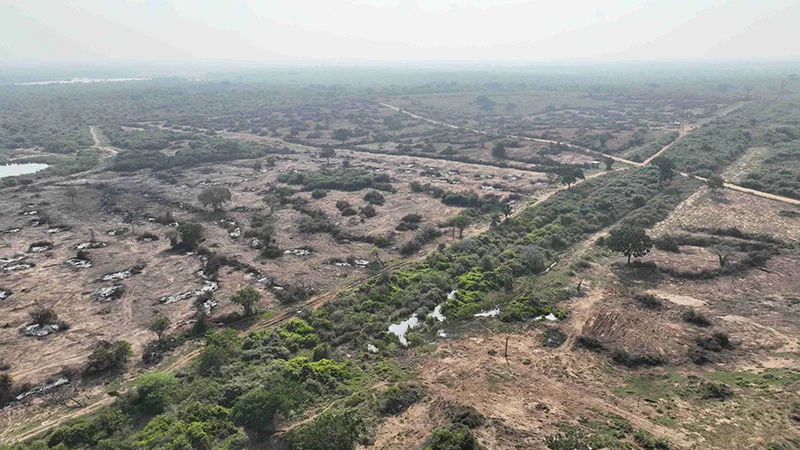
“These forests are not empty lands. They are part of a living system that supports wildlife and nearby communities. Once destroyed, they cannot be easily restored,” he said.
The projects in question include a 50 megawatt solar development undertaken by five companies and a larger 150 megawatt project implemented by 12 companies. The larger project is reported to be valued at around 150 million US dollars.
Chamikara stressed that these projects are being carried out in a coordinated manner and involve extensive land clearing on a scale that raises serious environmental concerns.
He further alleged that certain companies had paid about Rs. 14 million to secure support and move ahead with the projects. He said this points to a troubling failure of oversight by state institutions that are expected to protect forests and wildlife habitats.
“This is not only an environmental issue. It is also a serious governance issue. The institutions responsible for protecting these lands have failed in their duty,” he said.
Chamikara pointed out that under the National Environmental Act, any project of this scale must receive prior approval through a proper Environmental Impact Assessment process.
He said that clearing forest land before obtaining such approval is a direct violation of the law.
He added that legal requirements relating to archaeological assessments had also been ignored. Under existing regulations, large-scale land clearing requires prior evaluation to ensure that sites of historical or cultural value are not damaged.
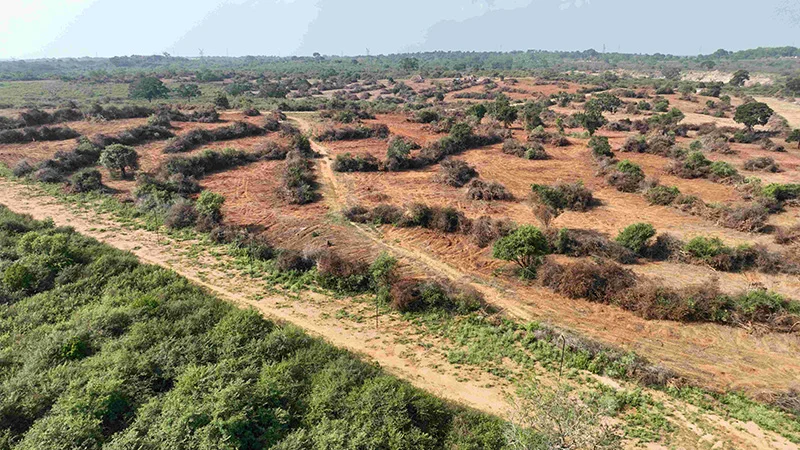
“The law is very clear. You cannot go ahead with projects of this nature without proper approval. What we are seeing is a complete disregard for legal procedure,” Chamikara said.
The environmental impact of these activities is already becoming visible. With their natural habitats destroyed, elephants are increasingly moving into nearby villages in search of food and shelter. This has led to a sharp rise in human-elephant conflict in several areas.
Areas such as Mayurapura, Gonnooruwa, Meegahajandura and Thanamalvila have reported increasing encounters between humans and elephants. According to Chamikara, more than 5,000 farming families in these areas are now facing growing threats to their safety and livelihoods.
He warned that farmers are being forced to abandon their lands due to repeated elephant intrusions, while incidents involving damage to crops and property are rising. There have also been increasing reports of injuries and deaths among both humans and elephants.
“This is turning into a serious social and economic problem. When farmers cannot cultivate their lands, it affects food production, income and rural stability,” he said.
Chamikara also raised concerns about the broader environmental consequences of clearing forests for solar power projects. While renewable energy is promoted as a solution to reduce carbon emissions, he said that destroying forests undermines that goal.
“Forests play a key role in absorbing carbon dioxide. When you clear and burn them, you are increasing emissions, not reducing them. That defeats the purpose of promoting solar energy,” he explained.
He added that large-scale deforestation in dry zone areas such as Hambantota could also affect local weather patterns and reduce rainfall, which would have further negative impacts on agriculture and water resources.
Chamikara called for a shift in policy, urging authorities to focus on more sustainable approaches to solar power development. He said that rooftop solar systems on homes, public buildings and commercial establishments should be given priority, as they do not require clearing large areas of land.
He also recommended that solar projects be located on degraded or abandoned lands, such as areas affected by past mining or other low-value lands, rather than forests or productive agricultural areas.
“Renewable energy development must be done in a way that does not destroy the environment. There are better options available if there is proper planning,” he said.
Chamikara urged the Central Environmental Authority and the Department of Wildlife Conservation to take immediate action to stop ongoing land clearing and investigate the projects. He stressed that all activities carried out without proper approval should be halted until legal requirements are met.
He warned that failure to act now would lead to long-term environmental damage that could not be reversed.
“If this continues, we will lose not only forests and wildlife, but also the balance between people and nature that supports rural life. The consequences will be felt for generations,” he said.
The situation in Hambantota is fast emerging as a critical test of whether development goals can be balanced with environmental protection. As pressure grows, the response of authorities in the coming weeks is likely to determine whether the damage can still be contained or whether it will continue to spread unchecked.
By Ifham Nizam
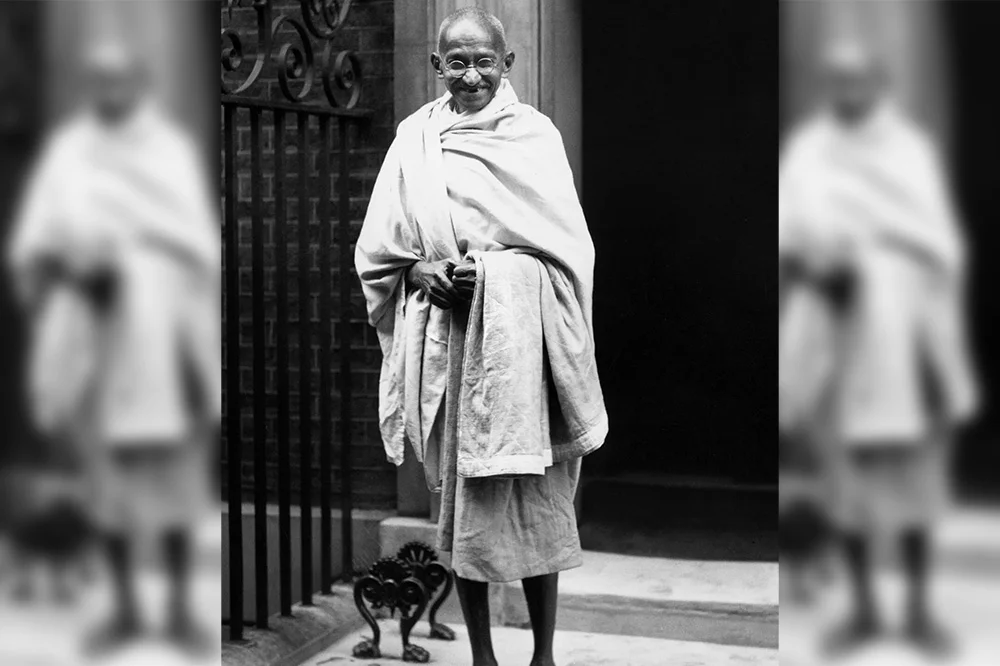
 All credit to the Tamil Nadu government for taking concrete measures to perpetuate the memory of the renowned Mahatma Gandhi of India, who on account of his moral teachings stands on par with the likes of Socrates, Plato, Aristotle, Confucius and Jalaluddin Rumi, to name a few such all-time greats. The time is indeed ripe to draw the world’s attention to the Mahatma’s humanistic legacy which has resonated in the hearts of peace-oriented sections the world over down the decades.
Under its mega developmental blueprint titled ‘ Tamil Nadu 2030’, the Tamil Nadu government, among other things, intends transforming villages into centres of economic growth in conformity with the Mahatma’s vision of making the village the fundamental unit of material and spiritual advancement. Thus will come into being the ‘Uttamar Gandhi Model Villages Project’, which will be initially covering 10 village Panchayats. (Please see page 3 of The Island of March 11, 2026).
The timeliness of remembering and appreciating anew the teachings of Mahatma Gandhi resides in the utter lawlessness that has been allowed to overtake the world over the last few decades by none other than those global powers which took it upon themselves to usher in a world political and economic order based on the UN Charter and the Universal Declaration of Human Rights. Mainly in ‘the dock’ in this regard are the permanent members of the UN Security Council.
As is plain to see, the international law and order situation has veered out of control. Principal priorities for the international community or what’s left of it is to prevent the current mainly regional war in the Middle East from degenerating dangerously into another world war, coupled with the task of eliminating the possibility of another nuclear holocaust.
The most scorching of ironies is that the world’s ‘number one power’, the US, has virtually lost its way in the ‘Global Disorder’ it has been party to letting lose. For instance, instead of making good its boast of militarily neutralizing Iran and paving the way for the constant flow of fuel and gas from the Strait of Hormus by itself and Israel, it is now appealing to the rest of the West to come to its assistance. Not surprisingly, US allies are indicating their unwillingness to help pull the US’ ‘chestnuts out of the fire’.
Oil and gas are the veritable life blood of countries and going ahead it should not come as a surprise if impatience gets the better of the major powers and the nuclear option is resorted to by some of them under the dangerous illusion that it would be a quick-fix to their growing economic ills and frustrations.
All the above and more are within the realms of the possible and the need is pressing for humanistic voices to take centre stage in the present runaway crisis. As pointed out in this column last week, Realpolitik has overtaken the world and unless the latter is convinced of the self-destructive nature of the major powers’ policy of ‘meeting fire with fire’ to resolve their disputes, annihilation could be the lot of a good part of the world.
For far too long the voice of humanity has been muted and silenced in the affairs of the world by the incendiary threats and counter-threats of the big powers and their allies. No quarter has been bold enough in these blood pressure-hiking slanging matches to speak of the need for brotherly love and compassion among nations and countries. But it’s the language of love and understanding that is the most pressing need currently and the Mahatma in his time did just that against mighty odds.
At present the US and Iran are trading threats and accusations over military-related developments in the Gulf and it’s anybody’s guess as to what turn these events will take. However, calming voices of humanity and moderation would help in deescalating tensions and such voices need to go to the assistance of the UN chief and his team.
The Mahatma used the technique of ‘Satyagraha’ or the policy of non-violent resistance to oppose and dis-empower to a degree the British empire in his time and the current major powers would do well to take a leaf from Gandhi. The latter also integrated into the strategy of non-violent resistance the policy of ‘Ahimsa’ or love and understanding which helped greatly in uniting rather than alienating adversaries. The language of love, it has been proved, speaks to the hearts and minds of people and has a profoundly healing impact.
Mahatma Gandhi defined the ideal of ‘Ahimsa’ thus: ‘In its positive form, “Ahimsa” means the largest love, the greatest charity. If I am a follower of “Ahimsa”, I must love my enemy or a stranger to me as I would my wrong-doing father or son. This active “Ahimsa” necessarily includes truth and fearlessness.’ (See; ‘Modern Indian Political Thought; Text and Context’ by Bidyut Chakrabarty and Rajendra Kumar Pandey, Sage Publications India, Pvt. Ltd., www.sagepub.in).
In the latter publication, the authors also defined the essence of ‘satyagraha’ as ‘protest without rancour’ and this is seen as ‘holding the key to his entire campaign’ of non-violent resistance. From these perspectives, the teaching, ‘hatred begets hatred’ acquires more salience and meaning.
Accordingly, the voice of reason and love needs to come centre stage and take charge of current international political discourse. The UN and allied organizations which advocate conflict resolution by peaceful means need to get together and ensure that their voices are clearly heard and understood. The global South could help in this process by seeing to the vibrant rejuvenation of organizations such as the Non-aligned Movement.
An immediate task for the peace-oriented and well meaning is to make the above projects happen fast. In the process they should underscore afresh the profound importance of the teachings of Mahatma Gandhi, who is acclaimed the world over as a uniting and healing political personality and prophet of peace.
If the Mahatma is universally acclaimed, the reason is plain to see. Put simply, he spoke to the hearts and minds of people everywhere, regardless of man-made barriers. The language of peace and brotherhood, that is, is understood by everyone. The world needs more prophets of peace and reconciliation of the likes of the Mahatma to drown out the voices of discord and war-mongering and ensure that the language of humanity prevails.

 The Future Model Hunt extravaganza, organised by Rukmal Senanayake, and advocacy trainer Tharaka Gurukanda, held in late January 2026, has brought into the limelight four outstanding contestants who will participate, at the international level, this year – Sandeepa Sewmini, Demitha Jayawardhana, Diwyanjana Senevirathna, and Nimesha Premachandra.
Nimesha took the honours as Mrs. Tourism Sri Lanka 2026 and was featured in The Island of 05th March,
Sandeepa Sewmini was crowned Miss Supranational 2026 and will represent Sri Lanka at the big event to be held in Poland later in the year.
A Business Management and Human Resources student, she will be competing under the guidance of Rukmal Senanayake from the Model With Ruki – Model Academy & Agency.
The Mister Supranational Sri Lanka crown went to Demitha Jayawardhana, a 20-year-old professional model and motocross rider.
Apart from modelling he is engaged in his family business.

Demitha Jayawardhana: Mister Supranational Sri Lanka 2026
Demitha is also a badminton player with a strong passion for sports, fitness and personal growth.
In fact, he is recognised for his strength, discipline, and passion for fitness.
A past student of Wycherley International School and St Peter’s College, Colombo, Demitha is currently in his second year of Economics Management at the Royal Institute of Colombo.
He will represent Sri Lanka at the 10th edition of the Mister Supranational pageant, in Poland, in August, 2026.
Mister and Miss Supranational are annual international beauty pageants, held in Poland, and are designed to discover new talent for the modelling and television industries and produce instant celebrities.
The competition focuses on elegance, intelligence, and social advocacy, with contestants, representing their countries.
The newly appointed Miss Teen International Sri Lanka 2026 is Diwyanjana Senevirathna.
She was crowned at the Future Model Hunt and will represent Sri Lanka at the Miss Teen International 2026 pageant in India.
Diwyanjana is noted for her grace and dedication to representing the country at this prestigious event that aims to celebrate talent, intelligence, charm, and individuality, and provide a platform for young girls to showcase their skills.

King Charles praises ‘living bridge’ with Nigeria at glitzy banquet

Our objective is to ensure that the Commission to Investigate Allegations of Bribery or Corruption operates as an independent institution, free from any external influence – PM

Showers above 50 mm can be expected at some places in the Central, Sabaragamuwa and Uva provinces and in Ampara district.

Oil nears $110 a barrel after gas field strike

Iran’s intelligence minister Esmail Khatib killed in air strike

Heat Index at ‘Caution Level’ in the Western, Sabaragamuwa, North-central, Southern and North-western provinces and in Monaragala, Mannar, Vavuniya and Mullaitivu districts

‘Dates have the highest sugar content to fight Coronavirus’

Sunday Island 27 December – Headlines

#SundayIsland 17th December – Headlines

Sunday Island – 28th March

Sunday Island Headlines – 21 March

Sunday Island – 21st February – Headlines
-

 Business4 days ago
Browns EV launches fast-charging BAW E7 Pro at Rs. 5.8 million
-

 Life style5 days ago
From culture to empowerment: Indonesia’s vision for Sri Lanka
-

 News2 days ago
CIABOC questions Ex-President GR on house for CJ’s maid
-
 Business6 days ago
Sri Lanka Institute of Information Technology raises the bar for academic excellence
-

 Opinion7 days ago
M. D. Banda: Memories of Appachchi – II
-

 Life style5 days ago
Ranjith Fernando celebrates cricketing journey with Hob Nails to Spikes
-

 Latest News5 days ago
QR code system will be implemented for fuel with effect from 06.00 a.m. today (15th)
-

 News3 days ago
Australian HC debunks misleading travel risk claims for Sri Lanka