
Business
EFC’s Specialized Training and Disability Resource Centre Shines Globally

Led by a visually impaired person
The Specialized Training and Disability Resource Centre of the Employers’ Federation of Ceylon (EFC) was shortlisted for the ‘Zero Project 2021’- an initiative of the Essl Foundation which focuses on the rights of persons with disabilities globally, an EFC news release said.
Essl is an Austrian foundation set up in 2007 by Martin and Gerda Essl and their children for social purposes and scientific research, its mission is to support social innovation, social entrepreneurship and persons with disabilities.
The Foundation is also in special consultative status with the Economic and Social Council of the United Nations since 2014 (ECOSOC status) and a member of the European Foundation Centre.
The Zero Project of the Essl Foundation provides a platform where the most innovative and effective solutions to problems that persons with disabilities face, are shared. It is committed to assist in creating a world without barriers, based on the Articles of the UN Convention on the Rights of Persons with Disabilities, the release said.
Each year the Zero Project focuses its research on a particular theme from the UN Convention on the Rights of People with Disabilities (UN CRPD.) The themes revolve around the key areas of employment, accessibility, independent living, political participation and education.
The EFC’s Specialized Training and Disability Resource Centre was among the 178 nominations which made it through to the shortlist out of 475 nominations for the Zero Project Award 2021. ‘The nominated practices and policies have made it through a detailed quality check and through one round of peer-reviewing from experts, with and without disabilities, from around the world,’ according to the project details, the release added.
Applauding Manique Gunaratne, Manager, Specialized Training and Disability Resource Centre of the EFC for, “her commitment towards improving the lives of persons with disabilities,” in a congratulatory note, the Zero Project Team has further acknowledged her efforts to be having a “significant impact on inclusive economic development.”
The Specialized Training and Disability Resource Centre of the EFC which is now into its 11th year, is a benchmarked platform for its ‘innovation’ and ‘uniqueness’, says its Manager. “The opportunities afforded by the Centre are multiple including employment opportunities for people with disabilities, additional training opportunities, app users etc. All these services are geared towards the open labour market in the country and extend to persons with diverse disabilities, diverse age groups, covering all corners of Sri Lanka,” notes Gunaratne who is a globally recognized activist for people with disabilities.
Steered by a person with a disability for persons with disabilities, the Specialized Training and Disability Resource Centre rests on the concept of ‘nothing about us without us,’ says Gunaratne who herself is visually impaired, having lost her vision in her late twenties due to Retinitis Pigmentosa.
Calling for a national will to champion the rights of people with disabilities, Gunaratne urges for expeditious passage of Disability Rights Bill. “The COVID pandemic has taken a toll on everyone and it is imperative to identify the concerns of people with disabilities and empower them especially during a testing time such as this.” She also invites more companies and stakeholders to join hands with the EFC to provide more employment opportunities for persons with disabilities and promote inclusive workplaces.
Commenting on the recognition as a “huge honour for the EFC”, Director General, EFC, Kanishka Weerasinghe noted: “I would like to thank the members of the Employers’ Network on Disability, those who have supported us over the years and especially those who have committed themselves in assisting persons with disabilities over the years. A special thank you is extended to my colleagues Manique Gunaratne and Ayasana Gunasekera.”

Business
Iran war threatens Sri Lanka’s fragile recovery; SMEs face “Survival Crisis” – Prof. Rohan de Silva

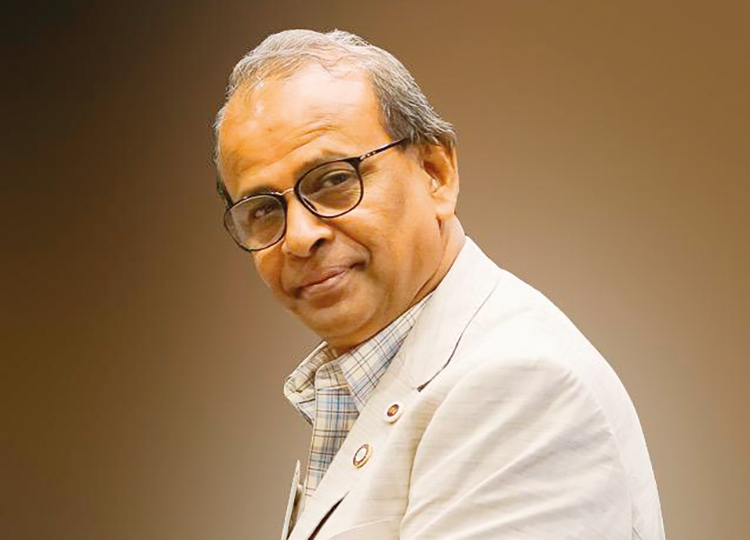
Sri Lanka’s already fragile economic recovery—still reeling from the aftermath of the 2019 Sri Lanka Easter Bombings, the pandemic, and the 2022 financial collapse—is now under renewed strain as the ongoing Iran war sends shockwaves through global energy, trade, and financial systems, experts warn.
Chartered Interior Architect and economic commentator Prof. Rohan de Silva cautioned that the Iran conflict is not an isolated external shock but a “multiplier crisis” that could severely undermine Sri Lanka’s recovery trajectory—particularly for small and medium enterprises (SMEs), which form the backbone of the economy.
Energy Shock Rekindles Crisis Conditions
At the heart of the emerging pressure is the sharp escalation in global oil prices and supply disruptions linked to instability around the Strait of Hormuz—a critical artery for global energy flows.
“Sri Lanka, which already spends around USD 4 billion annually on fuel imports, is extremely vulnerable to such shocks,” Prof. de Silva said. “Any disruption in supply chains or price spikes will immediately translate into domestic inflation and reduced economic activity.”
The situation, he noted, could force authorities to revisit emergency measures reminiscent of the 2022 crisis, including fuel rationing, restricted working days, and reduced transport services—directly impacting productivity.
Inflation Surge and Currency Pressures
Rising oil prices are expected to trigger a fresh wave of cost-push inflation, affecting transport, food, and essential goods. Increased war-risk insurance and shipping delays are further inflating import costs, placing additional pressure on the Sri Lankan rupee and already strained foreign reserves.
“The real danger is a re-triggering of balance of payments stress,” Prof. de Silva warned. “Higher fuel import bills, combined with potential declines in remittances from the Middle East and weaker export earnings, could destabilize external accounts once again.”
Sri Lanka’s export sectors are also facing mounting challenges. Tea exports to Iran and Gulf markets risk disruption, while apparel shipments are being delayed due to rerouted shipping lanes and rising freight costs.
“Transit times are increasing by up to two weeks in some cases. That erodes competitiveness and reliability—two key pillars for export markets,” Prof. de Silva explained.
Industrial supply chains are similarly under strain, with delays in raw materials and petroleum-based inputs threatening production continuity across sectors.
However, the most severe impact is being felt by SMEs, which Prof. de Silva described as “financially exhausted after enduring repeated shocks since 2019.”
“These businesses have not fully recovered from the Easter attacks, COVID-19 shutdowns, and the 2022 economic collapse. Now, they are facing a fresh crisis that is simultaneously increasing costs and reducing demand,” he said.
Operating expenses—including fuel, electricity, and logistics—have surged sharply, while constrained transport and reduced working days are limiting both customer access and employee attendance.
“This is a classic margin squeeze. For many SMEs, profits are not just shrinking—they are disappearing,” he added.
Compounding the crisis is tightening access to finance. With interest rates remaining elevated to control inflation, banks are becoming increasingly risk-averse, leaving SMEs struggling to secure working capital.
At the same time, declining household purchasing power is dampening demand, particularly in non-essential sectors such as retail, interior design, and construction-related services.
“Consumers are cutting back. SMEs are losing revenue streams. It’s a dangerous cycle,” Prof. de Silva said.
Export-oriented SMEs are also facing order cancellations and payment delays from Middle Eastern buyers, further squeezing foreign exchange inflows.
Employment and Social Pressures Mount
The SME crisis is already spilling over into the labour market. Businesses are reducing staff, cutting working hours, or halting expansion plans altogether.
“If this trend continues, we could see rising unemployment and underemployment, particularly among youth,” Prof. de Silva warned.
He also highlighted the risk of returning migrant workers due to instability in Gulf economies, which could intensify domestic job market pressures.
A Multi-Shock Economy on Edge
Prof. de Silva stressed that Sri Lanka is now grappling with a cumulative “multi-shock cycle”:
2019 Easter attacks → Tourism collapse
COVID-19 pandemic → Prolonged shutdowns
2022 economic crisis → Currency and fuel collapse
Iran war → External energy, trade, and financial shock
“Each crisis has weakened the resilience of SMEs. What we are seeing now is not recovery, but survival,” he said.
Without targeted intervention, Prof. de Silva warned of widespread SME closures, job losses, and a prolonged delay in national economic recovery.
“The Iran war is amplifying every existing vulnerability in Sri Lanka’s economy. SMEs are at the frontline of this crisis—and without immediate policy support, the consequences could be severe and long-lasting,” he cautioned.
By Ifham Nizam
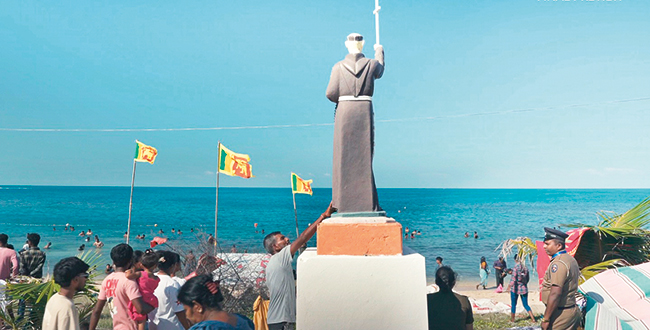
The International Centre for Ethnic Studies (ICES) will premiere its latest documentary, ‘The Saint of the Islands’ on 28th March. The 72-minute documentary, directed by Anomaa Rajakaruna, will be screened at the Tharangani Theatre of the National Film Corporation in Colombo, Bauddhaloka Mawatha, Colombo 7, starting at 4 pm on the 28th.
The film explores the shared devotional traditions surrounding St Anthony of Padua, the patron saint of sailors and fishermen, against the backdrop of the annual feast on the island of Kachchateevu. In Sri Lanka, devotion to St Anthony often crosses religious and cultural boundaries, bringing together different communities that unite across practices of prayer and veneration. At the centre of the story is the annual gathering of devotees from Sri Lanka and India at the St. Anthony’s Shrine on the island of Kachchatheevu, located near the maritime border between the two countries.
Filmed during the annual feast at Kachchatheevu and on the nearby island of Neduntheevu (Delft Island), the documentary reflects on the intersection of faith, livelihood, and geopolitics in the Palk Strait. Kachchatheevu itself is a small, uninhabited island that remains deserted for most of the year.
Yet for two days every year, during the annual feast of St Anthony, it is transformed into a vibrant pilgrimage site as thousands of devotees brave the rough seas, and arrive by boat from both Sri Lanka and India. This year alone, almost 12,000 people from India and Sri Lanka, gathered on the island for prayer, worship, and community.
The film also captures the nearby island of Neduntheevu (Delft Island), one of the northernmost inhabited islands of Sri Lanka. Known for its distinctive landscape, coral-stone architecture, and long maritime history, Delft serves as an important point of departure for pilgrims travelling to Kachchatheevu. Through scenes of travel, pilgrimage, and worship, the documentary reflects on how the sea shapes the lives of coastal communities while also connecting people across national borders and across different religions.
More information can be found on the ICES website, www.ices.lk or by emailing uvini.ices@gmail.com
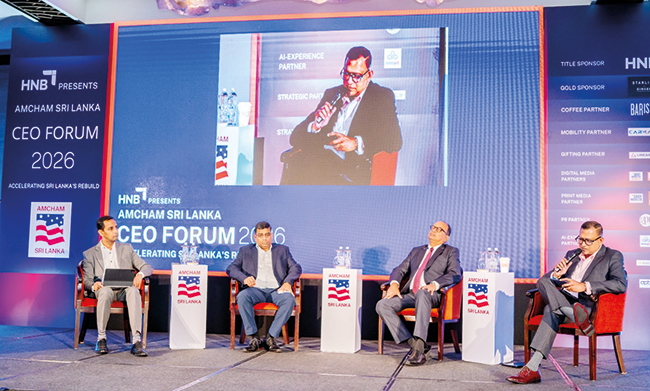
The American Chamber of Commerce in Sri Lanka concluded its flagship CEO Forum 2026 on 25 February with government officials outlining an ambitious plan to achieve 7% annual economic growth and progress toward a LKR 200 billion economy. The day-long summit, held under the theme “Accelerating Sri Lanka’s Rebuild,” brought together more than 200 C-level executives, senior policymakers, and international partners at Cinnamon Grand Colombo.
Dr. Harsha Suriyapperuma, Secretary to the Treasury, outlined priority reforms including strengthening fiscal stability, maintaining inflation at 5%, improving governance to attract foreign investment, upgrading port infrastructure, supporting IT and pharmaceutical sectors, accelerating digitization, and consolidating the banking sector. The government aims to double the economy within a decade while creating a more predictable business environment.
Opening the Forum, Her Excellency Jayne Howell, Chargé d’Affaires at the U.S. Embassy, called for expanded two-way trade and highlighted opportunities for Sri Lankan buyers to access American technology and energy solutions. She emphasized that growth in trade and logistics, including Port of Colombo expansion, strengthens supply chains and drives economic growth in both countries.
Deputy Minister Chathuranga Abeysinghe announced the establishment of the Industrial Transformation and Innovation Agency (ITIA), with LKR 300 million allocated for capacity-building and a “Level Up” program targeting 6,000 SMEs. Currently, only 20% of financial sector credit is accessible to SMEs, a constraint the new initiatives aim to address through simplified registration, expanded financial literacy, and improved equity financing access.

Our objective is to ensure the continuous functioning of essential services, public services, and industries even amidst this crisis — PM

Devine’s all-round masterclass hands New Zealand 2-1 series lead

Senegal and Morocco tied by religion and trade but divided by AFCON fallout

Showers expected in the Central, Sabaragamuwa and Uva provinces and in Galle, Matara, Mannar, Anuradhapura and Vavuniya districts after 2.00 pm.

CIABOC tells court Kapila gave Rs 60 mn to MR and Rs. 20 mn to Priyankara

Opposition moves no-faith motion against Energy Minister Kumara Jayakody

‘Dates have the highest sugar content to fight Coronavirus’

Sunday Island 27 December – Headlines

#SundayIsland 17th December – Headlines

Sunday Island – 28th March

Sunday Island Headlines – 21 March

Sunday Island – 21st February – Headlines
-

 Business5 days ago
Browns EV launches fast-charging BAW E7 Pro at Rs. 5.8 million
-
 Life style6 days ago
From culture to empowerment: Indonesia’s vision for Sri Lanka
-

 News3 days ago
CIABOC questions Ex-President GR on house for CJ’s maid
-
 Business7 days ago
Sri Lanka Institute of Information Technology raises the bar for academic excellence
-

 Life style6 days ago
Ranjith Fernando celebrates cricketing journey with Hob Nails to Spikes
-

 News4 days ago
Sri Lankan marine scientist Asha de Vos honoured at UNGA opening
-

 Features5 days ago
Achievements of the Hunduwa!
-
 Latest News6 days ago
QR code system will be implemented for fuel with effect from 06.00 a.m. today (15th)