
Midweek Review
Eelam conflict: In memory of fallen combatants


Sri Lanka’s economy is in shambles. The recent Supreme Court ruling set the record straight though silly attempts are being made to divert public attention. Regardless of the continuing economic crisis despite going to the IMF on the advice of pundits, the government and the Opposition should at the same time pay close attention to unresolved accountability issues as Lankan Tamil Diaspora with the subtle backing of the West will step up pressure with an eye on the outcome of the next Geneva session early next year. Perhaps, they should be reminded that Tamils here cleared the military by overwhelmingly voting for Fonseka at the 2010 presidential poll though he lost the contest by a staggering 1.8 mn votes.
By Shamindra Ferdinando
Fifteen years after the successful conclusion of the war against separatist terrorism, Sri Lanka is still embroiled in a simmering controversy over how to remember fallen members of the armed forces and the Liberation Tigers of Tamil Eelam (LTTE), despite the latter resorting to raw terror tactics virtually throughout the conflict, especially with the wide use of brainwashed suicide cadres to mount senseless attacks in pursuit of their dream.
Recently retired IGP C.D. Wickremeratne, who had received three extensions in spite of the steadfast refusal of the Constitutional Council to endorse President Ranil Wickremesinghe’s repeated recommendation to grant him extensions and the Director of the Terrorist Investigation Division (TID) last Friday (24) assured the Court of Appeal that action would be taken in terms of the Criminal Procedure Code against LTTE supporters who celebrated what they called ‘Great Heroes Day’ (Maveerar Naal). But events were underway in the North regardless of previous rulings issued by courts over there against such commemorations.
The assurance was given by Senior State Counsel Shaminda Wickrema, on behalf of the IGP and the Attorney General, in respect of a petition filed by a retired Warrant Officer of the Directorate of Military Intelligence (DMI).
Maveerar Naal events are celebrated both here and abroad with the participation of politicians even after the LTTE’s total military defeat.
Fallen members of the Indian military, too, are remembered in annual events at Palaly, in the Jaffna peninsula, though there hadn’t been memorial events whatsoever for members of other Tamil groups killed during the conflict. Some of them died while fighting for the Tamil National Army (TNA) formed by New Delhi ahead of the withdrawal of the so-called Indian Peace Keeping Force from the Northern and Eastern Provinces of Sri Lanka after they were asked to leave unceremoniously by the late President Ranasinghe Premadasa.
Event in London
Front organizations of the LTTE on Nov 27, 2008 celebrated their leader Velupillai Prabhakaran’s (VP) birthday in London while a relentless combined security forces offensive against the group was underway in the Vanni east.
Fifty-four-year-old VP had been in command of sufficient fighting cadre to sustain offensive action, though the area under his control was shrinking rapidly on the Vanni east front. By then, Lt. Gen. Sarath Fonseka’s Army had taken the upper hand and was gradually advancing on the enemy held territory in one-time LTTE bastion Mullaitivu, under his personal supervision, as he directly gave fighting orders to his individual field commanders, down to the rank of lieutenant colonel, from Colombo using CDMA phones almost on a daily basis.
With the capturing of Pooneryn on Nov 15, 2008 – 12 days before VP’s birthday, the Army turned eastwards and Paranthan was regained on January 01, 2009, Kilinochchi on January 02 and Elephant Pass on January 09. That brought the entire Vanni west back under military control.
Regardless of the LTTE being in a much disadvantaged position by late 2008, Diaspora Tamils still felt confident that the group could still turn around the situation, as they had done on countless occasions previously, hence the celebration in London, where the LTTE operated its so-called International Secretariat years ago even after they had assassinated former Indian Prime Minister Rajiv Gandhi as he campaigned in Tamil Nadu in May 1991.
Three weeks after the London celebrations, Canada-based columnist D.B.S. Jeyaraj claimed that the LTTE had the wherewithal to defeat the Army on the Vanni front. Close on the heels of DBS’s declaration, the LTTE suffered successive battlefield defeats and four months after the London celebrations, the LTTE received an unprecedented reversal at Anandapuram, Mullaithivu. The five-day Anandapuram battle (March 31-April 04, 2009) sealed the fate of the group, once considered invincible. Over 600 LTTE cadres, the majority from its elite units, along with senior commanders, were killed. Hundreds of others suffered injuries.
Let us discuss the situation then and the developments against the backdrop of wartime Foreign Minister Rohitha Bogollagama (January 2007 to April 2010) recently assuming responsibilities as our High Commissioner in London.
The Sri Lankan mission in London failed, in 2008, to thwart Prabhakaran’s birthday celebrations in spite of the then High Commissioner, retired Supreme Court Justice Nihal Jayasinghe (May 2008-Dec 2010) efforts to prevent the event. Jayasinghe succeeded top career diplomat Kshenuka Senewiratne, as our next High Commissioner designate in New Delhi.
On the instructions of the then Foreign Minister Bogollagama, the mission in London unsuccessfully asked for the UK’s intervention to stop it. But, Diaspora Tamils were allowed to organize a public event at ExCeL London, 1, Western Gateway, Royal Victoria Dock, London E16 1XL. The UK permitted the event in spite of the LTTE being a proscribed terrorist organization under the UK Terrorism Act. That is how London fights terrorism with their double standards as can be clearly seen from what is happening in Gaza now.
Five months later, Prabhakaran was dead. On May 19, 2009, a pro-LTTE website denied the death. “I wish to inform the global Tamil community distressed witnessing the final events of the war that our beloved leader Vellupillai Prabhakaran is alive and safe”, tamilnet.com quoted LTTE Selvarajah Pathmanathan aka KP as having said. A few months later KP ended up in Sri Lankan custody, thanks to Malaysia.
Reappraisal of strategy necessary
The government shouldn’t interfere with Maveerar Naal commemorative events held in honour of the fallen members of the LTTE though originally it was meant to remember the first cadre to die in Tamil Nadu on Nov 27, 1982 following a confrontation with Sri Lanka Army. Sathiyanathan alias Shankar also known as Suresh was his name. The LTTE had moved the wounded Shankar across the sea to Tamil Nadu for treatment.
Later the LTTE combined its leader’s birthday with Maveerar Naal to declare a week of ‘celebrations’ and commemorative events. It was part of their strategy meant to attract public attention, whip up the fighting spirit of its cadres and also win international recognition. VP used to declare his policy speech on his birthday on Nov 26. Since the death of VP in May 2009, the event has lost much of its significance and today bankrupt politicians sought to take advantage of these events.
The government and the Opposition should reach a consensus on the issue at hand to prevent those who supported and tolerated terrorism from exploiting the gullible Tamil population. Why should organizers of politically-motivated Maveerar Naal events be allowed to exploit the deaths of fallen LTTE cadres? Both politicians and law enforcement authorities should realize that unnecessary interference in Maveerar Naal events would be counterproductive and only facilitate Diaspora propaganda. Let them recollect the failed murderous Eelam project and how well over 200,000 civilians were held hostage as a human shield by the LTTE for its survival when it was well and truly cornered. Even the much maligned Hamas that has been ruling the Gaza after being democratically elected has done no such thing though they continue to be vilified by the West, while forgetting the fact that Israel kept the Palestinian territories like open concentration camps as pointed out by many independent observers.
The government should launch an initiative to remind the people of the use of child soldiers. The despicable practice of using children as cannon fodder continued until the military brought the war to an end in May 2009. Even during the last few months of the conflict, the LTTE made desperate efforts to recruit children from among the civilians they held as a shield.
Cancellation of Victory Day parade
In the aftermath of Maithripala Sirisena winning the January 2015 presidential election, Sri Lanka cancelled the annual Victory Day parade. President Sirisena, who also served as the Defence Minister, in addition to being the Commander-in-Chief of the armed forces, made the decision in agreement with its coalition partner, the UNP.
The government declared that May 19, which was marked as the Victory Day will be celebrated as the ‘Remembrance Day’ instead, to commemorate all who died in the war.
This should be examined against the backdrop of Western governments criticizing the Victory Day parade. On behalf of all those who had been pursuing war crimes allegations since the conclusion of the war against the Sri Lankan military, Canada in 2014 demanded the cancellation of the parade.
Sri Lanka quite rightly rejected that blatant Canadian interference declaring that the issue is purely a domestic matter. In the run-up to the 2014 Victory Day parade, in Matara, Canada publicly declared that it wouldn’t be represented. It was the fifth Victory Day parade held amidst stepped up international pressure.
Several years later Canada accused Sri Lanka of perpetrating genocide, whereas in actual fact it was the white colonisers of North and South America who committed numerous acts of genocide often to grab natives’ lands in the new world. Acts of genocide were even committed in Church-run schools for native children where they were kept by force often against the wishes of their parents and communities even up to mid-1990s, more than two thousand unmarked graves of those children were discovered on grounds of those schools recently. And what about dozens of native women there who have disappeared without a trace in recent years and have the Canadian law enforcers made any genuine effort to trace their fate? Despite all that, the Ottawa government has the temerity to level genocide accusations against Sri Lanka and those accusations conveniently surfaced a few months before a public protests campaign allegedly backed by the US forced the then President Gotabaya Rajapaksa to quit office. In spite of Sri Lanka’s outright rejection of unsubstantiated allegation, Canadian Prime Minister Justin Trudeau continued to reiterate genocide took place, hence May 18 declared as ‘Tamil Genocide Remembrance Day.’
However, the Canadian Foreign Affairs Ministry has acknowledged that they never made such a finding. When the writer sought a clarification regarding Trudeau’s claim, the Canadian HC in Colombo reiterated that the Premier’s stand remained the same. However, Kelum Bandara in an exclusive Daily Mirror report headlined ‘Canada informs SL that no genocide took place in SL, Trudeau says otherwise for political ends’ posted on June 16,2023, exposed the Canadian lie.
Bandara pointed out that Canada’s official position contradicted the allegations pertaining to genocide propagated by some of its leaders, including Canadian Prime Minister Justin Trudeau, as such belated accusations does not hold water. According to the DM report, the Canadian Foreign Ministry had responded to the Sri Lanka regarding concerns raised on March 21, 2021 by Brampton’s City Council’s reference to genocide.
Having pointed out that municipal and provincial governments enjoyed independence from the federal government of Canada, the Canadian Foreign Affairs Ministry acknowledged “the Government of Canada has not made a finding that there was genocide in Sri Lanka.”
But even after that, the Canadian Prime Minister repeated genocide allegations on May 18, 2023, a day prior to the 14th anniversary of Sri Lanka’s war victory against the LTTE.
Sri Lanka brought the war to a successful conclusion when LTTE leader Velupillai Prabhakaran was shot through his head on the banks of the Nanthikadal lagoon. That finally ended the scourge of terrorism.
Undeniable truth
On May 18, Tamils mark Mullivaikkal Memorial Day, in remembrance of those who died in the final phase of the fighting.
Actually how many civilians died as more than 200,000 were held as a human shield by the retreating LTTE? Would it be possible ever to identify the number of civilian and LTTE deaths as it was also not unusual to find Tigers who fought in civilian clothes, unless the Tamil community accepted the status of the dead?
If those who had been genuinely concerned about accountability issues and wanted to establish the number of dead, wounded, disappeared and those who secured foreign citizenship under assumed names, a proper census should be conducted with the assistance of the international community. Diaspora groups can play a significant role in carrying out an accurate survey. The census of the LTTE dead should begin with Sathiyanathan alias Shankar also known as Suresh (the first Great Hero in their parlance).
The census should be able to establish the number of ex-LTTE personnel living abroad to ensure they are not categorized here as war dead or disappeared. Perhaps South African Yasmin Sooka, a member of the UN Secretary General’s panel of experts on Sri Lanka accountability issues, can help conduct the survey as she, a Tamil of Indian origin, already had done a limited survey in the West.
The writer dealt with this issue in a report headlined ‘Sooka’s latest report to UNHRC: Glaring omissions’ posted on June 29, 2016.
The expensive survey had been carried out by the International Truth and Justice Project (ITJP), affiliated to the Foundation of Human Rights in South Africa. Based on that survey ITJP released ‘Forgotten Sri Lanka’s exiled victims.’ The release of the report coincided with the commencement of the 32 sessions of the Geneva-based United Nations Human Rights Council (UNHRC) in 2016. The report unintentionally revealed the existence of clandestine networks, facilitating Sri Lankans of Tamil origin, including former members of the LTTE, reaching Europe, through illegal means.
The Sooka study disclosed that LTTE personnel, including those who had been with Shanmugalingam Sivashankar alias Pottu Amman’s dreaded intelligence service, had secured citizenship in European countries, including the UK. Obviously, the report was meant to intensify pressure on Sri Lanka on the Geneva front, and justify the demand for a hybrid war crimes court on the basis of exaggerated and unsubstantiated accusations directed at the Sri Lankan military.
The report dealt with information obtained from 75 Tamils, living in the UK, France, Switzerland and Norway. Almost all of them had fled Sri Lanka after the conclusion of the war, in May, 2009 often after bribing local officials both civilian and military as alleged by some.
Sooka functions as the executive director of the foundation as well as ITJP. The report: “She is a former member of the South African & the Sierra Leone Truth and Reconciliation Commissions and was a legal advisor to Ban Ki-moon on Sri Lanka. She was the Soros inaugural Chair at the School of Public Policy and recently sat on the Panel investigating sexual violence by French peacekeeping troops in the Central African Republic.”
The writer sought a clarification from UNSG’s deputy spokesperson, Farhan Haq, regarding Sooka’s tenure as a Legal Advisor to UNSG on Sri Lanka. The Island received the following response from Haq: “Yasmin Sooka has been on high level panels, including on Sri Lanka, but she has not been the legal adviser to the Secretary-General.”
A proper survey cannot be carried out unless stakeholders pay attention to the following matters: (1) Combatants and civilians killed before July 23, 1983, killing of 13 soldiers at Thinnavely, Jaffna, that triggered attacks on the Tamil community. (2) Combatants and civilians killed between August 1983 to July 29, 1987 (3) Combatants (Indian Army included) and civilians killed during July 29, 1987 to March 1990, when India ceased its military presence here. Accountability issues cannot be addressed unless India’s role is fully investigated and (4) combatants and civilians killed during June 1990 to May 2009.
The survey should also focus on (1) number of Indian and locally trained Tamils killed in clashes among groups (2) those killed during weapons training in India and hunted down and eliminated by Indian police and security forces after the LTTE assassinated former Indian Premier Rajiv Gandhi in May 1991, PLOTE cadres killed during Nov 1988 raid on the Maldives and those killed by the Indian Navy while they were fleeing the Maldives in a commandeered merchant vessel (3) Sri Lankan Tamils given refuge in India after the collapse of the North-East Provincial administration 1989/1990, and finally (4) Members of political parties and Provincial Council killed during the conflict. At least few of them had been killed by Tamil groups at the behest of Indian intelligence. Current MP Dharmalingham Siddharthan (TNA/PLOTE) is on record as having said that TELO killed his father, a then MP in Sept 1985 on the orders of the Indian intelligence.
The late Jayantha Dhanapala, the much respected diplomat raised the accountability on the part of the international community. Dhanapala did so when he appeared before the Lessons Learnt and Reconciliation Commission (LLRC) in Aug 2010 but successive governments conveniently ignored his submissions. They never did until the great man passed away.
Finally, it must be asked why there is no proper accounting by the UN types to illegal wars fought by the West and its proxies in places like Iraq, Afghanistan, Libya, Palestine, Syria, etc., often on false pretexts that have caused millions of deaths, injuries, destruction and also millions of refugees since 1948.

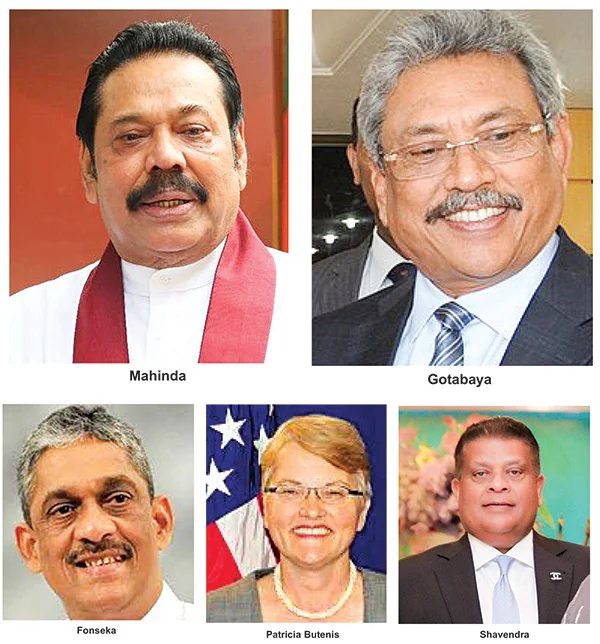
With Sri Lanka’s 17th annual war victory over separatist Tamil terrorism just months away, warwinning Army Chief, Field Marshal Sarath Fonseka (Dec. 06, 2005, to July 15, 2009) has significantly changed his war narrative pertaining to the final phase of the offensive that was brought to an end on May 18, 2009.
The armed forces declared the conclusion of ground operations on that day after the entire northern region was brought back under their control. LTTE leader Velupillai Prabhakaran, hiding within the secured area, was killed on the following day. His body was recovered from the banks of the Nanthikadal lagoon.
With the war a foregone conclusion, with nothing to save the increasingly hedged in Tigers taking refuge among hapless Tamil civilians, Fonseka left for Beijing on May 11, and returned to Colombo, around midnight, on May 17, 2009. The LTTE, in its last desperate bid to facilitate Prabhakatan’s escape, breached one flank of the 53 Division, around 2.30 am, on May 18. But they failed to bring the assault to a successful conclusion and by noon the following day those fanatical followers of Tiger Supremo, who had been trapped within the territory, under military control, died in confrontations.
During Fonseka’s absence, the celebrated 58 Division (formerly Task Force 1), commanded by the then Maj. Gen. Shavendra Silva, advanced 31/2 to 4 kms and was appropriately positioned with Maj. Gen. Kamal Gunaratne’s 53 Division. The LTTE never had an opportunity to save its leader by breaching several lines held by frontline troops on the Vanni east front. There couldn’t have been any other option than surrendering to the Army.
The Sinha Regiment veteran, who had repeatedly accused the Rajapaksas of war crimes, and betraying the war effort by providing USD 2 mn, ahead of the 2005 presidential election, to the LTTE, in return for ordering the polls boycott that enabled Mahinda Rajapaksa’s victory, last week made noteworthy changes to his much disputed narrative.
GR’s call to Shavendra What did the former Army Commander say?
* The Rajapaksas wanted to sabotage the war effort, beginning January 2008.
* In January 2008, Mahinda Rajapaksa, Defence Secretary Gotabaya Rajapaksa and Navy Commander VA Wasantha Karannagoda, proposed to the National Security Council that the Army should advance from Vavuniya to Mullithivu, on a straight line, to rapidly bring the war to a successful conclusion. They asserted that Fonseka’s strategy (fighting the enemy on multiple fronts) caused a lot of casualties.
* They tried to discourage the then Lt. Gen. Fonseka
* Fonseka produced purported video evidence to prove decisive intervention made by Defence Secretary Gotabaya Rajapaksa on the afternoon of May 17. The ex-Army Chief’s assertion was based on a telephone call received by Maj. Gen. Shavendra Silva from Gotabaya Rajapaksa. That conversation had been captured on video by Swarnavahini’s Shanaka de Silva who now resides in the US. He had been one of the few persons, from the media, authorised by the Army Headquarters and the Defence Ministry to be with the Army leadership on the battlefield. Fonseka claimed that the videographer fled the country to escape death in the hands of the Rajapaksas. It was somewhat reminiscent of Maithripala Sirisena’s claim that if Rajapaksas win the 2015 Presidential election against him he would be killed by them.
* Shanaka captured Shavendra Silva disclosing three conditions laid down by the LTTE to surrender namely (a) Their casualties should be evacuated to Colombo by road (b) They were ready to exchange six captured Army personnel with those in military custody and (c) and the rest were ready to surrender.
* Then Fonseka received a call from Gotabaya Rajapaksa, on a CDMA phone. The Defence Secretary issued specific instructions to the effect that if the LTTE was to surrender that should be to the military and definitely not to the ICRC or any other third party. Gotabaya Rajapaksa, one-time Commanding Officer of the 1st battalion of the Gajaba Regiment, ordered that irrespective of any new developments and talks with the international community, offensive action shouldn’t be halted. That declaration directly contradicted Fonseka’s claim that the Rajapaksas conspired to throw a lifeline to the LTTE.
Fonseka declared that the Rajapaksa brothers, in consultation with the ICRC, and Amnesty International, offered an opportunity for the LTTE leadership to surrender, whereas his order was to annihilate the LTTE. The overall plan was to eliminate all, Fonseka declared, alleging that the Rajapaksa initiated talks with the LTTE and other parties to save those who had been trapped by ground forces in a 400 m x 400 m area by the night of May 16, among a Tamil civilian human shield held by force.
If the LTTE had agreed to surrender to the Army, Mahinda Rajapaksa would have saved their lives. If that happened Velupillai Prabhakaran would have ended up as the Chief Minister of the Northern Province, he said. Fonseka shocked everyone when he declared that he never accused the 58 Division of executing prisoners of war (white flag killings) but the issue was created by those media people embedded with the military leadership. Fonseka declared that accusations regarding white flag killings never happened. That story, according to Fonseka, had been developed on the basis of the Rajapaksas’ failed bid to save the lives of the LTTE leaders.
Before we discuss the issues at hand, and various assertions, claims and allegations made by Fonseka, it would be pertinent to remind readers of wartime US Defence Advisor in Colombo Lt. Col. Lawrence Smith’s June 2011 denial of white flag killings. The US State Department promptly declared that the officer hadn’t spoken at the inaugural Colombo seminar on behalf of the US. Smith’s declaration, made two years after the end of the war, and within months after the release of the Darusman report, dealt a massive blow to false war crimes allegations.
UN Secretary-General Ban Ki-moon, in 2010, appointed a three-member Panel of Experts, more like a kangaroo court, consisting of Marzuki Darusman, Yasmin Sooka, and Steven Ratner, to investigate war crimes accusations.
Now Fonseka has confirmed what Smith revealed at the defence seminar in response to a query posed by Maj. General (retd.) Ashok Metha of the IPKF to Shavendra Silva, who had been No 02 in our UN mission, in New York, at that time.
White flag allegations
‘White flag’ allegations cannot be discussed in isolation. Fonseka made that claim as the common presidential candidate backed by the UNP-JVP-TNA combine. The shocking declaration was made in an interview with The Sunday Leader Editor Frederica Jansz published on Dec. 13, 2009 under ‘Gota ordered them to be shot – General Sarath Fonseka.’
The ‘white flag’ story had been sensationally figured in a leaked confidential US Embassy cable, during Patricia Butenis tenure as the US Ambassador here. Butenis had authored that cable at 1.50 pm on Dec. 13, 2009, the day after the now defunct The Sunday Leader exclusive. Butenis had lunch with Fonseka in the company of the then UNP Deputy Leader Karu Jayasuriya, according to the cable. But for the writer the most interesting part had been Butenis declaration that Fonseka’s advisors, namely the late Mangala Samaraweera, Anura Kumara Dissanayake (incumbent President) and Vijitha Herath (current Foreign Minister) wanted him to retract part of the story attributed to him.
Frederica Jansz fiercely stood by her explosive story. She reiterated the accuracy of the story, published on Dec. 13, 2009, during the ‘white flag’ hearing when the writer spoke to her. There is absolutely no reason to suspect Frederica Jansz misinterpreted Fonseka’s response to her queries.
Subsequently, Fonseka repeated the ‘white flag’ allegation at a public rally held in support of his candidature. Many an eyebrow was raised at The Sunday Leader’s almost blind support for Fonseka, against the backdrop of persistent allegations directed at the Army over Lasantha Wickrematunga’s killing. Wickrematunga, an Attorney-at-Law by profession and one-time Private Secretary to Opposition Leader Sirimavo Bandaranaike, was killed on the Attidiya Road, Ratmalana in early January 2009.
The Darusman report, too, dealt withthe ‘white flag’ killings and were central to unsubstantiated Western accusations directed at the Sri Lankan military. Regardless of the political environment in which the ‘white flag’ accusations were made, the issue received global attention for obvious reasons. The accuser had been the war-winning Army Commander who defeated the LTTE at its own game. But, Fonseka insisted, during his meeting with Butenis, as well as the recent public statement that the Rajapaksas had worked behind his back with some members of the international community.
Fresh inquiry needed
Fonseka’s latest declaration that the Rajapaksas wanted to save the LTTE leadership came close on the heels of Deputy British Prime Minister David Lammy’s whistle-stop visit here. The UK, as the leader of the Core Group on Sri Lanka at the Geneva-based United Nations Human Rights Council, spearheads the campaign targeting Sri Lanka.
Lammy was on his way to New Delhi for the AI Impact Summit. The Labour campaigner pushed for action against Sri Lanka during the last UK general election. In fact, taking punitive action against the Sri Lankan military had been a key campaign slogan meant to attract Tamil voters of Sri Lankan origin. His campaign contributed to the declaration of sanctions in March 2025 against Admiral of the Fleet Wasantha Karannagoda, General (retd) Shavendra Silva, General (retd) Jagath Jayasuriya and ex-LTTE commander Karuna, who rebelled against Prabhakaran. Defending Shavendra Silva, Fonseka, about a week after the imposition of the UK sanctions, declared that the British action was unfair.
But Fonseka’s declaration last week had cleared the Rajapaksas of war crimes. Instead, they had been portrayed as traitors. That declaration may undermine the continuous post-war propaganda campaign meant to demonise the Rajapaksas and top ground commanders.
Canada, then a part of the Western clique that blindly towed the US line, declared Sri Lanka perpetrated genocide and also sanctioned ex-Presidents Mahinda Rajapaksa and Gotabaya Rajapaksa. Other countries resorted to action, though such measures weren’t formally announced. General (retd) Jagath Dias and Maj. Gen (retd) Chagie Gallage were two of those targeted.
Against the backdrop of Fonseka’s latest claims, in respect of accountability issues, the urgent need to review action taken against Sri Lanka cannot be delayed. Although the US denied visa when Fonseka was to accompany President Maithripala Sirisena to the UN, in Sept. 2016, he hadn’t been formally accused of war crimes by the western powers, obviously because he served their interests.
On the basis of unsubstantiated allegations that hadn’t been subjected to judicial proceedings, Geneva initiated actions. The US, Canada and UK acted on those accusations. The US sanctioned General Shavendra Silva in Feb. 2020 and Admiral Karannagoda in April 2023.
What compelled Fonseka to change his narrative, 18 years after his Army ended the war? Did Fonseka base his latest version solely on Shanaka de Silva video? Fonseka is on record as claiming that he got that video, via a third party, thereby Shanaka de Silva had nothing to do with his actions.
DNA and formation of DP
Having realised that he couldn’t, under any circumstances, reach a consensus with the UNP to pursue a political career with that party, Fonseka teamed up with the JVP, one of the parties in the coalition that backed his presidential bid in 2010. Fonseka’s current efforts to reach an understanding with the JVP/NPP (President Anura Kumara Dissanayake is the leader of both registered political parties) should be examined against the backdrop of their 2010 alliance.
Under Fonseka’s leadership, the JVP, and a couple of other parties/groups, contested, under the symbol of the Democratic National Alliance (DNA) that had been formed on 22 Nov. 2009. but the grouping pathetically failed to live up to their own expectations. The results of the parliamentary polls, conducted in April 2010, had been devastating and utterly demoralising. Fonseka, who polled about 40% of the national vote at the January 2010 presidential election, ended up with just over 5% of the vote, and the DNA only managed to secure seven seats, including two on the National List. The DNA group consisted of Fonseka, ex-national cricket captain Arjuna Ranatunga, businessman Tiran Alles and four JVPers. Anura Kumara Dissanayake was among the four.
Having been arrested on February 8, 2010, soon after the presidential election, Fonseka was in prison. He was court-martialed for committing “military offences”. He was convicted of corrupt military supply deals and sentenced to three years in prison. Fonseka vacated his seat on 7 Oct .2010. Following a failed legal battle to protect his MP status, Fonseka was replaced by DNA member Jayantha Ketagoda on 8 March 2011. But President Mahinda Rajapaksa released Fonseka in May 2012 following heavy US pressure. The US went to the extent of issuing a warning to the then SLFP General Secretary Maithripala Sirisena that unless President Rajapaksa freed Fonseka he would have to face the consequences (The then Health Minister Sirisena disclosed the US intervention when the writer met him at the Jealth Ministry, as advised by President Rajapaksa)
By then, Fonseka and the JVP had drifted apart and both parties were irrelevant. Somawansa Amarasinghe had been the leader at the time the party decided to join the UNP-led alliance that included the TNA, and the SLMC. The controversial 2010 project had the backing of the US as disclosed by leaked secret diplomatic cables during Patricia Butenis tenure as the US Ambassador here.
In spite of arranging the JVP-led coalition to bring an end to the Rajapaksa rule, Butenis, in a cable dated 15 January 2010, explained the crisis situation here. Butenis said: “There are no examples we know of a regime undertaking wholesale investigations of its own troops or senior officials for war crimes while that regime or government remained in power. In Sri Lanka this is further complicated by the fact that responsibility for many of the alleged crimes rests with the country’s senior civilian and military leadership, including President Rajapaksa and his brothers and opposition candidate General Fonseka.”
Then Fonseka scored a major victory when Election Commissioner Mahinda Deshapriya on 1 April, 2013, recognised his Democratic Party (DNA was registered as DP) with ‘burning flame’ as its symbol. There hadn’t been a previous instance of any service commander registering a political party. While Fonseka received the leadership, ex-Army officer Senaka de Silva, husband of Diana Gamage ((later SJB MP who lost her National List seat over citizenship issue) functioned as the Deputy Leader.
Having covered Fonseka’s political journey, beginning with the day he handed over command to Lt. Gen. Jagath Jayasuriya, in July, 2009, at the old Army Headquarters that was later demolished to pave the way for the Shangri-La hotel complex, the writer covered the hastily arranged media briefing at the Solis reception hall, Pitakotte, on 2 April, 2023. Claiming that his DP was the only alternative to what he called corrupt Mahinda Rajapaksa’s government and bankrupt Ranil Wickremesinghe-led Opposition, a jubilant Fonseka declared himself as the only alternative (‘I am the only alternative,’ with strapline ‘SF alleges Opposition is as bad as govt’. The Island, April 3, 2013).
Fonseka had been overconfident to such an extent, he appealed to members of the government parliamentary group, as well as the Opposition (UNP), to switch allegiance to him. As usual Fonseka was cocky and never realised that 40% of the national vote he received, at the presidential election, belonged to the UNP, TNA and the JVP. Fonseka also disregarded the fact that he no longer had the JVP’s support. He was on his own. The DP never bothered to examine the devastating impact his 2010 relationship with the TNA had on the party. The 2015 general election results devastated Fonseka and underscored that there was absolutely no opportunity for a new party. The result also proved that his role in Sri Lanka’s triumph over the LTTE hadn’t been a decisive factor.
RW comes to SF’s rescue
Fonseka’s DP suffered a humiliating defeat at the August 2015 parliamentary polls. The outcome had been so bad that the DP was left without at least a National List slot. Fonseka was back to square one. If not for UNP leader and Prime Minister Ranil Wickremesinghe, Fonseka could have been left in the cold. Wickremesinghe accommodated Fonseka on their National List, in place of SLFPer M.K.D.S. Gunawardene, who played a critical role in an influential section of the party and the electorate shifting support to Maithripala Sirisena. Gunawardena passed away on 19 January, 2016. Wickremesinghe and Fonseka signed an agreement at Temple Trees on 3 February, 2016. Fonseka received appointment as National List MP on 9 February, 2016, and served as Minister of Regional Development and, thereafter, as Minister of Wildlife and Sustainable Development, till Oct. 2018. Fonseka lost his Ministry when President Sirisena treacherously sacked Wickremesinghe’s government to pave the way for a new partnership with the Rajapaksas. The Supreme Court discarded that arrangement and brought back the Yahapalana administration but Sirisena, who appointed Fonseka to the lifetime rank of Field Marshal, in recognition of his contribution to the defeat of terrorism, refused to accommodate him in Wickremesinghe’s Cabinet. The President also left out Wasantha Karannagoda and Roshan Goonetilleke. Sirisena appointed them Admiral of the Fleet and Marshal of Air Force, respectively, on 19, Sept. 2019, in the wake of him failing to secure the required backing to contest the Nov. 2019 presidential election.
Wickremesinghe’s UNP repeatedly appealed on behalf of Fonseka in vain to Sirisena. At the 2020 general election, Fonseka switched his allegiance to Sajith Premadasa and contested under the SJB’s ‘telephone’ symbol and was elected from the Gampaha district. Later, following a damaging row with Sajith Premadasa, he quit the SJB as its Chairman and, at the last presidential election, joined the fray as an independent candidate. Having secured just 22,407 votes, Fonseka was placed in distant 9th position. Obviously, Fonseka never received any benefits from support extended to the 2022 Aragalaya and his defeat at the last presidential election seems to have placed him in an extremely difficult position, politically.
Let’s end this piece by reminding that Fonseka gave up the party leadership in early 2024 ahead of the presidential election. Senaka de Silva succeeded Fonseka as DP leader, whereas Dr. Asosha Fernando received appointment as its Chairman. The DP has aligned itself with the NPP. The rest is history.
By Shamindra Ferdinando
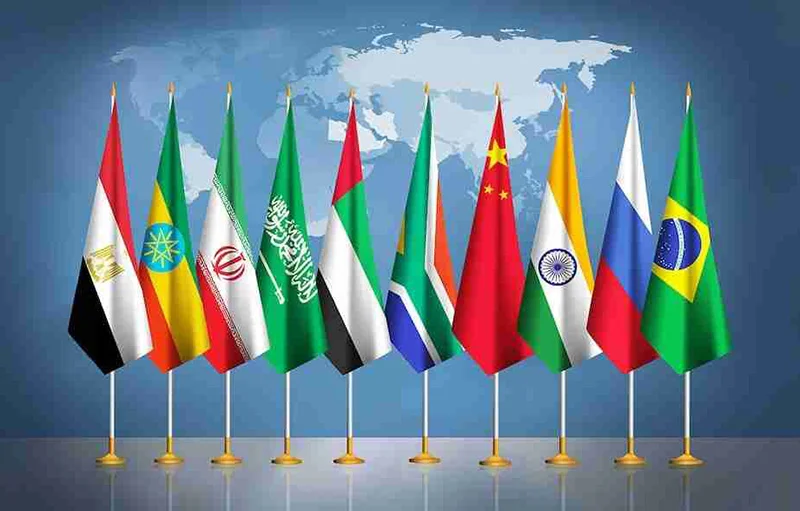
The 16th BRICS Summit, from 22 to 24 October 2024 in Kazan, was attended by 24 heads of state, including the five countries that officially became part of the group on 1 January: Saudi Arabia, the United Arab Emirates, Iran, Egypt and Ethiopia. Argentina finally withdrew from the forum after Javier Milei’s government took office in 2023.
In the end, it changed its strategy and instead of granting full membership made them associated countries adding a large group of 13 countries: two from Latin America (Bolivia and Cuba), three from Africa (Algeria, Nigeria, Uganda) and eight from Asia (Belarus, Indonesia, Kazakhstan, Malaysia, Thailand, Turkey, Uzbekistan and Vietnam). This confirms the expansionary intent of the BRICS, initiated last year and driven above all by China, which seeks to turn the group into a relevant multilateral forum, with focus on political than economic interaction, designed to serve its interests in the geopolitical dispute with the United States. This dispute however is not the making of China but has arisen mainly due to the callous bungling of Donald Trump in his second term in office.
China has emerged as the power that could influence the membership within the larger group more than its rival in the region, India. Obviously, the latter is concerned about these developments but seems powerless to stop the trend as more countries realize the need for the development of capacity to resist Western dominance. India in this regard seems to be reluctant possibly due to its defence obligations to the US with Trump declaring war against countries that try to forge partnerships aiming to de-dollarize the global economic system.
The real weakness in BRICS therefore, is the seemingly intractable rivalry between China and India and the impact of this relationship on the other members who are keen to see the organisation grow its capacity to meet its stated goals. China is committed to developing an alternative to the Western dominated world order, particularly the weaponization of the dollar by the US. India does not want to be seen as anti-west and as a result India is often viewed as a reluctant or cautious member of BRICS. This problem seems to be perpetuated due to the ongoing border tensions with China. India therefore has a desire to maintain a level playing field within the group, rather than allowing it to be dominated by Beijing.
Though India seems to be committed to a multipolar world, it prefers focusing on economic cooperation over geopolitical alignment. India thinks the expansion of BRICS initiated by China may dilute its influence within the bloc to the advantage of China. India fears the bloc is shifting toward an anti-Western tilt driven by China and Russia, complicating its own strong ties with the West. India is wary of the new members who are also beneficiaries of China’s Belt and Road Initiative. While China aims to use BRICS for anti-Western geopolitical agendas, India favors focusing on South-South financial cooperation and reforming international institutions. Yet India seems to be not in favour of creating a new currency to replace the dollar which could obviously strengthen the South-South financial transactions bypassing the dollar.
Moreover, India has explicitly opposed the expansion of the bloc to include certain nations, such as Pakistan, indicating a desire to control the group’s agenda, especially during its presidency.
In this equation an important factor is the role that Russia could play. The opinion expressed by the Russian foreign minister in this regard may be significant. Referring to the new admissions the Russian Foreign Minister Sergey Lavrov has said: “The weight, prominence and importance of the candidates and their international standing were the primary factors for us [BRICS members]. It is our shared view that we must recruit like-minded countries into our ranks that believe in a multipolar world order and the need for more democracy and justice in international relations. We need those who champion a bigger role for the Global South in global governance. The six countries whose accession was announced today fully meet these criteria.”
The admission of three major oil producing countries, Saudi Arabia, Iran and UAE is bound to have a significant impact on the future global economic system and consequently may have positive implications for the Global South. These countries would have the ability to decisively help in creating a new international trading system to replace the 5 centuries old system that the West created to transfer wealth from the South to the North. This is so because the petro-dollar is the pillar of the western banking system and is at the very core of the de-dollarizing process that the BRICS is aiming at. This cannot be done without taking on board Saudi Arabia, a staunch ally of the west. BRICS’ expansion, therefore, is its transformation into the most representative community in the world, whose members interact with each other bypassing Western pressure. Saudi Arabia and Iran are actively mending fences, driven by a 2023 China-brokered deal to restore diplomatic ties, reopen embassies, and de-escalate regional tensions. While this detente has brought high-level meetings and a decrease in direct hostility rapprochement is not complete yet and there is hope which also has implications, positive for the South and may not be so for the North.
Though the US may not like what is going on, Europe, which may not endorse all that the former does if one is to go by the speech delivered by the Canadian PM in Brazil recently, may not be displeased about the rapid growth of BRICS. The Guardian UK highlighted expert opinion that BRICS expansion is rather “a symbol of broad support from the global South for the recalibration of the world order.” A top official at the Konrad Adenauer Foundation, Caroline Kanter has told the daily, “It is obvious that we [Western countries] are no longer able to set our own conditions and standards. Proposals will be expected from us so that in the future we will be perceived as an attractive partner.” At the same time, the bottom line is that BRICS expansion is perceived in the West as a political victory for Russia and China which augurs well for the future of BRICS and the Global South.
Poor countries, relentlessly battered by the neo-liberal global economy, will greatly benefit if BRICS succeeds in forging a new world order and usher in an era of self-sufficiency and economic independence. There is no hope for them in the present system designed to exploit their natural resources and keep them in a perpetual state of dependency and increasing poverty. BRICS is bound to be further strengthened if more countries from the South join it. Poor countries must come together and with the help of BRICS work towards this goal.
by N. A. de S. Amaratunga
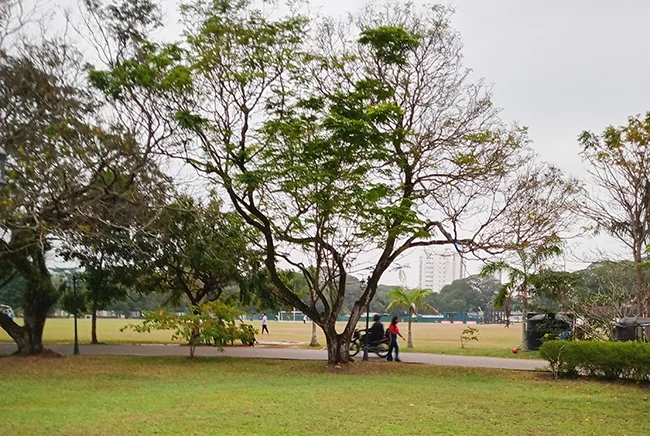
In the gentle red and gold of the setting sun,
The respected campus in Colombo’s heart,
Is a picture of joyful rest and relief,
Of games taking over from grueling studies,
Of undergrads heading home in joyful ease,
But in those bags they finally unpack at night,
Are big books waiting to be patiently read,
Notes needing completing and re-writing,
And dreamily worked out success plans,
Long awaiting a gutsy first push to take off.
By Lynn Ockersz

INS TARANGINI makes port call in Trincomalee

Iran’s Supreme Leader Ayatollah Ali Khamenei has been killed, state media says

Can West Indies make up for bowling gulf in virtual quarter-final against India?

Flights cancelled as travel warnings issued after strikes on Iran

Trump says Iran’s Supreme Leader Ayatollah Ali Khamenei is dead after US-Israeli strikes

South Africa put spotless record on the line in all-African clash

‘Dates have the highest sugar content to fight Coronavirus’

Sunday Island 27 December – Headlines

#SundayIsland 17th December – Headlines

Sunday Island – 28th March

Sunday Island Headlines – 21 March

Sunday Island – 21st February – Headlines
-

 Features6 days ago
LOVEABLE BUT LETHAL: When four-legged stars remind us of a silent killer
-

 Business6 days ago
Bathiya & Santhush make a strategic bet on Colombo
-
 Business6 days ago
Seeing is believing – the silent scale behind SriLankan’s ground operation
-

 Features6 days ago
Protection of Occupants Bill: Good, Bad and Ugly
-
 News6 days ago
Prime Minister Attends the 40th Anniversary of the Sri Lanka Nippon Educational and Cultural Centre
-

 News6 days ago
Coal ash surge at N’cholai power plant raises fresh environmental concerns
-
 Business6 days ago
Huawei unveils Top 10 Smart PV & ESS Trends for 2026
-
 Opinion2 days ago
Jamming and re-setting the world: What is the role of Donald Trump?