
Sports
Eden Gardens – a venue with fond memories for Sri Lankans

Rex Clementine
in Calcutta
After the T-20s were witnessed by packed crowds – all exceeding 30,000 in Bombay, Rajkot and Pune – the first ODI in Guwahati was bit of a disappointment as only half the stadium was full. India’s latest cricket ground with a 40,000 capacity had staged a game in October as well when South Africa toured India and three months later to get another game is highly unusual.
India has five main cricket centers – Bombay, Delhi, Calcutta, Madras and Bangalore. It is those centers that used to get regular fixtures until recently but newer grounds are favoured nowadays maybe due to the change of political landscape in cricket.
Jay Shah, cricket’s most powerful man is from Ahmedabad and that venue gets games frequently nowadays and Guwahati is climbing up the ladder maybe because the Joint Secretary of BCCI Devajit Saikia is from this city.
 There are plenty of activities to do in Guwahati and one of the must go places is the place of worship known as Kamakhya Devalaya, built in the eighth century. Yes, Devalaya is the name given for place of worship in this part of India. The temple dedicated to Lord Ganesh gets packed by noon so an early visit is the safest bet. According to the Kalika Purana, Kamakhya Devalaya ‘denotes the spot where Sati used to retire in secret to satisfy her amour with Shiva’.
The temple is some eight kilometers from the city but it takes more than 40 minutes as this place is in a hilly area. But the trouble is fully worth as you feel spiritually nourished after the visit.
Our next stop Calcutta is just a short one hour flight from Guwahati. The cheapest mode of transport is train but it takes you some 16 hours to cover the distance of 1080 kilometers and when you have back to back games, that’s out of the equation. Otherwise, train is the best mode of transportation in India. Clean, cheap and on time.
Although flying time is just one hour to Calcutta from Guwahati, sometimes you end up being on air for an hour and half. It all depends on what time you travel. If you are travelling during peak hours and if the air traffic control can not give you clearance to land, then you spend the extra half an hour as the aircraft circles around the same range of mountains.
Calcutta is okay, but in Bombay almost every flight lands some 20 minutes behind schedule as India’s commercial capital is a busy place.
Calcutta’s airport is named after Subash Chandra Bose, a freedom fighter. Fondly known as Netaji (Respected Leader). Bose was at one point a leader of the Congress party. While Mahatma Gandhi believed in principles of non violence, the British educated Bose wanted a more aggressive approach for India’s path to freedom.
His legacy was tainted somewhat after showing support to Japan and Germany prior to the 2nd World War. He died aged 48 in 1945 in a plane crash before India had gained independence.
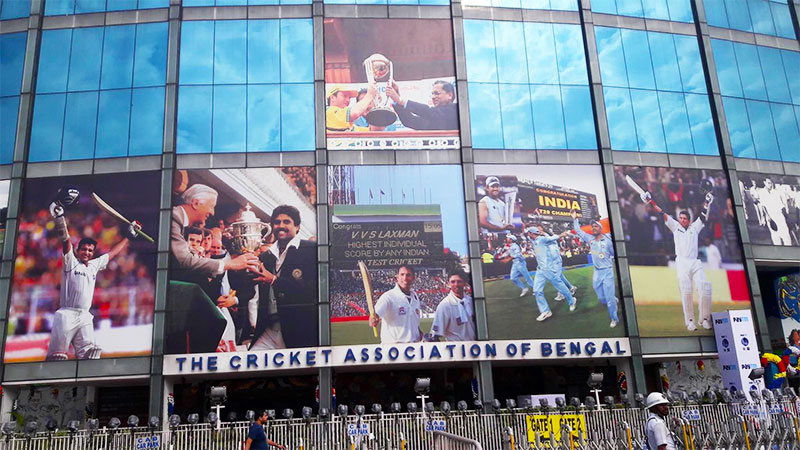
The iconic Eden Gardens is the pride of Calcutta having hosted a World Cup final and a semi-final. For Sri Lankans the place is so special as it was here that they defeated India in the 1996 semi-final.
The most famous cricketer from Calcutta of course is former captain Sourav Ganguly, who went onto become the President of the Indian cricket board. Geoffrey Boycott in his commentary called Ganguly ‘Prince of Calcutta’ when he first came onto the scene. After Ganguly had become captain of India, someone suggested that he better now call Ganguly the ‘King of Calcutta’. Boycott refused to do so for there is only one king of Calcutta – the ever versatile Jagmohan Dalmiya.
It is Dalmiya who broke the England and Australia stronghold in cricket. It is he who made cricket in India a profession by paying the players big money having signed up big television companies.
Dalmiya’s family business was construction and he was a practical man. He was the head of the organizing committee of the 1996 World Cup and faced a storm when Australia and West Indies refused to play in Colombo due to security reasons. After Colombo promised security provided to heads of state, still the two teams were not changing their stance. In order to show that Colombo was safe for cricket, he quickly arranged a joint India – Pakistan team to play a friendly match against Arjuna’s side.
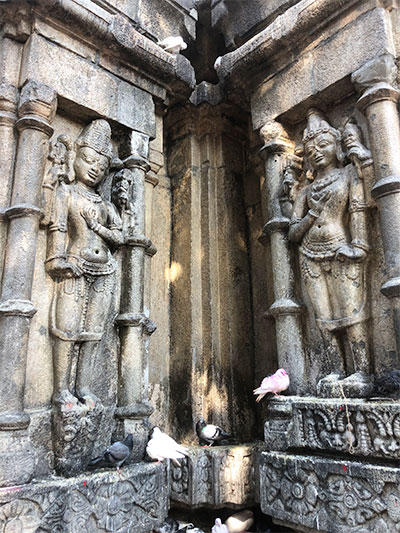
Kamakhya Devalaya in Guwahati was built in the 8th century.
Dalmiya had to deal with several problems. He knew that for Pakistan captain Wasim Akram to play under Indian captain Mohammad Azharuddin or vice-versa was impossible. So he first picked a manager for the team. He chose former Pakistan captain Intikhab Alam. Then he made Intikhab understand what a priviledge for him to be managing this side filled with superstars. As a happy Intikhab started to leave the room, he threw the dice.
“You see Intikhab now that Pakistan has got the Manager’s position, it is not fair to give the captaincy too to Pakistan. So, Azhar will lead the team. As Manager, it is your responsibility to convince Wasim that he’s got to play under Azhar,” Problem solved.
Dalmiya ruled cricket with an iron fist. Most of it during his tenure as Secretary of BCCI. He became the ICC President before becoming President of BCCI. He was responsible for taking the ICC headquarters out of Lord’s to the current location in Dubai.
Although some people have a few unsavoury things to say about Dalmiya, he was a friend of Sri Lanka and always helped SLC whenever India’s support was needed. Such men are rare these days.





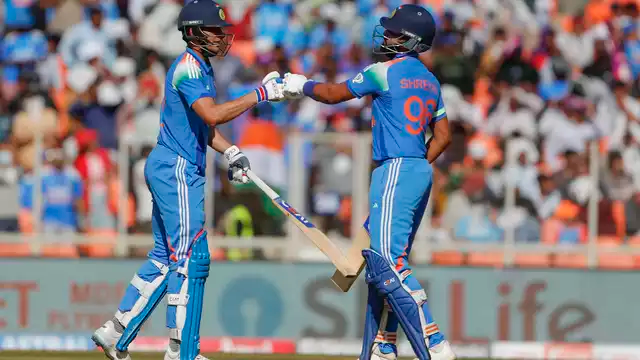
Squad for the first three ODIs: Shubman Gill [C], Rohit Sharma, Virat Kohli, Shreyas Iyer [VC], KL Rahul [WK], Nitish Kumar Reddy, Axar Patel, Naman Dhir, Anshul Kamboj, Gurnoor Brar, Ruturaj Gaikwad, Arshdeep Singh, Ishan Kishan [WK], Mohammed Siraj, Prasidh Krishna*, Kuldeep Yadav
Squad for fourth and fifth ODIs: Shreyas Iyer [C], Rohit Sharma, Virat Kohli, Tilak Varma, Ishan Kishan [WK, VC], Nitish Kumar Reddy, Axar Patel, Naman Dhir, Auqib Nabi, Gurnoor Brar, Ruturaj Gaikwad, Arshdeep Singh, Kumar Kushagra [WK], Mohammed Siraj, Yash Thakur, Kuldeep Yadav
[Cricbuzz]
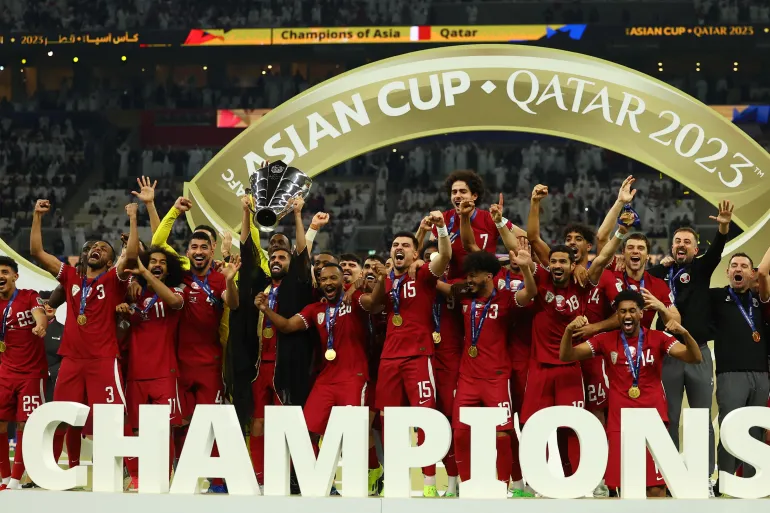
Football’s Asian Cup, hosted by Saudi Arabia, could be moved back a year to 2028 following a series of attacks on the country by Yemen’s Houthis.
The continental tournament will be rescheduled “if we need to” but the organisers are in “no hurry” to make a decision, Asian Football Confederation President Sheikh Salman bin Ebrahim Al Khalifa said on Thursday.
The 2027 Asian Cup is supposed to kick off on January 7 in the Saudi cities of Jeddah, Riyadh and al-Khobar.
The kingdom has in recent days come under sustained attack in a dramatic escalation from the Houthis.
“We can wait until the end of November,” Al Khalifa told reporters in Zurich on Wednesday about a decision on the fate of the Asian Cup.
“Things can change very quickly for better or worse in the region, and it is a question of seeing what happens,” he added.
“If we need to make a decision then we will, but we could move back a year to 2028 if we need to.
“But at the moment we are monitoring the situation and everything is on schedule.”
Cristiano Ronaldo’s Al-Nassr saw their Asian Champions League match delayed by an hour on Monday after Saudi Arabia’s Civil Defence said it had intercepted a missile fired towards Riyadh.
Three matches in Saudi domestic football, including one involving Al-Nassr, were postponed this week.
(Aljazeera)


All Island Schools Games Athletics Championships
by Reemus Fernando
The Under 18 boys’ shot put meet record will be under severe threat today, when the most talked-about thrower of the last All Island Schools Games Athletics Championships takes to the field on the opening day at Diyagama.
Mayon Rajasinghe, now competing for his third school in four years, has shown steady progress this season and appears to be peaking at the right time to attempt another record-breaking performance on the junior circuit.
Having recently set a new meet record of 17.31m at the Western Province Schools Games, Mayon will now try to surpass the All Island Schools Games Under 18 record of 17.15m.
The first two age-category records in the Games’ shot put event already bear his name. He set the current Under 14 record of 15.13m while representing Prince of Wales College, Moratuwa. Last year, while attending St. Joseph’s College, Darley Road, he shattered the Under 16 meet record with a throw of 18.57m using the 4kg shot. It is the furthest any Sri Lankan has thrown in the Under 16 category at any meet, from the Junior National Championships to the Sir John Tarbat Senior Championships to the Schools Games.
Yet the outstanding performance did not receive the recognition it deserved. His father, who also trains him, was adamant that the then 16-year-old deserved the meet’s Best Athlete title. The organisers disagreed, citing the differing weights of implements across age categories as their reason for setting the performance aside. No clear criteria had been announced before the meet, which made such disappointment all but inevitable. Senior Rajasinghe’s outburst after the presentation ceremony, and the social media backlash that followed, have had an effect: the Ministry of Education has now published criteria for selecting the meet’s best athlete. However, it remains doubtful whether the criteria in the competition manual can offer athletes in different age categories and disciplines an equal opportunity to have their performances assessed fairly.
This year Mayon represents Holy Cross College, Kalutara. He has picked up where he left off last year, breaking record after record, and is poised to make an impact once again.
The championship begins with a card of eight finals. Around 5,000 athletes in the Under 14, 16, 18 and 20 age categories, representing all nine provinces, will take part in the five-day event after qualifying through house, divisional, zonal and provincial competitions.

Iyer to lead in last two New Zealand ODIs, Kushagra earns maiden call-up

Pope pictured for first time since surgery and cancer diagnosis

Qatar announces ‘massive’ solar plant project in Lebanon

Samagi Spice Exports to launch Ceylon Cinnamon based beverage range

Asian Cup in Saudi Arabia could be postponed by a year amid Houthi attacks

Houthi missile attack on Yemeni presidential palace kills five, minister says

‘Dates have the highest sugar content to fight Coronavirus’

Sunday Island 27 December – Headlines

#SundayIsland 17th December – Headlines

Sunday Island – 28th March

Sunday Island Headlines – 21 March

Sunday Island – 21st February – Headlines
-

 News6 days ago
Sri Lanka escalates anti-graft drive with Shiranthi’s jailing
-

 News7 days ago
NPP govt. reminded of its responsibilities as US warship leaves Colombo
-

 Latest News5 days ago
Farhan and Sadaqat help Pakistan seal series in style
-

 News6 days ago
Iranian ships stranded, Lanka fears US sanctions
-

 Latest News4 days ago
Nissanka’s return headlines Sri Lanka’s Test squad against Pakistan
-
 News7 days ago
Interdicted top House official Kularatne receives special recognition in Mexican Parliament
-
 Features5 days ago
Intake 16: 45 years of duty and honour
-
 News5 days ago
Malwathu Chapter issues statement on talks with President over Gnanasara Thera’s robes